

Robert N. Bellah (1927–2013)
Author of Habits of the Heart: Individualism and Commitment in American Life
About the Author
Robert N. Bellah, an American sociologist, received his Ph.D. from Harvard University in 1955 and teaches at the University of California at Berkeley. He is best known for his work on community and religion. Although he has written on religions in nonwestern cultures, he has focused much of his show more research on the notion of civil religion in the West. To Bellah, American society confronts a moral dilemma whereby communalism competes with individualism for domination. His most important book, Habits of the Heart (1985), considers the American character and the decline of community. Bellah holds that the radical split between knowledge and commitment is untenable and can result only in a stunted personal and intellectual growth. He argues for a social science guided by communal values. (Bowker Author Biography) show less
Image credit: Portrait of Robert Neelly Bellah. Date 16 May 2008, 19:56:06 By Aguther (Own work)
Works by Robert N. Bellah
Individualism and Commitment in American Life: Readings on the Themes of Habits of the Heart (1987) 88 copies
Prophetic Religion in a Democratic Society: Essays on Deepening the American Dream (A Series Sponsored By the Fetzer Institute) (2006) 13 copies
Religion in America 3 copies
Religion and Progress in Modern Asia 2 copies
Education for Social Justice 1 copy
Apache kinship systerms. 1 copy
Associated Works
A World of Ideas : Conversations With Thoughtful Men and Women About American Life Today and the Ideas Shaping Our Future (1989) — Interviewee — 603 copies, 1 review
Anxious about Empire: Theological Essays on the New Global Realities (2004) — Contributor — 95 copies
Postmodern Theology: Christian Faith in a Pluralist World (1989) — Contributor — 64 copies, 1 review
Christianity and Civil Society: Theological Education for Public Life (Boston Theological Institute Annual) (1995) — Contributor — 7 copies
Tagged
Common Knowledge
- Legal name
- Bellah, Robert Neelly
- Birthdate
- 1927-02-23
- Date of death
- 2013-07-30
- Gender
- male
- Education
- Harvard College (AB|1950)
Harvard University (PhD ∙ 1955) - Occupations
- sociologist
university professor emeritus - Organizations
- University of California, Berkeley
- Awards and honors
- National Humanities Medal (2000)
American Academy of Arts and Letters - Relationships
- Bellah, Melanie (spouse)
- Short biography
- Robert N. Bellah was Elliott Professor of Sociology, Emeritus, at the University of California, Berkeley.
- Nationality
- USA
- Birthplace
- Altus, Oklahoma, USA
- Places of residence
- Berkeley, California, USA
Los Angeles, California, USA - Place of death
- Oakland, California, USA
- Associated Place (for map)
- California, USA
Members
Reviews

Review by Eric Thomas
One March day 161 years ago Henry David Thoreau borrowed an ax and walked to the woods near Walden Pond to cut down some trees for a cabin.
"It was a pleasant hillside where I worked, covered with pine woods, through which I looked out on the pond, and a small open field in the woods where pines and hickories were springing up. The ice in the pond was not yet dissolved, though there were some open spaces, and it was all dark-colored and saturated with water. There were show more some light flurries of snow during the days that I worked there; but for the most part when I came out onto the railroad on my way home, its yellow sand-heap stretched away gleaming in the hazy atmosphere, and the rails shone in the spring sun, and I heard the lark and the pewee and other birds already come to commence another year with us."
So began Thoreau’s two-year experiment in simple living. By escaping the petty distractions of town and the mind-numbing work he saw so many of his neighbors succumb to, he hoped to find freedom. Freedom to contemplate nature. Freedom to think.
Thoreau wasn’t the first to seek freedom in the American wilderness. The “Yankee spirit” embodied in Thoreau, which today might be called rugged individualism, motivated countless American pioneers, homesteaders, mariners, trappers, adventurers, and hermits. Even though most Americans today would shy away from the ascetic life Thoreau led on the shore of Walden Pond, his individualist legacy still smolders on in the collective American consciousness in the form of an overarching desire for personal autonomy and a profound uneasiness about institutions.
But life in the United States has changed since Thoreau’s day. Times are tough for the trapper and the hermit, for the person who wants to head off into the woods and live off the land. For better or for worse, our lives are subtly and completely interwoven with the very institutions—government, corporate, and social—we fear will impinge on our individual liberty. Most of us today recognize the vital role such institutions play in our lives, but our individualistic spirit keeps us from fully comprehending them.
Or so claim the authors of The Good Society, who argue that in order to solve the problems we face in the modern world, we need to change the way we think about institutions.
"The culture of individualism makes the very idea of institutions inaccessible to many of us. We Americans tend to think that all we need are energetic individuals and a few impersonal rules to guarantee fairness; anything more is not only superfluous but dangerous—corrupt, oppressive, or both. . . . Some of our institutions have indeed grown out of control and beyond our comprehension. But the answer is to change them, for it is illusory to imagine that we can escape them."
Fundamental to the book’s message is a rejection of classical liberalism, an ideology commonly associated with seventeenth century philosopher John Locke. Among other things, classical liberalism promotes limited government, individual property rights, and a laissez-faire economy. For the classical liberal, freedom is the right to be left alone and to pursue one’s own economic interests. Americans have modified the ideology in practice by regulating the economic free market (anti-trust laws are one example) and building a limited social safety net (although not nearly to the extent of some other developed nations), but we cling to it in spirit. In fact, most Americans, including those of the middle and lower classes, look favorably on a system where it’s possible to get rich (even if that means others may be poor).
The classical liberal view holds that institutions should function as neutral tools that individuals can use to pursue their goals. If they’re not neutral, the argument goes, then there is a danger that they’ll oppress the people they’re meant to serve. Robert N. Bellah and his four coauthors (whom I will refer to from here on as Bellah) contend that it is impossible for institutions to be morally neutral. For every action (or inaction) of an institution, there are consequences. Leaving healthcare to the marketplace, for example, contributes to the 46 million uninsured Americans who overwhelm emergency rooms or simply go without care. “A political tradition that enshrines individual liberty as its highest ideal leaves us ill prepared to think about ways of managing a modern economy or developing broad social policies to meet the needs of society as a whole,” writes Bellah.
Individualism, he argues, does more than hinder an equitable society; it threatens our ability to act democratically. “Americans fool themselves when they think they can strengthen democracy by weakening government.” Bellah acknowledges that government has grown in size and power, and that citizens expect more from it than ever. We depend on government to ensure the safety of the food we eat, give us monthly checks when we retire, regulate the airwaves, the airlines, and the level of contaminants in the air itself; we rely on government to protect us from our enemies, and settle our disputes. We depend on government to set interest rates, regulate the financial and banking industries, and insure our deposits. We drive on government-built roads and highways, visit parks and wildlife refuges protected by the government, and attend government-funded schools and universities. While we expect government to take care of more than ever, we have left important decisions about government’s role in creating a good society to technocrats and the courts. Politicians and political parties, who Bellah believes should be leading a public debate, concern themselves mainly with monitoring public opinion polls with a view to reelection. “It is not that the government does nothing—its numerous balkanized and poorly coordinated agencies do a great deal—but that it does it in a sort of holding pattern, often with reduced resources and with no vision of how to respond to new conditions and new challenges.”
Bellah also acknowledges that citizens are participating in politics, but again he criticizes their form of participation. “As government and politics have become central in American life, the political arena has not effectively formulated a vision of a common good. Rather, the political arena has become dominated by congeries of private interests (best symbolized by the increasing significance of single-issue Political Action Committees), which fight it out without regard to how the outcome affects the good of the community as a whole.” Part of the solution is to “shift the balance of power from the candidate to the party” because, in theory, parties have the capacity to develop a more coherent vision of the public good. The Good Society calls for “election-funding reforms that would increase party influence over campaign financing while reducing the direct ways organized interests finance individual candidates.” Another measure the book calls for is to completely outlaw campaign advertising on radio and television.
Like the widely read Habits of the Heart, the previous book from Bellah and his team, The Good Society is written for a broad audience. The authors favor a conversational tone over jargon and personal anecdotes over statistics. This is not a book the authors intended to be lost in a library or disappear into the dusty ether of academia. They clearly wanted the book to be read by the public—and influence the public’s patterns of thought and behavior. To that end, they traded the voice of the professor for that of the preacher. And, at least in my case, I felt they were preaching to the choir. As I read The Good Society, I was persuaded by its diagnosis of the sickness of American culture. And as someone who favors collective solutions to complex social problems such as the healthcare crisis in the US, I agreed with the book’s prescription for public debate and strengthened, morally guided institutions. However, my attitudes are not the attitudes of every American.
The Good Society stumbles, I believe, in its explanation of how to get to from A to B, from a society of self-centered individuals to a society that values the common good. The problem is, of course, who’s idea of the “good” are we talking about. Bellah brushes the argument aside by saying that a good society would “allow a wide scope for diversity and would draw on resources from its pluralistic communities in discerning those things that are necessarily matters of the good of all.” That’s all well and good, but isn’t it another way of saying that we’ll pay less attention to matters that aren’t the “good of all.”? As an example, Bellah points to discussions sponsored by the California Legislature’s Joint Senate and Assembly Committee on the Family. “There was no significant sector that was not concerned about the plight of the family today, nor was there any great disagreement about many of the necessary remedies.” But the plight of the family is not the same as the plight of the poor, of the disenfranchised, or of the powerless. Would discussions sponsored by the California legislature have found no “great disagreement” about the plight of immigrants?
When Bellah in The Good Society or I in this review use the word “we” to refer to Americans as whole, we are overlooking differences of opinion. Everyone in New Hampshire may drive around with the phrase “Live Free or Die” on their license plate, but that doesn’t mean some don’t think freedom is the right to own a gun and a snowmobile while others think of freedom from extreme poverty and suffering. The fact is, “we” Americans don’t all agree and probably never will. Some of us think Bellah’s vision of morally grounded and citizen-guided institutions is grand. Others think such an idea is an abomination. Even if we could all agree, it would probably eventually lead to apathy, not lively civic debate. It’s the give-and-take between these groups that’s the essence of democracy—not the seemingly attractive (yet unattainable) agreement Bellah cherishes.
Despite its flaws, The Good Society has much to offer as a critique of the current sorry state of civic participation in the United Sates. Especially telling is this anecdote from pollster Geoffrey Garin that Bellah relates: while polling Americans in 1990 about the cost of the savings and loan bailout, people responded, “Why do the taxpayers have to come up with the money? Why can’t the government?” When citizens in a democracy don’t even recognize that they are the government, that the government has no money that doesn’t come from them, then there is a grave problem. Bellah is right; the people need to take back their government from the technocrats and the moneyed interests they serve, and that means paying attention, as the title of the book’s conclusion suggests. This book should serve as a kick in the pants to those who are so disgusted by what “the government” does that they retreat to a private life of complaining to other likeminded cynics. Elements of the book could also serve as a decent manifesto (and possibly a key to winning elections) for progressives willing to fight for campaign finance reform and institutional solutions to our country’s escalating problems.
For me, The Good Society reinforced what Bellah’s last book, Habits of the Heart, helped me to reluctantly conclude ten years ago: the rugged individualism represented by Thoreau that was once an honorable, viable philosophy has become merely a simulacrum—a posturing, dishonest, “a-man’s-home-is-his-castle” excuse for sitting by while the world goes to shit and others pay the price for your “right” to get as rich as you like. But despite all this, the original vision of freedom—Thoreau’s vision—is a hard one to let go of. I am embarrassed to say that reading about Thoreau on his hillside among the pines and the hickories, listening to the cries of the lark and peewee that had returned after the winter, I get choked up with nostalgia for that time when it wasn’t morally reprehensible to go off and pursue your own interest, a time that perhaps never was.
Bellah describes this nostalgic pull as our “longstanding frontier mentality”:
"when you can see the smoke from your neighbor’s chimney, it’s time to move west. But today there is no West we can go to (if there ever was) that will not involve us with other people in ever more complex interrelations."
And that, perhaps, is one of the tragedies of the age we live in. Our nostalgia for a simple freedom that may never have existed leads us to make mistakes that hustle us ever faster down the cooperate-or-perish path of the modern, interconnected world. show less
One March day 161 years ago Henry David Thoreau borrowed an ax and walked to the woods near Walden Pond to cut down some trees for a cabin.
"It was a pleasant hillside where I worked, covered with pine woods, through which I looked out on the pond, and a small open field in the woods where pines and hickories were springing up. The ice in the pond was not yet dissolved, though there were some open spaces, and it was all dark-colored and saturated with water. There were show more some light flurries of snow during the days that I worked there; but for the most part when I came out onto the railroad on my way home, its yellow sand-heap stretched away gleaming in the hazy atmosphere, and the rails shone in the spring sun, and I heard the lark and the pewee and other birds already come to commence another year with us."
So began Thoreau’s two-year experiment in simple living. By escaping the petty distractions of town and the mind-numbing work he saw so many of his neighbors succumb to, he hoped to find freedom. Freedom to contemplate nature. Freedom to think.
Thoreau wasn’t the first to seek freedom in the American wilderness. The “Yankee spirit” embodied in Thoreau, which today might be called rugged individualism, motivated countless American pioneers, homesteaders, mariners, trappers, adventurers, and hermits. Even though most Americans today would shy away from the ascetic life Thoreau led on the shore of Walden Pond, his individualist legacy still smolders on in the collective American consciousness in the form of an overarching desire for personal autonomy and a profound uneasiness about institutions.
But life in the United States has changed since Thoreau’s day. Times are tough for the trapper and the hermit, for the person who wants to head off into the woods and live off the land. For better or for worse, our lives are subtly and completely interwoven with the very institutions—government, corporate, and social—we fear will impinge on our individual liberty. Most of us today recognize the vital role such institutions play in our lives, but our individualistic spirit keeps us from fully comprehending them.
Or so claim the authors of The Good Society, who argue that in order to solve the problems we face in the modern world, we need to change the way we think about institutions.
"The culture of individualism makes the very idea of institutions inaccessible to many of us. We Americans tend to think that all we need are energetic individuals and a few impersonal rules to guarantee fairness; anything more is not only superfluous but dangerous—corrupt, oppressive, or both. . . . Some of our institutions have indeed grown out of control and beyond our comprehension. But the answer is to change them, for it is illusory to imagine that we can escape them."
Fundamental to the book’s message is a rejection of classical liberalism, an ideology commonly associated with seventeenth century philosopher John Locke. Among other things, classical liberalism promotes limited government, individual property rights, and a laissez-faire economy. For the classical liberal, freedom is the right to be left alone and to pursue one’s own economic interests. Americans have modified the ideology in practice by regulating the economic free market (anti-trust laws are one example) and building a limited social safety net (although not nearly to the extent of some other developed nations), but we cling to it in spirit. In fact, most Americans, including those of the middle and lower classes, look favorably on a system where it’s possible to get rich (even if that means others may be poor).
The classical liberal view holds that institutions should function as neutral tools that individuals can use to pursue their goals. If they’re not neutral, the argument goes, then there is a danger that they’ll oppress the people they’re meant to serve. Robert N. Bellah and his four coauthors (whom I will refer to from here on as Bellah) contend that it is impossible for institutions to be morally neutral. For every action (or inaction) of an institution, there are consequences. Leaving healthcare to the marketplace, for example, contributes to the 46 million uninsured Americans who overwhelm emergency rooms or simply go without care. “A political tradition that enshrines individual liberty as its highest ideal leaves us ill prepared to think about ways of managing a modern economy or developing broad social policies to meet the needs of society as a whole,” writes Bellah.
Individualism, he argues, does more than hinder an equitable society; it threatens our ability to act democratically. “Americans fool themselves when they think they can strengthen democracy by weakening government.” Bellah acknowledges that government has grown in size and power, and that citizens expect more from it than ever. We depend on government to ensure the safety of the food we eat, give us monthly checks when we retire, regulate the airwaves, the airlines, and the level of contaminants in the air itself; we rely on government to protect us from our enemies, and settle our disputes. We depend on government to set interest rates, regulate the financial and banking industries, and insure our deposits. We drive on government-built roads and highways, visit parks and wildlife refuges protected by the government, and attend government-funded schools and universities. While we expect government to take care of more than ever, we have left important decisions about government’s role in creating a good society to technocrats and the courts. Politicians and political parties, who Bellah believes should be leading a public debate, concern themselves mainly with monitoring public opinion polls with a view to reelection. “It is not that the government does nothing—its numerous balkanized and poorly coordinated agencies do a great deal—but that it does it in a sort of holding pattern, often with reduced resources and with no vision of how to respond to new conditions and new challenges.”
Bellah also acknowledges that citizens are participating in politics, but again he criticizes their form of participation. “As government and politics have become central in American life, the political arena has not effectively formulated a vision of a common good. Rather, the political arena has become dominated by congeries of private interests (best symbolized by the increasing significance of single-issue Political Action Committees), which fight it out without regard to how the outcome affects the good of the community as a whole.” Part of the solution is to “shift the balance of power from the candidate to the party” because, in theory, parties have the capacity to develop a more coherent vision of the public good. The Good Society calls for “election-funding reforms that would increase party influence over campaign financing while reducing the direct ways organized interests finance individual candidates.” Another measure the book calls for is to completely outlaw campaign advertising on radio and television.
Like the widely read Habits of the Heart, the previous book from Bellah and his team, The Good Society is written for a broad audience. The authors favor a conversational tone over jargon and personal anecdotes over statistics. This is not a book the authors intended to be lost in a library or disappear into the dusty ether of academia. They clearly wanted the book to be read by the public—and influence the public’s patterns of thought and behavior. To that end, they traded the voice of the professor for that of the preacher. And, at least in my case, I felt they were preaching to the choir. As I read The Good Society, I was persuaded by its diagnosis of the sickness of American culture. And as someone who favors collective solutions to complex social problems such as the healthcare crisis in the US, I agreed with the book’s prescription for public debate and strengthened, morally guided institutions. However, my attitudes are not the attitudes of every American.
The Good Society stumbles, I believe, in its explanation of how to get to from A to B, from a society of self-centered individuals to a society that values the common good. The problem is, of course, who’s idea of the “good” are we talking about. Bellah brushes the argument aside by saying that a good society would “allow a wide scope for diversity and would draw on resources from its pluralistic communities in discerning those things that are necessarily matters of the good of all.” That’s all well and good, but isn’t it another way of saying that we’ll pay less attention to matters that aren’t the “good of all.”? As an example, Bellah points to discussions sponsored by the California Legislature’s Joint Senate and Assembly Committee on the Family. “There was no significant sector that was not concerned about the plight of the family today, nor was there any great disagreement about many of the necessary remedies.” But the plight of the family is not the same as the plight of the poor, of the disenfranchised, or of the powerless. Would discussions sponsored by the California legislature have found no “great disagreement” about the plight of immigrants?
When Bellah in The Good Society or I in this review use the word “we” to refer to Americans as whole, we are overlooking differences of opinion. Everyone in New Hampshire may drive around with the phrase “Live Free or Die” on their license plate, but that doesn’t mean some don’t think freedom is the right to own a gun and a snowmobile while others think of freedom from extreme poverty and suffering. The fact is, “we” Americans don’t all agree and probably never will. Some of us think Bellah’s vision of morally grounded and citizen-guided institutions is grand. Others think such an idea is an abomination. Even if we could all agree, it would probably eventually lead to apathy, not lively civic debate. It’s the give-and-take between these groups that’s the essence of democracy—not the seemingly attractive (yet unattainable) agreement Bellah cherishes.
Despite its flaws, The Good Society has much to offer as a critique of the current sorry state of civic participation in the United Sates. Especially telling is this anecdote from pollster Geoffrey Garin that Bellah relates: while polling Americans in 1990 about the cost of the savings and loan bailout, people responded, “Why do the taxpayers have to come up with the money? Why can’t the government?” When citizens in a democracy don’t even recognize that they are the government, that the government has no money that doesn’t come from them, then there is a grave problem. Bellah is right; the people need to take back their government from the technocrats and the moneyed interests they serve, and that means paying attention, as the title of the book’s conclusion suggests. This book should serve as a kick in the pants to those who are so disgusted by what “the government” does that they retreat to a private life of complaining to other likeminded cynics. Elements of the book could also serve as a decent manifesto (and possibly a key to winning elections) for progressives willing to fight for campaign finance reform and institutional solutions to our country’s escalating problems.
For me, The Good Society reinforced what Bellah’s last book, Habits of the Heart, helped me to reluctantly conclude ten years ago: the rugged individualism represented by Thoreau that was once an honorable, viable philosophy has become merely a simulacrum—a posturing, dishonest, “a-man’s-home-is-his-castle” excuse for sitting by while the world goes to shit and others pay the price for your “right” to get as rich as you like. But despite all this, the original vision of freedom—Thoreau’s vision—is a hard one to let go of. I am embarrassed to say that reading about Thoreau on his hillside among the pines and the hickories, listening to the cries of the lark and peewee that had returned after the winter, I get choked up with nostalgia for that time when it wasn’t morally reprehensible to go off and pursue your own interest, a time that perhaps never was.
Bellah describes this nostalgic pull as our “longstanding frontier mentality”:
"when you can see the smoke from your neighbor’s chimney, it’s time to move west. But today there is no West we can go to (if there ever was) that will not involve us with other people in ever more complex interrelations."
And that, perhaps, is one of the tragedies of the age we live in. Our nostalgia for a simple freedom that may never have existed leads us to make mistakes that hustle us ever faster down the cooperate-or-perish path of the modern, interconnected world. show less

Can USAmerica survive through the 21st century?
Public education in a modern democracy requires a new quadrivium. To survive, basically all citizens must master the four R’s: reading, writing, arithmetic, and responsibility—that is, civic responsibility. The first two R’s must focus on the communication arts including the critical “reading and writing” of media presentations; the third R must be defined to include statistics and scientific reasoning. But, if the US is to serve as show more the republic envisioned in our Constitution, that fourth R must not be neglected. Indeed, civic literacy and responsibility should be seen as the very reason for universal public education.
Habits of the Heart (1986), by Robert Bellah and his colleagues, is the kind of reading that should be required of all citizens. Based on social research, involving extensive interviews and observation of “middle-class Americans,” it explores tensions that have inevitably arisen between earnest individualism and the sense of community, between a competitive marketplace and social idealism, between rigorous self-reliance and mutual supportiveness. Ultimately, in the last chapter, Habits of the Heart points to ways that a balance might be renewed and sustained.
As the authors point out in their preface, the questions they ask are not primarily psychological or sociological but cultural: “We wanted to know what resources Americans have for making sense of their lives, how they think about themselves and their society, and how their ideas relate to their actions.” They begin with case studies of a few representative modern citizens, detailing their “pursuit of happiness,” They proceed with a brief historic survey of “culture and character,” identifying early biblical and republican strands that underlie the American way of life, then the utilitarian individualism of a Benjamin Franklin and the expressive individualism of a Walt Whitman.
Chapters are devoted to private life (for example, finding oneself, love and marriage, and reaching out through modern therapies) and public life (getting involved in work and community, participation in government and volunteer associations, religion, and the national society). The national society throughout the 20th century is seen as developing, first, through the Progressive Movement of T. R. Roosevelt. Progress was defined by the Establishment of industrial and financial elites, represented by an Andrew Carnegie. Such a definition was challenged by Populism (“the spirit of fraternity abroad in the land,” as expressed by Eugene Debs). There followed the Welfare Liberalism of Franklin Roosevelt’s New Deal countered by the Neocapitalism of his opponents. By the end of the century these had given way to an unresolved tension between supporters of an Administered Society, relying on a powerful elite, including economic experts in government agencies, and an Economic Democracy, emphasizing broader citizen participation in decision making and a more genuine egalitarianism in social and economic considerations.
The final chapter, “Transforming American Culture,” recognizes that we have fallen into a “culture of separation,” in which a sense of community or coherence has been weakened; “individualism” has focused the pursuit of happiness on each individual’s dream of personal success and on the intensity of personal feelings rather than on ideals of service and solidarity. The division of society into competing economic classes has reestablished an elite, affluent class, on the one hand, and, on the other, a welfare class, dwelling in poverty, or a struggling working class, threatened by poverty and, hence, anxious and self-centered.
“The litmus test that both the biblical and republican traditions give us for assaying the health of a society,” the authors maintain, “is how it deals with the problem of wealth and poverty.” Further, they say, “Contemporary social science has documented the consequences of poverty and discrimination, so that most educated Americans know that much of what makes our world and our neighborhoods unsafe arises from economic and racial inequality.”
Among other things, Bellah and his colleagues envision a transformation requiring (1) a changing economic system in which “business operates so as to encourage new initiatives in economic democracy and social responsibility,” (2) a restoration of “the dignity and legitimacy of democratic politics,” (3) a recovery of a social motivation that would “link [personal, individual] interests with a conception of the common good,” (4) the elimination of “differences that are patently unfair while respecting differences based on morally intelligible commitments,” (5) provision of “work that is intrinsically interesting and valuable” and that takes its meaning not only from “private aggrandizement,” but also from its “public contributions,” and especially (6) an awareness “of our intricate connectedness and interdependence.”
Such a transformation, the authors freely admit, would not be easy. It would involve reform not only in education, public media, government, and the economy, but also in public and personal consciousness. What they call “the poverty of affluence,” the packaged good-life, would have to give way to a revived sense of community and of social responsibility—even in the business sector, especially in the business sector:
“Reasserting the idea that incorporation is a concession of public authority to a private group in return for service to the public good, with effective public accountability would change what is now called the ‘social responsibility of the corporation’ from its present status, where it is often a kind of public relations whipped cream decorating the corporate pudding, to a constitutive structural element in the corporation itself.”
In such a corporate culture the ennui of bureaucratic management would give way to the excitement of professional management. Civic apathy would have to be replaced by active deliberation and participation. What a dramatic transformation that would be. show less
Public education in a modern democracy requires a new quadrivium. To survive, basically all citizens must master the four R’s: reading, writing, arithmetic, and responsibility—that is, civic responsibility. The first two R’s must focus on the communication arts including the critical “reading and writing” of media presentations; the third R must be defined to include statistics and scientific reasoning. But, if the US is to serve as show more the republic envisioned in our Constitution, that fourth R must not be neglected. Indeed, civic literacy and responsibility should be seen as the very reason for universal public education.
Habits of the Heart (1986), by Robert Bellah and his colleagues, is the kind of reading that should be required of all citizens. Based on social research, involving extensive interviews and observation of “middle-class Americans,” it explores tensions that have inevitably arisen between earnest individualism and the sense of community, between a competitive marketplace and social idealism, between rigorous self-reliance and mutual supportiveness. Ultimately, in the last chapter, Habits of the Heart points to ways that a balance might be renewed and sustained.
As the authors point out in their preface, the questions they ask are not primarily psychological or sociological but cultural: “We wanted to know what resources Americans have for making sense of their lives, how they think about themselves and their society, and how their ideas relate to their actions.” They begin with case studies of a few representative modern citizens, detailing their “pursuit of happiness,” They proceed with a brief historic survey of “culture and character,” identifying early biblical and republican strands that underlie the American way of life, then the utilitarian individualism of a Benjamin Franklin and the expressive individualism of a Walt Whitman.
Chapters are devoted to private life (for example, finding oneself, love and marriage, and reaching out through modern therapies) and public life (getting involved in work and community, participation in government and volunteer associations, religion, and the national society). The national society throughout the 20th century is seen as developing, first, through the Progressive Movement of T. R. Roosevelt. Progress was defined by the Establishment of industrial and financial elites, represented by an Andrew Carnegie. Such a definition was challenged by Populism (“the spirit of fraternity abroad in the land,” as expressed by Eugene Debs). There followed the Welfare Liberalism of Franklin Roosevelt’s New Deal countered by the Neocapitalism of his opponents. By the end of the century these had given way to an unresolved tension between supporters of an Administered Society, relying on a powerful elite, including economic experts in government agencies, and an Economic Democracy, emphasizing broader citizen participation in decision making and a more genuine egalitarianism in social and economic considerations.
The final chapter, “Transforming American Culture,” recognizes that we have fallen into a “culture of separation,” in which a sense of community or coherence has been weakened; “individualism” has focused the pursuit of happiness on each individual’s dream of personal success and on the intensity of personal feelings rather than on ideals of service and solidarity. The division of society into competing economic classes has reestablished an elite, affluent class, on the one hand, and, on the other, a welfare class, dwelling in poverty, or a struggling working class, threatened by poverty and, hence, anxious and self-centered.
“The litmus test that both the biblical and republican traditions give us for assaying the health of a society,” the authors maintain, “is how it deals with the problem of wealth and poverty.” Further, they say, “Contemporary social science has documented the consequences of poverty and discrimination, so that most educated Americans know that much of what makes our world and our neighborhoods unsafe arises from economic and racial inequality.”
Among other things, Bellah and his colleagues envision a transformation requiring (1) a changing economic system in which “business operates so as to encourage new initiatives in economic democracy and social responsibility,” (2) a restoration of “the dignity and legitimacy of democratic politics,” (3) a recovery of a social motivation that would “link [personal, individual] interests with a conception of the common good,” (4) the elimination of “differences that are patently unfair while respecting differences based on morally intelligible commitments,” (5) provision of “work that is intrinsically interesting and valuable” and that takes its meaning not only from “private aggrandizement,” but also from its “public contributions,” and especially (6) an awareness “of our intricate connectedness and interdependence.”
Such a transformation, the authors freely admit, would not be easy. It would involve reform not only in education, public media, government, and the economy, but also in public and personal consciousness. What they call “the poverty of affluence,” the packaged good-life, would have to give way to a revived sense of community and of social responsibility—even in the business sector, especially in the business sector:
“Reasserting the idea that incorporation is a concession of public authority to a private group in return for service to the public good, with effective public accountability would change what is now called the ‘social responsibility of the corporation’ from its present status, where it is often a kind of public relations whipped cream decorating the corporate pudding, to a constitutive structural element in the corporation itself.”
In such a corporate culture the ennui of bureaucratic management would give way to the excitement of professional management. Civic apathy would have to be replaced by active deliberation and participation. What a dramatic transformation that would be. show less
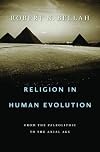
A comprehensive historical analysis of human religion and thought, starting with the animal play and ending with the axial age breakthroughs. The major evolutionary theme being the development from the mimetic to mythic and narrative to the theoretic stage of the axial age. The ability to construct narratives that ultimately led to the development of “theoretic culture”.
More of a descriptive work rather than an analytic one, he considers the religious development from tribal to archaic show more to axial societies. The author presents anthropological case studies for tribal, archaic and axial age societies. For tribal religion, he considers the hunter gatherer societies from the Amazon, Australia and the America's from precolonial period rather than any prehistoric cases. He considers the precontact Hawaii as a case for the transition from tribal to archaic, and Egypt and Mesopotamia as cases for archaic societies.
The major bulk of the book though is given to dealing with the axial age societies of India, China, Israel and Greece. The transition from mythic narrative to theoretic culture occupies the bulk of this work. “Theoretical” breakthroughs and the evolution of universal ethics.
The scope of this work is grand and ambitious and I'm not doing any justice to it by this short and broken review. This book is clearly a product of a lifetime of research and learning. A very humanistic work on themes that are central to human experience. Highly recommended. show less
More of a descriptive work rather than an analytic one, he considers the religious development from tribal to archaic show more to axial societies. The author presents anthropological case studies for tribal, archaic and axial age societies. For tribal religion, he considers the hunter gatherer societies from the Amazon, Australia and the America's from precolonial period rather than any prehistoric cases. He considers the precontact Hawaii as a case for the transition from tribal to archaic, and Egypt and Mesopotamia as cases for archaic societies.
The major bulk of the book though is given to dealing with the axial age societies of India, China, Israel and Greece. The transition from mythic narrative to theoretic culture occupies the bulk of this work. “Theoretical” breakthroughs and the evolution of universal ethics.
The scope of this work is grand and ambitious and I'm not doing any justice to it by this short and broken review. This book is clearly a product of a lifetime of research and learning. A very humanistic work on themes that are central to human experience. Highly recommended. show less

In contrast to the received wisdom, Bellah here argues that Japanese modernisation did not begin with Admiral Perry's arrival in 1868, and rapidly developed because of the superb Japanese ability for imitation. In contrast, he argues that the native doctrines of Buddhism, Confucianism, and Shinto encouraged forms of logic and understanding necessary for economic development.
Lists
Awards


You May Also Like


Associated Authors
Statistics
- Works
- 30
- Also by
- 15
- Members
- 2,951
- Popularity
- #8,652
- Rating
- 3.8
- Reviews
- 13
- ISBNs
- 61
- Languages
- 5
- Favorited
- 1