
Danny Gregory
Author of The Creative License: Giving Yourself Permission to Be the Artist You Truly Are
About the Author
Danny Gregory has written many bestselling books including Art Before Breakfast, The Creative License, An Illustrated Life, An Illustrated Journey, and Everyday Matters. He is the cofounder of SketchbookSkool.com and served as Executive Creative Director of a two-time Ad Agency of the Year. For show more more, visit dannygregory.com. show less
Image credit: Andrea Scher
Works by Danny Gregory
The Creative License: Giving Yourself Permission to Be the Artist You Truly Are (2005) 662 copies, 10 reviews
An Illustrated Life: Drawing Inspiration from the Private Sketchbooks of Artists, Illustrators and Designers (2008) 523 copies, 7 reviews
Art Before Breakfast: A Zillion Ways to be More Creative No Matter How Busy You Are (2015) 249 copies, 7 reviews
An Illustrated Journey: Inspiration From the Private Art Journals of Traveling Artists, Illustrators and Designers (2013) 138 copies, 2 reviews
Change Your Underwear Twice a Week: Lessons from the Golden Age of Classroom Filmstrips (2004) 122 copies, 4 reviews
Tagged
Common Knowledge
- Birthdate
- 1960-09-04
- Gender
- male
- Education
- Princeton University (Politics)
- Occupations
- White House intern (Jimmy Carter)
McDonalds' fry cook
Executive Creative Director (McGarry Bowen)
Contributing Illustrator (The Morning News) - Nationality
- UK
- Birthplace
- London, England, UK
- Places of residence
- Greenwich Village, New York, USA
Pittsburgh, Pennsylvania, USA
Canberra, Australian Capital Territory, Australia
Lahore, Pakistan
Kfar Saba, Israel
Brooklyn, New York, USA
Members
Reviews
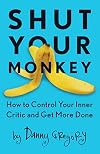
People often have a "negative view" for very good reason. And trying to get them to deny that and to plaster a false face of optimism onto themselves is not going to help one bit. It won't help them psychologically (except possibly in the short term) and it is, really, just as bad as Marx's "opium of the people." He meant religion, of course, in its "Pie in the sky when you die" form, but it could equally apply to anything that lulls folk into thinking/feeling that all is well when it show more isn't.
Here's a thought ... that the brain works by addition, not by subtraction, and as a wealth of evidence on thought suppression shows, the more we try NOT to think about something the more we think about it. Google “Wegner and the White Bear” experiment if you don't believe me. Trying to 'unthink' negative thoughts or replace them with positive ones just leads to more of the same. Anyone who ever tried to give up smoking by telling themselves they must not have a cigarette will have encountered this phenomenon.
The problem is not the content of the thoughts but our appraisal of them and how they then influences behaviour. Treating our 'negative' thoughts as serious and harmful simply gives them more power. Sitting around trying to change your mind is far less effective in the longer term than getting out there and changing your life. The trick is to recognise thoughts for what they are and start treating them as stories that your mind tell you.
When I began to learn to accept my inner critic as PART OF ME (not a horrid monster...god, I think that's a bit dangerous actually)...I was able to start feeling compassion towards it. I actually started visualising my inner critic as my 6 year old self. Then, rather than getting angry at my inner critic (which just makes things worse), I was able to show it compassion.
Eckhart Tolle's 'The Power Of Now' and Richard Rohr's Immortal Diamond' both approach this from a more spiritual bullshitty stance identifying this as our struggle with the 'Ego' or 'False Self'. I feel both these books are not essential reading and if like me you can identify with Danny Gregory's analogy then taking these first small recommend steps will be the first steps on a journey to lasting change and a new way of being. show less
Here's a thought ... that the brain works by addition, not by subtraction, and as a wealth of evidence on thought suppression shows, the more we try NOT to think about something the more we think about it. Google “Wegner and the White Bear” experiment if you don't believe me. Trying to 'unthink' negative thoughts or replace them with positive ones just leads to more of the same. Anyone who ever tried to give up smoking by telling themselves they must not have a cigarette will have encountered this phenomenon.
The problem is not the content of the thoughts but our appraisal of them and how they then influences behaviour. Treating our 'negative' thoughts as serious and harmful simply gives them more power. Sitting around trying to change your mind is far less effective in the longer term than getting out there and changing your life. The trick is to recognise thoughts for what they are and start treating them as stories that your mind tell you.
When I began to learn to accept my inner critic as PART OF ME (not a horrid monster...god, I think that's a bit dangerous actually)...I was able to start feeling compassion towards it. I actually started visualising my inner critic as my 6 year old self. Then, rather than getting angry at my inner critic (which just makes things worse), I was able to show it compassion.
Eckhart Tolle's 'The Power Of Now' and Richard Rohr's Immortal Diamond' both approach this from a more spiritual bullshitty stance identifying this as our struggle with the 'Ego' or 'False Self'. I feel both these books are not essential reading and if like me you can identify with Danny Gregory's analogy then taking these first small recommend steps will be the first steps on a journey to lasting change and a new way of being. show less
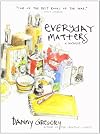
I knew Danny Gregory by reputation for a long time before really encountering him through Sketchbook Skool. I found I really appreciated his take on art and sketching and journaling. I liked the idea of connecting with something by drawing it. This book is basically a memoir through sketching of the time following his wife's tragic accident that left her paralyzed from the waist down. It's sad and beautiful and hopeful and inspiring. I read it in one sitting and will definitely be reading it show more again and again. show less
An Illustrated Life: Drawing Inspiration from the Private Sketchbooks of Artists, Illustrators and Designers by Danny Gregory
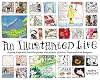
It's hard not to be fascinated by this collection of sketchbooks put together by Danny Gregory. I wonder how he was able to persuade all the artists (some of them very famous) to participate in his project. But I've always been curious about how artists got their inspiration. For a long while I just assumed that artists had some peculiar artistic "sense" that the rest of us didn't have but it's this sort of a collection that pulls back the curtain a little bit and gives one a glimpse into show more the sheer hard work and constant practice that lies behind a lot of the art we see in galleries and framed on walls. I was especially interested in the text. Clearly, each artist had been given a list of headings they were supposed to cover: what sort of sketchbooks did they use, did they mind other people looking at their sketchbooks, what sort of media (pencils, pens , watercolours etc.,) did they use. But one thing really shone through ....and that was how valuable these sketchbooks were to the individual artists. These were the things they would be picking up if there was a fire. Some really worked on their pages to turn it into finished art. For others it was just to capture a moment and they were not fussed about it appearing rough and unfinished. Some were actually having their sketchbooks published ....and, I guess, everyone in this book had put up some of their work up for publication. I noticed that a lot of the artists used time spent on a train or time spent waiting at bus stops etc to capture some of the people or scenes around them. In many cases the keeping of a sketchbook had been forced upon them at art school but I was surprised that so many tried to put something in their book every day or at least very regularly. And yes, some of them could draw really beautifully but some were pretty crude drawings .....and I got the impression that not everyone in the book was able to sketch recognisable portraits. I enjoyed it. And I'm keeping the book (not donating it to charity) and give it 4 stars. show less
Change Your Underwear Twice a Week: Lessons from the Golden Age of Classroom Filmstrips by Danny Gregory
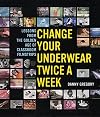
A glorious (and irreverent) look back at a wonderful technology now lost to the mists of time (and the occasion eBay auction.) Having grown up watching these 'teaching aides' year after year in school, I devoured the contents of this book in no time what-so-ever and enjoyed every moment of it. The book offers many glimpses into a wide variety of filmstrips and gives a wonderful interpretation of both the content and the times in which they were created. I highly recommend getting a copy (I show more got mine for a buck - you can't beat that with a stick!) if it even begins to peak your curiosity. I really do! show less
Lists
Just Make Art (1)
You May Also Like


Associated Authors
Statistics
- Works
- 14
- Members
- 2,241
- Popularity
- #11,443
- Rating
- 4.0
- Reviews
- 47
- ISBNs
- 28
- Languages
- 3
- Favorited
- 2