
Laura Perdew
Author of The Fort
Series
Works by Laura Perdew
Stink Fights, Earwax, and Other Marvelous Mammal Adaptations (Picture Book Science) (2020) 14 copies
Spit Nests, Puke Power, and Other Brilliant Bird Adaptations (Picture Book Science) (2020) 13 copies
Crazy Contraptions: Build Rube Goldberg Machines that Swoop, Spin, Stack, and Swivel: with Hands-On Engineering Activities (Build It Yourself) (2019) 13 copies
Biodiversity: Explore the Diversity of Life on Earth with Environmental Science Activities for Kids (Build It Yourself) (2019) 9 copies
Anti-Freeze, Leaf Costumes, and Other Fabulous Fish Adaptations (Picture Book Science) (2020) 8 copies
Sunscreen, Frogsicles, and Other Amazing Amphibian Adaptations (Picture Book Science) (2020) 6 copies
Asking Questions about Food Advertising (21st Century Skills Library: Asking Questions about Media) (2015) 4 copies
Extinction: What Happened to the Dinosaurs, Mastodons, and Dodo Birds? With 25 Projects (2017) 3 copies
Tagged
Common Knowledge
There is no Common Knowledge data for this author yet. You can help.
Members
Reviews
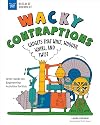
Wacky Contraptions: Gadgets That Whiz, Whoosh, Whirl, and Twist with Hands-On Engineering Activities (Build It Yourself) by Laura Perdew
Rating: 4* of five
The Publisher Says: In Wacky Contraptions: Gadgets That Whiz, Whoosh, Whirl, and Twist with Hands-On Engineering Activities, young engineers ages 9 to 12 brainstorm, design, and build devices using the engineering design process. Kids learn about simple machines, mechanical advantage, forces, energy, motion, electricity, and other physical science concepts while creating fun and fascinating prototypes that do different kinds of work. A hands-on project book for kids who show more love building wacky contraptions!
How do we make contraptions that zoom, bounce, tower, and collapse? By using hands-on STEAM engineering!
In Wacky Contraptions: Gadgets That Whiz, Whoosh, Whirl, and Twist with Hands-On Engineering Activities, young engineers ages 9 to 12 brainstorm, design, and build devices using the engineering design process. Kids learn about simple machines, mechanical advantage, forces, energy, motion, electricity, and other physical science concepts while creating fun and fascinating prototypes that do different kinds of work. Plus, this book encourages kids to adopt a growth mindset and understand that when their projects don’t work, that’s a sign that it’s time to revise and try again!
Built around a plethora of hands-on projects—a conveyor belt, magnetic slime, and a water wheel are just a few examples—a fun narrative style engages kids in discussions of the forces that define our world and the work we do in it. Tension, magnetism, electricity, and chemistry affect our daily lives in ways we often overlook—but armed with the power of knowledge, kids can identify and use the science that surrounds them. Graphic novel style illustrations, photographs, fun facts, sidebars, links to online resources, and more make Wacky Contraptions entertaining and educational.
Additional materials include a glossary, a list of media for further learning, a selected bibliography, and index. All books are leveled for Guided Reading level and Lexile and align with Common Core State Standards and Next Generation Science Standards.
I RECEIVED A DRC FROM THE PUBLISHER VIA EDELWEISS+. THANK YOU.
My Review: A bright sixth-grader who likes doing stuff with their hands will get a real lexical workout with this book. It keeps the language on the edge of their vocabulary; it will get many concepts across in infographics...the layout looks like a screen design...and it has a glossary included, to get them used to looking up words to figure out how to do something. Of course, starting out the usual stuff appears:
This is how we're starting out. It's really good at not being too far ahead of the bright ones, nor too "now look at the screen's left corner" for the average twelve-year-old.
Your middle-school nibling who's in a poor school district could get fired up over this because it's got stuff to do, to make things that work and aren't simply *there* when they are done. If the kid is watching Mark Rober videos on YouTube, this is the gift of this Yuletide. show less
The Publisher Says: In Wacky Contraptions: Gadgets That Whiz, Whoosh, Whirl, and Twist with Hands-On Engineering Activities, young engineers ages 9 to 12 brainstorm, design, and build devices using the engineering design process. Kids learn about simple machines, mechanical advantage, forces, energy, motion, electricity, and other physical science concepts while creating fun and fascinating prototypes that do different kinds of work. A hands-on project book for kids who show more love building wacky contraptions!
How do we make contraptions that zoom, bounce, tower, and collapse? By using hands-on STEAM engineering!
In Wacky Contraptions: Gadgets That Whiz, Whoosh, Whirl, and Twist with Hands-On Engineering Activities, young engineers ages 9 to 12 brainstorm, design, and build devices using the engineering design process. Kids learn about simple machines, mechanical advantage, forces, energy, motion, electricity, and other physical science concepts while creating fun and fascinating prototypes that do different kinds of work. Plus, this book encourages kids to adopt a growth mindset and understand that when their projects don’t work, that’s a sign that it’s time to revise and try again!
Built around a plethora of hands-on projects—a conveyor belt, magnetic slime, and a water wheel are just a few examples—a fun narrative style engages kids in discussions of the forces that define our world and the work we do in it. Tension, magnetism, electricity, and chemistry affect our daily lives in ways we often overlook—but armed with the power of knowledge, kids can identify and use the science that surrounds them. Graphic novel style illustrations, photographs, fun facts, sidebars, links to online resources, and more make Wacky Contraptions entertaining and educational.
Additional materials include a glossary, a list of media for further learning, a selected bibliography, and index. All books are leveled for Guided Reading level and Lexile and align with Common Core State Standards and Next Generation Science Standards.
I RECEIVED A DRC FROM THE PUBLISHER VIA EDELWEISS+. THANK YOU.
My Review: A bright sixth-grader who likes doing stuff with their hands will get a real lexical workout with this book. It keeps the language on the edge of their vocabulary; it will get many concepts across in infographics...the layout looks like a screen design...and it has a glossary included, to get them used to looking up words to figure out how to do something. Of course, starting out the usual stuff appears:
This is how we're starting out. It's really good at not being too far ahead of the bright ones, nor too "now look at the screen's left corner" for the average twelve-year-old.
Your middle-school nibling who's in a poor school district could get fired up over this because it's got stuff to do, to make things that work and aren't simply *there* when they are done. If the kid is watching Mark Rober videos on YouTube, this is the gift of this Yuletide. show less
Keystone Plants and Fungi: Discover the Organisms Vital to Ecosystem Health and Biodiversity (Build It Yourself) by Laura Perdew
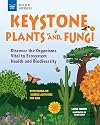
Keystone plants and fungi gain the spotlight in an interesting and hands-on way.
After carefully defining and making clear what a keystone in terms of the ecosystem means, these pages dive into various examples from the plant and fungi realm. These examples comes from around the world, each one gaining clear explanations and clarification as to what it is, it's purpose in the ecosystem, and what happens if it disappears. But that's only the beginning. These pages offer quite a bit more as show more small sidenotes help broaden the knowledge surrounding ecosystems, biology and science, in general. There are many Qcodes spread throughout the pages, where readers can view short videos about the topics. These help liven things up and also give real life views to help make the information clear. There are also plenty of activities, which readers can do themselves to experiment with the knowledge and gain insights on their own.
The text is pretty straight-forward but stays interesting. I especially appreciate the list of vocabulary words along the edge of the page with the words placed in bold within the text for easy referencing. There are interesting tidbits dropped in here and there to make sure things don't get too dry. Even the visual end is well done thanks to the images. It almost has the feel of an interactive classroom. The information is supplemented nicely to help keep boredom away. The activities tie directly into the section's theme and offer various possibilities each time. These are no problem to do these almost anywhere and most don't even require much supervision, since they are very age appropriate. This allows readers to become researchers themselves and go hands-on into nature.
This is a packed book, which would even work well for groups and homeschooling themes, since it offers a rounded variety of information and activities. show less
After carefully defining and making clear what a keystone in terms of the ecosystem means, these pages dive into various examples from the plant and fungi realm. These examples comes from around the world, each one gaining clear explanations and clarification as to what it is, it's purpose in the ecosystem, and what happens if it disappears. But that's only the beginning. These pages offer quite a bit more as show more small sidenotes help broaden the knowledge surrounding ecosystems, biology and science, in general. There are many Qcodes spread throughout the pages, where readers can view short videos about the topics. These help liven things up and also give real life views to help make the information clear. There are also plenty of activities, which readers can do themselves to experiment with the knowledge and gain insights on their own.
The text is pretty straight-forward but stays interesting. I especially appreciate the list of vocabulary words along the edge of the page with the words placed in bold within the text for easy referencing. There are interesting tidbits dropped in here and there to make sure things don't get too dry. Even the visual end is well done thanks to the images. It almost has the feel of an interactive classroom. The information is supplemented nicely to help keep boredom away. The activities tie directly into the section's theme and offer various possibilities each time. These are no problem to do these almost anywhere and most don't even require much supervision, since they are very age appropriate. This allows readers to become researchers themselves and go hands-on into nature.
This is a packed book, which would even work well for groups and homeschooling themes, since it offers a rounded variety of information and activities. show less
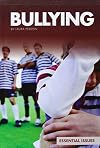
What I really like about this book is that it feels gut punching. So many stories are shared of people who have taken their own life....it leaves you with a pit in the stomach. There is also a lot of focus on the "bystander" who witnesses bullying and does nothing. Haven't we all been guilty of that at some point or another? This is a good resource.
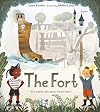
The Fort is one of my favorite books to give as a gift and read in my preschool class. I love how it teaches kids that 2 people can look at the same item and see 2 different things. A little girls finds a fort and sees a pirate ship meanwhile a little boy find the same fort and sees a castle. The story gets heated when the pirate finds a party invitation on the back of her treasure map! They run into each other at the end of the book and after an epic battle together they see a rocket ship.
Lists
Social Media (1)
Awards

You May Also Like


Statistics
- Works
- 51
- Members
- 247
- Popularity
- #92,309
- Rating
- 3.7
- Reviews
- 4
- ISBNs
- 171