
Kōji Kumeta
Author of Sayonara, Zetsubou-Sensei, Volume 1
About the Author
Image credit: via myanimelist.net
Series
Works by Kōji Kumeta
Joshiraku Volume1 1 copy
Joshiraku Volume 2 1 copy
久米田康治画集 悔画展 1 copy
さよなら絶望先生(13) (講談社コミックス) 1 copy
かくしごと(1) (月刊少年マガジンコミックス) 1 copy
Tagged
Common Knowledge
- Canonical name
- Kumeta, Kōji
- Birthdate
- 1967-09-05
- Gender
- male
- Nationality
- Japan
- Places of residence
- Yokosuka, Kanagawa, Japan
- Associated Place (for map)
- Kanagawa, Japan
Members
Reviews
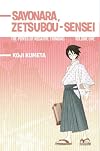
A wickedly dark comedy where the main character is a high school teacher who is constantly in depression (the Mr. "Despair") as he comes with all the negatives and tragedies in life. Balancing this out is his classroom of eclectic students, each seeming with a personal disorder of their own, with the lead being a girl who is always cheerful and seeing things to the positive, even to the most absurd levels (think Pollyanna's 'glad game' except you also believe in extraterrestrials, spirits, show more and anything out of the ordinary).
The humor of this series is crazy to the extreme and can come out so fast and so sharp that alot of us would probably miss out on all the inside joke references, if it weren't for the translation notes in the end that goes for 11 pages (most of the time they're around 5).
The art might be somewhat on the simple side but somehow fits the theme of the book with its deep contrasts between light and dark. But when necessary, the frame can be filled to the brim with detail (all with its jokes).
A fun series to start, especially if one is into gallows humor. show less
The humor of this series is crazy to the extreme and can come out so fast and so sharp that alot of us would probably miss out on all the inside joke references, if it weren't for the translation notes in the end that goes for 11 pages (most of the time they're around 5).
The art might be somewhat on the simple side but somehow fits the theme of the book with its deep contrasts between light and dark. But when necessary, the frame can be filled to the brim with detail (all with its jokes).
A fun series to start, especially if one is into gallows humor. show less

I loved the concept behind the Sayonara, Zetsubou-Sensei series: teacher overreacts to everything, his whole life is one long drawn-out moment of despair, and he just happens to be in charge of a class of strange girls (each one a stereotype of sorts) who all happen to be in love with him. The series is a gag manga that parodies and satirizes modern Japanese society without a true storyline, but with many running jokes and developments that carry from one chapter to another, or which are show more referred to many chapters later in order to make a joke.
The first volume is, possibly, the best of the series because it is fresh and everything is new. Each of the ten chapters introduces a new character, whether it is Nozomu Itoshiki the suicidal teacher, or Kafuka Fuura, the perpetually optimistic student, or Kiri Komori, the hikikomori. The students all have one defining character trait which is established in these introductory chapters, and which is also related to some aspect of society that leaves Sensei in despair.
The art style is a bit rough in this first volume, compared to much later ones, but it is still very representative of Kumeta's recent style. It's very stylized with clear, distinguishing silhouettes and not a lot of reliance on screentones for shading or visual interest (perhaps expected, since this is NOT a shoujo manga, where they are all too common!).
I'm not very confident in recommending the manga, though I enjoy it. It has a lot of jokes and references to very Japanese things (the kind called "wijits" by many for "Weird Japanese Thing") that are probably completely bewildering to people that know very little about Japanese culture, and many yet which are confusing even to those familiar with it. A wiki exists because so many of the references that Kumeta pokes fun at are obscure even to Japanese people.
Because of the wijits and the gag nature of the manga, it doesn't take very well to repeated readings. I'm not entirely sure I want to spend money on further volumes of the series, since I mostly enjoy reading them once and then am done with them. However, I do really like the visual style of the series, and this first volume is a lot more appealing simply because it is setting the stage with the character types rather than going straight into the gags.
DelRey did a pretty good job with the translation and footnotes, I think. There are a lot of footnotes with the series, as might be expected, and the quality over all seems pretty good. show less
The first volume is, possibly, the best of the series because it is fresh and everything is new. Each of the ten chapters introduces a new character, whether it is Nozomu Itoshiki the suicidal teacher, or Kafuka Fuura, the perpetually optimistic student, or Kiri Komori, the hikikomori. The students all have one defining character trait which is established in these introductory chapters, and which is also related to some aspect of society that leaves Sensei in despair.
The art style is a bit rough in this first volume, compared to much later ones, but it is still very representative of Kumeta's recent style. It's very stylized with clear, distinguishing silhouettes and not a lot of reliance on screentones for shading or visual interest (perhaps expected, since this is NOT a shoujo manga, where they are all too common!).
I'm not very confident in recommending the manga, though I enjoy it. It has a lot of jokes and references to very Japanese things (the kind called "wijits" by many for "Weird Japanese Thing") that are probably completely bewildering to people that know very little about Japanese culture, and many yet which are confusing even to those familiar with it. A wiki exists because so many of the references that Kumeta pokes fun at are obscure even to Japanese people.
Because of the wijits and the gag nature of the manga, it doesn't take very well to repeated readings. I'm not entirely sure I want to spend money on further volumes of the series, since I mostly enjoy reading them once and then am done with them. However, I do really like the visual style of the series, and this first volume is a lot more appealing simply because it is setting the stage with the character types rather than going straight into the gags.
DelRey did a pretty good job with the translation and footnotes, I think. There are a lot of footnotes with the series, as might be expected, and the quality over all seems pretty good. show less
3.5/5 stars!
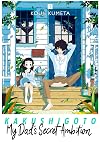
When a single parent tries to hide his line of work from his child, comedy ensues. This manga series shows the humor yet serious side of a mangaka in short issues/chapters but packed in volume form. It also has nice artwork, with definitive characters and self-esteem scenery. After a number of issues/chapters, there is some explanations about the creator's lifestyle, like how the beach and its importance to a mangaka. There is also the underlying plot of when the daughter will show more learn about her father's secret and her reaction to said revelation. An enjoyable manga series for a mature audience because of what the mangaka protagonist draws.
***Thanks to NetGalley and the publisher for providing a review copy.*** show less
When a single parent tries to hide his line of work from his child, comedy ensues. This manga series shows the humor yet serious side of a mangaka in short issues/chapters but packed in volume form. It also has nice artwork, with definitive characters and self-esteem scenery. After a number of issues/chapters, there is some explanations about the creator's lifestyle, like how the beach and its importance to a mangaka. There is also the underlying plot of when the daughter will show more learn about her father's secret and her reaction to said revelation. An enjoyable manga series for a mature audience because of what the mangaka protagonist draws.
***Thanks to NetGalley and the publisher for providing a review copy.*** show less
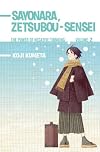
While still somewhat interesting, I found the second volume of Sayonara, Zetsubou Sensei, to be less as hilarious as I'd expected. Whereas in the first volume, where almost every chapter had me laughing at its dark humor; in this volume I found myself more puzzled than amused as some of the chapters would go for a more bizarre turn (with the Translation Notes to be of little use). In general, I found chapters that focused on characters (Fujiyoshi) or events (Miai) to be more interesting. show more Accordingly, chapters focusing on Sensei's explanation for the 'meaning of life' tended to find its welcome, worn short. show less
Awards


You May Also Like


Statistics
- Works
- 108
- Members
- 1,560
- Popularity
- #16,523
- Rating
- 3.6
- Reviews
- 9
- ISBNs
- 159
- Languages
- 3
- Favorited
- 1