
Jacob Needleman (1934–2022)
Author of Money and the Meaning of Life
About the Author
Jacob Needleman is a professor of philosophy at San Francisco State University, and the former director of the Center for the Study of New Religions at the Graduate Theological Union in Berkeley
Image credit: By Gazebo - Own work, CC BY-SA 3.0, https://commons.wikimedia.org/w/index.php?curid=30705452
Works by Jacob Needleman
The Essential Marcus Aurelius (Tarcher Cornerstone Editions) (2008) — Translator — 176 copies, 4 reviews
A Sense of the Cosmos: The Encounter of Modern Science and Ancient Truth (1975) 104 copies, 1 review
Associated Works
The Gospel of Philip: Jesus, Mary Magdalene, and the Gnosis of Sacred Union (2003) — Foreword, some editions — 136 copies, 5 reviews
Being In The World: selected papers of Ludwig Binswanger Translated and with a critical introduction to his existential psychoanalysis by Jacob Needleman (1975) — Translator, some editions — 60 copies
Tagged
Common Knowledge
- Birthdate
- 1934-10-06
- Date of death
- 2022-11-28
- Gender
- male
- Education
- Harvard University
Yale University
University of Freiburg - Occupations
- philosopher
professor - Organizations
- San Francisco State University
- Nationality
- USA
- Birthplace
- Philadelphia, Pennsylvania, USA
- Place of death
- Oakland, California, USA
- Associated Place (for map)
- USA
Members
Reviews

Author Needleman is not known for his fiction, but rather his popularizing efforts on religion and philosophy, as well as academic work in the same fields. Sorcerers was his first novel, and the substance would mark it as young adult literature--a short, digestible coming-of-age story about a 15-year-old protagonist--but the packaging seems to be directed to an adult audience. The story is concerned with magic of at least three kinds: the stage magic of the illusionist's craft, the magic of show more supernatural power, and the magic of spiritual realization.
There is certainly an autobiographical component: Needleman has put his central character Elliot Appleman in the 1950s Philadelphia where the author himself grew up, but the supernatural elements of the story suggest that it is quite fictional. Thaumaturgical characters with names like Irene Angel and Max Falkoner lend it the sense of allegorical fable, which the naturalistic setting helps to ameliorate.
Needleman's works are often informed by his embrace of the teachings originating with G. I. Gurdjieff, and that seems to be the case here as well. In particular, the lessons that Elliot receives from Max are concerned with using disciplined bodily movement to break free of psychic automatism, and the ethic emphasized is one of conscience and awakening. But the presentation of these ideas is free of sectarian baggage, and the same story might be read as a Thelemic parable, with a focus on gradual initiation and True Will.
The narrative highlights of Sorcerers are distinctly initiatory in character. There is a quite affective (and effective!) ceremony of Elliot's induction into the Sorcerer's Apprentices club for teenage stage magicians. His private instruction from the adult magicians Blake and Falkoner is also a combination of transformative ritual and spiritual filiation. The climax and denouement in the book's fourth part could be read as a single event in which various characters are undergoing different initiations peculiar to their own grades.
Unusually, but not inappropriately, the story ends with a benediction on the reader. show less
There is certainly an autobiographical component: Needleman has put his central character Elliot Appleman in the 1950s Philadelphia where the author himself grew up, but the supernatural elements of the story suggest that it is quite fictional. Thaumaturgical characters with names like Irene Angel and Max Falkoner lend it the sense of allegorical fable, which the naturalistic setting helps to ameliorate.
Needleman's works are often informed by his embrace of the teachings originating with G. I. Gurdjieff, and that seems to be the case here as well. In particular, the lessons that Elliot receives from Max are concerned with using disciplined bodily movement to break free of psychic automatism, and the ethic emphasized is one of conscience and awakening. But the presentation of these ideas is free of sectarian baggage, and the same story might be read as a Thelemic parable, with a focus on gradual initiation and True Will.
The narrative highlights of Sorcerers are distinctly initiatory in character. There is a quite affective (and effective!) ceremony of Elliot's induction into the Sorcerer's Apprentices club for teenage stage magicians. His private instruction from the adult magicians Blake and Falkoner is also a combination of transformative ritual and spiritual filiation. The climax and denouement in the book's fourth part could be read as a single event in which various characters are undergoing different initiations peculiar to their own grades.
Unusually, but not inappropriately, the story ends with a benediction on the reader. show less
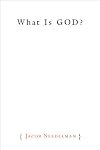
Reading Jacob Needleman’s spiritual, yet philosophical memoir What Is God? is akin to watching a slow-paced movie where you know it’s worth watching because you have this inkling that something big, shocking, revelatory—a giant epiphany—will surface at the end like the lost city of Atlantis. But all along you are thinking, where is he going with this? And will he ever answer the question he posed? Three quarters of my way through the book I was still asking myself that question. show more Patience, I told myself. And that is the same thing I would tell the reader. The book builds up slowly, but in the end delivers the answer to its question.
My first impression upon seeing Needleman’s book in the religion section of my local bookstore was that it must be an ambitious work. Needleman, who I had never heard of, was certainly tackling a gargantuan question. When I opened the back flap, I discovered that he was a professor, and not just any professor, a professor of philosophy who had penned over fourteen books. Clearly, he was up to the task of posing and possibly answering such an age-old question. As a philosopher and former atheist-turned man of faith, Needleman’s perspective was bound to be compelling.
What Is God? is a challenging read. It requires attention, concentration, maybe even a pencil in your hand. It does not swiftly move by like, for instance, Deepak Chopra’s How to Know God. You really have to pay attention. It’s almost as if you are a student in one of Needleman’s classes, such is his pedagogical tone.
The book begins with the chapter “My Father’s God,” where Needleman writes of looking at the night sky with his father when, he says, “something deep inside me started breathing for the first time” and “the whole universe itself suddenly opened its arms to me.” Such is his earliest experience with God, though he eventually turns to atheism. A skeptic of organized religion and original sin (at one point he admits to burning The Confessions of St. Augustine), he believed that religion, in particular, the Judaism of his family, “had nothing to do with the sky full of stars, the still and silent mantis…it had nothing to do with what…I had learned to call God.” So it seems his atheism was not totally devoid of God.
What then follows is the course of his career as an undergraduate student of philosophy at Harvard and a graduate student at Yale. Needleman spends many pages sharing the writers and thinkers who marked a profound affect on his philosophical and spiritual life, namely D.T. Suzuki, P.D. Ouspensky, G.I. Gurdjieff and Jeanne de Salzmann.
Needleman charts how his faith had developed from reading the works of Immanuel Kant (he devotes an entire chapter to The Critique of Pure Reason), David Hume and others of the Age of Enlightenment, focusing on the power and importance of empirical thought. For Needleman, God can be known through an empirical process, what he calls “higher attention.” By simply focusing, giving one’s full attention, one can engage in higher attention, and thus, God. Higher attention inward may allow one to experience the Self with a capital S, the true self, that deeply quiet higher being, behind the self with a lowercase s, the egotistical me. In the end, this is his epiphany, that God can be experienced empirically, and does not have to be divorced from science or philosophy.
Though it is not an easy read, and may not work for the mainstream reader (I found the narrative disorganized at times and the chapter headings random and disconnected), What Is God? is ideal for a philosophical or spiritual reader. Needleman brought back my own memories toiling through philosophical texts in my undergraduate courses: Philosophy of Law, The Age of Enlightenment and Modernism. These were courses that changed my own thinking.
“…I learned from my own years of inner work that the great questions of life cannot be answered by the mind alone,” Needleman writes, “but only when they are asked with the whole of one’s being.” show less
My first impression upon seeing Needleman’s book in the religion section of my local bookstore was that it must be an ambitious work. Needleman, who I had never heard of, was certainly tackling a gargantuan question. When I opened the back flap, I discovered that he was a professor, and not just any professor, a professor of philosophy who had penned over fourteen books. Clearly, he was up to the task of posing and possibly answering such an age-old question. As a philosopher and former atheist-turned man of faith, Needleman’s perspective was bound to be compelling.
What Is God? is a challenging read. It requires attention, concentration, maybe even a pencil in your hand. It does not swiftly move by like, for instance, Deepak Chopra’s How to Know God. You really have to pay attention. It’s almost as if you are a student in one of Needleman’s classes, such is his pedagogical tone.
The book begins with the chapter “My Father’s God,” where Needleman writes of looking at the night sky with his father when, he says, “something deep inside me started breathing for the first time” and “the whole universe itself suddenly opened its arms to me.” Such is his earliest experience with God, though he eventually turns to atheism. A skeptic of organized religion and original sin (at one point he admits to burning The Confessions of St. Augustine), he believed that religion, in particular, the Judaism of his family, “had nothing to do with the sky full of stars, the still and silent mantis…it had nothing to do with what…I had learned to call God.” So it seems his atheism was not totally devoid of God.
What then follows is the course of his career as an undergraduate student of philosophy at Harvard and a graduate student at Yale. Needleman spends many pages sharing the writers and thinkers who marked a profound affect on his philosophical and spiritual life, namely D.T. Suzuki, P.D. Ouspensky, G.I. Gurdjieff and Jeanne de Salzmann.
Needleman charts how his faith had developed from reading the works of Immanuel Kant (he devotes an entire chapter to The Critique of Pure Reason), David Hume and others of the Age of Enlightenment, focusing on the power and importance of empirical thought. For Needleman, God can be known through an empirical process, what he calls “higher attention.” By simply focusing, giving one’s full attention, one can engage in higher attention, and thus, God. Higher attention inward may allow one to experience the Self with a capital S, the true self, that deeply quiet higher being, behind the self with a lowercase s, the egotistical me. In the end, this is his epiphany, that God can be experienced empirically, and does not have to be divorced from science or philosophy.
Though it is not an easy read, and may not work for the mainstream reader (I found the narrative disorganized at times and the chapter headings random and disconnected), What Is God? is ideal for a philosophical or spiritual reader. Needleman brought back my own memories toiling through philosophical texts in my undergraduate courses: Philosophy of Law, The Age of Enlightenment and Modernism. These were courses that changed my own thinking.
“…I learned from my own years of inner work that the great questions of life cannot be answered by the mind alone,” Needleman writes, “but only when they are asked with the whole of one’s being.” show less
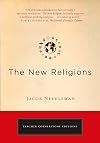
Eastern religions exploded into the US in the freedom of the 1960s. This book explores a number of those religions and their teachings, some of which are very familiar, such as Buddhism, others that are much less well known. The religions and their proponents make for interesting reading, and this book is not burdened with the esoterica that so often accompanies similar books by philosophers, so it's fun reading. It does suffer from a way too credulous manner, with the author buying into the show more idea that there is something terribly wrong with a scientific materialistic worldview, and that there is something wrong with the West in general, and also the idea that there is something incredibly right and wonderful about these religions. He does not present any of the downside, but some of the things he does say (as positives) leave one scratching their head wondering how anyone could see that as good, for instance the command for total surrender to nothingness and the isolation from the outside world. The book also demonstrates, though not noticed by the author, that these religions share the same failing of western religions - a total lack of humility in the assumption that they are superior in mind and form to those of us who have not embraced the "way". A great look at these religions, if you can keep from getting diabetes from all the syrup. show less
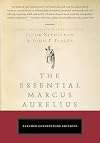
This edition seems well executed in translation, readability, and introductory context. As for the meditations themselves, I remembered them being more thought provoking. There were several ideas that made me stop and think, or that I made note of as worth coming back to. There were a lot of others that weren't so inspiring. Aurelius certainly was an interesting character: truly a philosopher king. His closing thought in book one is both interesting and humorous. "I am also thankful that, show more once I had an appetite for philosophy, I did not fall into the hands of some so-called wise man, and that I did not waste my time publishing or attempting to solve logic puzzles, or busy myself with observing the sky." Perhaps the central message from Aurelius is that we are all part of the human experience and for such a short time. We need to interact with others and better ourselves, yet the converse is more common. show less
Lists
Awards

You May Also Like


Associated Authors
Statistics
- Works
- 38
- Also by
- 12
- Members
- 2,393
- Popularity
- #10,724
- Rating
- 4.1
- Reviews
- 20
- ISBNs
- 123
- Languages
- 7
- Favorited
- 3
