

Lee Eisenberg (1) (1946–)
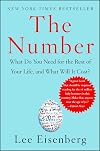
Author of The Number: What Do You Need for the Rest of Your Life and What Will It Cost?
For other authors named Lee Eisenberg, see the disambiguation page.
Works by Lee Eisenberg
The Number: What Do You Need for the Rest of Your Life and What Will It Cost? (2006) 428 copies, 12 reviews
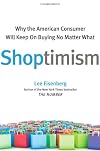
Shoptimism: Why the American Consumer Will Keep on Buying No Matter What (2009) 86 copies, 4 reviews
Tagged
Common Knowledge
- Birthdate
- 1946
- Gender
- male
- Places of residence
- Chicago, Illinois, USA
New York, New York, USA - Associated Place (for map)
- USA
Members
Reviews
I have abandoned this book. The author is well intentioned, but he is also disconnected from the reality of day-to-day life for the majority of Americans. One of the foundations of writing is to ask the question "Who is my audience?" This was not a question that the author asked himself in any way at all. He essentially decided to write a book about retirement saving and investing based purely on his own experience and his friendships with people in the minority of earnings and positions. show more Nowhere is this more obvious than when he must resort to making up "regular people" as examples to use for illustrative purposes. His friendships which he discusses are all with people in very high corporate positions with concerns such as how they will maintain their "lifestyle" as opposed to concerns about how they will pay for their small 2BR ranch house before they die and also be able to eat healthy and no go broke from America's failing health care system. Yes, wealthy people have these concerns as well, but when someone's "number" is $15 million to live a life that they feel isn't horrible, well, it's difficult to believe that the author knowns a single real person in the country that has lost their job and sold their house and moved into an apartment with a family of four just to survive.
In addition to his bizarre disconnect from normal people, he also is unable to stick to a metaphor or any other writing convention for more than half a page. The metaphors are mixed throughout. These mixed metaphors lead to enormous confusion throughout the book. A particular topic may be started with one metaphor and then mid chapter the metaphor is switched but the topic is still the same, then the point he is trying to make is severely weakened by his lack of follow through from where he started. Every chapter in the book could have been cut 3/4 in length and stated in a short, simple paragraph with clarity and succinct precision. Instead, he picks a topic and rehashes it repeatedly using metaphor after metaphor. Real-world examples are few and far between (see my mention of his need to make up example cases), and when they do show up, again, they are so far out of line with real world struggling Americans that they seem outlandish and essentially themselves like fantasy cases.
That is only the FIRST half of the book, sadly. I had to abandon it half way through. Good intentions alone do not lead to a clear picture of what he is attempting to address and help people resolve. Good writing is essential in keeping the reader's interest. In the case of making suggestions for how regular people should plan and save for their upcoming retirements, a book should engender confidence that that the writer knows what he is talking about. This book fails to do that because of its inability to state its message in a coherent, meaningful way.
My wife suggested reading A Random Walk Down Wall Street instead as a well written, educational statement about investing serving the average person in a reasonable way, and she was absolutely correct. A Random Walk Down Wall Street is practically the polar opposite of The Number. Well written and thoughtfully constructed, it educates and entertains all at once. Reading it is a joy because the author sticks on topic and rarely uses metaphors, instead opting for clear explanations in the most simple language he can and defining his terms along the way and building on them. show less
In addition to his bizarre disconnect from normal people, he also is unable to stick to a metaphor or any other writing convention for more than half a page. The metaphors are mixed throughout. These mixed metaphors lead to enormous confusion throughout the book. A particular topic may be started with one metaphor and then mid chapter the metaphor is switched but the topic is still the same, then the point he is trying to make is severely weakened by his lack of follow through from where he started. Every chapter in the book could have been cut 3/4 in length and stated in a short, simple paragraph with clarity and succinct precision. Instead, he picks a topic and rehashes it repeatedly using metaphor after metaphor. Real-world examples are few and far between (see my mention of his need to make up example cases), and when they do show up, again, they are so far out of line with real world struggling Americans that they seem outlandish and essentially themselves like fantasy cases.
That is only the FIRST half of the book, sadly. I had to abandon it half way through. Good intentions alone do not lead to a clear picture of what he is attempting to address and help people resolve. Good writing is essential in keeping the reader's interest. In the case of making suggestions for how regular people should plan and save for their upcoming retirements, a book should engender confidence that that the writer knows what he is talking about. This book fails to do that because of its inability to state its message in a coherent, meaningful way.
My wife suggested reading A Random Walk Down Wall Street instead as a well written, educational statement about investing serving the average person in a reasonable way, and she was absolutely correct. A Random Walk Down Wall Street is practically the polar opposite of The Number. Well written and thoughtfully constructed, it educates and entertains all at once. Reading it is a joy because the author sticks on topic and rarely uses metaphors, instead opting for clear explanations in the most simple language he can and defining his terms along the way and building on them. show less
There is no doubt about it: America is a nation of shoppers and ours is an economy driven more by consumption than by production. For some of us, the craziness of Black Friday is to be avoided at all cost; for others it is a contact sport they look forward to all year long. Lee Eisenberg's "Shoptimism: Why the American Consumer Will Keep on buying No Matter What," attempts to explain why that is.
Eisenberg divides "Shoptimism" into two parts, one from "The Sell Side" (Them Versus You) and show more one from "The Buy Side" (You Versus You). The first part focuses on the efforts retailers make to convince unwary buyers they cannot live without what the seller has to offer. It includes a history of retailing, advertising, marketing research and what, at times, seems like psychological warfare being waged upon the buyer by the seller. Eisenberg, in a past life, was executive vice president of Land's End and he knows exactly how "They" play the game of getting cash from your pocket into theirs.
The book's second part focuses on the "Why" and the "Who" of shopping. Why do we shop the way we do? Why do brands mean everything to some shoppers while others see avoiding popular brands as a badge of honor? How do male and female shoppers differ? Can shopping truly be an addiction or is that just an excuse some shoppers use to rationalize their spending habits? This section of the book includes chapters on "The Classic Buyer," one that tries to get the most for his dollar and is willing to do the research needed to increase his odds of succeeding, and "The Romantic Buyer" that shops more with an impulsive heart than with a fact-filled head.
Although he uses graphs, tables, lists and illustrations for summary and clarification purposes, Eisenberg builds his case largely through the anecdotal style he uses to recount his own shopping experiences and observations. Thankfully, he also puts today's shopping habits into historical context, explaining how we arrived at the point that President Bush would dare suggest shortly after 9-11 that the best things Americans could do for their country was to return to its shopping malls. According to Eisenberg, it was during the 1950s that America "underwent a bloodless coup that transformed us from engaged citizens into self-indulgent consumers." In postwar America, Americans found that buying things made them happy - and American consumption has only gotten more frantic with each succeeding generation.
Some might find it easy to ridicule the shopping habits of their fellow citizens but before getting too carried away they should consider some of the things that now eat up such a large chunk of their own disposable income, expenses our grandparents never dreamed of: mobile phones, cable television, internet bills, hugely expensive printer ink, and the like. As one consultant tells Eisenberg, "The average American household spends more a year on technology-related products and services than it does on clothes, health insurance, prescription drugs or entertainment." Consumerism has a way, in other words, of sneaking up on the best of us.
Rated at: 4.0 show less
Eisenberg divides "Shoptimism" into two parts, one from "The Sell Side" (Them Versus You) and show more one from "The Buy Side" (You Versus You). The first part focuses on the efforts retailers make to convince unwary buyers they cannot live without what the seller has to offer. It includes a history of retailing, advertising, marketing research and what, at times, seems like psychological warfare being waged upon the buyer by the seller. Eisenberg, in a past life, was executive vice president of Land's End and he knows exactly how "They" play the game of getting cash from your pocket into theirs.
The book's second part focuses on the "Why" and the "Who" of shopping. Why do we shop the way we do? Why do brands mean everything to some shoppers while others see avoiding popular brands as a badge of honor? How do male and female shoppers differ? Can shopping truly be an addiction or is that just an excuse some shoppers use to rationalize their spending habits? This section of the book includes chapters on "The Classic Buyer," one that tries to get the most for his dollar and is willing to do the research needed to increase his odds of succeeding, and "The Romantic Buyer" that shops more with an impulsive heart than with a fact-filled head.
Although he uses graphs, tables, lists and illustrations for summary and clarification purposes, Eisenberg builds his case largely through the anecdotal style he uses to recount his own shopping experiences and observations. Thankfully, he also puts today's shopping habits into historical context, explaining how we arrived at the point that President Bush would dare suggest shortly after 9-11 that the best things Americans could do for their country was to return to its shopping malls. According to Eisenberg, it was during the 1950s that America "underwent a bloodless coup that transformed us from engaged citizens into self-indulgent consumers." In postwar America, Americans found that buying things made them happy - and American consumption has only gotten more frantic with each succeeding generation.
Some might find it easy to ridicule the shopping habits of their fellow citizens but before getting too carried away they should consider some of the things that now eat up such a large chunk of their own disposable income, expenses our grandparents never dreamed of: mobile phones, cable television, internet bills, hugely expensive printer ink, and the like. As one consultant tells Eisenberg, "The average American household spends more a year on technology-related products and services than it does on clothes, health insurance, prescription drugs or entertainment." Consumerism has a way, in other words, of sneaking up on the best of us.
Rated at: 4.0 show less

Good current overview of consumerism, covering the behavior of both buyers and sellers. Eisenberg's journalism background means snappier writing than the more academic books, with references to 'soothingly pretentious' ad campaigns and stores entombed in marble-tiled malls. A discussion of Victorian Era marketing invokes 'the man in the grey flannel waistcoat.'
No one is villain or victim here, although the 'Buy Scolds' receive regular chiding for overdoing it. The author and his family are show more unrepentant consumers, which is an unusual position to take in this genre. Eisenberg's basic stance is that as long as nothing is going on the credit cards and you're leaving enough to live on, knock yourself out with the self-actualization. (Within reason. Rolex owners still receive no mercy.) Advertisers are not brainwashers and consumers are neither sheep nor shallow. It's certainly easy -- and unwise -- to spend too much on things that bring no meaning to your life, but there are plenty of ways to do it properly as well. Humans have social needs as well as biological ones.
The inevitable discussions of gender differences in shopping stay refreshingly non-sexist. One reason is provided -- he speaks respectfully and often of both his wife and college-age daughter.
He references many authors I've already read -- always fun; hi again! -- and passes along time-saving criticism of a book about which I was on the fence. I've also added to my to-read list, of course.
This book almost works well for a reading club. There are plenty of discussion provoking tidbits -- Who buys black market baby food? What's the ethical cut-off for counterfeit luxury goods and (much trickier) their knock-offs? Does the Mall of American really only have two Starbucks? How could anyone think a separate plus-size Lands End catalog was a good idea? Why does the % of money spent on clothing not change as income rises? Am I the only one who initially thought a reference to "dual carbs" was related to national eating habits? But it does run long. Even though I enjoyed every chapter, I started to feel like I'd been reading the thing for weeks.
I'd still like to know whether the art at the beginning of each chapter was Charles Burns or a look-alike and why his research-gathering job at Target ended so quickly. show less
No one is villain or victim here, although the 'Buy Scolds' receive regular chiding for overdoing it. The author and his family are show more unrepentant consumers, which is an unusual position to take in this genre. Eisenberg's basic stance is that as long as nothing is going on the credit cards and you're leaving enough to live on, knock yourself out with the self-actualization. (Within reason. Rolex owners still receive no mercy.) Advertisers are not brainwashers and consumers are neither sheep nor shallow. It's certainly easy -- and unwise -- to spend too much on things that bring no meaning to your life, but there are plenty of ways to do it properly as well. Humans have social needs as well as biological ones.
The inevitable discussions of gender differences in shopping stay refreshingly non-sexist. One reason is provided -- he speaks respectfully and often of both his wife and college-age daughter.
He references many authors I've already read -- always fun; hi again! -- and passes along time-saving criticism of a book about which I was on the fence. I've also added to my to-read list, of course.
This book almost works well for a reading club. There are plenty of discussion provoking tidbits -- Who buys black market baby food? What's the ethical cut-off for counterfeit luxury goods and (much trickier) their knock-offs? Does the Mall of American really only have two Starbucks? How could anyone think a separate plus-size Lands End catalog was a good idea? Why does the % of money spent on clothing not change as income rises? Am I the only one who initially thought a reference to "dual carbs" was related to national eating habits? But it does run long. Even though I enjoyed every chapter, I started to feel like I'd been reading the thing for weeks.
I'd still like to know whether the art at the beginning of each chapter was Charles Burns or a look-alike and why his research-gathering job at Target ended so quickly. show less
This is a book that most should read because it will force you to think about your looming future. The Number refers to the number each of us believes we'll need to have upon the day of our retirement. It differs completely for each of us. Have modest needs? it could be small. Lead a great, costly life now and wish to maintain it? It could be much, much higher. The book address how the number changes with life events like more toys, the arrival of children, the return of college children, show more etc. it will also point out items most do not really dwell on. We're living much longer, which means we'll need more money, health care is much better and much more costly. So, be prepared, if you hate thinking of your financial future, to be very uncomfortable, but don't say you weren't warned. show less
Lists
You May Also Like


Associated Authors
Statistics
- Works
- 5
- Members
- 591
- Popularity
- #42,465
- Rating
- 2.9
- Reviews
- 16
- ISBNs
- 39