
Kenneth Roman
Author of Writing That Works, 3rd Edition: How to Communicate Effectively in Business
About the Author
Kenneth Roman worked directly with David Ogilvy at Ogilvy Mather for 26 years, rising from account executive to chairman and CEO. He is the coauthor of two business classics, How to Advertise and Writing That Works, both in third editions. He lives in New York City.
Works by Kenneth Roman
Writing That Works, 3rd Edition: How to Communicate Effectively in Business (2000) 290 copies, 1 review
The King of Madison Avenue: David Ogilvy and the Making of Modern Advertising (2009) 64 copies, 3 reviews
Tagged
Common Knowledge
- Gender
- male
Members
Reviews
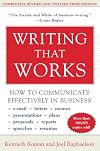
Great start. Weak ending. Okay book.
What? You want more? But the big lesson that was constantly hammered in this book was that conciseness is better? What's that? You say it also emphasized giving people enough information to make a decision? Okay, here's more.
There is some good stuff in this book. The first couple of chapters in particular do an effective job explaining how to write more clearly and succinctly. This is a litany that is chanted in many other books, but this book reinforces show more it and drives it home with good insights and examples.
And then the importance of what is being shared begins to decline. Sections on presentations, memos, and letters have some value. However, they point out one of the major problems with this edition – the inability to properly address technological trends.
This third edition makes a valiant effort to include approaches to email and other changes that have come to pass with greater computerization of communications. But the approaches are still embedded in the past and you can see a certain reluctance by the authors to accept that a change has really come. This is not to say that the advice related to electronic and social media is wrong. Rather, it just feels like your uncle agreeing that the new electric cars are great but constantly drawing analogies to his old Desoto.
As the authors dig deeper into various business communications, the insights seem more rudimentary. The advice about proposals, resumes, sales, and fund-raising (to name a few) are fine, but far too specific. On the other hand, some topics need more information than can be handled in this small edition. As an example, the section on reports cannot speak to the broad scope of the various types of reports extant. Therefore, it paints with a broad brush and doesn't give the particulars most people need.
One of the true tests for me related to this type of book is how dog-eared the book is after I am done. After reading this book, there are a number of dog-ears at the beginning. The number then swiftly declines and, less than half-way through the book, there are none.
This is a decent reference and reminder, and it will be in the part of the grammar/writing library which I keep close to my desk. However, if I were to misplace it, I wouldn't rush out to find a replacement. show less
What? You want more? But the big lesson that was constantly hammered in this book was that conciseness is better? What's that? You say it also emphasized giving people enough information to make a decision? Okay, here's more.
There is some good stuff in this book. The first couple of chapters in particular do an effective job explaining how to write more clearly and succinctly. This is a litany that is chanted in many other books, but this book reinforces show more it and drives it home with good insights and examples.
And then the importance of what is being shared begins to decline. Sections on presentations, memos, and letters have some value. However, they point out one of the major problems with this edition – the inability to properly address technological trends.
This third edition makes a valiant effort to include approaches to email and other changes that have come to pass with greater computerization of communications. But the approaches are still embedded in the past and you can see a certain reluctance by the authors to accept that a change has really come. This is not to say that the advice related to electronic and social media is wrong. Rather, it just feels like your uncle agreeing that the new electric cars are great but constantly drawing analogies to his old Desoto.
As the authors dig deeper into various business communications, the insights seem more rudimentary. The advice about proposals, resumes, sales, and fund-raising (to name a few) are fine, but far too specific. On the other hand, some topics need more information than can be handled in this small edition. As an example, the section on reports cannot speak to the broad scope of the various types of reports extant. Therefore, it paints with a broad brush and doesn't give the particulars most people need.
One of the true tests for me related to this type of book is how dog-eared the book is after I am done. After reading this book, there are a number of dog-ears at the beginning. The number then swiftly declines and, less than half-way through the book, there are none.
This is a decent reference and reminder, and it will be in the part of the grammar/writing library which I keep close to my desk. However, if I were to misplace it, I wouldn't rush out to find a replacement. show less
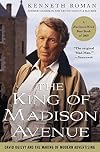
I read David Ogilvy's "Confessions of an Advertising Man" as an undergrad in the 70's, and he has been a larger than life role model ever since. He was a gifted copywriter in a era when copy was king. He was also an insightful manager who built one of the world's most admired ad agencies. But must of all, he was a witty smart ass who charmed everyone in his path. If you like this, try to find a now out-of-print collection of his personal and professional correspondence, "The Unpublished show more David Ogilvy". show less
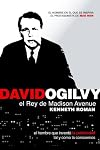
Desde Leader Summaries recomendamos la lectura del libro David Ogilvy, de Kenneth Roman.
Las personas interesadas en las siguientes temáticas lo encontrarán práctico y útil: marketing y ventas, publicidad y relaciones públicas, análisis de empresas y líderes de éxito.
En el siguiente enlace tienes el resumen del libro David Ogilvy, La biografía del inventor de la publicidad tal y como hoy la conocemos: David Ogilvy
Las personas interesadas en las siguientes temáticas lo encontrarán práctico y útil: marketing y ventas, publicidad y relaciones públicas, análisis de empresas y líderes de éxito.
En el siguiente enlace tienes el resumen del libro David Ogilvy, La biografía del inventor de la publicidad tal y como hoy la conocemos: David Ogilvy
Desde Leader Summaries recomendamos la lectura del libro David Ogilvy, de Kenneth Roman.
Las personas interesadas en las siguientes temáticas lo encontrarán práctico y útil: marketing y ventas, publicidad y relaciones públicas, análisis de empresas y líderes de éxito.
En el siguiente enlace tienes el resumen del libro David Ogilvy, La biografía del inventor de la publicidad tal y como hoy la conocemos: David Ogilvy
Las personas interesadas en las siguientes temáticas lo encontrarán práctico y útil: marketing y ventas, publicidad y relaciones públicas, análisis de empresas y líderes de éxito.
En el siguiente enlace tienes el resumen del libro David Ogilvy, La biografía del inventor de la publicidad tal y como hoy la conocemos: David Ogilvy
Awards

You May Also Like


Associated Authors
Statistics
- Works
- 8
- Members
- 434
- Popularity
- #56,343
- Rating
- 3.5
- Reviews
- 4
- ISBNs
- 29
- Languages
- 5