
Phyllis T. Smith
Author of I Am Livia
About the Author
Image credit: TLC Book Tours
Works by Phyllis T. Smith
Tagged
Common Knowledge
- Gender
- female
- Birthplace
- Brooklyn, New York, USA
- Associated Place (for map)
- New York, USA
Members
Reviews

I've never considered Livia, wife of Emperor Augustus, to be a very sympathetic figure. Popular culture tends to paint her as a cold, scheming woman but in Smith's hands, Livia is far more sympathetic, likable, and warm. As an enormous fan of Stephanie Dray's trilogy about Cleopatra's daughter, I pretty much thought I'd never like Livia. This book proves the power of a well-written novel: a reader, despite herself, can't resist a convincing main character and realistically articulated show more emotions and drama.
Opening in the 20s BC, I think, the novel is told by Livia at the end of her life. She begins with the event that shaped her life in many ways: the assassination of Julius Caesar. Her father marries her at 14 to a cousin to ensure his loyalty. And while Livia manages to make her marriage work, she is shocked by the attraction she feels for her family's enemy, Octavius -- Caesar's heir.
As Octavius wages a war of vengeance on those who betrayed his adoptive father, Livia struggles to hide her feelings for him. Still, they marry, under shocking circumstances, and Livia casts her lot with Octavius. As politically minded as he is, they make a powerful couple, and with her increased influence comes, unsurprisingly, controversy!
In Smith's hands, the complicated (and for me, unfamiliar) world of Roman politics and Octavius' reign becomes intimate, easy to understand, and deeply compelling. The Livia of cruel depravity and malicious machinations isn't seen here; instead, we have a young woman, deeply loyal to Rome and its citizens, passionate about improvement and urging her husband to be his best self.
This novel raced; Livia is a survivor, eyewitness to a tumultuous and violent time in Roman history. While the story isn't heavy with historical detail, there is a sense of place and era there, and Livia is an appealing heroine.
A great read; fans of ancient Rome will want this one, as well as those who are curious about Livia. This has some shocking drama and the promise of romance (without being an out-and-out romance), making it a lovely summer read -- deliciously escapist! show less
Opening in the 20s BC, I think, the novel is told by Livia at the end of her life. She begins with the event that shaped her life in many ways: the assassination of Julius Caesar. Her father marries her at 14 to a cousin to ensure his loyalty. And while Livia manages to make her marriage work, she is shocked by the attraction she feels for her family's enemy, Octavius -- Caesar's heir.
As Octavius wages a war of vengeance on those who betrayed his adoptive father, Livia struggles to hide her feelings for him. Still, they marry, under shocking circumstances, and Livia casts her lot with Octavius. As politically minded as he is, they make a powerful couple, and with her increased influence comes, unsurprisingly, controversy!
In Smith's hands, the complicated (and for me, unfamiliar) world of Roman politics and Octavius' reign becomes intimate, easy to understand, and deeply compelling. The Livia of cruel depravity and malicious machinations isn't seen here; instead, we have a young woman, deeply loyal to Rome and its citizens, passionate about improvement and urging her husband to be his best self.
This novel raced; Livia is a survivor, eyewitness to a tumultuous and violent time in Roman history. While the story isn't heavy with historical detail, there is a sense of place and era there, and Livia is an appealing heroine.
A great read; fans of ancient Rome will want this one, as well as those who are curious about Livia. This has some shocking drama and the promise of romance (without being an out-and-out romance), making it a lovely summer read -- deliciously escapist! show less
I began this fictional biography of Livia Drusilla with no background knowledge of the real woman. Therefore I knew nothing of her negative reputation and my understanding of the events surrounding the ascent and reign of Octavius were confined to the broad overview without personal details. Phyllis Smith makes a compelling case for the talents and decency of Livia while de-romanticizing the hi-jinks of Marc Antony and Cleopatra. The novel concentrates on the years between the assassination show more of Julius Caesar and Octavius' consolidation of power following the Battle of Actium. I learned a great deal more about Roman history and enjoyed the process. show less
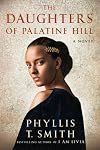
Ancient Rome is one of my favorite historical eras so I was pretty excited to see THE DAUGHTERS OF PALATINE HILL. This is how I prefer my historical fiction when it involves actual historical figures. These are the qualities I look for:
-It should transport me to another time and place. The story should have an excellent grasp of the period and culture. I neither expect, nor want, characters from ancient Rome to have the same mores or feelings about issues, social or otherwise. I want them show more to be an honest reflection of their times. This is especially true when it involves actual historical figures.
-My preference is to become intimately involved with at least one of the characters. To be able to put myself in their shoes, see things from their perspective.
-Make me think, rethink, wonder, speculate…..
THE DAUGHTERS OF PALATINE HILL did all these things. Ms. Smith brought Livia, Julia, and Selene to life. Focus is on the characters and their motivations. Emphasis is placed on the political intricacies and aspects of their situations, rather than the decadence and lewdness that many stories highlight.
Livia was a far cry from the cruel, manipulative woman driven by greed and ambition for her son that I’d met before.
Julia was more than the selfish, spoiled, petulant woman who had everything, without it ever being enough, that I thought I knew. Though she certainly displayed those traits; she was rather sad, looking for love, recognition, and validation in all the wrong ways and places.
Selene, I confess to knowing almost nothing about her. However, the portrayal of the tightrope she navigated so brilliantly was fascinating. She’s definitely snagged my interest and I’ll be looking for more information about her.
If you’re looking for historical fiction that not only takes you “there”, but into the hearts, minds, and lives of the characters, your search is over. THE DAUGHTERS OF PALATINE HILL does all that and more.
Reviewed for Novels Alive TV show less
-It should transport me to another time and place. The story should have an excellent grasp of the period and culture. I neither expect, nor want, characters from ancient Rome to have the same mores or feelings about issues, social or otherwise. I want them show more to be an honest reflection of their times. This is especially true when it involves actual historical figures.
-My preference is to become intimately involved with at least one of the characters. To be able to put myself in their shoes, see things from their perspective.
-Make me think, rethink, wonder, speculate…..
THE DAUGHTERS OF PALATINE HILL did all these things. Ms. Smith brought Livia, Julia, and Selene to life. Focus is on the characters and their motivations. Emphasis is placed on the political intricacies and aspects of their situations, rather than the decadence and lewdness that many stories highlight.
Livia was a far cry from the cruel, manipulative woman driven by greed and ambition for her son that I’d met before.
Julia was more than the selfish, spoiled, petulant woman who had everything, without it ever being enough, that I thought I knew. Though she certainly displayed those traits; she was rather sad, looking for love, recognition, and validation in all the wrong ways and places.
Selene, I confess to knowing almost nothing about her. However, the portrayal of the tightrope she navigated so brilliantly was fascinating. She’s definitely snagged my interest and I’ll be looking for more information about her.
If you’re looking for historical fiction that not only takes you “there”, but into the hearts, minds, and lives of the characters, your search is over. THE DAUGHTERS OF PALATINE HILL does all that and more.
Reviewed for Novels Alive TV show less

This novel is a fictional autobiography of Livia, the wife of Augustus Caesar. She looks back on her youth and her life as a young woman until the time when Augustus defeats Mark Antony and rules all of the Roman Empire. I don't know much about Roman history and this is the first novel of this kind that I have read, but I enjoyed it very much. I was never confused about it because although there is a lot of politics, the narration makes it easy to understand and there is a good flow.
I gather show more that many other books and the general reception make Livia into kind of a villain, but in this novel she is a sympathetic character most of the time. Although I did not agree with all of her actions, I understood her. Her relationships to the men in her life are important in this story, and I must say that I rooted for her and Augustus because their love was painted in a special, yet credible light. I wished the dialogue to be a bit more elaborate from time to time, and the middle part felt a bit lengthy to me, but I still loved this novel. show less
I gather show more that many other books and the general reception make Livia into kind of a villain, but in this novel she is a sympathetic character most of the time. Although I did not agree with all of her actions, I understood her. Her relationships to the men in her life are important in this story, and I must say that I rooted for her and Augustus because their love was painted in a special, yet credible light. I wished the dialogue to be a bit more elaborate from time to time, and the middle part felt a bit lengthy to me, but I still loved this novel. show less
Lists
You May Also Like


Statistics
- Works
- 2
- Members
- 416
- Popularity
- #58,579
- Rating
- 3.8
- Reviews
- 34
- ISBNs
- 14
- Languages
- 1