
Joan Samson (1937–1976)
Author of The Auctioneer
About the Author
Works by Joan Samson
Tagged
Common Knowledge
- Birthdate
- 1937
- Date of death
- 1976
- Gender
- female
- Relationships
- Carberg, Warren (husband)
- Nationality
- USA
- Places of residence
- Maine, Massachsetts
- Associated Place (for map)
- Maine, Massachsetts
Members
Reviews
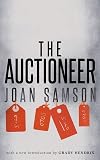
The writing is as austere as the setting, which fits. This is a stark horror and it builds slowly. There is no monster here (except for the greatest monster of all–man).
Yes, this is one of those psychologically scary horrors like Oldboy or Se7en. Fear is created through a slow burn as the person terrorizing others is just a guy like you or me. And he does it by degrees, not in a single brutal slash. And you are left to wonder what you would do in this situation and finding yourself not show more liking the answer.
The novel, as written, was more an allegory of city people fleeing into the rural areas, gentrifying them, farmers getting shouldered off their land by weekend warriors and the invasion of suburbia. But you know how I interpreted it? I saw an allegory for how Native Americans were driven off their land. Getting increasingly worse deals for their property, always the threat of violence implied if they didn’t surrender.
The problem is that, like other horror novels I’ve seen, like in The Deep and Touch the Night, they get into a “horror loop”. They remember to include the scares but forget to move the plot along. The scary thing repeats and no one does anything about it. It’s like building a stack of papers one sheet at a time. Which, I guess, is what a book is. But for me, I need more development than that, not just scrapings. show less
Yes, this is one of those psychologically scary horrors like Oldboy or Se7en. Fear is created through a slow burn as the person terrorizing others is just a guy like you or me. And he does it by degrees, not in a single brutal slash. And you are left to wonder what you would do in this situation and finding yourself not show more liking the answer.
The novel, as written, was more an allegory of city people fleeing into the rural areas, gentrifying them, farmers getting shouldered off their land by weekend warriors and the invasion of suburbia. But you know how I interpreted it? I saw an allegory for how Native Americans were driven off their land. Getting increasingly worse deals for their property, always the threat of violence implied if they didn’t surrender.
The problem is that, like other horror novels I’ve seen, like in The Deep and Touch the Night, they get into a “horror loop”. They remember to include the scares but forget to move the plot along. The scary thing repeats and no one does anything about it. It’s like building a stack of papers one sheet at a time. Which, I guess, is what a book is. But for me, I need more development than that, not just scrapings. show less

4.5/5 stars!
Evil in a small town is one of my favorite horror tropes and books like this are the reason why!
Harlowe, New Hampshire is a small town surrounded by small farms. It's a tightly knit community, or at least the townsfolk believe it is, until an outsider comes to town and slowly things begin to unravel.
Perly Dunsmore is an auctioneer. Taking over a recently available old mansion in town, (due to the death of the previous owner), Perly sets about "improving" Harlowe by holding show more auctions to benefit the police department. These auctions are funded by the generous donations of the townspeople. Until they're no longer able to do so, (eventually there's nothing left), in which case they are gently and quietly threatened to come up with more donations, or ELSE. Will Harlowe survive these auctions or will it rise up against Perly in protest? You'll have to read this to find out!
I've been thinking about what this novel was really about and I'm still not quite sure. The strongest feeling I have about it relates to that old poem: "First they came for the Socialists...", but that's not quite right. Then I was wondering if it was really about fascism-the auctions after all first funded a police department, to the point of having almost as many officers and deputies as there were citizens in the entire town. But that doesn't quite fit the bill either, especially in light of the finale. Then I finally gave up the analyzing and endeavored to enjoy this novel for the yummy, atmospheric piece of horror fiction that it was.
If this is the type of story that usually works for you, (quiet, small town horror a la Tryon's HARVEST HOME, or maybe Michael Rowe's ENTER, NIGHT), I highly recommend you give this book a shot! I listened to it on audio, narrated by Matt Godfrey, whose voicing of Ma Moore I will never forget.
Atmospheric, full of tension and fear, THE AUCTIONEER still holds up as an excellent tale, even now, 40 years later. I give it my highest recommendation!
*I received this audiobook from the narrator in exchange for my honest feedback. This is it! Further, I consider Matt Godfrey to be a friend, although we've never met in person. This has not affected the content of this review.* show less
Evil in a small town is one of my favorite horror tropes and books like this are the reason why!
Harlowe, New Hampshire is a small town surrounded by small farms. It's a tightly knit community, or at least the townsfolk believe it is, until an outsider comes to town and slowly things begin to unravel.
Perly Dunsmore is an auctioneer. Taking over a recently available old mansion in town, (due to the death of the previous owner), Perly sets about "improving" Harlowe by holding show more auctions to benefit the police department. These auctions are funded by the generous donations of the townspeople. Until they're no longer able to do so, (eventually there's nothing left), in which case they are gently and quietly threatened to come up with more donations, or ELSE. Will Harlowe survive these auctions or will it rise up against Perly in protest? You'll have to read this to find out!
I've been thinking about what this novel was really about and I'm still not quite sure. The strongest feeling I have about it relates to that old poem: "First they came for the Socialists...", but that's not quite right. Then I was wondering if it was really about fascism-the auctions after all first funded a police department, to the point of having almost as many officers and deputies as there were citizens in the entire town. But that doesn't quite fit the bill either, especially in light of the finale. Then I finally gave up the analyzing and endeavored to enjoy this novel for the yummy, atmospheric piece of horror fiction that it was.
If this is the type of story that usually works for you, (quiet, small town horror a la Tryon's HARVEST HOME, or maybe Michael Rowe's ENTER, NIGHT), I highly recommend you give this book a shot! I listened to it on audio, narrated by Matt Godfrey, whose voicing of Ma Moore I will never forget.
Atmospheric, full of tension and fear, THE AUCTIONEER still holds up as an excellent tale, even now, 40 years later. I give it my highest recommendation!
*I received this audiobook from the narrator in exchange for my honest feedback. This is it! Further, I consider Matt Godfrey to be a friend, although we've never met in person. This has not affected the content of this review.* show less
I can't remember how this book made it onto my radar. Maybe some sort of "small-town horror" list? Anyway, this is focused on the Moore family, made up of John, his wife Mim, their four-year-old daughter Hildie, and John's elderly mother. The Moores get by okay, doing work for others in the town of Harlowe and occasionally selling some butter and crops, but they're not wealthy by any means. Even so, when the police chief stops by to tell them that an auctioneer has moved into town, and would show more they like to donate something to an auction he's planning in order to pay for more deputies for Harlowe, they find a few things to donate.
The problem is that it doesn't just stop with that one request, and as Harlowe gets more deputies, the requests feel more and more like demands. Perly, the auctioneer, is all smiles and charm, but it seems like an awful lot of "accidents" have been happening to those who don't donate.
A large chunk of this book is John and Mim worrying about the next week's request to donate and fighting about how far they're willing and able to let this go. Initially, they have enough junk that's broken or that they don't regularly use that it's easy for them to find stuff to give. And there's an element of peer pressure in it as well - it's to help Harlowe, so sure, why not donate a few old wheels or whatever?
As things progress, however, the Moores are faced with donating things they actually still treasure, and then things they still use. Peer pressure was part of the issue, but I got the impression that Mim was also kind of dazzled and flattered by Perly's attention, at the start. (Unless I misinterpreted things, it sure seemed like John was ragingly jealous.) When the flattery stopped working, word about the "accidents" started getting around.
I could sort of see why people kept caving to the requests, especially since Perly, through the deputies, was careful to target Harlowe's less wealthy and powerful residents and to ensure that the more powerful residents benefited enough from the auctions to be willing to look the other way when things began to get more tense. A few people ended up leaving Harlowe, but that required them to have enough money to go somewhere else, and people like Moore saw their primary wealth as being the land they lived on.
Still, this ended up going much further than I could accept. I think the first "donation" that broke my sense of disbelief was when John was asked to put his gun up for auction. He was angry about it, but he did end up caving...and then grumbled about it later because he no longer had a way to protect his land, family, and stuff.
I don't know where Samson stood politically, but the way things worked out in this book reminded me an awful lot of the people who cry about "liberals/government/whatever coming to take their guns," with Perly swooping in and literally taking guns, promising that good things would come from the auction money (greater safety with more deputies! an ambulance!) when the opposite was actually the case. It just didn't play out in a way that was at all believable, especially considering how far Samson took it.
My other issue with this book is that I approached it as horror because I'd heard that it was horror, but it didn't read as creepy or scary at all.
(Original review posted on A Library Girl's Familiar Diversions.) show less
The problem is that it doesn't just stop with that one request, and as Harlowe gets more deputies, the requests feel more and more like demands. Perly, the auctioneer, is all smiles and charm, but it seems like an awful lot of "accidents" have been happening to those who don't donate.
A large chunk of this book is John and Mim worrying about the next week's request to donate and fighting about how far they're willing and able to let this go. Initially, they have enough junk that's broken or that they don't regularly use that it's easy for them to find stuff to give. And there's an element of peer pressure in it as well - it's to help Harlowe, so sure, why not donate a few old wheels or whatever?
As things progress, however, the Moores are faced with donating things they actually still treasure, and then things they still use. Peer pressure was part of the issue, but I got the impression that Mim was also kind of dazzled and flattered by Perly's attention, at the start. (Unless I misinterpreted things, it sure seemed like John was ragingly jealous.) When the flattery stopped working, word about the "accidents" started getting around.
I could sort of see why people kept caving to the requests, especially since Perly, through the deputies, was careful to target Harlowe's less wealthy and powerful residents and to ensure that the more powerful residents benefited enough from the auctions to be willing to look the other way when things began to get more tense. A few people ended up leaving Harlowe, but that required them to have enough money to go somewhere else, and people like Moore saw their primary wealth as being the land they lived on.
Still, this ended up going much further than I could accept. I think the first "donation" that broke my sense of disbelief was when John was asked to put his gun up for auction. He was angry about it, but he did end up caving...and then grumbled about it later because he no longer had a way to protect his land, family, and stuff.
I don't know where Samson stood politically, but the way things worked out in this book reminded me an awful lot of the people who cry about "liberals/government/whatever coming to take their guns," with Perly swooping in and literally taking guns, promising that good things would come from the auction money (greater safety with more deputies! an ambulance!) when the opposite was actually the case. It just didn't play out in a way that was at all believable, especially considering how far Samson took it.
My other issue with this book is that I approached it as horror because I'd heard that it was horror, but it didn't read as creepy or scary at all.
(Original review posted on A Library Girl's Familiar Diversions.) show less
This is a story about an idyllic but poor small town that is invaded by a self-serving, demoniac auctioneer who starts taking everything from the townspeople. It starts slow but gradually builds in intensity as the family at the center of the story, the Moores, become more and more desperate. Really, this is about tensions between rural and urban America, between the old ways and the new ways, and the invasion of the countryside by entitled outsiders who only want to destroy what is idyllic show more about it. I think it reflects the fears of the time it was written, and in a different way, the fears of today as well. show less
Lists
Awards

You May Also Like


Associated Authors
Statistics
- Works
- 2
- Members
- 622
- Popularity
- #40,475
- Rating
- 3.7
- Reviews
- 15
- ISBNs
- 23
- Languages
- 5
- Favorited
- 1