
Miles Cameron (1) (1962–)
Author of The Red Knight
For other authors named Miles Cameron, see the disambiguation page.
Miles Cameron (1) has been aliased into Christian Cameron.
Series
Works by Miles Cameron
Works have been aliased into Christian Cameron.
Associated Works
Works have been aliased into Christian Cameron.
Tagged
Common Knowledge
- Legal name
- Cameron, Christian
- Other names
- Cameron, Miles (pseudonym for fantasy writing)
- Birthdate
- 1962-08-16
- Gender
- male
- Places of residence
- Canada
- Associated Place (for map)
- Canada
Members
Reviews
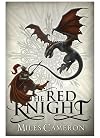
The Red Knight is an often brilliant, often frustrating fantasy debut. The titular character is leader of a mercenary band with a contract to protect an isolated fortress-nunnery. The Captain and his merry band of sell-swords find that they've bitten off more than they can chew when a tide of monsters from the Wild washes over their stronghold, leaving them to face a perilous siege.
So the brilliant part first. Cameron is a giant historical re-enactment nerd, and he's done everything in this show more novel short of killing a man with a sword. The personal knowledge of medieval clothing, arms, and sleeping rough shine through in the little details. Where other fantasy writers are working from the literature, he's working from the stuff, and this book has the bronze glow of authenticity about it. Getting the little details right mean that the big stuff, armored knights fighting monsters, absolutely works. You get how utterly dangerous a trained and armored man on a warhorse is.
But there's also a lot of aggravating stuff. The point of view jumps around between characters because that's what Epic Fantasy does, and like constant jump cuts in a movie, this interrupts the flow of the story. There's a lot of minor skirmishes and side stories that don't pay off nearly enough to justify the investment in pages or emotional energy. I kept thinking that Poul Anderson would have written an absolutely crackerjack version of the same basic story that came in at half the word count and hit all the themes better. And while it's a little unfair to compare a first novel to the skill of a master craftsman like Anderson, it's more a matter of the form, the idea that epic fantasy should be 600+ pages a book, rather than the proper length of enough story to cover everything that needs covering while being short enough to be interesting.
The setting and characterization is erratic. I enjoyed the Captain and his mercenaries, and the slave turned Wildling warrior Peter, but the voices of many of the other secondary characters were false or redundant or both. The story is set in an England-expy, with a France-expy and Holy Roman Empire-expy nearby, though the religion is literally Christianity and not Christianity-shaped polytheism. Part of this worked, because even if it's not my religion there's enough culture Christianity around that its notions of holiness had power, where invoking St. Cuthbert would be LARP nonsense, but the mix of real and fictional elements was a little jarring. But finally, if there is a real conflict in this book, it's between the works of Man and the Powers of the Wild, and neither side is drawn particularly clearly. The world of knights lacks the layers of personal relationships, histories, and betrayals that made say, A Song of Ice and Fire so good when it was good. The forces of the Wild are hostile and dangerous, but not as malevolent as a true Dark Lord would be.
I did enjoy this book, and anything to do with swordfights was amazing, but I'm looking at the next four with aprehnsion rather than joy, and that's not true of a five-star book. This review is more hostile than the book really deserves, but that's because this book is almost great, and that's more frustrating than just being mediocre. show less
So the brilliant part first. Cameron is a giant historical re-enactment nerd, and he's done everything in this show more novel short of killing a man with a sword. The personal knowledge of medieval clothing, arms, and sleeping rough shine through in the little details. Where other fantasy writers are working from the literature, he's working from the stuff, and this book has the bronze glow of authenticity about it. Getting the little details right mean that the big stuff, armored knights fighting monsters, absolutely works. You get how utterly dangerous a trained and armored man on a warhorse is.
But there's also a lot of aggravating stuff. The point of view jumps around between characters because that's what Epic Fantasy does, and like constant jump cuts in a movie, this interrupts the flow of the story. There's a lot of minor skirmishes and side stories that don't pay off nearly enough to justify the investment in pages or emotional energy. I kept thinking that Poul Anderson would have written an absolutely crackerjack version of the same basic story that came in at half the word count and hit all the themes better. And while it's a little unfair to compare a first novel to the skill of a master craftsman like Anderson, it's more a matter of the form, the idea that epic fantasy should be 600+ pages a book, rather than the proper length of enough story to cover everything that needs covering while being short enough to be interesting.
The setting and characterization is erratic. I enjoyed the Captain and his mercenaries, and the slave turned Wildling warrior Peter, but the voices of many of the other secondary characters were false or redundant or both. The story is set in an England-expy, with a France-expy and Holy Roman Empire-expy nearby, though the religion is literally Christianity and not Christianity-shaped polytheism. Part of this worked, because even if it's not my religion there's enough culture Christianity around that its notions of holiness had power, where invoking St. Cuthbert would be LARP nonsense, but the mix of real and fictional elements was a little jarring. But finally, if there is a real conflict in this book, it's between the works of Man and the Powers of the Wild, and neither side is drawn particularly clearly. The world of knights lacks the layers of personal relationships, histories, and betrayals that made say, A Song of Ice and Fire so good when it was good. The forces of the Wild are hostile and dangerous, but not as malevolent as a true Dark Lord would be.
I did enjoy this book, and anything to do with swordfights was amazing, but I'm looking at the next four with aprehnsion rather than joy, and that's not true of a five-star book. This review is more hostile than the book really deserves, but that's because this book is almost great, and that's more frustrating than just being mediocre. show less
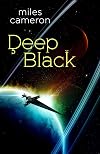
So this was fun. Just outright fun, except for the headache I was left with at the end, for reading six hours straight. Marca Nbaro is continuing to serve on the giant trading ship Athens. This goes beyond the original Mary Sue, find-my-destiny story into a flat out adventure. She grows into it, the disillusionment as one discovers their heroes are human (more or less), and has some flat out adventures. Not everyone welcomes the traders, and at the back of their minds is the mysterious show more disappearance of the last two greatships. There's no end to the external conflicts (it would probably be spoilery if I said more), so suffice it to say that it is not all space-battles, and there are challenges with the aliens that trade them the coveted space-glass (okay, Cameron calls it something else, but that's what it was in my mind).
"'We’re lucky we didn’t take losses, but I’m getting ready to get hammered in the next exchange. Life goes on.’ What he meant was, Death goes on."
Tempering that are a few moments of inner conflict, self-doubt, and self-effacement that are appropriate for that transition into leadership. I rather liked those moments, particularly Cameron's ability to recognize we might have conflicting emotional parts, mostly because they both humanize Marca and throw some emotional tension into those moments between external conflict.
As an aside (some days I feel like everything I say is an aside), I'll probably have to add Cameron to the shortlist of non-female authors who can convincingly write women as humans.
"Nbaro knew, without feeling around inside her head, that she wasn’t actually all right with it: that some part of her had expected this and saw it as rejection; that another part had never believed that he loved her; a third part – a deeply injured part – had never expected any other outcome."
The last book ended rather abruptly, and this picks up where it left off. I'll be honest--Cameron writes rather more battle details than I am able to pay attention to, so on the whole, I just continued applying the gloss of my usual experience and it went just fine. Others' mileage may vary. Also, while there were hints of a greater arc in the first book, this one does more than hint. Alas, that we might have to wait another year for the next chapter. This, I think, should appeal to sci-fi classic lovers (without the -isms, thankfully) as well as the next generation. Think Star Wars, that transcends generations and without the ridiculous pandering the marketers, despite the fact that we have a fleet of capitalist soldiers.
Four and a half Greatships. show less
"'We’re lucky we didn’t take losses, but I’m getting ready to get hammered in the next exchange. Life goes on.’ What he meant was, Death goes on."
Tempering that are a few moments of inner conflict, self-doubt, and self-effacement that are appropriate for that transition into leadership. I rather liked those moments, particularly Cameron's ability to recognize we might have conflicting emotional parts, mostly because they both humanize Marca and throw some emotional tension into those moments between external conflict.
As an aside (some days I feel like everything I say is an aside), I'll probably have to add Cameron to the shortlist of non-female authors who can convincingly write women as humans.
"Nbaro knew, without feeling around inside her head, that she wasn’t actually all right with it: that some part of her had expected this and saw it as rejection; that another part had never believed that he loved her; a third part – a deeply injured part – had never expected any other outcome."
The last book ended rather abruptly, and this picks up where it left off. I'll be honest--Cameron writes rather more battle details than I am able to pay attention to, so on the whole, I just continued applying the gloss of my usual experience and it went just fine. Others' mileage may vary. Also, while there were hints of a greater arc in the first book, this one does more than hint. Alas, that we might have to wait another year for the next chapter. This, I think, should appeal to sci-fi classic lovers (without the -isms, thankfully) as well as the next generation. Think Star Wars, that transcends generations and without the ridiculous pandering the marketers, despite the fact that we have a fleet of capitalist soldiers.
Four and a half Greatships. show less
Thoroughly enjoyed and I'll be reading the rest of the series.
The Red Knight, known more casually as Captain of a mercenary troop (much more substantial than you imagine, not just knights, but their men at arms, archers, and camp followers), has some secret connection to the royal court, but none of the company care. They just want to be paid, which means a commission. The company has been hired out to defend an Abby towards the borders of the kingdom. The Wild is encroaching after decades show more of peace. Non-human creatures of various intelligence and sometimes speech normally live beyond the Wall, but have occasionally been sighted inside 'civilisation'. Now it seems something has stirred them up. the Captain quickly realises this isn't just hunting a few boglins, but potentially a full scale invasion.
The Abby is well fortified, but there is only so long a small force can hold out, even if everyone is a hero. Help might be coming, including from unexpected sources, but meanwhile there are farmers and traders to protect. The nuns are not without resources of their own, and the Captain quickly realises he may have to accept some intrusions into his secrets if he's to preserve as many as he can from a force that doesn't think like he does.
There's a neat set-up for the 2nd book introduced much earlier into the plot than you might expect. Again very much in the style I prefer, authors who are thinking ahead of a series as a whole.
The setting was just my kind of thing - a duality of magic, but not as obviously divided into good and evil as some of the practitioners believe. It's unclear how significant religion actually is in the division. The court settings and historical fantasy tropes are well described - occasionally a little too much, the author is an avowed re-enactment hobbyist - but generally as things the characters would mentally note, rather than pure exposition. I also loved that everybody who is supposed to be intelligent actually acts that way. Feelings are real, but the 'bad guys' are acting for real reasons too. show less
The Red Knight, known more casually as Captain of a mercenary troop (much more substantial than you imagine, not just knights, but their men at arms, archers, and camp followers), has some secret connection to the royal court, but none of the company care. They just want to be paid, which means a commission. The company has been hired out to defend an Abby towards the borders of the kingdom. The Wild is encroaching after decades show more of peace. Non-human creatures of various intelligence and sometimes speech normally live beyond the Wall, but have occasionally been sighted inside 'civilisation'. Now it seems something has stirred them up. the Captain quickly realises this isn't just hunting a few boglins, but potentially a full scale invasion.
The Abby is well fortified, but there is only so long a small force can hold out, even if everyone is a hero. Help might be coming, including from unexpected sources, but meanwhile there are farmers and traders to protect. The nuns are not without resources of their own, and the Captain quickly realises he may have to accept some intrusions into his secrets if he's to preserve as many as he can from a force that doesn't think like he does.
There's a neat set-up for the 2nd book introduced much earlier into the plot than you might expect. Again very much in the style I prefer, authors who are thinking ahead of a series as a whole.
The setting was just my kind of thing - a duality of magic, but not as obviously divided into good and evil as some of the practitioners believe. It's unclear how significant religion actually is in the division. The court settings and historical fantasy tropes are well described - occasionally a little too much, the author is an avowed re-enactment hobbyist - but generally as things the characters would mentally note, rather than pure exposition. I also loved that everybody who is supposed to be intelligent actually acts that way. Feelings are real, but the 'bad guys' are acting for real reasons too. show less
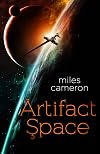
Hey, guess what? It turns out I can still read overly long books and enjoy them! I mean, it's not that amazing--I did read [b:The Doors of Eden|48643567|The Doors of Eden|Adrian Tchaikovsky|https://i.gr-assets.com/images/S/compressed.photo.goodreads.com/books/1572448827l/48643567._SY75_.jpg|73985219], right? But that was about a year ago, so it was actually a relief to realize this this ridiculously long space adventure was entertaining me every time I picked it up.
Artifact Space is an show more old-fashioned, Mary-Sue orphan-makes-good, updated for modern times. And you know what? I'm totally on board with that. How updated? Updated enough that a line like this made sense:
"It was very old-fashioned and bi-gendered, but in a romantic way, not a gender bias way – or perhaps its very antiquity caused her to forgive it."
Anyway, we first meet said orphan, Marca Nbaro, as she is masquerading as a new recruit on one of the few Greatships, a giant ship capable of traveling between stars that functions as a highly-protected trading ship. It is a great way to introduce a potential Mary Sue, giving them a bit of rule-bending grit to contrast the ethical sweetness.
"Most people can live without booze,’ Marca said. ‘But no one can go an hour without a rationalisation."
The story follows Marca and her adventures on the Greatship Athens. Cameron deftly begins with small, personal-level conflicts and gradually weaves in more ominous threads from deep state conspiracies to alien negotiations to the challenges of delayed communications in space. The Greatships are part AI and it's interesting to see how Cameron integrates both the potential benefits and weaknesses in warfare. This one has a penchant for appearing as a human petting a cat, and I honestly could not stop thinking of a Bond villain:
"A light went on over the co-pilot’s couch, and there, stretched full length, was a tall, skinny man with long, curly dark hair and a scarlet flightsuit. His nose was his most obvious feature, and if his appearance wasn’t enough to cause her to flinch, he had a cat on his chest. Nbaro could almost see through him, and gradually came to realise he was a holographic projection."
I suspect a little joking on Cameron's part; much of the story feels serious, but like the AI's hologram, there will be fun nods to tropes, humorous asides, or even reoccurring quests like obtaining cake from the officers' mess for friends.
Smith nodded. ‘Thanks.’ He tried on a smile, didn’t like it, and traded it for a more believable facial expression.
Cameron might have tried to pack too much stuff in here; there's a spot or two where I thought it went off the rails a bit. For the most part, however, I was 100% on board.
My recommendation comes with three caveats: one, you have to be okay with a seriously heroic protagonist. I know; it's the age of flawed heroism (which could be precisely why it works).
"Gunny says you saved everyone’s ass … or maybe you’re too wet behind the ears to know what you’re doing.’ Akunje’s grin was huge and infectious.
‘Yep,’ Marca said. ‘At least one of those things is definitely true."
Two, there's a definite military flavor throughout the book. It is, after all, a navy, and there are legitimate space battles. There's also detailed bits about flight paths and trajectories that I largely ignored. One of my friends noted Cameron had a tendency to go on about armor in one of his other books. So you probably have to either have a tolerance for armor and battle specifics, or the ability to read past. Guess which I did?
Third, and this would sometimes be a dealbreaker, but because of the sheer length and adventureness of the book as a whole, totally wasn't. Anyway, there's a Grand Canyon-level cliffhanger ending. Who knows when the next one is coming out? Not me.
I thought it was all completely worth it, because it's hard to find enjoyable, semi-realistic, fun sci-fi these days with cool women protagonists (hint: if the author describes the hero's violet eyes, it's probably not about the sci-fi). I'll venture to say that it reminds me just a bit of The Expanse, in that the events that our protagonist becomes caught up in have ramifications everywhere. And, it gives me a reason to read it again before the next installment comes out. show less
Artifact Space is an show more old-fashioned, Mary-Sue orphan-makes-good, updated for modern times. And you know what? I'm totally on board with that. How updated? Updated enough that a line like this made sense:
"It was very old-fashioned and bi-gendered, but in a romantic way, not a gender bias way – or perhaps its very antiquity caused her to forgive it."
Anyway, we first meet said orphan, Marca Nbaro, as she is masquerading as a new recruit on one of the few Greatships, a giant ship capable of traveling between stars that functions as a highly-protected trading ship. It is a great way to introduce a potential Mary Sue, giving them a bit of rule-bending grit to contrast the ethical sweetness.
"Most people can live without booze,’ Marca said. ‘But no one can go an hour without a rationalisation."
The story follows Marca and her adventures on the Greatship Athens. Cameron deftly begins with small, personal-level conflicts and gradually weaves in more ominous threads from deep state conspiracies to alien negotiations to the challenges of delayed communications in space. The Greatships are part AI and it's interesting to see how Cameron integrates both the potential benefits and weaknesses in warfare. This one has a penchant for appearing as a human petting a cat, and I honestly could not stop thinking of a Bond villain:
"A light went on over the co-pilot’s couch, and there, stretched full length, was a tall, skinny man with long, curly dark hair and a scarlet flightsuit. His nose was his most obvious feature, and if his appearance wasn’t enough to cause her to flinch, he had a cat on his chest. Nbaro could almost see through him, and gradually came to realise he was a holographic projection."
I suspect a little joking on Cameron's part; much of the story feels serious, but like the AI's hologram, there will be fun nods to tropes, humorous asides, or even reoccurring quests like obtaining cake from the officers' mess for friends.
Smith nodded. ‘Thanks.’ He tried on a smile, didn’t like it, and traded it for a more believable facial expression.
Cameron might have tried to pack too much stuff in here; there's a spot or two where I thought it went off the rails a bit. For the most part, however, I was 100% on board.
My recommendation comes with three caveats: one, you have to be okay with a seriously heroic protagonist. I know; it's the age of flawed heroism (which could be precisely why it works).
"Gunny says you saved everyone’s ass … or maybe you’re too wet behind the ears to know what you’re doing.’ Akunje’s grin was huge and infectious.
‘Yep,’ Marca said. ‘At least one of those things is definitely true."
Two, there's a definite military flavor throughout the book. It is, after all, a navy, and there are legitimate space battles. There's also detailed bits about flight paths and trajectories that I largely ignored. One of my friends noted Cameron had a tendency to go on about armor in one of his other books. So you probably have to either have a tolerance for armor and battle specifics, or the ability to read past. Guess which I did?
Third, and this would sometimes be a dealbreaker, but because of the sheer length and adventureness of the book as a whole, totally wasn't. Anyway, there's a Grand Canyon-level cliffhanger ending. Who knows when the next one is coming out? Not me.
I thought it was all completely worth it, because it's hard to find enjoyable, semi-realistic, fun sci-fi these days with cool women protagonists (hint: if the author describes the hero's violet eyes, it's probably not about the sci-fi). I'll venture to say that it reminds me just a bit of The Expanse, in that the events that our protagonist becomes caught up in have ramifications everywhere. And, it gives me a reason to read it again before the next installment comes out. show less
Lists
Awards


You May Also Like
Associated Authors
Statistics
- Works
- 18
- Also by
- 2
- Members
- 3,205
- Popularity
- #7,983
- Rating
- 4.0
- Reviews
- 88
- ISBNs
- 133
- Languages
- 4
- Favorited
- 3