
Ashley Weaver
Author of Murder at the Brightwell
Series
Works by Ashley Weaver
Associated Works
The Minotaur Sampler, Volume 2: New Books to Make Your Heart Race (2021) — Contributor — 3 copies, 2 reviews
Reader's Digest Fiction Favorites, Vol. 396: An Honest Man / Playing it Safe / A Good Family / The Wishing Game (2019) — Contributor — 1 copy
Reader's Digest Fiction Favorites, The Key to Deceit, The Big Finish — Contributor — 1 copy
Tagged
Common Knowledge
- Birthdate
- 20th century
- Gender
- female
- Education
- Louisiana State University (MLIS)
- Occupations
- library technical services coordinator
fiction writer - Organizations
- Sleuths in Time
- Agent
- Ann Collette
- Nationality
- USA
- Places of residence
- Oakdale, Louisiana, USA
- Associated Place (for map)
- Louisiana, USA
Members
Reviews
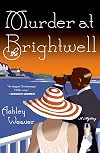
It's going to be hard to say anything about this one without making it sound like I'm damning it with faint praise. The cover quote says it's "An elegant Christie-esque romp". Putting aside that I'd hardly call most of Christie's work a "romp", there is a similarity in tone, and certainly setting. This is a well-written, relaxing read.
The main characters are upper-class repressed Brits in the 1930's. It seems things changed enough after WWI that a bit of scandal was acceptable, although show more nobody had better get too emotional about it. Very stiff-upper-lip. It sounds like I'm being snarky - but I'm not, I quite enjoyed the calm control that is such a part of Amory she could hardly be anything else; even during situations where a bit of hysteria could be considered appropriate.
Amory is married to a rogue. He charmed her out of her engagement with her childhood friend, and then promptly left her at home while he played about the continent. After 5 years, her ex comes to her and asks for help convincing his younger sister not to make the same mistake Amory did, and Amory decides what's good for the goose is good for the gander. Only her husband, Milo, follows her. And someone ends up dead.
Here's my only real complaint about the book: Amory consistently forgets to be mad at Milo. She certainly has plenty of reason, and it's not like she's a limp rag around him, but he need only say something charming, or kiss her, and she forgets all about pursuing their marital issues. It's trying to the reader's patience after awhile. I don't care if Milo looks like Thor and acts like James Bond, if I was married to him and his name was linked to every other woman in Europe, we'd be having that row and I'd not be distracted.
The mystery was awesome at the end. Never saw that coming. Incredibly well-plotted, although the writer doesn't give up a lot of clues. I don't mind this but I know some people do. Amory flirts with TSTL a couple of times, but mostly, it works.
Overall, a very, very good debut novel I enjoyed immensely. I'm quite looking forward to the second book out at the end of this year. show less
The main characters are upper-class repressed Brits in the 1930's. It seems things changed enough after WWI that a bit of scandal was acceptable, although show more nobody had better get too emotional about it. Very stiff-upper-lip. It sounds like I'm being snarky - but I'm not, I quite enjoyed the calm control that is such a part of Amory she could hardly be anything else; even during situations where a bit of hysteria could be considered appropriate.
Amory is married to a rogue. He charmed her out of her engagement with her childhood friend, and then promptly left her at home while he played about the continent. After 5 years, her ex comes to her and asks for help convincing his younger sister not to make the same mistake Amory did, and Amory decides what's good for the goose is good for the gander. Only her husband, Milo, follows her. And someone ends up dead.
Here's my only real complaint about the book: Amory consistently forgets to be mad at Milo. She certainly has plenty of reason, and it's not like she's a limp rag around him, but he need only say something charming, or kiss her, and she forgets all about pursuing their marital issues. It's trying to the reader's patience after awhile. I don't care if Milo looks like Thor and acts like James Bond, if I was married to him and his name was linked to every other woman in Europe, we'd be having that row and I'd not be distracted.
The mystery was awesome at the end. Never saw that coming. Incredibly well-plotted, although the writer doesn't give up a lot of clues. I don't mind this but I know some people do. Amory flirts with TSTL a couple of times, but mostly, it works.
Overall, a very, very good debut novel I enjoyed immensely. I'm quite looking forward to the second book out at the end of this year. show less
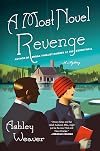
A fake Q&A with an imaginary Ashley Weaver inspired by this book:
WEAVER: Should I, the author of a novel, include lengthy chunks of a fake book inside my real book because my character is reading it?
A. No. It slows down the pacing and forces the reader to slog their way through a huge amount of a book they don't care about.
Q. But it's a mystery novel and there are clues in the fake book!
A. There really weren't. But even if there had been: no. Put the clues somewhere else. No one wants to show more read a book you wrote to be worse than the book you're actually writing, but only pieces of it, so they can never actually get into it.
Q. But Italo --
A. You are not Italo Calvino.
Q. But --
A. No. Do not do it. You, Ashley Weaver, should especially not do it. There are a few writers who can pull this off, and thanks to A Most Novel Revenge, we know you are not one of them.
WEAVER: Can a detective be said to have solved a mystery if they suspected all the wrong people for 90% of the book and then happened upon, essentially, a drawing entitled The Murder and Why I Did It in a place where the detective should obviously have looked for clues back at 25%?
A. In that case, we say a non-detective happened upon the solution to the mystery.
Q. She's definitely a detective. She has a drawing room "I've gathered you all here today" scene and everything.
A. A detective investigates and solves crimes. The drawing room scene is in fact optional.
Q. She investigated!
A. I assume you read some mystery novelist novelhacks newsletter that said: "HACK: You don't need clues OR an actual investigation! You only need your character to wander around randomly accusing people of murder!" Unfortunately, like so many lifehacks and novelhacks, this doesn't actually work.
Q. She asked people questions!
A. But they were mostly like, "Can you remember what happened seven years ago while I sit here in sympathetic silence and ask no follow-up questions?" They were not, for example, "Hey, so, domestic staff: did anyone burn any cloth in their fireplace today? Any clothes go mysteriously missing after that woman was stabbed many, many times last night?"
Q. She is a LADY.
A. Fair. But what she is not, at least in this book, is a lady DETECTIVE.
And that's all we have time for today! Imaginary Ashley Weaver has another booking to get to. A pity, because I never got to ask her the burning question this book left me with, which is unfortunately a spoiler for the solution to the mystery:This book's entire mystery hinges on British people in 1925 thinking a man in his mid-twenties dating a 16 year old girl was incredibly scandalous, and also that girl's siblings thinking that sending her off to have a shame baby in secret was better than her marrying the father of that baby, an independently wealthy man who is, again, in his mid-twenties. I -- would love to see some citations on that. As it stands, I don't believe it. I think they'd marry her off and count themselves lucky. show less
WEAVER: Should I, the author of a novel, include lengthy chunks of a fake book inside my real book because my character is reading it?
A. No. It slows down the pacing and forces the reader to slog their way through a huge amount of a book they don't care about.
Q. But it's a mystery novel and there are clues in the fake book!
A. There really weren't. But even if there had been: no. Put the clues somewhere else. No one wants to show more read a book you wrote to be worse than the book you're actually writing, but only pieces of it, so they can never actually get into it.
Q. But Italo --
A. You are not Italo Calvino.
Q. But --
A. No. Do not do it. You, Ashley Weaver, should especially not do it. There are a few writers who can pull this off, and thanks to A Most Novel Revenge, we know you are not one of them.
WEAVER: Can a detective be said to have solved a mystery if they suspected all the wrong people for 90% of the book and then happened upon, essentially, a drawing entitled The Murder and Why I Did It in a place where the detective should obviously have looked for clues back at 25%?
A. In that case, we say a non-detective happened upon the solution to the mystery.
Q. She's definitely a detective. She has a drawing room "I've gathered you all here today" scene and everything.
A. A detective investigates and solves crimes. The drawing room scene is in fact optional.
Q. She investigated!
A. I assume you read some mystery novelist novelhacks newsletter that said: "HACK: You don't need clues OR an actual investigation! You only need your character to wander around randomly accusing people of murder!" Unfortunately, like so many lifehacks and novelhacks, this doesn't actually work.
Q. She asked people questions!
A. But they were mostly like, "Can you remember what happened seven years ago while I sit here in sympathetic silence and ask no follow-up questions?" They were not, for example, "Hey, so, domestic staff: did anyone burn any cloth in their fireplace today? Any clothes go mysteriously missing after that woman was stabbed many, many times last night?"
Q. She is a LADY.
A. Fair. But what she is not, at least in this book, is a lady DETECTIVE.
And that's all we have time for today! Imaginary Ashley Weaver has another booking to get to. A pity, because I never got to ask her the burning question this book left me with, which is unfortunately a spoiler for the solution to the mystery:
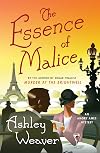
Ashley, are you okay?
I decided to read this series until Weaver's weird cuckolding-edging/marital misery kink cropped back up, which boy howdy did it, so I'm free of it. But this book took that whole kink thing in a direction so disturbing that if I knew anyone who was friends with the author, I would ask them to see about maybe encouraging her to get therapy.
Let's consider a summary of Milo's behavior throughout the book:
1. He asks Amory to come with him to Paris to help his old show more nanny/mother figure.
2. At first, he's bang alongside solving the mystery the nanny has brought to them.
3. Then he starts to get evasive.
4. He lies to Amory repeatedly and obviously.
5. He tells her it's all her imagination.
6. He also tells her, repeatedly, that she's getting worked up over nothing and shouldn't be worrying her pretty head.
7. After a book of him learning things and concealing them from her (badly), she jumps to the wrong conclusion about the mystery.
8. He is furious with her about this wrong conclusion, which, again, she came up with because he'd been keeping her entirely in the dark.
9. When she tries to confront him, he physically overpowers her and carries her out of where they are against her will.
10. She apologizes for all the of the above.
Oh, and! We learn more about their "courtship." Amory tells us that Milo "relentlessly pursued" her while she was engaged to another man (we knew about that part, but not the rest). When she finally succumbed to his charm offensive, he immediately proposed to her. They'd kissed once. They had not dated or spent more than a few minutes alone together.
I don't even need to say it, do I? The red flags aren't so much waving as screaming at this point, and here's the kicker: Weaver clearly thinks this is all quite romantic. And, given how she's written this narrative, she sees Amory as approximately equally at fault for all of the above.
You see why I want someone who cares about her to coax her into therapy.
But aside from that, how was the book? Bad. It was bad.
Weaver still doesn't understand that solving mysteries requires more than scurrying around accusing everyone of murder in turn, and she still doesn't write plots that make sense. (They're actually getting increasingly nonsensical with each passing book.) Amory doesn't actually solve this mystery -- someone else explains the whole thing to her when she's got it entirely wrong. Possibly that's because Milo hid everything he learned from her, but also possibly it's just because the whole thing is ridiculous.
And, as if all of that weren't enough: there is a deus ex monkeyna in this. I am not kidding. Milo gets Amory a pet monkey (Extravagant, unwanted gifts following an episode of gaslighting: oh look, it's another red flag! We're running out of room to store all these.) and the monkey is fully fucking ridiculous and unmonkeylike as it pulls quite a load of the plot.
I am glad to be done with this series, and I look forward to the day when I find a mystery series that doesn't feel like reading the first drafts of freshmen in a Novel Writing 101 course. But, seriously: Ashley, are you okay? Do you need help? Are you safe at home? show less
I decided to read this series until Weaver's weird cuckolding-edging/marital misery kink cropped back up, which boy howdy did it, so I'm free of it. But this book took that whole kink thing in a direction so disturbing that if I knew anyone who was friends with the author, I would ask them to see about maybe encouraging her to get therapy.
Let's consider a summary of Milo's behavior throughout the book:
1. He asks Amory to come with him to Paris to help his old show more nanny/mother figure.
2. At first, he's bang alongside solving the mystery the nanny has brought to them.
3. Then he starts to get evasive.
4. He lies to Amory repeatedly and obviously.
5. He tells her it's all her imagination.
6. He also tells her, repeatedly, that she's getting worked up over nothing and shouldn't be worrying her pretty head.
7. After a book of him learning things and concealing them from her (badly), she jumps to the wrong conclusion about the mystery.
8. He is furious with her about this wrong conclusion, which, again, she came up with because he'd been keeping her entirely in the dark.
9. When she tries to confront him, he physically overpowers her and carries her out of where they are against her will.
10. She apologizes for all the of the above.
Oh, and! We learn more about their "courtship." Amory tells us that Milo "relentlessly pursued" her while she was engaged to another man (we knew about that part, but not the rest). When she finally succumbed to his charm offensive, he immediately proposed to her. They'd kissed once. They had not dated or spent more than a few minutes alone together.
I don't even need to say it, do I? The red flags aren't so much waving as screaming at this point, and here's the kicker: Weaver clearly thinks this is all quite romantic. And, given how she's written this narrative, she sees Amory as approximately equally at fault for all of the above.
You see why I want someone who cares about her to coax her into therapy.
But aside from that, how was the book? Bad. It was bad.
Weaver still doesn't understand that solving mysteries requires more than scurrying around accusing everyone of murder in turn, and she still doesn't write plots that make sense. (They're actually getting increasingly nonsensical with each passing book.) Amory doesn't actually solve this mystery -- someone else explains the whole thing to her when she's got it entirely wrong. Possibly that's because Milo hid everything he learned from her, but also possibly it's just because the whole thing is ridiculous.
And, as if all of that weren't enough: there is a deus ex monkeyna in this. I am not kidding. Milo gets Amory a pet monkey (Extravagant, unwanted gifts following an episode of gaslighting: oh look, it's another red flag! We're running out of room to store all these.) and the monkey is fully fucking ridiculous and unmonkeylike as it pulls quite a load of the plot.
I am glad to be done with this series, and I look forward to the day when I find a mystery series that doesn't feel like reading the first drafts of freshmen in a Novel Writing 101 course. But, seriously: Ashley, are you okay? Do you need help? Are you safe at home? show less
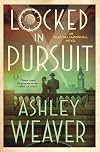
Ellie McDonnell hasn't seen Major Ramsey for a while but then she reads of a robbery that seems wrong to her and goes to him to ask if it might be suspicious. He tells her that it is the third suspicious robbery though the other two didn't make the newspapers.
When they go to ask some questions, it becomes apparent that there is something very suspicious about the crimes. It seems the Nazis are looking for something that has made its way to London from Lisbon. And they are willing to kill to show more find it.
Meanwhile, Ellie is dealing with some information about her father that is concerning to her. She has some evidence that he was a spy for Germany in WWI. A coded letter leads her to make a bargain with a mathematician neighbor. She also owes a favor to a local gangster for some information he provides to help track down the unknown thieves.
Although she has promised not to commit any more robberies while working with British intelligence, she just has to do a favor for a friend and pay off a debt. Retrieving blackmail letters and getting a crook into an office to place a wiretap isn't really robbery - at least in her opinion. Major Ramsey disagrees.
This was an engaging episode in the series. It was packed with action. I liked that both Ramsey and Ellie are acknowledging their feeling for each other even if neither sees a future together. I can't wait for the next story in the series. show less
When they go to ask some questions, it becomes apparent that there is something very suspicious about the crimes. It seems the Nazis are looking for something that has made its way to London from Lisbon. And they are willing to kill to show more find it.
Meanwhile, Ellie is dealing with some information about her father that is concerning to her. She has some evidence that he was a spy for Germany in WWI. A coded letter leads her to make a bargain with a mathematician neighbor. She also owes a favor to a local gangster for some information he provides to help track down the unknown thieves.
Although she has promised not to commit any more robberies while working with British intelligence, she just has to do a favor for a friend and pay off a debt. Retrieving blackmail letters and getting a crook into an office to place a wiretap isn't really robbery - at least in her opinion. Major Ramsey disagrees.
This was an engaging episode in the series. It was packed with action. I liked that both Ramsey and Ellie are acknowledging their feeling for each other even if neither sees a future together. I can't wait for the next story in the series. show less
Lists
Awards


You May Also Like


Associated Authors
Statistics
- Works
- 13
- Also by
- 10
- Members
- 2,483
- Popularity
- #10,329
- Rating
- 3.7
- Reviews
- 163
- ISBNs
- 157
- Languages
- 2
- Favorited
- 2