
Carola Dunn
Author of Death at Wentwater Court
About the Author
Carola Dunn was born in England on November 14, 1946. She received a B.A. in Russian and French from Manchester University and took a secretarial course for graduates at Oxford Tech. She traveled to numerous places around the world including Samoa and Fiji before getting married and settling in show more California. Prior to becoming a full-time writer, she worked in child-care, market research, construction, and wrote definitions for a science and technology dictionary. Her first book, Toblethorpe Manor, was published in 1979. Since then, she has written over 50 books including more than 30 Regency romances and the Daisy Dalrymple mystery series. (Bowker Author Biography) show less
Series
Works by Carola Dunn
Unhappy Medium 6 copies
Gabrielle's Gamble 1 copy
Associated Works
Crime Through Time: Original Tales of Historical Mystery (1997) — Contributor — 137 copies, 2 reviews
A Taste of Murder: Diabolically Delicious Recipes from Contemporary Mystery Writers (1999) — Contributor — 48 copies, 1 review
Malice Domestic 07: An Anthology of Original Traditional Mystery Stories (1998) — Contributor — 46 copies, 2 reviews
A Christmas Courtship (The Christmas Party / Under the Mistletoe / The Christmas Beau) (1996) 28 copies
Requiem for a Mezzo | Whatever Happened to Jennifer Steele? | The William Powell and Mynra Loy Murder Case (1997) — Contributor — 1 copy
Tagged
Common Knowledge
- Other names
- Nash, Petra
- Birthdate
- 1946-11-14
- Gender
- female
- Education
- University of Manchester (BA - Russian and French)
- Occupations
- writer
- Agent
- Alice Volpe (Northwest Literary Agency)
- Nationality
- UK
- Birthplace
- England, UK
- Places of residence
- Fiji
Eugene, Oregon, USA
California, USA - Map Location
- England, UK
Members
Reviews
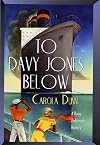
Like all Daisy Dalrymple mysteries, this book was a pleasure to read. Since I discovered the series, Carola Dunn has become one of my favorite ‘comfort’ authors: always reliable to bring a bit of excitement, intermittent explosions of giggles, and a spell of jolly tranquility. To paraphrase the protagonist of the series, Daisy, these novels are ‘Spiffing!’ I love the word.
A string of cozy British mysteries set in the 1920s, the entire series dabs in many grave themes, including class show more distinctions, women emancipation, and the past-war unraveling of the British society, but the emphasis is on Daisy and her amateur sleuthing.
Charming and kindhearted, Daisy has an unconventional penchant for stumbling upon dead bodies and embroidering herself in murder investigations. In this particular installment, Daisy has gotten married to her sweetheart from book one, Detective Chief Inspector of Scotland Yard, Alec Fletcher. Together, they board a trans-Atlantic ship to travel to America, where Alec has a temporary assignment: to consult J. Edgar Hoover on how to organize an honest, efficient police force in the US. Are you smiling yet?
The sea voyage commences in a sedate manner, making the first few chapters a tad dragging, until someone is pushed overboard, and the action starts rolling. Unfortunately, the weather worsens, and Alec, the ship's only tenant Scotland Yard, is laid low with sea sickness. Daisy doesn’t have a choice but to investigate in his stead. When another fatal accident occurs, the plot spirals into the convoluted serial murder territory without losing its common sense or its dry humor.
The language is yummy, sweet and piquant like a chocolate cake, while the pages are peppered with ironic jabs and occasional bits of sarcasm. I wanted to gobble it all up, although I have to admit that despite Dunn’s elusive simplicity, every time I read her novels I have to consult a dictionary; at least once or twice per novel.
One of my favorite quotes: “Her [Daisy’s] school had not considered Greek and Latin suitable for feeble female minds, but tales from the myths, properly bowdlerized, were staples.” Do you know what bowdlerized means. I didn’t.
Another quote reminded me of Georgette Heyer: “Daisy, normally the least high-nosed scion of the nobility, decided there was common and then there was common, and Mrs. Gotobed was really too, too frightfully vulgar.” You don’t get more delightfully British than that. You can almost hear Daisy’s accent.
Both she and her husband Alec, the protagonists of the series, are not static. Their personalities develop and their relationship matures from novel to novel, as their romance ambles through their murder cases.
Although each novel of the series is a stand-alone, you would enjoy them better if you read them in sequence, or at least an approximate sequence. In this novel, the newlyweds Daisy and Alec enjoy their working honeymoon, and Dunn managed to convey their coital bliss and their love for each other without resorting to bed scenes with ‘heat level’ ten or higher. Her treatment of sex is delicate and tactful, never blatant or prude.
Her depth of research is impressive as well. The novel takes place on a ship, and nautical references abound. But what puzzled me initially was the title. There is no character in the novel with the name Davy Jones. I didn’t know why Dunn saddled her tale with such a strange name until I googled ‘Davy Jones’ and learned that it means a drowned sailor. A fitting name, as it happens, as two victims drowned and one nearly drowned during that ill-fated ocean jaunt.
Although this novel might not be the best of the series, it’s a fair representative, and I’d recommended it, especially to those who like British cozies. show less
A string of cozy British mysteries set in the 1920s, the entire series dabs in many grave themes, including class show more distinctions, women emancipation, and the past-war unraveling of the British society, but the emphasis is on Daisy and her amateur sleuthing.
Charming and kindhearted, Daisy has an unconventional penchant for stumbling upon dead bodies and embroidering herself in murder investigations. In this particular installment, Daisy has gotten married to her sweetheart from book one, Detective Chief Inspector of Scotland Yard, Alec Fletcher. Together, they board a trans-Atlantic ship to travel to America, where Alec has a temporary assignment: to consult J. Edgar Hoover on how to organize an honest, efficient police force in the US. Are you smiling yet?
The sea voyage commences in a sedate manner, making the first few chapters a tad dragging, until someone is pushed overboard, and the action starts rolling. Unfortunately, the weather worsens, and Alec, the ship's only tenant Scotland Yard, is laid low with sea sickness. Daisy doesn’t have a choice but to investigate in his stead. When another fatal accident occurs, the plot spirals into the convoluted serial murder territory without losing its common sense or its dry humor.
The language is yummy, sweet and piquant like a chocolate cake, while the pages are peppered with ironic jabs and occasional bits of sarcasm. I wanted to gobble it all up, although I have to admit that despite Dunn’s elusive simplicity, every time I read her novels I have to consult a dictionary; at least once or twice per novel.
One of my favorite quotes: “Her [Daisy’s] school had not considered Greek and Latin suitable for feeble female minds, but tales from the myths, properly bowdlerized, were staples.” Do you know what bowdlerized means. I didn’t.
Another quote reminded me of Georgette Heyer: “Daisy, normally the least high-nosed scion of the nobility, decided there was common and then there was common, and Mrs. Gotobed was really too, too frightfully vulgar.” You don’t get more delightfully British than that. You can almost hear Daisy’s accent.
Both she and her husband Alec, the protagonists of the series, are not static. Their personalities develop and their relationship matures from novel to novel, as their romance ambles through their murder cases.
Although each novel of the series is a stand-alone, you would enjoy them better if you read them in sequence, or at least an approximate sequence. In this novel, the newlyweds Daisy and Alec enjoy their working honeymoon, and Dunn managed to convey their coital bliss and their love for each other without resorting to bed scenes with ‘heat level’ ten or higher. Her treatment of sex is delicate and tactful, never blatant or prude.
Her depth of research is impressive as well. The novel takes place on a ship, and nautical references abound. But what puzzled me initially was the title. There is no character in the novel with the name Davy Jones. I didn’t know why Dunn saddled her tale with such a strange name until I googled ‘Davy Jones’ and learned that it means a drowned sailor. A fitting name, as it happens, as two victims drowned and one nearly drowned during that ill-fated ocean jaunt.
Although this novel might not be the best of the series, it’s a fair representative, and I’d recommended it, especially to those who like British cozies. show less

When Hugh Carrick, Viscount Iverbrook, returns to England from Jamaica upon the death of his brother and sister-in-law, he is at first incensed to learn that his young nephew, Peter, has been left to the guardianship of his maternal aunt, Miss Selena Whitton. Believing that no "hubble-bubble female" could be a fit guardian for his heir, Iverbrook heads to Milford Manor, the Whitton home in Berkshire. Here he is much surprised to discover that Miss Whitton is no fashionable lady, but a show more competent young woman with a mind of her own. Caught between admiration for her excellent management of her farmland, left to her by her father, and irritation at her outspoken ways, Iverbrook soon finds himself entangled in life at the Whitton home, developing a genuine affection for his nephew, and for the formidable Selena. But will that affection survive their many misunderstandings? Or will the appearance on the scene of his former amour, Amabel Parcott, spell disaster for their growing understanding...?
After reading and enjoying Carola Dunn's Smuggler's Summer, I was keen to try another of her Regency novels, and Lord Iverbrook's Heir being another of her books available through my library, I decided to give it a try. Unfortunately, it did not live up to my expectations. It started well enough, with an entertaining albeit fairly common premise, and some likable characters. I was impressed that Dunn didn't ignore the historical realities attached to plantation farming in Jamaica, and addressed the issue of slavery by having her hero become an Abolitionist. Unrealistically ideal, perhaps, but better than the alternative of ignoring the facts, or making Iverbrook indifferent to them. I also greatly enjoyed Dunn's depiction of Lady Whitton, an accomplished herbalist.
In many ways, this was just the sort of light-hearted and entertaining reading I've been wanting recently. But midway through the book, as the unrealistic melodrama began to build, I started to lose my patience. Dunn's narrative simply isn't strong enough to pull off some of the swashbuckling villainy she depicts, from the drugging of Iverbrook's brandy, to the plot to force Selena into a marriage with her obnoxious cousin. The final kidnapping sequence was the last straw. This would have been a much stronger story, if Dunn had kept it short and simple. Although not enough to put me off this author (I did enjoy Smuggler's Summer, after all), it is certainly not one I would recommend very strongly. show less
After reading and enjoying Carola Dunn's Smuggler's Summer, I was keen to try another of her Regency novels, and Lord Iverbrook's Heir being another of her books available through my library, I decided to give it a try. Unfortunately, it did not live up to my expectations. It started well enough, with an entertaining albeit fairly common premise, and some likable characters. I was impressed that Dunn didn't ignore the historical realities attached to plantation farming in Jamaica, and addressed the issue of slavery by having her hero become an Abolitionist. Unrealistically ideal, perhaps, but better than the alternative of ignoring the facts, or making Iverbrook indifferent to them. I also greatly enjoyed Dunn's depiction of Lady Whitton, an accomplished herbalist.
In many ways, this was just the sort of light-hearted and entertaining reading I've been wanting recently. But midway through the book, as the unrealistic melodrama began to build, I started to lose my patience. Dunn's narrative simply isn't strong enough to pull off some of the swashbuckling villainy she depicts, from the drugging of Iverbrook's brandy, to the plot to force Selena into a marriage with her obnoxious cousin. The final kidnapping sequence was the last straw. This would have been a much stronger story, if Dunn had kept it short and simple. Although not enough to put me off this author (I did enjoy Smuggler's Summer, after all), it is certainly not one I would recommend very strongly. show less
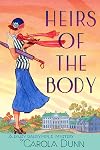
I need to get into the habit of making notes about books as I read them. Although I don't know how others do it; I get so involved in the story that even the things I noticed are really only noticed on an alternate track of my consciousness. I just get too engrossed in the story to stop. At the end, I remember vague connections, but they're too vague to add that level of detail that is often helpful in good reviews.
This book is a perfect example. I love the Daisy Dalrymple series. I first show more discovered them in a used bookstore in Chattanooga TN more than a decade ago. They are historical mysteries of the delightfully naive type. Even though murder and mayhem abound, it's always in the most genteel and proper manner. The early books were liberally sprinkled with such gems as "Pip-pip!" and "tootles!" and they all continue with "Darling" and "Dash it!" and other gems of a largely by-gone era. Daisy is an Honorable whose father and brother both died; the first to the flu epidemic and the second to the war (WWI), leaving the viscountcy to a distant cousin. Rather than sponging off the relatives, Daisy takes it upon herself to work for a living, writing articles about the aristocracy and their homes for a magazine. Thus putting her front and centre for all sorts of shenanigans of the posh variety.
Heirs of the Body centers on her own family and her distant cousin's need to find another heir (he has no children of his own). Daisy is pulled in to assist with meeting the possible heirs from a branch of the tree that long ago left England for Jamaica, none of which seem to have certified bonafides, leaving who inherits a bit of a quagmire.
The plot of this book is less about the dead body and more about the possible heirs and which one is causing a string of accidents or not-accidents that are befalling just about everybody at Fairacres, the ancestral home. As such, the body is a long time coming, so if you're reading this and you're not a fan of plot building and prefer your dead bodies come fast, you might find yourself impatient with this book. I didn't mind it at all, but then I love visiting with the Dalrymple/Fletcher family and we learn a lot about the family Daisy was born into in this book. Unfortunately, this means we get a snootful of her godawful mother, the Dowager Viscountess Dalrymple. She is the very definition of a harridan. We also get to spend quite a bit more time with Edgar and Geraldine, the current Viscount and his wife. They are shadowy figures throughout the series and it was fun to actually get to know them. Edgar feels like a homage to Mr. Jack Stapleton of the Hounds of the Baskervilles but in a very innocent-lamb, wonderfully eccentric sort of way.
But there were issues with the plot. This one probably wasn't the strongest one in the series. I knew early on who was going to jail at the end.
I knew Martha was being poisoned from the moment she commented on her tea. And for some reason I can't remember now, I knew who was doing it all along.
I also knew the attack in the lane was going to end up being faked. It just felt predictable. I think the author accidentally gave the game away for me when Raymond's death was announced and she discussed the character reactions.
But I still loved this book. It's a fun, light read where the good guys always win and the bad guys always get what's coming to them. If I had to live the England between WWI and WWII, I'd want to be Daisy Dalrymple.
Pip-pip! show less
This book is a perfect example. I love the Daisy Dalrymple series. I first show more discovered them in a used bookstore in Chattanooga TN more than a decade ago. They are historical mysteries of the delightfully naive type. Even though murder and mayhem abound, it's always in the most genteel and proper manner. The early books were liberally sprinkled with such gems as "Pip-pip!" and "tootles!" and they all continue with "Darling" and "Dash it!" and other gems of a largely by-gone era. Daisy is an Honorable whose father and brother both died; the first to the flu epidemic and the second to the war (WWI), leaving the viscountcy to a distant cousin. Rather than sponging off the relatives, Daisy takes it upon herself to work for a living, writing articles about the aristocracy and their homes for a magazine. Thus putting her front and centre for all sorts of shenanigans of the posh variety.
Heirs of the Body centers on her own family and her distant cousin's need to find another heir (he has no children of his own). Daisy is pulled in to assist with meeting the possible heirs from a branch of the tree that long ago left England for Jamaica, none of which seem to have certified bonafides, leaving who inherits a bit of a quagmire.
The plot of this book is less about the dead body and more about the possible heirs and which one is causing a string of accidents or not-accidents that are befalling just about everybody at Fairacres, the ancestral home. As such, the body is a long time coming, so if you're reading this and you're not a fan of plot building and prefer your dead bodies come fast, you might find yourself impatient with this book. I didn't mind it at all, but then I love visiting with the Dalrymple/Fletcher family and we learn a lot about the family Daisy was born into in this book. Unfortunately, this means we get a snootful of her godawful mother, the Dowager Viscountess Dalrymple. She is the very definition of a harridan. We also get to spend quite a bit more time with Edgar and Geraldine, the current Viscount and his wife. They are shadowy figures throughout the series and it was fun to actually get to know them. Edgar feels like a homage to Mr. Jack Stapleton of the Hounds of the Baskervilles but in a very innocent-lamb, wonderfully eccentric sort of way.
But there were issues with the plot. This one probably wasn't the strongest one in the series. I knew early on who was going to jail at the end.
I knew Martha was being poisoned from the moment she commented on her tea. And for some reason I can't remember now, I knew who was doing it all along.
But I still loved this book. It's a fun, light read where the good guys always win and the bad guys always get what's coming to them. If I had to live the England between WWI and WWII, I'd want to be Daisy Dalrymple.
Pip-pip! show less

Locked room mystery set on a Train, the solution came across as a bit rushed.
I like Daisy and the interaction between her and Alex are great, it was also interesting to see her interaction with his daughter, Belinda. A family are going to Scotland for a final visit to a curmudgeonly patriarch. When the main beneficiary of this man's impending death turns up dead, the bickering family wonder who will inherit next, while wondering as well who killed the old man.
Interesting but more about the show more people than the death, and much more about Daisy and Belinda and their growing relationship than about the feuding McGowans, not the best of this series that I've read, but I enjoyed it. show less
I like Daisy and the interaction between her and Alex are great, it was also interesting to see her interaction with his daughter, Belinda. A family are going to Scotland for a final visit to a curmudgeonly patriarch. When the main beneficiary of this man's impending death turns up dead, the bickering family wonder who will inherit next, while wondering as well who killed the old man.
Interesting but more about the show more people than the death, and much more about Daisy and Belinda and their growing relationship than about the feuding McGowans, not the best of this series that I've read, but I enjoyed it. show less
Lists
Unmarried women (1)
Favorite Series (1)
British Mystery (14)
Best Beach Reads (1)
Books Read in 2015 (13)
You May Also Like


Associated Authors
Statistics
- Works
- 74
- Also by
- 7
- Members
- 9,815
- Popularity
- #2,431
- Rating
- 3.6
- Reviews
- 373
- ISBNs
- 627
- Languages
- 5
- Favorited
- 20
