
Martin Shaw (4) (1971–)
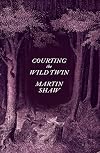
Author of Courting the Wild Twin
For other authors named Martin Shaw, see the disambiguation page.
Works by Martin Shaw
Liturgies of the Wild: A Transformative Journey into Story, Spirit and Self-discovery (2026) 58 copies, 2 reviews
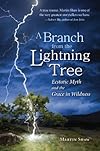
A Branch from the Lightning Tree: Ecstatic Myth and the Grace of Wildness (2011) 42 copies, 1 review
Stag cult 1 copy
Tagged
Common Knowledge
- Birthdate
- 1971
- Gender
- male
- Places of residence
- "Devonshire, England", "England", "UK"
- Associated Place (for map)
- "England", "UK"
Members
Reviews
Although I've been hearing of Martin Shaw for years, this is the first book of his that I've read (and I've placed an order for his recently self-republished "Snowy Tower").
The core concept—that of the wild twin, feels familiar. Shaw shares that he spent two decades leading wilderness "rites of passage" ceremonies. Through my time with Bill Plotkin's Soulcraft, I would equate Shaw's courting of the wild twin with the process of moving into Soul Valley to encounter our anima or animas.
In show more this book, Shaw retells two sibling myths—neither one of which am I familiar (although I’ve heard of the second, Tatterhood).
What stands out to me in these myths, as well as others I’ve been reading lately, is that there is no such thing as a critique in myth. What I mean by this is that, when something is named, its presence is invoked. It doesn’t matter if you invoke it by saying yes or no—all things that are named manifest.
For example, in both stories, the crones tell the queens, “whatever you do, don’t eat the red flower.” And, of course, they eat the red flower. I can’t think of a single myth where a warning such as this is issued and our protagonist doesn’t go ahead and engage with the forbidden anyways. Actually, it is so universal as to dispel a modern rationalist paradigm.
To draw a parallel in current events; all the critiques of Trump, including his impeachment, have only strengthened him. The leftist academic mechanisms of dissecting the failings of something as a way to dismantle it seem to no longer function in this age of the resurgence of the oral.
What stood out to my partner, in retelling these myths to here, is that, in both cases, the wild twin becomes domesticated. I’m not sure what to say about this. Is that the moral of the story here? Likely not. Then again, why is it present?
On an embodied level, this book is a tutorial in how each of us can begin practicing as bards. The ability to orally relay stories is one of the most fundamental of human customs—a custom of which few of us have retained. Now is wonderful time to listen for what myths are calling to us, and start coaxing them out of their lairs. show less
The core concept—that of the wild twin, feels familiar. Shaw shares that he spent two decades leading wilderness "rites of passage" ceremonies. Through my time with Bill Plotkin's Soulcraft, I would equate Shaw's courting of the wild twin with the process of moving into Soul Valley to encounter our anima or animas.
In show more this book, Shaw retells two sibling myths—neither one of which am I familiar (although I’ve heard of the second, Tatterhood).
What stands out to me in these myths, as well as others I’ve been reading lately, is that there is no such thing as a critique in myth. What I mean by this is that, when something is named, its presence is invoked. It doesn’t matter if you invoke it by saying yes or no—all things that are named manifest.
For example, in both stories, the crones tell the queens, “whatever you do, don’t eat the red flower.” And, of course, they eat the red flower. I can’t think of a single myth where a warning such as this is issued and our protagonist doesn’t go ahead and engage with the forbidden anyways. Actually, it is so universal as to dispel a modern rationalist paradigm.
To draw a parallel in current events; all the critiques of Trump, including his impeachment, have only strengthened him. The leftist academic mechanisms of dissecting the failings of something as a way to dismantle it seem to no longer function in this age of the resurgence of the oral.
What stood out to my partner, in retelling these myths to here, is that, in both cases, the wild twin becomes domesticated. I’m not sure what to say about this. Is that the moral of the story here? Likely not. Then again, why is it present?
On an embodied level, this book is a tutorial in how each of us can begin practicing as bards. The ability to orally relay stories is one of the most fundamental of human customs—a custom of which few of us have retained. Now is wonderful time to listen for what myths are calling to us, and start coaxing them out of their lairs. show less
Red, Black, White
Myth and Meaning in "A Branch from the Lightning Tree"
I've been skirting around the work of Martin Shaw for many years now. While reading this book, I was also rereading Bill Poltkin's Nature and the Human Soul - a different way of engaging some of the same inquiries. They both deal with the descent into soul and the return to community. Shaw sums this up as the "red, black, white" process, which might be summed up as passion, moving into darkness, maturing into show more integration. I'm also currently reading Lord of the Rings; to get a sense of initiation, take a look and the transformation of Gandalf the Grey to Gandalf the White (although we don't get a strong sense of the red in Tolkien's telling).
Where Plotkin's approach towards soul and the wild is through depth psychology, Shaw comes at the inquiry through myth.
Akin to the Benedictine Midnight Mass I attend on Christmas Eve, Shaw is as a cleric, reciting passages from the Bible followed by interpretations of the metaphors therein.
Having spent just a little time reading through collections of myths from my ancestors, the question I'm left with is, how do we begin to gain a competence in meaning-making through myth? How do I begin to select the myths that will become my blood and bones (or that already are and I have yet to realize)?
As a friend humblingly reminded me, Shaw's been at this for most of a lifetime, and competence may require a decades-long commitment. In the meantime, I'm going to start reading the second book in this Mythteller Trilogy, The Snowy Tower.
In the following I'll speak to a few quotes that stood out to me.
First, Shaw calls out that in the West, we're often fail to give the third phase of initiation (the white) its due:
"The Return in any great story or initiation ritual is a place of blessing, encouragement, celebration, and integration." (XXV)
The way I've been holding this question is to ask, as I contemplate my next vision fast, how can I be carrying the longing of my community out with me, and have them greet me on my return?
And to speak more to what longing might mean, "Longing means staying in the hard wisdom of our life's troubles, resisting the societal urge to just sever immediately from its tricky invitation." (XXVI)
He also discerns between how society might step up in holding the energy of success through blessings rather than affirmation, although he doesn't say a lot about this. "Even the so-called success stories can end in violence. Rothko, suicide at the foot of a canvas; Pollock in a car crash. One perspective is that they were given the wrong response to their work, an affirmation - wealth and prestige - rather than a blessing - a culturally understood act of holding and honoring the visible thread of an energy whose roots are in the invisible world." (27)
Part of how I parse this is through scope of considering: are we holding our egoic individual as the self, or the community or even bioregion as self?
In Courting the Wild Twin, Shaw looks carefully at raw, untempered desire. Following this sort of desire can lead to integration, but only through an initiation, never directly.
"To meet the Hag is a move towards the articulating of real desire, not the consensual wants of an already designated kingdom." (157)
Again, Shaw touches on this theme, but doesn't explore it deeply here.
In past months, having recently celebrated my thirtieth birthday, I've been reflecting on the unexpected and unpredictable ways in which periods of time continue and end. We get used to routines like having dinner with our parents, driving our kids to school, or talking with our business partners. Each of these things will end; sometimes much sooner or much later than we would like! There is a poignance to these musings which Shaw captures well in the following quote when speaking of a Russian folktale, the Maiden Tzar; "'There is a Goddess who doesn't love you anymore…' Some opportunities, if not seized, fall away forever." (210)
The richness of mortality is also hinted at in the first chapter in a quote from Cesar Vallejo:
"Ruben Dario has said that the grief of the gods is never to attain death. Regarding men, if they were, from the moment they are conscious, certain of of attaining death, they would be joyous forever. Unfortunately, men are never certain of their death: they feel the dark anxiety and the yearning of dying, but always doubt their death. The fried of men, we can say, is never to be certain of death." (12)
This is palpably useful information during the small death of a vision fast, although I can't quite put my finger on why, aside from aligning ourself with hazard.
In the end, Shaw leaves us with the question, "How do we reorient to the great dark caves of story that live beneath our feet?" (219) I have been asking myself this question in my own way wondering, what is it to have myths of my place? I'm interested in learning, what myths (Native American and possible other) speak of the Connecticut River, or other notable features of my home place. show less
Myth and Meaning in "A Branch from the Lightning Tree"
I've been skirting around the work of Martin Shaw for many years now. While reading this book, I was also rereading Bill Poltkin's Nature and the Human Soul - a different way of engaging some of the same inquiries. They both deal with the descent into soul and the return to community. Shaw sums this up as the "red, black, white" process, which might be summed up as passion, moving into darkness, maturing into show more integration. I'm also currently reading Lord of the Rings; to get a sense of initiation, take a look and the transformation of Gandalf the Grey to Gandalf the White (although we don't get a strong sense of the red in Tolkien's telling).
Where Plotkin's approach towards soul and the wild is through depth psychology, Shaw comes at the inquiry through myth.
Akin to the Benedictine Midnight Mass I attend on Christmas Eve, Shaw is as a cleric, reciting passages from the Bible followed by interpretations of the metaphors therein.
Having spent just a little time reading through collections of myths from my ancestors, the question I'm left with is, how do we begin to gain a competence in meaning-making through myth? How do I begin to select the myths that will become my blood and bones (or that already are and I have yet to realize)?
As a friend humblingly reminded me, Shaw's been at this for most of a lifetime, and competence may require a decades-long commitment. In the meantime, I'm going to start reading the second book in this Mythteller Trilogy, The Snowy Tower.
In the following I'll speak to a few quotes that stood out to me.
First, Shaw calls out that in the West, we're often fail to give the third phase of initiation (the white) its due:
"The Return in any great story or initiation ritual is a place of blessing, encouragement, celebration, and integration." (XXV)
The way I've been holding this question is to ask, as I contemplate my next vision fast, how can I be carrying the longing of my community out with me, and have them greet me on my return?
And to speak more to what longing might mean, "Longing means staying in the hard wisdom of our life's troubles, resisting the societal urge to just sever immediately from its tricky invitation." (XXVI)
He also discerns between how society might step up in holding the energy of success through blessings rather than affirmation, although he doesn't say a lot about this. "Even the so-called success stories can end in violence. Rothko, suicide at the foot of a canvas; Pollock in a car crash. One perspective is that they were given the wrong response to their work, an affirmation - wealth and prestige - rather than a blessing - a culturally understood act of holding and honoring the visible thread of an energy whose roots are in the invisible world." (27)
Part of how I parse this is through scope of considering: are we holding our egoic individual as the self, or the community or even bioregion as self?
In Courting the Wild Twin, Shaw looks carefully at raw, untempered desire. Following this sort of desire can lead to integration, but only through an initiation, never directly.
"To meet the Hag is a move towards the articulating of real desire, not the consensual wants of an already designated kingdom." (157)
Again, Shaw touches on this theme, but doesn't explore it deeply here.
In past months, having recently celebrated my thirtieth birthday, I've been reflecting on the unexpected and unpredictable ways in which periods of time continue and end. We get used to routines like having dinner with our parents, driving our kids to school, or talking with our business partners. Each of these things will end; sometimes much sooner or much later than we would like! There is a poignance to these musings which Shaw captures well in the following quote when speaking of a Russian folktale, the Maiden Tzar; "'There is a Goddess who doesn't love you anymore…' Some opportunities, if not seized, fall away forever." (210)
The richness of mortality is also hinted at in the first chapter in a quote from Cesar Vallejo:
"Ruben Dario has said that the grief of the gods is never to attain death. Regarding men, if they were, from the moment they are conscious, certain of of attaining death, they would be joyous forever. Unfortunately, men are never certain of their death: they feel the dark anxiety and the yearning of dying, but always doubt their death. The fried of men, we can say, is never to be certain of death." (12)
This is palpably useful information during the small death of a vision fast, although I can't quite put my finger on why, aside from aligning ourself with hazard.
In the end, Shaw leaves us with the question, "How do we reorient to the great dark caves of story that live beneath our feet?" (219) I have been asking myself this question in my own way wondering, what is it to have myths of my place? I'm interested in learning, what myths (Native American and possible other) speak of the Connecticut River, or other notable features of my home place. show less
When I was living in Jersey in my early 20s a brilliant person gave me a book by Joseph Campbell. It changed my life and I immediately starting dreaming about living in a cabin in the woods by myself, where I would read and write by the fire. I have Mr. Campbell's face tattooed on my arm as I write this in my cabin in the woods, sitting in front of a fire. Martin Shaw is no Joseph Campbell, but he's talking about similar things—mostly storytelling and myths.
Courting the Wild Thing features show more two stories/tales made up by Shaw (I think), interspersed with analysis and a kind of life advice. Like Campbell he tells stories that often focus on the hero's journey. Someone has a nice, safe life at home (often in a castle or mansion), then something happens that requires that person to go on a journey far from home. They learn, they expand their view of the world, and they become a different person. Then they return home as this new, heroic human.
This book didn't change my life, but there were a few things that reminded me of where my brain/soul should be, and of how far I've come in these past two decades. He talks about confusing things that are life giving with things that are life preserving. He talks about how when we exile a part of ourselves, that part will grow hostile towards us (in fact, both the stories he tell involve an exiled twin). He also emphasizes the importance of story tellers. Those story tellers that stand up and tell stories, who have a story for every occasion, who change their stories to fit the circumstances.
Unlike Joseph Campbell, Shaw talks a bunch about climate change. He writes about how, due to there being a lack of real story tellers, we're scared. We have nothing to hold us to the earth as everything around us burns/freezes/melts/floods. This lack of connections lead us in the west to have kind of a death wish.
Besides making me remember how I got to where I am, and that my love of telling stories is beneficial to humanity, this book makes me want to reread Reflections on the Art of Living. show less
Courting the Wild Thing features show more two stories/tales made up by Shaw (I think), interspersed with analysis and a kind of life advice. Like Campbell he tells stories that often focus on the hero's journey. Someone has a nice, safe life at home (often in a castle or mansion), then something happens that requires that person to go on a journey far from home. They learn, they expand their view of the world, and they become a different person. Then they return home as this new, heroic human.
This book didn't change my life, but there were a few things that reminded me of where my brain/soul should be, and of how far I've come in these past two decades. He talks about confusing things that are life giving with things that are life preserving. He talks about how when we exile a part of ourselves, that part will grow hostile towards us (in fact, both the stories he tell involve an exiled twin). He also emphasizes the importance of story tellers. Those story tellers that stand up and tell stories, who have a story for every occasion, who change their stories to fit the circumstances.
Unlike Joseph Campbell, Shaw talks a bunch about climate change. He writes about how, due to there being a lack of real story tellers, we're scared. We have nothing to hold us to the earth as everything around us burns/freezes/melts/floods. This lack of connections lead us in the west to have kind of a death wish.
Besides making me remember how I got to where I am, and that my love of telling stories is beneficial to humanity, this book makes me want to reread Reflections on the Art of Living. show less

Like many authors, Shaw wrote a short book during the pandemic. In it, he shares three folktales that he finds appropriate for our time: the Handless Maiden, the Bewitched Princess, and the Spyglass.
Unlike many mythologists these days, Shaw doesn't speak to the provenance of these stories (I don't think he regularly does).
The stories are poignant and haunting in the way of a good fairytale. I recently watched the first three episodes of the Star Wars saga since I first saw them in theaters, show more and there are many parallels (although less redemption in the films than these stories). In there own way, each of these three stories are misogynistic. There are also so many memorable images; it seems these images hold deeper wisdom within them, but in many cases, I'm not sure what it is.
To say more about misogyny: all three of these tales begin with a male protagonist (the Handless Maiden then switching to the story of the maiden, to then loop around to her husband). You could say that the antagonist in each of these tales is female (depending on how you hold the polarity of that term).
I'm also reading Maria Pinkola Estés' "Women Who Run With Wolves" at this time. This is a book about the capacities women can develop, and the myths that serve as a north story on this journey. The Handless Maiden, in particular, holds echoes of the boundless sacrifices women bear in our culture. In the Bewitched Princess and the Spyglass, the women are in the thrall of a dark masculine energy that is subsequently dispelled by our male protagonists. We all have both masculine and feminine energy within us, so maybe this is too banal a reading of the forces within these stories.
Is there something more to these stories than gender stereotypes? Absolutely. But my attention has focused on this for the time being. show less
Unlike many mythologists these days, Shaw doesn't speak to the provenance of these stories (I don't think he regularly does).
The stories are poignant and haunting in the way of a good fairytale. I recently watched the first three episodes of the Star Wars saga since I first saw them in theaters, show more and there are many parallels (although less redemption in the films than these stories). In there own way, each of these three stories are misogynistic. There are also so many memorable images; it seems these images hold deeper wisdom within them, but in many cases, I'm not sure what it is.
To say more about misogyny: all three of these tales begin with a male protagonist (the Handless Maiden then switching to the story of the maiden, to then loop around to her husband). You could say that the antagonist in each of these tales is female (depending on how you hold the polarity of that term).
I'm also reading Maria Pinkola Estés' "Women Who Run With Wolves" at this time. This is a book about the capacities women can develop, and the myths that serve as a north story on this journey. The Handless Maiden, in particular, holds echoes of the boundless sacrifices women bear in our culture. In the Bewitched Princess and the Spyglass, the women are in the thrall of a dark masculine energy that is subsequently dispelled by our male protagonists. We all have both masculine and feminine energy within us, so maybe this is too banal a reading of the forces within these stories.
Is there something more to these stories than gender stereotypes? Absolutely. But my attention has focused on this for the time being. show less
Lists
Awards

You May Also Like


Statistics
- Works
- 12
- Members
- 369
- Popularity
- #65,263
- Rating
- 4.1
- Reviews
- 10
- ISBNs
- 100
- Languages
- 1