
John Higgs (1) (1971–)
Author of Stranger Than We Can Imagine: Making Sense of the Twentieth Century
For other authors named John Higgs, see the disambiguation page.
Works by John Higgs
Brandy In The Basement 1 copy
Tagged
Common Knowledge
- Other names
- Higgs, JMR
- Birthdate
- 1971
- Gender
- male
- Nationality
- UK
- Birthplace
- Rugby, Warwickshire, England, UK
- Map Location
- England, UK
Members
Reviews
This is the first biography or introduction to the life and work of William Blake (1757-1827) that I have read, so it is difficult for me to compare. But it’s clear that reading Blake without an accompanying explanation is pointless. Those who do (like me 20 years ago) will inevitably be rejected by it, and that is a pity. Blake's oeuvre is so atypical and idiosyncratic that it inevitably comes across as hermetic, and seems like the work of a madman. His texts portray a strange universe show more full of mythical creatures, expressed in exuberant statements that are presented with many exclamation points, often in a very a visionary style. Anyone who looks at the accompanying expressive work may also be surprised and not really know what he/she is seeing.
That is why a book like this by John Higgs is absolutely appropriate. Higgs provides context and biographical data that partly clarify the meaning of Blake's oeuvre. But he also goes further and uses a lot of modern scientific insights to explain Blake's many strange twists. This ranges from the cognitive sciences, the theory of relativity, quantum mechanics, and so on. Personally, I think he goes a bit too far in this, but hey, it shows how unique Blake was.
After this book I took up Blake's oeuvre again, and thanks to Higgs' reading keys it now started to make sense. The classic The Marriage of Heaven and Hell in particular now appears to be one of the most remarkable books ever written. To be honest: of course not everything became clear, there are plenty of elements in Blake's oeuvre that remain beyond the immediate reach of our (my) mind. For example, I still had particular difficulty with the Jerusalem book. But Blake's emphasis on the human imagination as the beginning and end of all understanding and being is incredibly modern; in this you can safely call him a constructivist avant la lettre. Just like his view that thinking in dualisms and contradictions, black and white, is aberrant, is a formidable criticism of the reductionism that is so characteristic of our modern thinking. But even if I stress those two things, this doesn’t do Blake justice. As Higgs himself writes: “His work is deep and rich and no matter who looks into it, they will always find their own prejudices and interests reflected back. Perhaps he is too big a mind for us to ever properly grasp, and we are doomed to always fail. Perhaps the best we can do is find our own version of Blake, and take pleasure in knowing how incomplete it will appear to others.” show less
That is why a book like this by John Higgs is absolutely appropriate. Higgs provides context and biographical data that partly clarify the meaning of Blake's oeuvre. But he also goes further and uses a lot of modern scientific insights to explain Blake's many strange twists. This ranges from the cognitive sciences, the theory of relativity, quantum mechanics, and so on. Personally, I think he goes a bit too far in this, but hey, it shows how unique Blake was.
After this book I took up Blake's oeuvre again, and thanks to Higgs' reading keys it now started to make sense. The classic The Marriage of Heaven and Hell in particular now appears to be one of the most remarkable books ever written. To be honest: of course not everything became clear, there are plenty of elements in Blake's oeuvre that remain beyond the immediate reach of our (my) mind. For example, I still had particular difficulty with the Jerusalem book. But Blake's emphasis on the human imagination as the beginning and end of all understanding and being is incredibly modern; in this you can safely call him a constructivist avant la lettre. Just like his view that thinking in dualisms and contradictions, black and white, is aberrant, is a formidable criticism of the reductionism that is so characteristic of our modern thinking. But even if I stress those two things, this doesn’t do Blake justice. As Higgs himself writes: “His work is deep and rich and no matter who looks into it, they will always find their own prejudices and interests reflected back. Perhaps he is too big a mind for us to ever properly grasp, and we are doomed to always fail. Perhaps the best we can do is find our own version of Blake, and take pleasure in knowing how incomplete it will appear to others.” show less

The KLF wears a sheen of mystique I was reluctant to draw the curtain away from, but how to resist? It's a pleasure to find even more mystique behind the curtain. It begins with a simple premise: there must have been a reason why Drummond and Cauty infamously (and literally) burned a million British pounds of their own money, earned from the success of their music endeavors, even if they still don't know or understand what that reason is. This is the launching point for Higgs' story that show more begins with Drummond's early years and the history of chaos theory. Along the path of what follows, we're treated to Carl Jung, giant imaginary bunnies and gods, Alan Moore's views on magic, and a dozen other side trips that each nonetheless prove integral to the story that Higgs has to tell. He is wonderfully grounded even while navigating through all of this seeming madness, ready to acknowledge when something is absurd but also able to describe in luminous detail the theory behind even the nuttiest concepts, making all of it sound almost rational. Nobody in this story comes across as crazy, even when they are accusing one another of being mad. It's the most fun kind of lunacy, and the most down-to-earth way of approaching it. This is a wonderful heady mix with some laugh-out-loud highlights.
The thesis here is that Drummond and Cauty proceeded by the seat of their pants without any plan in mind, following imaginary clues (chaos, in other words) to guide them from one project into the next, often even defining the shape that next step would take. This is a far cry from the professional media manipulators they've been made out to be. Unless, of course, Higgs is part of their scheme - but that would be to dive down my own conspiracy-laden rabbit hole. I'm more ready to take this at face value and call it a treasure: part biography, part philosophy, and all entertaining. The audio version (read by its author) was great but it left me unable to have a look at the sources and interviews used (presuming those are listed in the printed copy). show less
The thesis here is that Drummond and Cauty proceeded by the seat of their pants without any plan in mind, following imaginary clues (chaos, in other words) to guide them from one project into the next, often even defining the shape that next step would take. This is a far cry from the professional media manipulators they've been made out to be. Unless, of course, Higgs is part of their scheme - but that would be to dive down my own conspiracy-laden rabbit hole. I'm more ready to take this at face value and call it a treasure: part biography, part philosophy, and all entertaining. The audio version (read by its author) was great but it left me unable to have a look at the sources and interviews used (presuming those are listed in the printed copy). show less

This is a delicious book. I gobbled up all of the fascinating parallels made between the Beatles and the James Bond franchise. From the fact that “Love Me Do” and Dr. No were released the same day (05 October 1962), a book was born. I was constantly surprised by new(-to-me) information. For example: Richard Vernon was in both Goldfinger and A Hard Day’s Night, which were released the same year. In Goldfinger he’s a Bank of England exec, part of the respected Establishment. In A Hard show more Day’s Night he’s just “Man on Train”, someone the Beatles poke fun at. “I fought the war for your sort!” “I bet you’re sorry you won.” And it was through this book that I learned that Maharishi Mahesh Yogi had a degree in physics! The Rishikesh chapter puts forward a new angle on why John became disillusioned with the retreat and Maharishi: apparently “Magic Alex” Mardas was also there and the Maharishi didn’t buy his more fanciful scientific theories, and John, who was quite taken with Magic Alex, didn’t like hearing him being criticized. Also, as John himself stated later, John probably expected too much of the Maharishi, that John would have a lifetime’s worth of abandonment and emotional issues healed. There’s a chapter about Christopher Lee, and one about Desmond Llewelyn. The book covers up to 2022, so it does cover No Time to Die and what Paul and Ringo are up to in the very present day (I read this in April 2023). Some of the connections are a bit more tenuous than others—the chapter about Desmond Llewelyn, for example, links Bond and the Beatles by the thread of car crashes, but I suppose it works. The whole story is told with lots of credited quotes, (invisible) endnotes, and a sizeable bibliography. I highly recommend this if you like the Beatles and Bond, but if you’re not a fan of spoilers, I suggest you watch No Time to Die before you read this. show less
To see a world in a grain of sand
And a heaven in a wild flower,
Hold infinity in the palm of your hand
And eternity in an hour.
William Blake was both fascinating and strange. John Higgs, the author and audio reader, seems like a character of many talents. He's very interested in all aspects of Blake, including Blake's weirdest and most arcane, where he spends a whole lot of this book. But he also covers who Blake was, what was behind his written and visual artworks, and how the world viewed show more Blake during his lifetime and afterwards. He covers why Blake became associated with the Romantic movement, even though he doesn't have a whole lot in common with English Romanticism.
Blake was an odd child who told his parents he saw a tree full of angels, that he could describe in detail (he was beaten), and who his parents thought best to homeschool, afraid or aware that he wouldn't do well in a strict setting. He grew up outside London, but far enough outside that he was surrounded by undeveloped land, and could lose himself in the natural surroundings, which he did. It seems Blake understood his visions were only in his mind, but also believed that made them real.
Apprenticed to be an engraver, Blake not only illustrated his own works, but created his own technique for mass producing them. Unfortunately, it wasn't necessary. No one bought his works.
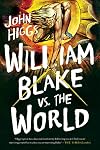
After producing his first works, [The Songs of Innocence], and later his [Songs of Experience] (with Tyger, Tyger), he began to write about his mythology of the spiritual world. He pulled from a Swedish mystic, Emanuel Swedenborg, and from ideas in [Pilgrims Progress], and his perspectives on Dante, Shakespeare, and Milton. His Ancient of Days, a version of which he completed on his deathbed, and also the image on the cover, and above on my thread, is from his idea of Urizen, a logical spirit who created the universe, but couldn't understand anything spiritual, or outside regular logic. This was Blake’s way of understanding his visions and spiritual ideas without undermining the quotidian world, arguing that the mind can see this non-quotidian, limited world. In the image the creator, Urizen, thinking himself falsely as an omnipotent god, creates a limited world, and yet can't see the light behind him. Most of Blake’s mythology went misunderstood by everyone, which probably protected him from some criticism.
As an older, defeated man, he acquired a small admiring following, which allowed the mythology of Blake himself to grow, and allowed most of his writing and much of his artwork to be preserved (although Higgs suggests he had a collection of somewhat sexually explicit art that was destroyed.).
Blake's associate with Romanticism comes from how he brings nature into his art, his independent spirit, radical rejection of organized religion and the newly evolving industrial world, and his work The Marriage of Heaven and Hell. But he was very much his own person.
The book is fascinating. But it does spend a lot of time on arcane stuff I wasn't interested in. And it commits one soft crime I didn't like. Higgs brings in later and contemporary science and knowledge to help explain what Blake was doing. Of course, Blake was living in his time (1757 – 1827). So why it's kind of cool, it's also, to me, a distraction away from where Blake's ideas actually came from. Still, fun, fascinating, insightful stuff.
2025
https://www.librarything.com/topic/369129#8856411 show less
And a heaven in a wild flower,
Hold infinity in the palm of your hand
And eternity in an hour.
William Blake was both fascinating and strange. John Higgs, the author and audio reader, seems like a character of many talents. He's very interested in all aspects of Blake, including Blake's weirdest and most arcane, where he spends a whole lot of this book. But he also covers who Blake was, what was behind his written and visual artworks, and how the world viewed show more Blake during his lifetime and afterwards. He covers why Blake became associated with the Romantic movement, even though he doesn't have a whole lot in common with English Romanticism.
Blake was an odd child who told his parents he saw a tree full of angels, that he could describe in detail (he was beaten), and who his parents thought best to homeschool, afraid or aware that he wouldn't do well in a strict setting. He grew up outside London, but far enough outside that he was surrounded by undeveloped land, and could lose himself in the natural surroundings, which he did. It seems Blake understood his visions were only in his mind, but also believed that made them real.
Apprenticed to be an engraver, Blake not only illustrated his own works, but created his own technique for mass producing them. Unfortunately, it wasn't necessary. No one bought his works.
After producing his first works, [The Songs of Innocence], and later his [Songs of Experience] (with Tyger, Tyger), he began to write about his mythology of the spiritual world. He pulled from a Swedish mystic, Emanuel Swedenborg, and from ideas in [Pilgrims Progress], and his perspectives on Dante, Shakespeare, and Milton. His Ancient of Days, a version of which he completed on his deathbed, and also the image on the cover, and above on my thread, is from his idea of Urizen, a logical spirit who created the universe, but couldn't understand anything spiritual, or outside regular logic. This was Blake’s way of understanding his visions and spiritual ideas without undermining the quotidian world, arguing that the mind can see this non-quotidian, limited world. In the image the creator, Urizen, thinking himself falsely as an omnipotent god, creates a limited world, and yet can't see the light behind him. Most of Blake’s mythology went misunderstood by everyone, which probably protected him from some criticism.
As an older, defeated man, he acquired a small admiring following, which allowed the mythology of Blake himself to grow, and allowed most of his writing and much of his artwork to be preserved (although Higgs suggests he had a collection of somewhat sexually explicit art that was destroyed.).
Blake's associate with Romanticism comes from how he brings nature into his art, his independent spirit, radical rejection of organized religion and the newly evolving industrial world, and his work The Marriage of Heaven and Hell. But he was very much his own person.
The book is fascinating. But it does spend a lot of time on arcane stuff I wasn't interested in. And it commits one soft crime I didn't like. Higgs brings in later and contemporary science and knowledge to help explain what Blake was doing. Of course, Blake was living in his time (1757 – 1827). So why it's kind of cool, it's also, to me, a distraction away from where Blake's ideas actually came from. Still, fun, fascinating, insightful stuff.
2025
https://www.librarything.com/topic/369129#8856411 show less
Lists
Awards


You May Also Like


Associated Authors
Statistics
- Works
- 14
- Members
- 982
- Popularity
- #26,222
- Rating
- 4.1
- Reviews
- 37
- ISBNs
- 62
- Languages
- 6