
Sharon Blackie
Author of If Women Rose Rooted: A Life-changing Journey to Authenticity and Belonging
About the Author
Works by Sharon Blackie
If Women Rose Rooted: A Life-changing Journey to Authenticity and Belonging (2016) 264 copies, 3 reviews
Associated Works
Tagged
Common Knowledge
- Birthdate
- 1961-06-30
- Gender
- female
- Education
- University of Liverpool (BA|Psychology|1982)
University of London (PhD|Psychology and Neuroscience|1985)
London College of Clinical Hypnosis (Practitioner Diploma|Clinical Hypnotherapy|2003)
Manchester Metropolitan University (MA|Creative Writing|2007)
University of Wales (MA|Celtic Studies|2019) - Occupations
- psychologist
school founder (The Hedge School)
podcaster
writer
mythologist - Organizations
- Royal Society of Arts
- Awards and honors
- Roger Deakin Award
Creative Scotland Writer’s Award - Agent
- Jane Graham Maw
- Relationships
- Knowles, David (husband)
- Nationality
- UK
- Birthplace
- County Durham, England, UK
- Places of residence
- Hebrides, Scotland, UK
Donegal, Ireland
Connemara, Ireland
Wales, UK
Cumbria, England, UK - Map Location
- England, UK
Members
Reviews
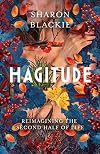
A collection of primarily British, Irish and Scottish myths and archetypes of old women. The author systematically examines folklore, mythology, and fairy tales and groups them into broad thematic images of elder women. What can we learn from these tales about how we may be in old age? Old women past their fertile years are often practically invisible in modern Western culture. What are aging women meant to do with their lives? Media would have us to believe that our stories are over, but show more these ancient cultural images of women suggest that we have much still to offer the world.
I enjoyed the collected stories of old women in folklore. I did not care for the bizarre veering off into TERF content towards the end of the book. It came out of left field and really made me question the author's self-awareness. She complains about terms like "people who menstruate" and how it's "erasing" women, completely oblivious to the fact that not all women menstruate. Like herself for instance.
This book is a fascinating exploration of positive and powerful elder female images, and that's fine. I like the idea of thinking about what type of old woman I want to be. But I think time should also be spared for thinking about the type of old woman I do not want to be. God save me from being an old woman so privileged and out of touch that I wind up oppressing others. Perhaps it was just the more critical eye I turned to the author after she showed her ass in the TERF chapter, but I quickly became aware of the patronizing and controlling tone of her writing. This really came out in the chapter where she described briefly her cancer diagnosis and treatment. The way she blisteringly scolds other cancer patients for not properly appreciating their disease was kinda shocking. I think it's fine that she approached cancer as a transformative gift that she should welcome and attempt to learn from. It apparently worked for her. But telling other people that they're suffering wrong is an absolutely unhinged thing to do.
She follows up this tirade with a long screed about how retirement is stupid and people should find their calling and work until they die instead of enjoying themselves. Nevermind that having the luxury to "find your calling and unique gifts" is an outlandishly privileged thing that not everyone can afford to do. The final chapter really clanged hollow for me. It reminded me that another archetypical attribute of elderhood is loudly proclaiming unsolicited and out-of-touch advice. Definitely not the type of old woman I want to be. show less
I enjoyed the collected stories of old women in folklore. I did not care for the bizarre veering off into TERF content towards the end of the book. It came out of left field and really made me question the author's self-awareness. She complains about terms like "people who menstruate" and how it's "erasing" women, completely oblivious to the fact that not all women menstruate. Like herself for instance.
This book is a fascinating exploration of positive and powerful elder female images, and that's fine. I like the idea of thinking about what type of old woman I want to be. But I think time should also be spared for thinking about the type of old woman I do not want to be. God save me from being an old woman so privileged and out of touch that I wind up oppressing others. Perhaps it was just the more critical eye I turned to the author after she showed her ass in the TERF chapter, but I quickly became aware of the patronizing and controlling tone of her writing. This really came out in the chapter where she described briefly her cancer diagnosis and treatment. The way she blisteringly scolds other cancer patients for not properly appreciating their disease was kinda shocking. I think it's fine that she approached cancer as a transformative gift that she should welcome and attempt to learn from. It apparently worked for her. But telling other people that they're suffering wrong is an absolutely unhinged thing to do.
She follows up this tirade with a long screed about how retirement is stupid and people should find their calling and work until they die instead of enjoying themselves. Nevermind that having the luxury to "find your calling and unique gifts" is an outlandishly privileged thing that not everyone can afford to do. The final chapter really clanged hollow for me. It reminded me that another archetypical attribute of elderhood is loudly proclaiming unsolicited and out-of-touch advice. Definitely not the type of old woman I want to be. show less
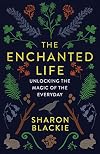
“Recently, I happened across it again, by chance – if you believe, which I do not, that stories ever come to you by chance.” I don't think I happened across this book by chance.
Sharon Blackie explores the philosophical and psychological history of *disenchantment*, and how Western society came to be so thoroughly and determinedly disenchanted with the world. In the face of the trauma this has caused (in the form of increasing rates of depression, anxiety, and physical manifestations of show more stress), she offers up an alternative: *enchantment*, or falling in love with the world and all its complexities.
Don't underestimate this work. It's not "woo-woo", a term she uses a few times in reference to escapist, magical, potentially silly ways of thinking. Blackie has a strong background in neuroscience and doesn't hesitate to dive into academic texts spanning psychology, philosophy, and folklore.
This book was incredibly meaningful to me. As soon as I read the comparison of Woman A vs. Woman B, I started trying to implement some of these ideas into my own life. I do feel like I've fallen prey to the isolation and meaninglessness that result from such determined individualism, human supremacy, and pessimism. I hope that I can bring myself to a better place now that I've recognized where those feelings may come from.
There are little exercises throughout the book that tie into what she's talking about. Some of them can be quickly written down in a journal; others are more involved and will take time. I've done some of the easy ones and intend to do most of them eventually. show less
Sharon Blackie explores the philosophical and psychological history of *disenchantment*, and how Western society came to be so thoroughly and determinedly disenchanted with the world. In the face of the trauma this has caused (in the form of increasing rates of depression, anxiety, and physical manifestations of show more stress), she offers up an alternative: *enchantment*, or falling in love with the world and all its complexities.
Don't underestimate this work. It's not "woo-woo", a term she uses a few times in reference to escapist, magical, potentially silly ways of thinking. Blackie has a strong background in neuroscience and doesn't hesitate to dive into academic texts spanning psychology, philosophy, and folklore.
This book was incredibly meaningful to me. As soon as I read the comparison of Woman A vs. Woman B, I started trying to implement some of these ideas into my own life. I do feel like I've fallen prey to the isolation and meaninglessness that result from such determined individualism, human supremacy, and pessimism. I hope that I can bring myself to a better place now that I've recognized where those feelings may come from.
There are little exercises throughout the book that tie into what she's talking about. Some of them can be quickly written down in a journal; others are more involved and will take time. I've done some of the easy ones and intend to do most of them eventually. show less

''No one wants to work the land, now; they just want to sit and look out of the picture window and stare at the water. A 'view', they call is, as if they had nothing but eyes to know this place with- and as if their eyes could ever even scratch the surface of it from where they stand. His friends and family have been dying all around him for years, and some days it seems that there'll only be him left standing at the end of the world. A crumbling saint; a reluctant relic of a way of life show more that's gone forever. Just like that poem she read, years ago now- about a stone statue, all that was left dissolving in the desert at the end of everything.''
Daphne was turned into a plant to escape Apollo's unwanted attention. Io was turned into a cow to flee Hera's wrath. Medusa fell victim to Athena's illogical revenge. Arachne dared to challenge the Goddess of Wisdom and became a loathsome insect. Greek Mythology is full of stories of women who ''shapeshifted'' with or without their will, because of fear, love, transgression. All cultures are rich in stories of shapeshifting women, each one a universe in itself.
In this beautiful volume, we are given retellings of the tales of old Europe and tales where characters are given a new voice. Sharon Blackie has also included notes regarding the inspiration behind each story.
Wolfskin: A story based on a traditional Croatian/Slavic myth with an interesting ending.
The Last Man Standing: A tale inspired by an Irish myth, set in Scotland. A story of old age and true love.
The Bogman's Wife: A Scottish/Irish story of a mermaid's rightful revenge, inspired by W.B.Yeats' poem The Song of Wandering Aengus.
Foxfire: A Scandinavian tale of the huldra, a woman-fox that seduces men who wander in the forest, exacting revenge on those who fail to satisfy her.
''It was the human skulls on top of the fenceposts that gave the place away. Though I have to say, it wasn't quite what I'd been expecting. Every one of them had a candle inside, eye sockets all lit up, grinning away in the late afternoon gloom like some half=crazed band of jack - o'- lanterns.''
Meeting Baba Yaga: This tale was supposedly inspired by the classic Russian story of Vasilisa the Brave (...and not ''Vasalisa'' as the writer states...). The Russian woods and Baba Yaga deserved better treatment than a story whose main character is the epitome of the middle-aged newly-turned into a hippie who is uneducated, ignorant, disrespectful, whose only source of ''education'' is the ...Tardis and lifestyle magazines. I was disgusted by this treatment of Russian culture. The character (and by extension, the writer) should learn how to spell before they criticize Russia and its vast cultural significance. Appalling.
''We're a fanciful folk here - fanciful and fey. What could you possibly know about our sea-longings, our hill-cravings? What could you know about the eerie half-light of midsummer nights in the glen?''
The Water Horse: A Scottish/Irish story, set in the Highlands, of the legendary each-uisge, the horse that acquires the appearance of young men. A beautiful tale of a girl who didn't pay attention to cautionary tales, a myth of true love that echoed The Gloaming.
''This land, this island of white and snow. Can you follow the sparkling motes of freezing mist through Arctic air? Do you see the aurora's brushstrokes on the pure, translucent canvas of our icebound cliffs? This beauty so pellucid, so serene that your heart would shatter if you thought it might pass forever from this world. This beauty. No wonder you come seeking it. This last bastion of ice; the still point of a burning world. I have seen the icebergs weep; I have seen the dissolution of great glaciers. Snow Queen has raised them from the dead.''
''Snow Queen loves silence. Loves the silence of ice and snow.
It is Snow Quuen now who knows best; it is Snow Queen who alone has held true.
Snow Queen will make an iceberg of your heart.''
Snow Queen: The Danish tale is turned into a Dystopian story set in a world destroyed by climate change, set in an incredibly beautiful and terrifying landscape.
The Saturday Diary of the Fairy Melusine: Melusine is given voice to condemn her husband's abuse in a story inspired by the French myth of the Serpent Wife.
''You have listened to the song of the blackthorn at winter solstice, and drunk from the well at the world's end. Here you are now, and here you will linger on. Forever? You have no stories about forever.''
The Madness of Mis: An Irish tale of a daughter who lost her father and became one with the mountains until she fell in love. Haunting and brilliantly written.
I Shall Go Into A Hare: A tale about the hare and the Easter eggs as symbols of fertility and the association between witches and hares. Set in our era, very raw. Brilliant.
The Weight of a Human Heart: Based on the famous love triangle of the Irish hero Cu Culainn, Emer and Fand. I don't believe this was a positive moment in this book. The final twist seemed to me a cheap gimmick, a bone to satisfy the expectations of the so-called ''today's'' audience.
Flower Face: A tale of scorn, betrayal, unimaginable abuse and retribution, based on the Welsh myth of Blodeuwedd from the Mabinogion.
''She cannot face another hundred years of this. The last time she renewed herself, the Great War had just ended and there was hope. Who'd have imagined they'd do it all again? Who'd have thought, in just one hundred years, they'd have caused so much carnage? What could they do in another century, with all their implacable power?''
No Country For Old Women: A haunting retelling of the Gaelic myth of the Cailleath who becomes young every hundred years by bathing in the lake. Here, she seems utterly done with all the mess we've made...
Apart from two disappointing moments, I loved Blackie's writing and the immediacy of the characters' voices. I appreciated the balance between the two sexes, the focus on love,, honour and independence as reasons to transform and escape. This is pure literary quality.
Absolutely beautiful illustrations by Helen Nicholson.
''Perhaps, when the world has turned a few more times, when their remaining relics have all crumbled away into dust- perhaps then she will bathe again on the flat rock by the sea loch at Bealtaine. But she does not think she will.
The last of her men was the last man standing. And she will be the last of the fairy wives.''
My reviews can also be found on https://theopinionatedreaderblog.wordpress.com/ show less
Daphne was turned into a plant to escape Apollo's unwanted attention. Io was turned into a cow to flee Hera's wrath. Medusa fell victim to Athena's illogical revenge. Arachne dared to challenge the Goddess of Wisdom and became a loathsome insect. Greek Mythology is full of stories of women who ''shapeshifted'' with or without their will, because of fear, love, transgression. All cultures are rich in stories of shapeshifting women, each one a universe in itself.
In this beautiful volume, we are given retellings of the tales of old Europe and tales where characters are given a new voice. Sharon Blackie has also included notes regarding the inspiration behind each story.
Wolfskin: A story based on a traditional Croatian/Slavic myth with an interesting ending.
The Last Man Standing: A tale inspired by an Irish myth, set in Scotland. A story of old age and true love.
The Bogman's Wife: A Scottish/Irish story of a mermaid's rightful revenge, inspired by W.B.Yeats' poem The Song of Wandering Aengus.
Foxfire: A Scandinavian tale of the huldra, a woman-fox that seduces men who wander in the forest, exacting revenge on those who fail to satisfy her.
''It was the human skulls on top of the fenceposts that gave the place away. Though I have to say, it wasn't quite what I'd been expecting. Every one of them had a candle inside, eye sockets all lit up, grinning away in the late afternoon gloom like some half=crazed band of jack - o'- lanterns.''
Meeting Baba Yaga: This tale was supposedly inspired by the classic Russian story of Vasilisa the Brave (...and not ''Vasalisa'' as the writer states...). The Russian woods and Baba Yaga deserved better treatment than a story whose main character is the epitome of the middle-aged newly-turned into a hippie who is uneducated, ignorant, disrespectful, whose only source of ''education'' is the ...Tardis and lifestyle magazines. I was disgusted by this treatment of Russian culture. The character (and by extension, the writer) should learn how to spell before they criticize Russia and its vast cultural significance. Appalling.
''We're a fanciful folk here - fanciful and fey. What could you possibly know about our sea-longings, our hill-cravings? What could you know about the eerie half-light of midsummer nights in the glen?''
The Water Horse: A Scottish/Irish story, set in the Highlands, of the legendary each-uisge, the horse that acquires the appearance of young men. A beautiful tale of a girl who didn't pay attention to cautionary tales, a myth of true love that echoed The Gloaming.
''This land, this island of white and snow. Can you follow the sparkling motes of freezing mist through Arctic air? Do you see the aurora's brushstrokes on the pure, translucent canvas of our icebound cliffs? This beauty so pellucid, so serene that your heart would shatter if you thought it might pass forever from this world. This beauty. No wonder you come seeking it. This last bastion of ice; the still point of a burning world. I have seen the icebergs weep; I have seen the dissolution of great glaciers. Snow Queen has raised them from the dead.''
''Snow Queen loves silence. Loves the silence of ice and snow.
It is Snow Quuen now who knows best; it is Snow Queen who alone has held true.
Snow Queen will make an iceberg of your heart.''
Snow Queen: The Danish tale is turned into a Dystopian story set in a world destroyed by climate change, set in an incredibly beautiful and terrifying landscape.
The Saturday Diary of the Fairy Melusine: Melusine is given voice to condemn her husband's abuse in a story inspired by the French myth of the Serpent Wife.
''You have listened to the song of the blackthorn at winter solstice, and drunk from the well at the world's end. Here you are now, and here you will linger on. Forever? You have no stories about forever.''
The Madness of Mis: An Irish tale of a daughter who lost her father and became one with the mountains until she fell in love. Haunting and brilliantly written.
I Shall Go Into A Hare: A tale about the hare and the Easter eggs as symbols of fertility and the association between witches and hares. Set in our era, very raw. Brilliant.
The Weight of a Human Heart: Based on the famous love triangle of the Irish hero Cu Culainn, Emer and Fand. I don't believe this was a positive moment in this book. The final twist seemed to me a cheap gimmick, a bone to satisfy the expectations of the so-called ''today's'' audience.
Flower Face: A tale of scorn, betrayal, unimaginable abuse and retribution, based on the Welsh myth of Blodeuwedd from the Mabinogion.
''She cannot face another hundred years of this. The last time she renewed herself, the Great War had just ended and there was hope. Who'd have imagined they'd do it all again? Who'd have thought, in just one hundred years, they'd have caused so much carnage? What could they do in another century, with all their implacable power?''
No Country For Old Women: A haunting retelling of the Gaelic myth of the Cailleath who becomes young every hundred years by bathing in the lake. Here, she seems utterly done with all the mess we've made...
Apart from two disappointing moments, I loved Blackie's writing and the immediacy of the characters' voices. I appreciated the balance between the two sexes, the focus on love,, honour and independence as reasons to transform and escape. This is pure literary quality.
Absolutely beautiful illustrations by Helen Nicholson.
''Perhaps, when the world has turned a few more times, when their remaining relics have all crumbled away into dust- perhaps then she will bathe again on the flat rock by the sea loch at Bealtaine. But she does not think she will.
The last of her men was the last man standing. And she will be the last of the fairy wives.''
My reviews can also be found on https://theopinionatedreaderblog.wordpress.com/ show less
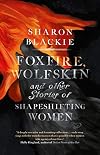
A glorious collection of retelling and re-imaginings centering female characters and frequently challenging the traditional female fairy tale experience. While many of the tales inevitably feature themes of assault or infidelity, there's a fiercer response here than the traditional tale allows for. The collection also makes room for older women - if mostly in the role of the goddess. There's even a small space made for female friendship, however unlikely in the original show more circumstances.
Particular favourites for me: The Last Man Standing, The Bogman's Wife, Meeting Baba Yaga and No Country For Old Women
Full review show less
Particular favourites for me: The Last Man Standing, The Bogman's Wife, Meeting Baba Yaga and No Country For Old Women
Full review show less
Lists
Awards

You May Also Like


Associated Authors
Statistics
- Works
- 11
- Also by
- 2
- Members
- 725
- Popularity
- #35,031
- Rating
- 3.7
- Reviews
- 15
- ISBNs
- 45
- Languages
- 1