
Tracie Vaughn Zimmer
Author of Reaching for Sun
About the Author
Works by Tracie Vaughn Zimmer
Tagged
Common Knowledge
- Birthdate
- 1969-04-21
- Gender
- female
- Education
- Ohio State University (BA)
Miami University (MA) - Occupations
- teacher
children's book author
Reading Specialist
Children's Reading Guides author - Nationality
- USA
- Birthplace
- Cincinnati, Ohio, USA
- Places of residence
- Cincinnati, Ohio, USA
Virginia, USA
North Carolina, USA - Associated Place (for map)
- USA
Members
Reviews
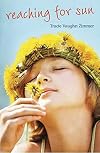
Zimmer, T.V. (2007). Reaching for Sun. New York: Bloomsbury.
181 pages.
Appetizer: Josie Wyatt is in the seventh grade. She lives with her mom (who is almost never around since she's trying to complete her college degree) and her grandmother. She hates school. She's never met her father. Her family has had to sell most of their farm land and must watch subdivisions for the rich be built around their house. She is bullied by most of the kids at school. And she has cerebral palsy.
Reaching for show more the Sun is set over (just about) a year as Josie makes her first friend, deals with her grandmother's deteriorating health and struggles to find the words to get her mom to let her not participate in a summer clinic designed to help her with her cerebral palsy.
This novel in verse is written by Tracie Vaughn Zimmer, a local author who I have heard speak a couple of time, and who (full-disclosure!) made contact with the literary agency that would eventually represent me. So far, this is my favorite book by her. Josie's voice is honest and poignant. The moment that really drew me in was when she thinks about what type of man her absentee-father must be:
"I wonder
if he ditched me and Mom
when he found out about my disability,
or if it gave him the excuse he needed--
typed letter left behind in the mailbox,
no stamp.
I wonder if I got my straight
blond hair, blue eyes,
and cowardice from him,
and whether he's real smart,
rich, and now got himself
a picture-perfect family" (p. 15)
Ouch!
Throughout the book, there are also illustrations of a flower growing in the bottom right margin of each page. As you go through the story, Josie grows and blossoms as a character and the flower grows and blossoms too. I thought this was a wonderful touch that complimented the content and name of the story beautifully.
Overall, I found Reaching for Sun to be a very touching and realistic story of a girl coming into her own.
Dinner Conversation:
"The last bell rings,
but
I'm hiding
in the last stall
of the girls' bathroom
until I hear
voices
disappear behind closing
classroom doors.
Only then
do I slip out
into the deserted hallway
and rush to room 204,
a door
no one
wants to be seen opening.
Not even
me." (p. 3).
"With my odd walk
and slow speech
everyone knows
I've got special ed,
but if I wait
until the hall clears,
taunts like tomatoes
don't splatter
the back of my head" (p. 4).
"Mom wants me
to love school like she does,
follow her lead to college,
make my mark:
the first astronaut with
cerebral palsy,
or at least
a doctor or lawyer,
something with a title or abbreviations, I guess.
But Mom's dreams for me
are a heavy wool coat I
wear, even in summer." (p.46).
Tasty Rating: !!!! show less
181 pages.
Appetizer: Josie Wyatt is in the seventh grade. She lives with her mom (who is almost never around since she's trying to complete her college degree) and her grandmother. She hates school. She's never met her father. Her family has had to sell most of their farm land and must watch subdivisions for the rich be built around their house. She is bullied by most of the kids at school. And she has cerebral palsy.
Reaching for show more the Sun is set over (just about) a year as Josie makes her first friend, deals with her grandmother's deteriorating health and struggles to find the words to get her mom to let her not participate in a summer clinic designed to help her with her cerebral palsy.
This novel in verse is written by Tracie Vaughn Zimmer, a local author who I have heard speak a couple of time, and who (full-disclosure!) made contact with the literary agency that would eventually represent me. So far, this is my favorite book by her. Josie's voice is honest and poignant. The moment that really drew me in was when she thinks about what type of man her absentee-father must be:
"I wonder
if he ditched me and Mom
when he found out about my disability,
or if it gave him the excuse he needed--
typed letter left behind in the mailbox,
no stamp.
I wonder if I got my straight
blond hair, blue eyes,
and cowardice from him,
and whether he's real smart,
rich, and now got himself
a picture-perfect family" (p. 15)
Ouch!
Throughout the book, there are also illustrations of a flower growing in the bottom right margin of each page. As you go through the story, Josie grows and blossoms as a character and the flower grows and blossoms too. I thought this was a wonderful touch that complimented the content and name of the story beautifully.
Overall, I found Reaching for Sun to be a very touching and realistic story of a girl coming into her own.
Dinner Conversation:
"The last bell rings,
but
I'm hiding
in the last stall
of the girls' bathroom
until I hear
voices
disappear behind closing
classroom doors.
Only then
do I slip out
into the deserted hallway
and rush to room 204,
a door
no one
wants to be seen opening.
Not even
me." (p. 3).
"With my odd walk
and slow speech
everyone knows
I've got special ed,
but if I wait
until the hall clears,
taunts like tomatoes
don't splatter
the back of my head" (p. 4).
"Mom wants me
to love school like she does,
follow her lead to college,
make my mark:
the first astronaut with
cerebral palsy,
or at least
a doctor or lawyer,
something with a title or abbreviations, I guess.
But Mom's dreams for me
are a heavy wool coat I
wear, even in summer." (p.46).
Tasty Rating: !!!! show less
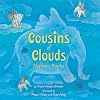
A collection of poetic ruminations on pachyderms coupled with informational bits that might work on multiple levels for older and younger audiences.
The second largest mammals on the planet get the poetic treatment from a variety of perspectives that describe and explain as much as they meditate and drift. Each poem includes a bit of non-fiction that informs the reader separate from the poem's language and intent, with illustrations that underscores the many facets of elephants.
One show more particular spread covers the bases here. One one page we get "Ivory:"
Excuse me?
You want what?
Two of my teeth? I think not!
Find another souvenir.
My enemy is drawing near~
my calf and I must disappear.
This is accompanied on the same page a line drawing of an elephant drawn on top of collaged brown paper that gives the animal shades of character as it stares the reader down. Beneath is an explanation of how elephants were once hunted for their ivory and how a boycott on ivory sales was instituted in 1989. On the facing page we get another poem, "Mud Spa:"
slurp!
thwonk!
splat!
Completely divine,
muddy chocolate sublime
splattered onto my skin–
better yet, I'll dive in.
The playful poem, and equally playful illustration, gives us an image we have seen before, but the accompanying sidebar text explains how elephant skins are sensitive to sunburn and insect bites, making the mud bath more of an essential element of survival more than playtime. In these two pages we get a range of information and imagery that paints a concise picture of elephants in a way dry text could not.
This is what made me think about how this book -- reformatted, and slightly modified -- would work equally well with an audience older than what we would normally consider for picture books. I know there are older readers, including teens, who don't have problems reading picture books, but there are as many if not more who would find the poems and information appealing if presented differently.
Not to suggest there's anything wrong with the collection as it is, no, no. In fact, I'd like to see more like this, books with a melding of fiction (and poetry) among the non-fiction. The reader with a preference for one will end up reading the other and reaping the benefits. show less
The second largest mammals on the planet get the poetic treatment from a variety of perspectives that describe and explain as much as they meditate and drift. Each poem includes a bit of non-fiction that informs the reader separate from the poem's language and intent, with illustrations that underscores the many facets of elephants.
One show more particular spread covers the bases here. One one page we get "Ivory:"
Excuse me?
You want what?
Two of my teeth? I think not!
Find another souvenir.
My enemy is drawing near~
my calf and I must disappear.
This is accompanied on the same page a line drawing of an elephant drawn on top of collaged brown paper that gives the animal shades of character as it stares the reader down. Beneath is an explanation of how elephants were once hunted for their ivory and how a boycott on ivory sales was instituted in 1989. On the facing page we get another poem, "Mud Spa:"
slurp!
thwonk!
splat!
Completely divine,
muddy chocolate sublime
splattered onto my skin–
better yet, I'll dive in.
The playful poem, and equally playful illustration, gives us an image we have seen before, but the accompanying sidebar text explains how elephant skins are sensitive to sunburn and insect bites, making the mud bath more of an essential element of survival more than playtime. In these two pages we get a range of information and imagery that paints a concise picture of elephants in a way dry text could not.
This is what made me think about how this book -- reformatted, and slightly modified -- would work equally well with an audience older than what we would normally consider for picture books. I know there are older readers, including teens, who don't have problems reading picture books, but there are as many if not more who would find the poems and information appealing if presented differently.
Not to suggest there's anything wrong with the collection as it is, no, no. In fact, I'd like to see more like this, books with a melding of fiction (and poetry) among the non-fiction. The reader with a preference for one will end up reading the other and reaping the benefits. show less
There are some books that will just stick with you wherever you go. Tracie Vaughn Zimmer’s newest novel Reaching for Sun is definitely one of those books. Heart-warming and inspiring, this novel follows 11-year old Josie – who has cerebral palsy.
This book is AMAZING! Although it’s quick (it’s only 144 pages) and the actual “text” is fairly simple, the story itself is beyond complex. Readers will definitely be able to relate to Josie on a variety of levels, and they will show more find themselves laughing and crying along with Josie.
I’ll admit something: I’m not the biggest fan of free verse. I picked Reaching for Sun up, and decided to give free verse another try. But…holy cow! This blew me away! It hardly feels like you’re even reading free verse. There is so much figurative language implanted everywhere – it truly adds to the emotional aspect of the story. I mean seriously…this is phenomenal! I will definitely be reading free verse again if it’s this good!
I’d definitely recommend this to anyone interested in free verse or realistic fiction. This is definitely a story you won’t forget! Tracie Vaughn Zimmer…I am definitely reading more of your stories! show less
This book is AMAZING! Although it’s quick (it’s only 144 pages) and the actual “text” is fairly simple, the story itself is beyond complex. Readers will definitely be able to relate to Josie on a variety of levels, and they will show more find themselves laughing and crying along with Josie.
I’ll admit something: I’m not the biggest fan of free verse. I picked Reaching for Sun up, and decided to give free verse another try. But…holy cow! This blew me away! It hardly feels like you’re even reading free verse. There is so much figurative language implanted everywhere – it truly adds to the emotional aspect of the story. I mean seriously…this is phenomenal! I will definitely be reading free verse again if it’s this good!
“...My thumb will always be pasted to my palm, and my left wrist and shoulder connected by an invisible rubber band called cerebral palsy.”My only critique is that the plot starts off just a *tad* slowly, but then it quickly picks up. (I know -- picky, picky…)
~ page 6
I’d definitely recommend this to anyone interested in free verse or realistic fiction. This is definitely a story you won’t forget! Tracie Vaughn Zimmer…I am definitely reading more of your stories! show less
Josie makes her first real friend, deals with the aftermath of her beloved Grandma's stroke, and learns to voice what she wants for her life in this brief novel written in verse. Josie has cerebral palsy and resents all the therapy she must endure. There are moments where the poetry sparkles.
Lists
Awards


You May Also Like


Associated Authors
Statistics
- Works
- 6
- Members
- 467
- Popularity
- #52,671
- Rating
- 3.9
- Reviews
- 41
- ISBNs
- 12