
Alan Johnson (10) (1950–)
Author of This Boy
For other authors named Alan Johnson, see the disambiguation page.
About the Author
Image credit: https://alanjohnsonbooks.co.uk/bio/
Series
Works by Alan Johnson
The Preservation and Creation of Jobs - national options in view of international competition 1 copy
Direct mail: A Union view 1 copy
Post Office Pay 1 copy
Speech to Annual conference 1 copy
We can beat sell-off 1 copy
Cutting criticism of low pay 1 copy
Freedom to deliver 1 copy
Pay, hours and jobs 1 copy
Associated Works
Tagged
Common Knowledge
- Legal name
- Johnson, Alan Arthur
- Birthdate
- 1950-05-17
- Gender
- male
- Occupations
- postal worker
trade unionist
politician - Organizations
- The Labour Party
- Short biography
- Alan Johnson was General Secretary of the Communication Workers Union before entering Parliament as Labour MP for Hull West and Hessle in 1997. He served as Home Secretary from June 2009 to May 2010. Before that, he filled a wide variety of cabinet positions in both the Blair and Brown governments, including Health Secretary and Education Secretary. Until 20 January 2011 he was Shadow Chancellor of the Exchequer. Alan retired as an MP before the 2017 general election after 20 years as an MP.
- Nationality
- UK
- Birthplace
- London, England, UK
- Places of residence
- East Yorkshire, England, UK
- Associated Place (for map)
- England, UK
Members
Reviews

Johnson was a British politician who served as Secretary of State and later, Shadow Chancellor of the Exchequer. His memoirs are engrossing and very well-written, so good that I was delighted when I heard he had written his first mystery novel The Late Train to Gipsy Hill, which was excellent.
This is a second mystery in what has become a series featuring Louise Mangan, who is now Assistant Commissioner of the Metropolitan Police in London. A government minister has gone missing on a walking show more holiday in Crete and Louise has been asked to liaise with the Greek police in the search for him. At the same time she must stay abreast of potential problems connected to an upcoming visit to London of a controversial Turkish author. While I enjoyed it enormously, it did not have the sheer excitement of the first novel. However, as a combination of political drama and police procedural it is well-written, has great characters, fabulous location, and keeps the reader engaged, if not on the edge of their seat. I can’t wait to get the next book in the series. show less
This is a second mystery in what has become a series featuring Louise Mangan, who is now Assistant Commissioner of the Metropolitan Police in London. A government minister has gone missing on a walking show more holiday in Crete and Louise has been asked to liaise with the Greek police in the search for him. At the same time she must stay abreast of potential problems connected to an upcoming visit to London of a controversial Turkish author. While I enjoyed it enormously, it did not have the sheer excitement of the first novel. However, as a combination of political drama and police procedural it is well-written, has great characters, fabulous location, and keeps the reader engaged, if not on the edge of their seat. I can’t wait to get the next book in the series. show less

I have always enjoyed politicians' memoirs, and Alan Johnson’s first volume of autobiography, This Boy, must rank as one of the best I have read. I was particularly keen to read it as Johnson had, briefly, been Secretary of State in my Department. It's true that, throughout his short period in the Department for Education, he had been conspicuous principally by his virtual invisibility but I still thought that he might have some juicy morsel to dispense, with which to whet the salacious show more appetites of my fellow functionaries. As it happens, that book drew to a close before his political career had even started, and while I enjoyed the subsequent volumes (Please Mr Postman and The Long and Winding Road), they didn’t quite match the first one for its dramatic impact.
Since his retirement from front line politics, Johnson has gone a considerable way towards acquiring ‘national treasure’ status, partially as a consequence of the volumes of memoirs mentioned above, which show a great triumph over considerable early adversity, but also from his pragmatic and open approach, and his self-deprecating sense of humour.
Since then he has reinvented himself as a crime writer, and this is his third novel to feature Louise Mangan, now at the lofty rank of Detective Chief Superintendent. The novel opens, however, back in 1999, when Louise was a relative newcomer to the force, and still in the rank of Constable. As the book opens, she is engaged in an operation designed to catch a man who has been assaulting women in Southwest London. A man is arrested … indeed, Louise herself arrests him, but owing to the odd circumstances, she is never wholly satisfied that he is the actual assailant.
Meanwhile, preparations are under way for a monthly television programme highlighting prominent crimes. Although the programme has reached its current popularity as a consequence of close collaboration between the police and the programme makers, an issue has arisen. The producers want to lead with a story exposing the leader of a gang responsible for a massive proportion of the capital’s drug deals, but the police are threatening to withdraw their cooperation. And then the glamorous female presenter of the show is shot dead on her own doorstep. There are obvious resonances with the real murder of Jill Dando, who had presented Crimewatch for the BBC. Those similarities are carried further in the book, cleverly woven through the main plotline of the story.
Johnson’s ministerial career included a brief stint as Home Secretary, and he clearly draws on insights culled from those days in his portrayal of the working relationships (and especially the jealousies and resentments) between officers in the top echelons of the Metropolitan Police Service. He also portrays some of the sexism and racism with which many officers have to contend, and a lot of issues that are currently drawing media attention are brought into focus.
I particularly enjoyed Johnson’s deployment of his local knowledge. A lot of the action of the novel takes place on Tagg’s Island, a small island in the Thames near Hampton Court. Having never heard of this, I wonder ed whether Johnson had made it up to suit the requirements of the plot, but it does exist, and from my foray there over the Easter weekend, it is clear that Johnson knows it well, as he captures it very accurately.
This is a light-hearted yet still plausible novel, and highly entertaining. show less
Since his retirement from front line politics, Johnson has gone a considerable way towards acquiring ‘national treasure’ status, partially as a consequence of the volumes of memoirs mentioned above, which show a great triumph over considerable early adversity, but also from his pragmatic and open approach, and his self-deprecating sense of humour.
Since then he has reinvented himself as a crime writer, and this is his third novel to feature Louise Mangan, now at the lofty rank of Detective Chief Superintendent. The novel opens, however, back in 1999, when Louise was a relative newcomer to the force, and still in the rank of Constable. As the book opens, she is engaged in an operation designed to catch a man who has been assaulting women in Southwest London. A man is arrested … indeed, Louise herself arrests him, but owing to the odd circumstances, she is never wholly satisfied that he is the actual assailant.
Meanwhile, preparations are under way for a monthly television programme highlighting prominent crimes. Although the programme has reached its current popularity as a consequence of close collaboration between the police and the programme makers, an issue has arisen. The producers want to lead with a story exposing the leader of a gang responsible for a massive proportion of the capital’s drug deals, but the police are threatening to withdraw their cooperation. And then the glamorous female presenter of the show is shot dead on her own doorstep. There are obvious resonances with the real murder of Jill Dando, who had presented Crimewatch for the BBC. Those similarities are carried further in the book, cleverly woven through the main plotline of the story.
Johnson’s ministerial career included a brief stint as Home Secretary, and he clearly draws on insights culled from those days in his portrayal of the working relationships (and especially the jealousies and resentments) between officers in the top echelons of the Metropolitan Police Service. He also portrays some of the sexism and racism with which many officers have to contend, and a lot of issues that are currently drawing media attention are brought into focus.
I particularly enjoyed Johnson’s deployment of his local knowledge. A lot of the action of the novel takes place on Tagg’s Island, a small island in the Thames near Hampton Court. Having never heard of this, I wonder ed whether Johnson had made it up to suit the requirements of the plot, but it does exist, and from my foray there over the Easter weekend, it is clear that Johnson knows it well, as he captures it very accurately.
This is a light-hearted yet still plausible novel, and highly entertaining. show less
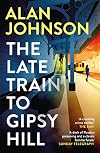
I have enjoyed Alan Johnson’s various volumes of memoirs – I had a particular personal interest because he had, briefly, been Secretary of State at the Department for Children, Schools and Families (now the Department for Education) while I worked there. It would be fair to say that throughout his short period in the Department, he had been conspicuous principally by his virtual invisibility, but I had still thought that he might have some juicy morsel to dispense, with which to whet the show more salacious appetites of my fellow functionaries.
Those memoirs certainly told an amazing story – especially the first volume, This Boy, and his journey from desperate, poverty-stricken childhood in the post war years in what is now affluent Notting Hill, but was then run-down Notting Dale, to serving in the Cabinet is utterly life-affirming.
This is his first novel, and he has taken to the format very confidently, weaving an exciting and engrossing story about infighting between Russian and Ukrainian gangsters across London. It veers more towards the light-hearted end of the crime genre, but does not allow that to compromise the plot. His protagonist, Gary Nelson, is charming in his lack of heroic pretension (although that does not prevent him displaying considerable courage and integrity throughout), and it is all too plausible that he should fall so heavily for the alluringly beautiful woman whom he sees on his commuter train each morning.
This was a thoroughly entertaining novel, and I am looking forward to the next in the series. show less
Those memoirs certainly told an amazing story – especially the first volume, This Boy, and his journey from desperate, poverty-stricken childhood in the post war years in what is now affluent Notting Hill, but was then run-down Notting Dale, to serving in the Cabinet is utterly life-affirming.
This is his first novel, and he has taken to the format very confidently, weaving an exciting and engrossing story about infighting between Russian and Ukrainian gangsters across London. It veers more towards the light-hearted end of the crime genre, but does not allow that to compromise the plot. His protagonist, Gary Nelson, is charming in his lack of heroic pretension (although that does not prevent him displaying considerable courage and integrity throughout), and it is all too plausible that he should fall so heavily for the alluringly beautiful woman whom he sees on his commuter train each morning.
This was a thoroughly entertaining novel, and I am looking forward to the next in the series. show less
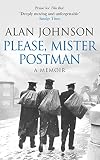
The second volume of Alan Johnson's engaging memoirs picks up right where its predecessor left off. Alan is whisked off on Christmas Eve, 1967, to spend the holiday in Watford with his sister Linda, the real heroine of the first volume, and her husband Mike. The new year was to bring a lot of change for him: not only would he turn eighteen but he would get married and start a new job as a postman, based at the Barnes sorting centre in west London.
The first volume of this autobiography, show more 'This Boy', was memorable for two extraordinary women: Johnson's mother, who worked herself into an early grave through her efforts to stave off poverty from her two children after their inadequate father absconded, and Linda, Johnson's elder sister who looked after him following their mother's death. Linda remains magnificent throughout this second volume, bringing up her own children and fostering four others. Still ravaged by tragedy, she carries on indomitably.
Yet Johnson himself emerges as an extraordinary figure, too. Self-effacing and driven by principle rather than political dogma. He came into politics gradually, having served his time as a postman on the daily rounds, and rising through the ranks of the Communications Workers' Union.
All in all, this is another uplifting work: simply written, but utterly engaging. I am looking forward to reading the next instalment as he draws closer to Westminster and, ultimately, his role in Tony Blair's and Gordon Brown's cabinets, where he would become established as the ultimate 'safe pair of hands', moved between departments to damp down potential crises. show less
The first volume of this autobiography, show more 'This Boy', was memorable for two extraordinary women: Johnson's mother, who worked herself into an early grave through her efforts to stave off poverty from her two children after their inadequate father absconded, and Linda, Johnson's elder sister who looked after him following their mother's death. Linda remains magnificent throughout this second volume, bringing up her own children and fostering four others. Still ravaged by tragedy, she carries on indomitably.
Yet Johnson himself emerges as an extraordinary figure, too. Self-effacing and driven by principle rather than political dogma. He came into politics gradually, having served his time as a postman on the daily rounds, and rising through the ranks of the Communications Workers' Union.
All in all, this is another uplifting work: simply written, but utterly engaging. I am looking forward to reading the next instalment as he draws closer to Westminster and, ultimately, his role in Tony Blair's and Gordon Brown's cabinets, where he would become established as the ultimate 'safe pair of hands', moved between departments to damp down potential crises. show less
Lists
Awards


You May Also Like


Associated Authors
Statistics
- Works
- 28
- Also by
- 1
- Members
- 550
- Popularity
- #45,354
- Rating
- 4.0
- Reviews
- 34
- ISBNs
- 82
- Favorited
- 1