

Marti Olsen Laney
Author of The Introvert Advantage: How to Thrive in an Extrovert World
About the Author
Marti Olsen Laney, Psy.D., is a licensed Marriage and Family Therapist. She frequently speaks on the topic of introversion (with plenty of preparation time) and also leads workshops for introverts. She and her husband live in Calabasas, California. (Bowker Author Biography)
Image credit: GoodReads
Works by Marti Olsen Laney
The Hidden Gifts of the Introverted Child: Helping Your Child Thrive in an Extroverted World (2005) 99 copies, 2 reviews
Tagged
Common Knowledge
- Birthdate
- 19??
- Gender
- female
- Occupations
- psychotherapist
author - Nationality
- USA
- Places of residence
- Portland, Oregon, USA
Knoxville, Tennessee, USA - Associated Place (for map)
- USA
Members
Reviews
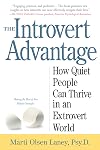
It's hard to believe that there are some non-fiction books that one can simply tear through like a trashy thriller or a novel of mystery and suspense. This is one of them. It's a highly readable look at the world of introverts written by an introvert, and it ably discusses the challenges that introverts face in a society that places a higher value on extroverted qualities (speaking one's mind, doing all sorts of things, being a social butterfly, etc.). The book is divided in three distinct show more parts. The first defines an introvert and discusses how they are perceived and whether people are born to be introverted or extroverted. The second talks about four different aspects of the extroverted world that pose great challenges for introverts: relationships, parenting, socializing, and working. The third discusses how introverts can learn to set their own priorities and parameters in order to feel more comfortable in their own skin, and the last chapter provides techniques on how to become a temporary extrovert when required (as the author points out, you can go right back to being an introvert when you're finished).
I always figured I was an introvert, and indeed I scored on the "Pretty darn introverted" level in the self-assessment found in Chapter 1, but reading this book also made me realize just how far I've come in my life, in terms of social situations especially. (For example, I have mustered up the courage to ask for autographs from musicians I like. A few years ago that would have been unthinkable.) But of course there's always room for improvement, and so I found the chapters on socializing and working to be particularly helpful., especially the sections that talked about speaking one's mind and offering opinions without being prompted. The book is littered with helpful real-life examples of introverts, concrete suggestions for moving forward in one's life, and the tone is friendly without trying too hard to be funny.
This is a worthy addition to an introvert's bookshelves. I borrowed my copy from the library but will likely buy my own for future reference. show less
I always figured I was an introvert, and indeed I scored on the "Pretty darn introverted" level in the self-assessment found in Chapter 1, but reading this book also made me realize just how far I've come in my life, in terms of social situations especially. (For example, I have mustered up the courage to ask for autographs from musicians I like. A few years ago that would have been unthinkable.) But of course there's always room for improvement, and so I found the chapters on socializing and working to be particularly helpful., especially the sections that talked about speaking one's mind and offering opinions without being prompted. The book is littered with helpful real-life examples of introverts, concrete suggestions for moving forward in one's life, and the tone is friendly without trying too hard to be funny.
This is a worthy addition to an introvert's bookshelves. I borrowed my copy from the library but will likely buy my own for future reference. show less
Wow. Just wow.
I learned a lot about how my brain works, specifically how it works differently from extroverted folks' brains. This book is also full of lots of tips on how to thrive and be yourself in our extrovert-biased society. She describes many of the things that are normal for introverts, based just on how our brains are wired - in these descriptions, I found SO MANY things that I've always thought were really, deeply, wrong with me. And hey, look at that. Not wrong with me at all. show more Normal for an introvert! Similar experience with a lot of her tips. Many (but not all) of the tips are things I've already figured out and have been doing to various degrees for many years. Some of these things, I've always felt like a freak for doing. I'm working on changing the way I think about all of this. The way I think about me.
I strongly recommend this book to all of my introverted family and friends. The more introverted you are, the more I recommend it. It might not be a bad read for my extrovert friends, either. Have a peek at what we may not be able to tell you about ourselves. :)
Life-changing. If I can retain it. :) show less
I learned a lot about how my brain works, specifically how it works differently from extroverted folks' brains. This book is also full of lots of tips on how to thrive and be yourself in our extrovert-biased society. She describes many of the things that are normal for introverts, based just on how our brains are wired - in these descriptions, I found SO MANY things that I've always thought were really, deeply, wrong with me. And hey, look at that. Not wrong with me at all. show more Normal for an introvert! Similar experience with a lot of her tips. Many (but not all) of the tips are things I've already figured out and have been doing to various degrees for many years. Some of these things, I've always felt like a freak for doing. I'm working on changing the way I think about all of this. The way I think about me.
I strongly recommend this book to all of my introverted family and friends. The more introverted you are, the more I recommend it. It might not be a bad read for my extrovert friends, either. Have a peek at what we may not be able to tell you about ourselves. :)
Life-changing. If I can retain it. :) show less
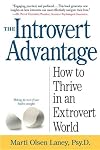
There were many things in this book that resonated with me. Living among extroverts, I find myself comparing myself and trying to be like them. Or I find myself feeling guilty for my need to be alone and process life. Yet reading this I realize God has made me a certain way, and that introversion is not a bad thing. There is actually a physiological reality in my brain that makes me the way I am!
Laney gives some practical advice for being an introvert. Some things I have already show more instinctively learned, but some were new. One of my favorites is strategies for going to a large group gathering such as a party. I recently used her sea urchin strategy when I found myself walking into a party where I knew everyone, but I still had the initial pang of anxiety, "where do I start? what do I say?" Instead, I just smiled at my own awkward feelings inside, knowing, "hey this is me" and then I found a good location to sit and just wait for, as Laney describes, the flow of people to come to me. Like an anemone attaches itself on a rock waiting for the current to bring along food, you can plant yourself in location waiting for people you can invite into pleasant, meaningful conversation. What a better way to enjoy talking to friends rather than trying to act like an extrovert, who actually enjoys going from person to person engaging in small talk! (My nightmare!)
I also enjoyed the chapter on the brain. It gives me some comfort to know there is a reason why I can't always think of what to say on the spot, or why I have trouble articulating myself in a moment's notice.
If you feel like you are an introvert (and there is a spectrum from super introversion to a little bit of introversion), this book will be very validating. If you love an introvert, this will help you understand them better. show less
Laney gives some practical advice for being an introvert. Some things I have already show more instinctively learned, but some were new. One of my favorites is strategies for going to a large group gathering such as a party. I recently used her sea urchin strategy when I found myself walking into a party where I knew everyone, but I still had the initial pang of anxiety, "where do I start? what do I say?" Instead, I just smiled at my own awkward feelings inside, knowing, "hey this is me" and then I found a good location to sit and just wait for, as Laney describes, the flow of people to come to me. Like an anemone attaches itself on a rock waiting for the current to bring along food, you can plant yourself in location waiting for people you can invite into pleasant, meaningful conversation. What a better way to enjoy talking to friends rather than trying to act like an extrovert, who actually enjoys going from person to person engaging in small talk! (My nightmare!)
I also enjoyed the chapter on the brain. It gives me some comfort to know there is a reason why I can't always think of what to say on the spot, or why I have trouble articulating myself in a moment's notice.
If you feel like you are an introvert (and there is a spectrum from super introversion to a little bit of introversion), this book will be very validating. If you love an introvert, this will help you understand them better. show less
I really enjoyed the main thesis of the book: "introvertism" and "extrovertism" aren't about being shy or outgoing, but rather are manners of describing how a person recharges their energy; whether alone or with other people, respectively. Overall the book was repetitive and geared towards people with very high levels of social anxiety, but it did end up making me feel more comfortable with my own social deficits.
Lists
You May Also Like


Associated Authors
Statistics
- Works
- 4
- Members
- 1,689
- Popularity
- #15,216
- Rating
- 3.8
- Reviews
- 29
- ISBNs
- 30
- Languages
- 9