
Patrick Parrinder
Author of H.G. Wells Short Stories (Gothic Fantasy)
Works by Patrick Parrinder
Learning from Other Worlds: Estrangement, Cognition, and the Politics of Science Fiction and Utopia (2000) — Editor — 24 copies
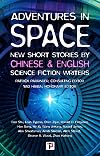
Adventures in Space (Short stories by Chinese and English Science Fiction writers) (2023) — Editor — 24 copies, 2 reviews
Shadows of the Future: H.G.Wells, Science Fiction and Prophesy (Liverpool Science Fiction Texts & Studies) (1995) 17 copies
The Reception of H.G. Wells in Europe (The Reception of British and Irish Authors in Europe) (2005) 8 copies
H.G. Wells under revision : proceedings of the International H.G. Wells Symposium, London, July 1986 (1990) 6 copies
Utopian literature and science : from the scientific revolution to Brave New World and beyond (2015) 4 copies
The Wellsian (No. 5) 1 copy
The Wellsian (No. 4) 1 copy
The Wellsian (No. 6) 1 copy
The Wellsian (No. 7) 1 copy
Associated Works
The Country of the Blind and Other Science-Fiction Stories (1997) — Editor, some editions — 235 copies, 1 review
Science Fiction Roots and Branches: Contemporary Critical Approaches (1990) — Contributor — 11 copies, 1 review
Tagged
Common Knowledge
- Birthdate
- 1944
- Gender
- male
- Organizations
- H. G. Wells Society (vice president)
Wellsian (editor)
University of Reading (emeritius professor|English) - Nationality
- United Kingdom
- Associated Place (for map)
- United Kingdom
Members
Reviews
https://fromtheheartofeurope.eu/adventures-in-space-eds-patrick-parrinder-and-ya...
It’s actually quite an old-fashioned collection – most of the stories are about people on spaceships or on alien planets getting into trouble, which of course a lot of SF is still about, but few of these stories really touch on anything else. “Answerless Journey”, by Han Song, one of the Hugo finalists, takes this in an interesting direction by de-humanising its space travellers (if indeed they are show more human, which is – deliberately? – not clear). The thirteen stories range in length from 65 pages (“Shine”, by Chen Zijun) to 13 (“The Darkness of Mirror Planet”, by Zhao Haihong), most on the shorter side. Still, it’s an interesting step in intercultural communication. show less
It’s actually quite an old-fashioned collection – most of the stories are about people on spaceships or on alien planets getting into trouble, which of course a lot of SF is still about, but few of these stories really touch on anything else. “Answerless Journey”, by Han Song, one of the Hugo finalists, takes this in an interesting direction by de-humanising its space travellers (if indeed they are show more human, which is – deliberately? – not clear). The thirteen stories range in length from 65 pages (“Shine”, by Chen Zijun) to 13 (“The Darkness of Mirror Planet”, by Zhao Haihong), most on the shorter side. Still, it’s an interesting step in intercultural communication. show less
Adventures in Space: An Anthology of Short Stories by Chinese and English-language Science Fiction Writers by Patrick Parrinder

Adventures in Space is a science fiction anthology containing a mix of translated Chinese stories and English-language originals; the Chinese stories are all reprints, as are most of the English ones. I picked it up from the library because it contained three Hugo finalists, all Chinese stories that became eligible because they were contained in this anthology. The theme of the anthology is space exploration; all of the stories feature people on expeditions into space, either within our show more solar system or beyond. (Note that the title on the cover says "new short stories" but only two of the thirteen stories are new; the actual title on the book's title page makes no such promise. Also, given Patrick Parrinder and Yao Haijun are credited as just "consultant editor" and "honorary editor" respectively, I wonder how much they actually did to make this book.) I'll give full reviews of the three Hugo finalists, then offer some more summative comments on the book, first the Chinese stories, then all the English ones.
Han Song, "Answerless Journey" (1995)
Wang Jinkang, "Seeds of Mercury" (2002)
He Xi, "Life Does Not Allow Us to Meet" (2010)
Chinese Stories Overall
What I've learned from reading a lot of Chinese sf over the past couple years (either Hugo finalists or stories collected in Neil Clarke's anthologies) is that a lot of it comes across as old-fashioned to an Anglophone reader; lots of stories that are heavy on technical details and light on characterization. "Seeds of Mercury," "Life Does Not Allow Us to Meet," and Chen Zijun's "Shine" (2016) are all like this; they are all panoramic, big picture stories of space exploration... but all ones that gave me as a reader little-to-no reason to actually care about the story being told. "Shine" was particularly though; lots of bits where some kind of technical problem would be introduced (if we launch this rocket now, it will be hit by lightning) and then two paragraphs later someone would technobabble a solution (we can use our "li-fi" network to make laser lightning rods). This stuff could be technically sound or not, I have no way of knowing, but it's not interesting.
I did find more to like in the last two Chinese stories. Some aspects of Zhao Haihong's "The Darkness of Mirror Planet" (2003) are a bit cheesy, but overall it was a very interesting story. The main character comes from a very planned-out future; she is recruited to go on an expedition to a newly discovered planet, but finds something there that she did not expect... or does she? I also enjoyed "Doomsday Tour" (2013) by Bao Shu, which doesn't really fit the anthology's theme, but maybe that's for the best. Clearly inspired by 2012's Mayan apocalypse memes, it's about what happen when people think it's the end of the world, but it's actually not... on a cosmic scale. Fun and clever.
Also a lot of the Chinese stories have this very social Darwinist, it's us-or-them vibe: "Life Does Not Allow Us to Meet," "Shine," and "The Darkness of Mirror Planet" all have moments that hinge on the idea that we can't allow alien life to thrive because it innately poses a threat to us. In many of these cases, it's presented as the obvious conclusion to reach, even when the story seemingly disagrees with it. I find it kind of unsettling.
In my review of "Seeds of Mercury," I touched on some of translator Alex Woodend's odd choices; I am no student of Chinese, but surely the odd bit in "Shine" where someone says they will "be blown to the Western Paradise" is meant to be referring to "Heaven"?
English Stories Overall
It might be tempting to blame the mediocre quality here on the stories' Chinese origins, but I didn't find very many of the English ones very compelling either. I usually try to eschew spoilers in my reviews, especially of short fiction, but I find it impossible to discuss the twist held in common between several of these stories.
The first is Alex Shvartsman's "The Race for Arcadia" (2015), which is about a dying professor recruited for a desperate attempt by the Russian government to be the first to land on a newly discovered exoplanet. The more stripped down the ship, the faster it can make the interstellar journey, so if they put him on a one-way trip, they can win. But the twist is thatbefore the ship launches, the Russians upload his consciousness, so he only thinks he's physically on a ship... it turns out he's just an emulation. I didn't buy this at all; why would other nations consider landing an AI emulation of a person on an exoplanet any more meaningful than landing an automated probe?
The particular problem is that the next English story, "On the Ship" (2017) by Leah Cypess, has a similar twist. In this one, we are on a colony ship traveling from planet to planet looking for one where its passengers can settle, but it turns out that though they really are on such a ship, they're actually in suspended animation, and it's a trick to keep them wandering forever away from Earth. It might work okay (I didn't love it, but it was well told) if it didn't follow the previous story. The problem gets even worse in that the next English story, Eleanor R. Wood's "Her Glimmering Façade" (2016), is entirely dependent on the twist that the seemingly ordinary people in the story are actually in suspended animation on a spaceship living illusory lives. If you encountered the story in another context you might not see it coming, but given the story is in a book called "Adventures in Space" and having been primed by the previous two English stories, you basically work it out right away. This is, I suppose, a problem of the theme anthology—as an editor you need to balance coherence against repetition—but I am sure there must be other contemporary English takes on the idea of space exploration than "people have are secretly living in a computer simulation."
Thankfully the fourth English story, "Cylinders" (2017) by Ronald D. Ferguson, does not follow this line... but (not a spoiler for this story, but it is for the earlier ones)it is still told from the perspective of an uploaded consciousness ! Alas, I still didn't enjoy it much; a bit long-winded and I didn't really buy the central concepts.
Fortunately, the last three English stories take totally different approaches, but unfortunately, I found two of them pretty cheesy; Allen Stroud's "The First" (2023) and Russell James's "The Emissary" (2023) both have kind of old-school premises about alien life. I did find "Minuet of Corpses" (2018) by Amdi Silvestri the best English story in the book, with some good unsettling imagery, but by this point, you might see that that's damning with faint praise.
The idea behind this anthology is neat enough—bringing together English and Chinese stories on a common topic—but it needed a stronger set of stories to actually work. I did something similar with the 2023 Hugo Awards, reading the anthology Galaxy Awards 1 because it contained one translation of a Chinese finalist, but that even though it was a mixed bag, it was a much stronger volume, containing four strong stories instead of just one. show less
Han Song, "Answerless Journey" (1995)
There is still The Third.This is a translation of a story originally published in 1995! Thirty years old, but it feels much older, one of those old-school science fiction stories that really depends on a twist in the last lines but doesn't have much else going for it.
Wang Jinkang, "Seeds of Mercury" (2002)
"In short, in organic evolution, the tendency to cooperate is everywhere and grows stronger. For example, the scope of human cooperation has extended from individual to family, to community, to nation, to different races, even to wildlife beyond human beings. [...] I think the next step for human transcendence will be integration with alien life."Like "Life Does Not Allow Us to Meet" (see below), it's a very technical, exposition-focused story—Chinese sf does not seem in step with what is happening in Anglophone sf. Which is fine, of course, but I my tastes have been shaped by a different body of work. This has an interesting premise, of an attempt to create artificial life that translates into a moral duty to that life, but it seems to me that it skips over the interesting stuff and spends lot of time on the boring stuff. Plus I found the writing pretty stilted, with lots of awkward dialogue and the particularly terrible choice of referring to the protagonist's wife in narration as "wifey"! (All the Chinese stories from Adventures in Space have the same translator, so I don't know why this one would be noticeably worse, except if it was reflecting something in the original.)
He Xi, "Life Does Not Allow Us to Meet" (2010)
"If tube worms had pessimists, they would definitely shout: 'Shit! Human beings have come to snatch our hydrogen sulfide and tasty water!'"This is about a colonization effort, and concerns the genetic divergence of a group of "pioneers" altered to function on a water world in space. I found it long on exposition, and full of interchangeable boring characters.
Chinese Stories Overall
What I've learned from reading a lot of Chinese sf over the past couple years (either Hugo finalists or stories collected in Neil Clarke's anthologies) is that a lot of it comes across as old-fashioned to an Anglophone reader; lots of stories that are heavy on technical details and light on characterization. "Seeds of Mercury," "Life Does Not Allow Us to Meet," and Chen Zijun's "Shine" (2016) are all like this; they are all panoramic, big picture stories of space exploration... but all ones that gave me as a reader little-to-no reason to actually care about the story being told. "Shine" was particularly though; lots of bits where some kind of technical problem would be introduced (if we launch this rocket now, it will be hit by lightning) and then two paragraphs later someone would technobabble a solution (we can use our "li-fi" network to make laser lightning rods). This stuff could be technically sound or not, I have no way of knowing, but it's not interesting.
I did find more to like in the last two Chinese stories. Some aspects of Zhao Haihong's "The Darkness of Mirror Planet" (2003) are a bit cheesy, but overall it was a very interesting story. The main character comes from a very planned-out future; she is recruited to go on an expedition to a newly discovered planet, but finds something there that she did not expect... or does she? I also enjoyed "Doomsday Tour" (2013) by Bao Shu, which doesn't really fit the anthology's theme, but maybe that's for the best. Clearly inspired by 2012's Mayan apocalypse memes, it's about what happen when people think it's the end of the world, but it's actually not... on a cosmic scale. Fun and clever.
Also a lot of the Chinese stories have this very social Darwinist, it's us-or-them vibe: "Life Does Not Allow Us to Meet," "Shine," and "The Darkness of Mirror Planet" all have moments that hinge on the idea that we can't allow alien life to thrive because it innately poses a threat to us. In many of these cases, it's presented as the obvious conclusion to reach, even when the story seemingly disagrees with it. I find it kind of unsettling.
In my review of "Seeds of Mercury," I touched on some of translator Alex Woodend's odd choices; I am no student of Chinese, but surely the odd bit in "Shine" where someone says they will "be blown to the Western Paradise" is meant to be referring to "Heaven"?
English Stories Overall
It might be tempting to blame the mediocre quality here on the stories' Chinese origins, but I didn't find very many of the English ones very compelling either. I usually try to eschew spoilers in my reviews, especially of short fiction, but I find it impossible to discuss the twist held in common between several of these stories.
The first is Alex Shvartsman's "The Race for Arcadia" (2015), which is about a dying professor recruited for a desperate attempt by the Russian government to be the first to land on a newly discovered exoplanet. The more stripped down the ship, the faster it can make the interstellar journey, so if they put him on a one-way trip, they can win. But the twist is that
The particular problem is that the next English story, "On the Ship" (2017) by Leah Cypess, has a similar twist. In this one, we are on a colony ship traveling from planet to planet looking for one where its passengers can settle, but it turns out that though they really are on such a ship, they're actually in suspended animation, and it's a trick to keep them wandering forever away from Earth. It might work okay (I didn't love it, but it was well told) if it didn't follow the previous story. The problem gets even worse in that the next English story, Eleanor R. Wood's "Her Glimmering Façade" (2016), is entirely dependent on the twist that the seemingly ordinary people in the story are actually in suspended animation on a spaceship living illusory lives. If you encountered the story in another context you might not see it coming, but given the story is in a book called "Adventures in Space" and having been primed by the previous two English stories, you basically work it out right away. This is, I suppose, a problem of the theme anthology—as an editor you need to balance coherence against repetition—but I am sure there must be other contemporary English takes on the idea of space exploration than "people have are secretly living in a computer simulation."
Thankfully the fourth English story, "Cylinders" (2017) by Ronald D. Ferguson, does not follow this line... but (not a spoiler for this story, but it is for the earlier ones)
Fortunately, the last three English stories take totally different approaches, but unfortunately, I found two of them pretty cheesy; Allen Stroud's "The First" (2023) and Russell James's "The Emissary" (2023) both have kind of old-school premises about alien life. I did find "Minuet of Corpses" (2018) by Amdi Silvestri the best English story in the book, with some good unsettling imagery, but by this point, you might see that that's damning with faint praise.
The idea behind this anthology is neat enough—bringing together English and Chinese stories on a common topic—but it needed a stronger set of stories to actually work. I did something similar with the 2023 Hugo Awards, reading the anthology Galaxy Awards 1 because it contained one translation of a Chinese finalist, but that even though it was a mixed bag, it was a much stronger volume, containing four strong stories instead of just one. show less
Lists
You May Also Like


Associated Authors
Statistics
- Works
- 28
- Also by
- 18
- Members
- 447
- Popularity
- #54,864
- Rating
- 3.7
- Reviews
- 2
- ISBNs
- 72
- Languages
- 1