
Elizabeth Sayles
Author of I Already Know I Love You
Works by Elizabeth Sayles
Associated Works
Tagged
Common Knowledge
There is no Common Knowledge data for this author yet. You can help.
Members
Reviews

I'm generally skeptical about biographies for very young children - I don't think they have the context to really be interested in historical figures, which is why, in my opinion, picture book biographies really only work in schools, where teachers can introduce them in the context of classroom units. However, this easy reader biography of Anne Frank really, really works and I was surprised and pleased to see how good it was.
The story talks briefly about how Anne was an ordinary little girl, show more who liked to play with her friends, write, and collect pictures of movie stars. It explains the Nazi invasion in simple terms and shows their persecution of Jews without being too graphic or frightening. Most of the story focuses on Anne's life in hiding and how, despite the difficulty and sadness of her life, she still maintained hope, as symbolized by the chestnut tree. The story ends by explaining that although Anne did not survive the war, she lives on in her words and in the hope and kindness she believed in.
This is a level 3 Step Into Reading title, intended for 1st through 3rd grade. The language still has the brief, declarative sentences of an easy reader, but more complex vocabulary (collected, thoughts, opinions, memories, complained, etc.) is included as well as the more complex context of the story itself. The art is soft and pastel, conveying the fear and sadness of the story without making it nightmarish. The dark, earth-colored art doesn't do as well in the final illustrations, showing Anne's legacy and the hope she left behind though.
Verdict: I would definitely recommend this for a public library. It's a great introduction to Anne Frank for young children, as well as being a good story for them to read, even without complete context. Parents (and teachers) will want to be prepared to offer more explanations of the historical events, including Anne's death, since kids will probably be curious to find out more about her life.
ISBN: 9780449812556; Published 2013 by Random House; Review copy provided by the publisher; Added to the library show less
The story talks briefly about how Anne was an ordinary little girl, show more who liked to play with her friends, write, and collect pictures of movie stars. It explains the Nazi invasion in simple terms and shows their persecution of Jews without being too graphic or frightening. Most of the story focuses on Anne's life in hiding and how, despite the difficulty and sadness of her life, she still maintained hope, as symbolized by the chestnut tree. The story ends by explaining that although Anne did not survive the war, she lives on in her words and in the hope and kindness she believed in.
This is a level 3 Step Into Reading title, intended for 1st through 3rd grade. The language still has the brief, declarative sentences of an easy reader, but more complex vocabulary (collected, thoughts, opinions, memories, complained, etc.) is included as well as the more complex context of the story itself. The art is soft and pastel, conveying the fear and sadness of the story without making it nightmarish. The dark, earth-colored art doesn't do as well in the final illustrations, showing Anne's legacy and the hope she left behind though.
Verdict: I would definitely recommend this for a public library. It's a great introduction to Anne Frank for young children, as well as being a good story for them to read, even without complete context. Parents (and teachers) will want to be prepared to offer more explanations of the historical events, including Anne's death, since kids will probably be curious to find out more about her life.
ISBN: 9780449812556; Published 2013 by Random House; Review copy provided by the publisher; Added to the library show less
The Ghost Army of World War II : how one top-secret unit deceived the enemy with inflatable tanks, sound effects, and other audacious fakery by Rick Beyer
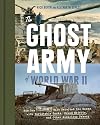
The Ghost Army of World War II I found to be exceptional in numerous ways. Firstly, I am not an aficionado of military history (although it is admittedly difficult to study human history without encountering quite a few wars), but this look at a historical event is fascinating from cover to cover. Secondly, I have found most books written by multiple authors to be of inferior quality in one way or another, but the two authors of Ghost Army have produced an extraordinarily fine read. The show more text, while factual, informative and instructive, is exceedingly well written and leads the reader onward without pause. Yet the text itself is but part of the book's attraction; liberally interspersed with the text are drawings and watercolors produced by the men who created the visual and auditory deceptions for which their unit was created. These drawings communicate the environment which these men found in both France and Germany in 1944 and 1945 more effectively than even the most adroit narrative description could do. Quite a few photographs also augment the text although most are too small to do justice to their subjects and do not come up to the quality of the sketches and water colors.
There is not quite as much material in the book as its 254 pages suggest, for the page margins are quite generous and white space abounds. Still, I found the formatting rather pleasing, and it sets off the illustrations to good effect.
A documentary film on the “ghost army” preceded this book, reversing the usual practice of a book's inspiring a subsequent film. Having never seen the filmed documentary, I cannot compare it with this book; however, the book does remind me of another World War II film, The Monuments Men. While the objectives of the two groups were quite different, both units were similar in that they were comprised of men who were professionals in the art world and were in no way typical combat units, nor did they have traditional military missions. Neither was well understood nor fully supported by other military commanders, the “ghost army,” in fact, being kept secret from allied as well as from opposing forces. The novel and largely unprecedented composition and mission of the “ghost army” (and of the “monuments men”) make their stories of interest even to readers who may usually avoid military-related topics.
I was struck by the concluding section of The Ghost Army of World War II because the authors do not end the history with the end of the war in 1945. While they could not detail post-war information on all 1,100 members of the “ghost army,” they do provide brief biographies of about sixty of those members so that the reader is not left to wonder what these men did after their experience in the war. Why did this section particularly impress me? It parallels my own efforts in documenting the lives of the men who served with my father in the 645th Aero Squadron in France in World War I and which is currently published via the World Wide Web.
Perhaps the fact that the “ghost army” fought against Hitler's troops by creating rather than destroying and by deceiving rather than shooting makes the book a pleasurable read. The Ghost Army of World War II gives the reader an intriguing look into the conceptualization, creation, and operation of a unit comprised largely of men skilled in artistic (both visual and auditory) creation and given a mission that may well have been unique in the conduct of modern warfare. It is a story of inspiration and imagination put to use to help win a war, and it is a story well told and meaningfully illustrated. show less
There is not quite as much material in the book as its 254 pages suggest, for the page margins are quite generous and white space abounds. Still, I found the formatting rather pleasing, and it sets off the illustrations to good effect.
A documentary film on the “ghost army” preceded this book, reversing the usual practice of a book's inspiring a subsequent film. Having never seen the filmed documentary, I cannot compare it with this book; however, the book does remind me of another World War II film, The Monuments Men. While the objectives of the two groups were quite different, both units were similar in that they were comprised of men who were professionals in the art world and were in no way typical combat units, nor did they have traditional military missions. Neither was well understood nor fully supported by other military commanders, the “ghost army,” in fact, being kept secret from allied as well as from opposing forces. The novel and largely unprecedented composition and mission of the “ghost army” (and of the “monuments men”) make their stories of interest even to readers who may usually avoid military-related topics.
I was struck by the concluding section of The Ghost Army of World War II because the authors do not end the history with the end of the war in 1945. While they could not detail post-war information on all 1,100 members of the “ghost army,” they do provide brief biographies of about sixty of those members so that the reader is not left to wonder what these men did after their experience in the war. Why did this section particularly impress me? It parallels my own efforts in documenting the lives of the men who served with my father in the 645th Aero Squadron in France in World War I and which is currently published via the World Wide Web.
Perhaps the fact that the “ghost army” fought against Hitler's troops by creating rather than destroying and by deceiving rather than shooting makes the book a pleasurable read. The Ghost Army of World War II gives the reader an intriguing look into the conceptualization, creation, and operation of a unit comprised largely of men skilled in artistic (both visual and auditory) creation and given a mission that may well have been unique in the conduct of modern warfare. It is a story of inspiration and imagination put to use to help win a war, and it is a story well told and meaningfully illustrated. show less
The Ghost Army of World War II: How One Top-Secret Unit Deceived the Enemy with Inflatable Tanks, Sound Effects, and Other Audacious Fakery by Rick Beyer
The Ghost Army is a breezy, mostly oral and visual history, of one of the strangest units of World War II. The 23rd Headquarters Special Troops' mission was one of comprehensive deception, using a few hundred men to simulate armored divisions and other heavy units. Using a combination of inflatable 'tanks', giant loudspeakers playing tape of real armored formations, radio units capable of mimicking other formations, and a bottom-up initiative called 'atmosphere', where men would essentially show more LARP as officers from the units they were mimicking, with classic loose lips.
The 23rd pulled off dozens of roadshows with theatrical flare. It's tricky to evaluate their direct military impact, but there were operations that they were a part of, notably the breakout from Normandy and crossing the Rhine, where Nazi defenses were held in front of the deception for vital hours at the beginning of an attack.
Where this book excels is in the literal picture of the men involved. The heart of the 23rd was a lowkey mafia of New York artists and art students, and where other soldiers with downtime would gamble, the 23rd sketched and painted. The art is exceptional, and there's lots of excerpts from sketchbooks. Some of the men of the 23rd went on to great careers in art and design, and their talent shows through.
The authors do a solid job putting together the story, though real history buffs should probably just go right to the primary source with the 23rd's Official History, which is arguably the most entertaining official history in the Army's archives and only recently declassified. With this book and the PBS documentary, Beyer and Sayles have done an admirable job preserving the legacy of one of the oddest and most interesting military units. show less
The 23rd pulled off dozens of roadshows with theatrical flare. It's tricky to evaluate their direct military impact, but there were operations that they were a part of, notably the breakout from Normandy and crossing the Rhine, where Nazi defenses were held in front of the deception for vital hours at the beginning of an attack.
Where this book excels is in the literal picture of the men involved. The heart of the 23rd was a lowkey mafia of New York artists and art students, and where other soldiers with downtime would gamble, the 23rd sketched and painted. The art is exceptional, and there's lots of excerpts from sketchbooks. Some of the men of the 23rd went on to great careers in art and design, and their talent shows through.
The authors do a solid job putting together the story, though real history buffs should probably just go right to the primary source with the 23rd's Official History, which is arguably the most entertaining official history in the Army's archives and only recently declassified. With this book and the PBS documentary, Beyer and Sayles have done an admirable job preserving the legacy of one of the oddest and most interesting military units. show less

Fascinating. More about the people - and in their own voices, from contemporary records and recent interviews - than the methods, though there's some discussion of their tools. The sonic and radio aspects of the deception get skimmed over more lightly than the physical ones - I don't know whether that's because some of them might still be useful (and therefore not declassified) or because they're more complex and technical and an in-depth discussion of them didn't fit the book's style. But show more the skimming is barely noticeable while reading, because the focus of the book is on the artists who were part of the various sections that made up the deception unit - many of them came straight from art school to the unit, and when they returned to civilian life many of them became famous artists (in one medium or another - Bill Blass is a big name in fashion, for instance). But many of the artists spent every free minute during their service sketching, painting, and otherwise illustrating their service and the areas where they were stationed, which make for a fascinating record of this unit's service. Few of the pictures chosen for the book illustrate the deception itself, but we get to see the towns they were in just before, and often just after, they'd been attacked; we get to see the soldiers (if you like Bill Mauldin's cartoons, here's some of the same sort of images); and we get to see the people they encountered, both locals (in France, Belgium, and other areas) and refugees in the same locations. It's not a dense book, but I found it very interesting. I suspect it will reward rereading, as well. show less
Awards

You May Also Like


Associated Authors
Statistics
- Works
- 5
- Also by
- 8
- Members
- 660
- Popularity
- #38,227
- Rating
- 3.9
- Reviews
- 44
- ISBNs
- 25
- Languages
- 1