
Aeschylus
Author of The Oresteia: Agamemnon, Women at the Graveside, Orestes in Athens
About the Author
Aeschylus was born at Eleusis of a noble family. He fought at the Battle of Marathon (490 b.c.), where a small Greek band heroically defeated the invading Persians. At the time of his death in Sicily, Athens was in its golden age. In all of his extant works, his intense love of Greece and Athens show more finds expression. Of the nearly 90 plays attributed to him, only 7 survive. These are The Persians (produced in 472 b.c.), Seven against Thebes (467 b.c.), The Oresteia (458 b.c.)---which includes Agamemnon, Libation Bearers, and Eumenides (or Furies) --- Suppliants (463 b.c.), and Prometheus Bound (c.460 b.c.). Six of the seven present mythological stories. The ornate language creates a mood of tragedy and reinforces the already stylized character of the Greek theater. Aeschylus called his prodigious output "dry scraps from Homer's banquet," because his plots and solemn language are derived from the epic poet. But a more accurate summation of Aeschylus would emphasize his grandeur of mind and spirit and the tragic dignity of his language. Because of his patriotism and belief in divine providence, there is a profound moral order to his plays. Characters such as Clytemnestra, Orestes, and Prometheus personify a great passion or principle. As individuals they conflict with divine will, but, ultimately, justice prevails. Aeschylus's introduction of the second actor made real theater possible, because the two could address each other and act several roles. His successors imitated his costumes, dances, spectacular effects, long descriptions, choral refrains, invocations, and dialogue. Swinburne's (see Vol. 1) enthusiasm for The Oresteia sums up all praises of Aeschylus; he called it simply "the greatest achievement of the human mind." Because of his great achievements, Aeschylus might be considered the "father of tragedy." (Bowker Author Biography) show less
Image credit: Herma of Aeschylus (Aischylos). Roman bust from the time around 30 BC after Greek bronze herma from the years 340-320 BC. Naples National Archaeological Museum. Photo from the exhibition Klassik 2002 in Berlin. Photo by Zde. https://commons.wikimedia.org/wiki/User:Zde
Series
Works by Aeschylus
The Persians; Prometheus Bound; Seven Against Thebes; The Suppliants (0458) — Author — 2,852 copies, 16 reviews
The Greek Plays: Sixteen Plays by Aeschylus, Sophocles, and Euripides (Modern Library Classics) (2016) 396 copies, 3 reviews
Nine Greek Dramas by Æschylus, Sophocles, Euripides and Aristophanes (2004) — Contributor — 346 copies
Aeschylus II: Agamemnon, Libation-Bearers, Eumenides, Fragments (Loeb Classical Library #146) (1957) 210 copies, 3 reviews
The Oresteia Trilogy (Agamemnon, Choephoroe, and Eumenides) [and] Prometheus Bound (0458) — Author — 164 copies, 1 review
Prometheus Bound(Aeschylus) and Prometheus Unbound(Shelley) (in Slipcase) (2011) 94 copies, 3 reviews
Tragédies (7): Les suppliantes - Les Perses - Les sept contre Thèbes - Prométhée enchainé - L'Agamemnon. Les Choephores. Les Eumenides (1999) 73 copies, 4 reviews
Persians, Seven against Thebes, and Suppliants (Johns Hopkins New Translations from Antiquity) (1987) 70 copies
Three Greek tragedies in translation (Prometheus Bound : Oedipus the King : Hippolytus) (1946) 24 copies
Drie Griekse tragedies 6 copies
Greek Tragedies II: Tbe Libation Bearers • Electra • Iphigenia in Tauris, Electra, The Trojan Women (2013) 6 copies
The Greek Plays: 33 Plays by Aeschylus, Sophocles, and Euripides (Modern Library Classics) (2019) 5 copies
Aeschylus 5 copies
Teatro Grego 4 copies
Orestien 1 2 Agamemnon. Orestes 3 copies
The suppliants (Volume 1) 3 copies
Sengrieķu traģēdijas — Author — 3 copies
The Tragedies of Aeschylus vol. II 3 copies
The Tragedies of Aeschylus vol. I 3 copies
The Oresteia of Aeschylus. Vol. 2 3 copies
Aeschylus 2 copies
The Ultimate Anthology of Philosophy 2 copies
Tutti i frammenti con la prima traduzione degli scolii antichi. Testo greco a fronte (2009) 2 copies
Prometeu Agrilhoado e Agaménnon 2 copies
Aeschylus: Tragoediae 2 copies
The Oresteia - A trilogy by Aeschylus in a version by Tony Harrison by Aeschylus (1981-11-01) 2 copies
Les Sept contre Thèbes - Les Suppliantes - Prépas scientifiques 2024 2025 (French Edition) (2024) 2 copies
Eschyle. Tome 2 2 copies
Aeschyli Fabulae 2 copies
Scènes choisies, Tome 2 2 copies
Ἃπαντα Αἰσχύλου 2 copies
Esquilo: Tragedias, II, Los siete contra Tebas, Las suplicantes; texto revisado y traducido por Mercedes Vílchez (1997) 2 copies
Χοηφόροι-Ευμενίδες 2 copies
The suppliants (Volume 2) 2 copies
Aeschyli Cantica 2 copies
Agamemnon och Medea 2 copies
Sentencias de Esquilo 1 copy
Scènes choisies, Tome 1 1 copy
Les Danas 1 copy
Tragèdies. III 1 copy
Αισχύλος: Πέρσαι, Επτά επί Θήβας, Ικέτιδες, Προμηθεύς Δεσμώτης, Αγαμέμνων, Χοηφόροι, Ευμενίδες (2005) 1 copy
Oréstia 1 copy
ΑΠΟΣΠΑΣΜΑΤΑ 1 copy
Άπαντα Αισχύλου (Β) - Μεγάλοι Αρχαίοι Συγγραφείς - Αγαμέμνων - Χοηφόροι - Ευμενίδες - Επτά επί Θήβας 1 copy
Χοηφόροι - Ευμενίδες 1 copy
ΑΙΣΧΥΛΟΥ ΤΡΑΓΩΔΙΕΣ 1 copy
Αἰσχύλος: Ἱκέτιδες 1 copy
Oréstia 1 copy
Tragedias (Spanish Edition) 1 copy
Édipo Antigo Livro 1 1 copy
Teatro Grego 1 copy
Teatro Completo Livro 1 1 copy
The Discoveries of Epictetus 1 copy
The Oresteia (video) 1 copy
Aeschylus: Agamemnon: Volume I (Prologomena, Text, Translation), Volume II (Commentary on 1-1055) (1962) 1 copy
Aeschykus 1 copy
Prometheus Bound; The Suppliants; Seven Against Thebes; The Persians, Philip Vellacott, trans. 1 copy
The Persians & Other Plays 1 copy
Aeschylos' Werke Griechisch mit metrischer Uebersetzung und prüfenden und erklärenden Anmerkungen 1 copy
Αἰσχύλου Τραγωδίαι: Ἑπτὰ ἐπὶ Θήβας, Πέρσαι, Ἀγαμέμνων, Προμηθεύς Δεσμώτης, Χοηφόροι, Εὐμενίδες… 1 copy
Aeschylus 1 copy
Aeschylus 1 copy
Aeschylus 1 copy
Prometheus, Nebst Den Bruchstücken Des Prometheus Luomenos: Für Den Schulgebrauch Erklärt Von N. Wecklein (German Edition) (2010) 1 copy
Tragici greci 1 copy
Le supplici e altri drammi 1 copy
I tragici greci 1 copy
Aeschylus 1 copy
Orestien. 2, Orestes 1 copy
Doodenoffer Eumeniden 1 copy
Die Perser . Die Orestie 1 copy
Associated Works
World Poetry: An Anthology of Verse from Antiquity to Our Time (1998) — Contributor — 496 copies, 2 reviews
Three Greek Plays: Prometheus Bound / Agamemnon / The Trojan Women (1958) — some editions — 147 copies, 1 review
The Graphic Canon of Crime & Mystery, Vol. 1: From Sherlock Holmes to A Clockwork Orange to Jo Nesbø (2017) — Contributor — 38 copies, 2 reviews
Nine Great Plays: From Aeschylus to Eliot (Revised Edition) (1956) — Contributor; Contributor — 28 copies
Iliad, Odyssey, Aeneid, Oedipus, Jason and the Argonauts and Much More - ULTIMATE MYTHOLOGY COLLECTION 50 BOOKS - Complete Works of Homer, ALL Plays by Sophocles, Euripides and… (2011) — Author, some editions — 23 copies
Oogst Der Tijden. keur uit de werken van schrijvers en dichters aller volken en eeuwen (1940) — Contributor — 12 copies
The Delphian Course : Part Three : Greek Drama, Philiosopy and Literature, the Story of Rome (1913) — Contributor — 8 copies
Het Griekse treurspel Aeschylus, Sophocles, Euripides : een keuze uit vertalingen van hun werken (1952) — Contributor — 5 copies
Grieksche lyriek in Nederlandsche verzen — Contributor — 3 copies
Tagged
Common Knowledge
- Canonical name
- Aeschylus
- Legal name
- Αἰσχύλος
- Other names
- Esquilo
- Birthdate
- c. 525 BCE
- Date of death
- c. 456 BCE
- Gender
- male
- Occupations
- tragedian
soldier - Awards and honors
- 13 victories at the Athens Dionysia
- Short biography
- Aeschylus was an ancient Greek playwright. He is credited with an estimated 92 plays, though only seven have survived into modern times. He is known to have fought at the Battle of Marathon (490 BCE), which influenced his Persians (the only surviving Greek tragedy based on contemporary events) and probably at the Battle of Salamis (480).
Born at Eleusis in 525 BCE, he started producing tragedies at Athens in 499, and had his first victory in 484. He visited Sicily at least twice, and died there at Gela in 456. - Cause of death
- animal incident (Hit in head with tortoise dropped by a passing eagle)
- Nationality
- Greece
- Birthplace
- Eleusis, Attica, Greece
- Places of residence
- Athens, Greece
Eleusis, Greece
Syracuse, Sicily
Gela, Sicily - Place of death
- Gela, Sicily
- Burial location
- Gela, Sicily
- Map Location
- Greece
Members
Discussions
Prometheus Bound/Unbound-LEC or Heritage in George Macy devotees (November 2023)
Reviews

41. Prometheus Bound by Aeschylus, translated by Paul Roche
1st performed: c ~456 bce ?? (alternately 430 bce, authored by Aeschylus' son, Euphorion)
format: 128 page Paperback - 1964 Mentor Classic
acquired: unknown. It comes from my childhood home. Perhaps one of my parents used it in high school or college.
read: July 2-3
rating: 4
I read this recently with a different translator. That review includes a brief summary. See HERE.
As far as I can tell, Paul Roche is a pretty obscure translator. I show more thought he created something really nice, keeping the poetry and recreating the rhythms. It's not as clean as David Grene, Robert Fitzgerald etc, and it's not as poetic as Philip Vellacott, but it is somewhere between these two. It's easily readable, but also provides noticeable poetic feel. Roche includes an introduction and various thoughts afterward in the format of questions and answers. I found the introduction particularly interesting as he talks about his struggle to translate this. He had translated about half the play unhappily. He studied the translation of Elizabeth Barrett Browning, then went back to the Greek and noticed how clean the line endings were. Based on this, he re-worked the translation over again, trying to focus on clean line endings, with the rhyme, alliteration, assonance etc similar to the original. He even diagrams a few examples. No easy thing this, and very interesting to read about in brief, as he has it.
As far as re-reading the play itself, I'm struck first by Prometheus's character. Pinned to a rock the entire play, literally just hanging there, everything hinges on what he says and how he says it. He is an elegant stoic, in the modern sense, never losing his composure regardless of the pain and the endlessness of it all. He also makes Zeus, who condemned him, out to be an absolute tyrant, in the sense of, say, a Persian emperor. Zeus can do as he pleases and command endless torture for any frivolous reason, and there is no one even to complain to. It's a clear political point. (Critics have felt the negative light he writes of Zeus is inconsistent with his other works. Some have tried to give the play to other authors.)
2016
https://www.librarything.com/topic/220674#5642886 show less
1st performed: c ~456 bce ?? (alternately 430 bce, authored by Aeschylus' son, Euphorion)
format: 128 page Paperback - 1964 Mentor Classic
acquired: unknown. It comes from my childhood home. Perhaps one of my parents used it in high school or college.
read: July 2-3
rating: 4
I read this recently with a different translator. That review includes a brief summary. See HERE.
As far as I can tell, Paul Roche is a pretty obscure translator. I show more thought he created something really nice, keeping the poetry and recreating the rhythms. It's not as clean as David Grene, Robert Fitzgerald etc, and it's not as poetic as Philip Vellacott, but it is somewhere between these two. It's easily readable, but also provides noticeable poetic feel. Roche includes an introduction and various thoughts afterward in the format of questions and answers. I found the introduction particularly interesting as he talks about his struggle to translate this. He had translated about half the play unhappily. He studied the translation of Elizabeth Barrett Browning, then went back to the Greek and noticed how clean the line endings were. Based on this, he re-worked the translation over again, trying to focus on clean line endings, with the rhyme, alliteration, assonance etc similar to the original. He even diagrams a few examples. No easy thing this, and very interesting to read about in brief, as he has it.
As far as re-reading the play itself, I'm struck first by Prometheus's character. Pinned to a rock the entire play, literally just hanging there, everything hinges on what he says and how he says it. He is an elegant stoic, in the modern sense, never losing his composure regardless of the pain and the endlessness of it all. He also makes Zeus, who condemned him, out to be an absolute tyrant, in the sense of, say, a Persian emperor. Zeus can do as he pleases and command endless torture for any frivolous reason, and there is no one even to complain to. It's a clear political point. (Critics have felt the negative light he writes of Zeus is inconsistent with his other works. Some have tried to give the play to other authors.)
2016
https://www.librarything.com/topic/220674#5642886 show less

I enjoyed reading these plays, and imagining how they would be staged. The theme of revenge vs. justice is still a timely one today, and I thought the layers of old gods vs. new gods, and to a lesser extent, gender politics, added psychological depth to the story.
I can imagine the characters as actual people, with their messy motivations and emotions. Clytemnestra, left alone for over a decade as her husband is off at Troy, her oldest daughter killed by this same man. I honestly can't really show more blame her for wanting to kill Agamemnon herself, especially since he tricked both of them by saying he had found a husband for Iphigenia in order to get his daughter to come to where he was. To then turn a celebration into a murder is really evil. But "an eye for an eye" really does just cause an endless trail of tragedy.
It's fascinating to see the Furies turned into some kind of auxiliary for the Fates. I wonder why Aeschylus did that, or if that was already an accepted mythology that he capitalized on. It contains aspects of karma for me, the idea that these beings who demand payment for crimes should morph into beings who deal out destiny. So interesting. show less
I can imagine the characters as actual people, with their messy motivations and emotions. Clytemnestra, left alone for over a decade as her husband is off at Troy, her oldest daughter killed by this same man. I honestly can't really show more blame her for wanting to kill Agamemnon herself, especially since he tricked both of them by saying he had found a husband for Iphigenia in order to get his daughter to come to where he was. To then turn a celebration into a murder is really evil. But "an eye for an eye" really does just cause an endless trail of tragedy.
It's fascinating to see the Furies turned into some kind of auxiliary for the Fates. I wonder why Aeschylus did that, or if that was already an accepted mythology that he capitalized on. It contains aspects of karma for me, the idea that these beings who demand payment for crimes should morph into beings who deal out destiny. So interesting. show less

Does the Eumenides depict the establishment of trial by jury? Or is it an account of the origins of patriarchy?
The Eumenides portrays the trial of Orestes and is the third play in Aeychelus' famous Oresteia trilogy. According to critic Wainmu Njoya, conventional interpretations of the Eumenides emphasize the shift from blood vendetta (family members bearing responsibility for avenging crimes against their kin) to the court system of trial by jury. She states that the playwright Aeschylus show more lived during Athens's golden age, and he hoped to add legitimacy to the courts by attributing their origins to the end of the mythic age of heroes.
Feminist critics see the play differently. The first two plays in the trilogy, Agamemnon and The Libation Bearers, dramatize the system of a blood vendetta. Clytemnestra murders her husband Agamemnon on his return from the Trojan War to avenge his sacrificial killing of their 16-year-old daughter. Likewise, tradition requires their son Orestes to avenge his father's death. However, loyalty to one's mother is also a traditional value. The god Apollo forces Orestes to choose. He kills his mother, and the Furies, the goddesses who punish breaches in domestic discord, pursue him to the temple of Athena, where The Eumides begins. It is the first drama of a trial in western history.
The goddess Athena decides that blood vendettas are not the way to arbitrate disputes and appoints the first mythical jury of Athenian men.
Since Orestes has murdered his mother to avenge his father, the trial focuses on which parent and invariably which gender is more important.
Apollo argues in defense of Orestes's actions and, in the process, spews some of the most sexist rhetoric I have I have ever come across. However, he can only convince half the jury, and Athena breaks the tie, siding with Apollo. She then disarms the Furies by forcing them to take minor roles, diminishing female powers, and the male hierarchy led by her father Zeus becomes institutionalized in Athens.
I didn't know quite what to make of the play. I was both fascinated and appalled. A new trilogy adaptation is coming from London to an off-broadway experimental theater in New York. I plan to see it and wonder how they handle the issues that make this classic so volatile. show less
The Eumenides portrays the trial of Orestes and is the third play in Aeychelus' famous Oresteia trilogy. According to critic Wainmu Njoya, conventional interpretations of the Eumenides emphasize the shift from blood vendetta (family members bearing responsibility for avenging crimes against their kin) to the court system of trial by jury. She states that the playwright Aeschylus show more lived during Athens's golden age, and he hoped to add legitimacy to the courts by attributing their origins to the end of the mythic age of heroes.
Feminist critics see the play differently. The first two plays in the trilogy, Agamemnon and The Libation Bearers, dramatize the system of a blood vendetta. Clytemnestra murders her husband Agamemnon on his return from the Trojan War to avenge his sacrificial killing of their 16-year-old daughter. Likewise, tradition requires their son Orestes to avenge his father's death. However, loyalty to one's mother is also a traditional value. The god Apollo forces Orestes to choose. He kills his mother, and the Furies, the goddesses who punish breaches in domestic discord, pursue him to the temple of Athena, where The Eumides begins. It is the first drama of a trial in western history.
The goddess Athena decides that blood vendettas are not the way to arbitrate disputes and appoints the first mythical jury of Athenian men.
Since Orestes has murdered his mother to avenge his father, the trial focuses on which parent and invariably which gender is more important.
Apollo argues in defense of Orestes's actions and, in the process, spews some of the most sexist rhetoric I have I have ever come across. However, he can only convince half the jury, and Athena breaks the tie, siding with Apollo. She then disarms the Furies by forcing them to take minor roles, diminishing female powers, and the male hierarchy led by her father Zeus becomes institutionalized in Athens.
I didn't know quite what to make of the play. I was both fascinated and appalled. A new trilogy adaptation is coming from London to an off-broadway experimental theater in New York. I plan to see it and wonder how they handle the issues that make this classic so volatile. show less
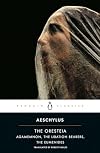
My edition had a 100 page introduction that was frankly a chore to get through. I feel bad because clearly Phillip Vellacott (the editor) was extremely passionate about the trilogy, but that was so much introduction.
The Orestia seeks to answer that time-honoured question: If your mum kills your dad, are you morally obligated to kill your mum?
In all seriousness, Orestes is in a no-win situation. He is honour-bound to avenge his father, but will be cursed forever if he kills his show more mother.
Aeschylus's answer to this is to illustrate the transition from an eternal vengeance-fuelled cycle of violence to a civilised justice system. At least one person I spoke to considered this a "cop-out" but I quite like it. It give the cycle a greater meaning and raises a mirror to our own ideas of justice and retribution.
My only prior experience with Aeschylus had been my study of Aristophanes' The Frogs in high school, in which Aeschylus is portrayed as an old-fashioned fuddy-duddy whose works nevertheless come out more worthy than later, more cynical playwrights.
I was surprised at the sophistication of the writing - all the characters have their own motives and perspectives. Although Clytaemnestra is portrayed as a villain, you can easily see how she ended up where she did.
Cassandra was my favourite character, perhaps because she was the only person involved who hadn't done anything wrong (unless you count offending Apollo!).
There are also very sophisticated layers of symbolism and intense, evocative imagery. I enjoyed the ominous imagery of the furies gathering on the roof, signifying the feminine fury soon to fill the house.
Here's some excerpts I particularly liked, this one because it's low key kinda hot:
An this one because I read it just as the 2024 US persedential election concluded:
Aristophanes concluded that it was Aeschylus Athens needed as its defeat loomed on the horizon. Perhaps it is Aeschylus we also need now, to remind us how we must suffer through violence and disaster and into true justice. show less
The Orestia seeks to answer that time-honoured question: If your mum kills your dad, are you morally obligated to kill your mum?
In all seriousness, Orestes is in a no-win situation. He is honour-bound to avenge his father, but will be cursed forever if he kills his show more mother.
Aeschylus's answer to this is to illustrate the transition from an eternal vengeance-fuelled cycle of violence to a civilised justice system. At least one person I spoke to considered this a "cop-out" but I quite like it. It give the cycle a greater meaning and raises a mirror to our own ideas of justice and retribution.
My only prior experience with Aeschylus had been my study of Aristophanes' The Frogs in high school, in which Aeschylus is portrayed as an old-fashioned fuddy-duddy whose works nevertheless come out more worthy than later, more cynical playwrights.
I was surprised at the sophistication of the writing - all the characters have their own motives and perspectives. Although Clytaemnestra is portrayed as a villain, you can easily see how she ended up where she did.
Cassandra was my favourite character, perhaps because she was the only person involved who hadn't done anything wrong (unless you count offending Apollo!).
There are also very sophisticated layers of symbolism and intense, evocative imagery. I enjoyed the ominous imagery of the furies gathering on the roof, signifying the feminine fury soon to fill the house.
Here's some excerpts I particularly liked, this one because it's low key kinda hot:
Oh but a man's high daring spirit,
who can account for that? Or woman's
desperate passion daring past all bounds?
She couples with every form of ruin known to mortals.
Woman, frenzied, driven wild with lust,
twists the dark, warm harness
of wedded love - tortures man and beast!
An this one because I read it just as the 2024 US persedential election concluded:
But ancient Violence longs to breed,
new violence comes
when its fatal hour comes, the demon comes
to take her toll - no war, no force no prayer
can hinder the midnight Fury stamped
with parent Fury moving through the house.
But justice shines in sooty hovels,
loves the decent life.
From proud halls crusted with gilt by filthy hands
she turns her eyes to find the pure in spirit -
spurning the wealth stamped counterfeit with praise,
she steers all things towards their destined end.
Aristophanes concluded that it was Aeschylus Athens needed as its defeat loomed on the horizon. Perhaps it is Aeschylus we also need now, to remind us how we must suffer through violence and disaster and into true justice. show less
Lists
Favourite Books (7)
Which house? (1)
Tom's Bookstore (1)
Kilobook (1)
Unread books (1)
Antigua Grecia (1)
Lectuurlijst (1)
A Reading List (2)
Plays I Like (2)
bound (1)
. (1)
Awards


You May Also Like


Associated Authors
Statistics
- Works
- 309
- Also by
- 26
- Members
- 22,763
- Popularity
- #930
- Rating
- 3.9
- Reviews
- 233
- ISBNs
- 1,051
- Languages
- 29
- Favorited
- 62

