
Tom Veitch (1951–2022)
Author of Star Wars: Dark Empire
About the Author
Image credit: Tom Veitch
Series
Works by Tom Veitch
Star Wars: Tales of the Jedi: Dark Lords of the Sith #1 of 6 - Masters and Students of the Force (1994) 9 copies
Star Wars: Tales of the Jedi #2: Ulic Qel-Droma and the Beast Wars of Onderon, Part 2 (1993) 5 copies
My Name is Chaos Book 1 2 copies
Dark Empire #1 2 copies
Animal Man 46 1 copy
STAR WARS featuring INDIANA JONES #1: The Destiny Of A Jedi (October, 1992 - British Edition) 1 copy
Animal Man No. 40 1 copy
THE NAZZ Book #2 of 4 1 copy
Homem Animal #1 1 copy
Kamandi: At Earth's End #1 1 copy
Kamandi: At Earth's End #4 1 copy
My Name is Chaos Book 4 1 copy
My Name is Chaos Book 3 1 copy
My Name is Chaos Book 2 1 copy
Kamandi: At Earth's End 03 1 copy
Homem-Animal 1 copy
Associated Works
Strange Faeces 15 — Contributor — 1 copy
Tagged
Common Knowledge
- Canonical name
- Veitch, Tom
- Birthdate
- 1951-09-26
- Date of death
- 2022-02-18
- Gender
- male
- Occupations
- author
poet
bookseller - Organizations
- Lightgate Books
Old Bennington Books - Relationships
- Veitch, Rick (brother)
Veitch, Martha (spouse) - Nationality
- USA
- Birthplace
- Walpole, New Hampshire, USA
- Places of residence
- Lower East Side, Manhattan, New York, New York, USA
Weston, Vermont, USA
San Francisco, California, USA
Manchester, Vermont, USA - Place of death
- Bellows Falls, Vermont, USA
- Associated Place (for map)
- USA
Members
Reviews

"The Freedon Nadd Uprising" unites the two strands of Tales of the Jedi, bringing Ulic Qel-Droma into contact with Nomi Sunrider for the first time. This later becomes a Great Romance, but it never really convinces as such because they barely interact.
From there, it's into giant events with "Dark Lords of the Sith" and "The Sith War." My main takeaway from this is that Veitch and Anderson just do not get the Dark Side of the Force. They seem to see it solely as an external force of Evil that show more acts upon our heroes. I don't understand why Ulic falls. I mean, I really do not get it. He decides he wants to join the Krath and take them out from within... but at what point does he become Evil? He leaves the Jedi, next we see him, he is Evil. But what is he actually doing that is Evil? I think he's commanding the Krath military, but it should or could even be possible to do that without falling to the Dark Side. Most of what he does is glossed over, and I think that really undermines the effect of the story of Ulic's fall.
My favorite fall to the Dark Side in Star Wars is one that never actually happens. In The Empire Strikes Back, Darth Vader has Luke Skywalker backed into a corner. "Join me." It seems like a sane, reasonable action for Luke. But taking it would be the act of a coward, and thus an action for the Dark Side. Only by jumping into the unknown, choosing suicide over surrender, does Luke maintain his ties to the Light. But I always imagine that moment of cowardice that could have happened. With his whole world broken down, his friends captured, the truth revealed, his hand severed, who could blame Luke if he joined Darth Vader? Any good fall has a backed-into-a-corner moment like that, I think, if just metaphorically. Ulic has no such moment-- one minute he's good, the next he's Evil.
It gets worse from there, as Ulic's fall is mostly carried out through external forces-- first, the Krath give him "Sith poisons," which apparently make you Evil (Veitch often seems to think the Force is just standard fantasy-type magic), and then the spirit of Marka Ragnos appears and just turns him into a Dark Lord of the Sith. This whole thing completely lacks any feeling of character or choice-- so what's the point of it all then? Falling to the Dark Side is only a meaningful story if the character chooses it. (Also, the moment when Nomi leaves Ulic behind with the Krath is morally reprehensible. If he has chosen Evil and is unwilling to come, then it's not just "his choice"-- if he helps the Krath maintain their control over the Empress Teta System, then it's a choice that leads to the destruction of millions of innocent lives! Take the guy out while you have a chance!)
Oddly, Exar Kun, then, has a slightly more effective "fall" than Ulic, as he does have that moment of choice in the Sith Temple on Yavin 4. Unfortunately, though, he's been depicted as Evil all along, so the effect is undermined. And too many of the Sith minions are just controlled via magic.
All of this is to say that "Dark Lords of the Sith" and "The Sith War" are a lot of big flash, with epic battles and such, but with little actual meaning. There are lots of Jedi here-- too many, and mostly we care about them because of the earlier stories. Which means I basically only cared about Nomi, Oss, and Thon.
Surprisingly, given all this, Kevin J. Anderson and Chris Gossett pull it out of the bag at the end with "Redemption." Set ten years after the end of the Great Sith War, the story is about many things, all of them tragic-- Nomi's inability to connect with her own daughter after all the tragedy she's seen, Vima's inability to see what it really means to be a Jedi, Ulic's inability to find peace and solace now that he's been stripped of the Force, Tott Doneeta and Sylvar's inability to leave the war behind. It's heartbreaking stuff, drawn to perfection by Gossett, and with a tragic, elegiac tone throughout.
My favorite bit was a small one, just a shared look between Tott and Sylvar that brought home the tragedy of their lives. At one point, they were young Jedi Knights, ready to conquer evil and right wrongs and all that jazz. Now, only ten years later, they're walking wounded, people who've seen too much and who became old before their time, and with no one to understand them. "Will you go with me?" Sylvar asks Tott, as she decides to burn out her rage in a ritual hunt, Tott the only man who can possibly understand her pain. "I would be honored," says Tott grimly, his very visible scarring a reminder that he can never be who he was again.
It ends in tragedy, of course, but the best kind of tragedy-- the kind that indicates rebirth and hope and the potential for real change. It's a shame that nothing's been done with these characters since Tales of the Jedi ended in 2001, but as long as I can imagine the epic adventures of Vima Sunrider, Jedi Knight, perhaps we're better off that way. show less
From there, it's into giant events with "Dark Lords of the Sith" and "The Sith War." My main takeaway from this is that Veitch and Anderson just do not get the Dark Side of the Force. They seem to see it solely as an external force of Evil that show more acts upon our heroes. I don't understand why Ulic falls. I mean, I really do not get it. He decides he wants to join the Krath and take them out from within... but at what point does he become Evil? He leaves the Jedi, next we see him, he is Evil. But what is he actually doing that is Evil? I think he's commanding the Krath military, but it should or could even be possible to do that without falling to the Dark Side. Most of what he does is glossed over, and I think that really undermines the effect of the story of Ulic's fall.
My favorite fall to the Dark Side in Star Wars is one that never actually happens. In The Empire Strikes Back, Darth Vader has Luke Skywalker backed into a corner. "Join me." It seems like a sane, reasonable action for Luke. But taking it would be the act of a coward, and thus an action for the Dark Side. Only by jumping into the unknown, choosing suicide over surrender, does Luke maintain his ties to the Light. But I always imagine that moment of cowardice that could have happened. With his whole world broken down, his friends captured, the truth revealed, his hand severed, who could blame Luke if he joined Darth Vader? Any good fall has a backed-into-a-corner moment like that, I think, if just metaphorically. Ulic has no such moment-- one minute he's good, the next he's Evil.
It gets worse from there, as Ulic's fall is mostly carried out through external forces-- first, the Krath give him "Sith poisons," which apparently make you Evil (Veitch often seems to think the Force is just standard fantasy-type magic), and then the spirit of Marka Ragnos appears and just turns him into a Dark Lord of the Sith. This whole thing completely lacks any feeling of character or choice-- so what's the point of it all then? Falling to the Dark Side is only a meaningful story if the character chooses it. (Also, the moment when Nomi leaves Ulic behind with the Krath is morally reprehensible. If he has chosen Evil and is unwilling to come, then it's not just "his choice"-- if he helps the Krath maintain their control over the Empress Teta System, then it's a choice that leads to the destruction of millions of innocent lives! Take the guy out while you have a chance!)
Oddly, Exar Kun, then, has a slightly more effective "fall" than Ulic, as he does have that moment of choice in the Sith Temple on Yavin 4. Unfortunately, though, he's been depicted as Evil all along, so the effect is undermined. And too many of the Sith minions are just controlled via magic.
All of this is to say that "Dark Lords of the Sith" and "The Sith War" are a lot of big flash, with epic battles and such, but with little actual meaning. There are lots of Jedi here-- too many, and mostly we care about them because of the earlier stories. Which means I basically only cared about Nomi, Oss, and Thon.
Surprisingly, given all this, Kevin J. Anderson and Chris Gossett pull it out of the bag at the end with "Redemption." Set ten years after the end of the Great Sith War, the story is about many things, all of them tragic-- Nomi's inability to connect with her own daughter after all the tragedy she's seen, Vima's inability to see what it really means to be a Jedi, Ulic's inability to find peace and solace now that he's been stripped of the Force, Tott Doneeta and Sylvar's inability to leave the war behind. It's heartbreaking stuff, drawn to perfection by Gossett, and with a tragic, elegiac tone throughout.
My favorite bit was a small one, just a shared look between Tott and Sylvar that brought home the tragedy of their lives. At one point, they were young Jedi Knights, ready to conquer evil and right wrongs and all that jazz. Now, only ten years later, they're walking wounded, people who've seen too much and who became old before their time, and with no one to understand them. "Will you go with me?" Sylvar asks Tott, as she decides to burn out her rage in a ritual hunt, Tott the only man who can possibly understand her pain. "I would be honored," says Tott grimly, his very visible scarring a reminder that he can never be who he was again.
It ends in tragedy, of course, but the best kind of tragedy-- the kind that indicates rebirth and hope and the potential for real change. It's a shame that nothing's been done with these characters since Tales of the Jedi ended in 2001, but as long as I can imagine the epic adventures of Vima Sunrider, Jedi Knight, perhaps we're better off that way. show less
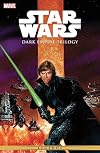
Star Wars merchandising in the 90s was all about the trilogies. As well as the Special Edition re-release of the original trilogy and the start of the prequel trilogy, there was the Thrawn trilogy (which took place after all that), the Dark Empire trilogy (which took place after that) and the Crimson Empire trilogy (which took place after that). There was also a Hand of Thrawn 'duology' in there somewhere, but don't ask me where.
Unfortunately, sometimes those trilogies ended up as a show more structural gimmick - a way of signifying importance without necessarily working out an arc to fill it. And so it is with the Dark Empire trilogy.
The first instalment, Dark Empire itself, is actually quite good. It's full of the high concepts and grandiose imagery Star Wars needs in order to be Star Wars: Luke bringing down AT-ATs with the Force, Imperial dungeon ships (and now I want every franchise to have dungeon ships), and a vast machine vacuuming up a Star Destroyer.
The full-page splashes – so often in 90s comics a sign of artists wanting to maximise the amounts they can make from selling on the original artwork – are used intelligently to show the scale on which the conflict is occurring. When the World Devastators make their first appearance, it is with all the weight and might with which that first Star Destroyer rumbled overhead in 1977.
Even what should be the story's most gimmicky element – the return of Palpatine – is handled very well. Resurrected, he is no longer a man, but the ultimate expression of the power of the dark side, existing largely without form, moving from clone body to clone body as each one dies. The sadomasochistic overtones and violation of the body are classic signifiers of perverted villainy, but no less effective for that. Now he's back, he's even less real than he was before, hiding in a city of light, deep within the galaxy's hellish core.
I guess he's a bit like Sauron, but there are all sorts of horror influences in there (Dracula, Hellraiser, Rosemary's Baby), and it all fits beautifully with Revenge of the Sith later revealed about his master, Darth Plagueis, and his quest for life eternal. The hive mind of the Star Wars Expanded Universe gave Palpatine a rather brilliant character arc.
But the problems are in the second and third instalments: Dark Empire II and Empire's End. There's just too much that is familiar: from the start, characters are heading back to places they left in Dark Empire, repeating the same cons and making similar threats.
As with many a trilogy, the first part stands on its own, but the latter two are interdependent. The Empire Strikes Back and Return of the Jedi got around that by stuffing each with new locations and characters equal to or superseding those introduced in A New Hope: they may be telling two halves of the same story, but it's difficult to argue they feel like two halves of the same film.
The structure of Star Wars is built around recurrent leitmotifs, but sometimes they can swamp the song. It was one solid criticism of The Force Awakens and it's even worse here. Not so much a trilogy as a great news story followed by an extended re-run. show less
Unfortunately, sometimes those trilogies ended up as a show more structural gimmick - a way of signifying importance without necessarily working out an arc to fill it. And so it is with the Dark Empire trilogy.
The first instalment, Dark Empire itself, is actually quite good. It's full of the high concepts and grandiose imagery Star Wars needs in order to be Star Wars: Luke bringing down AT-ATs with the Force, Imperial dungeon ships (and now I want every franchise to have dungeon ships), and a vast machine vacuuming up a Star Destroyer.
The full-page splashes – so often in 90s comics a sign of artists wanting to maximise the amounts they can make from selling on the original artwork – are used intelligently to show the scale on which the conflict is occurring. When the World Devastators make their first appearance, it is with all the weight and might with which that first Star Destroyer rumbled overhead in 1977.
Even what should be the story's most gimmicky element – the return of Palpatine – is handled very well. Resurrected, he is no longer a man, but the ultimate expression of the power of the dark side, existing largely without form, moving from clone body to clone body as each one dies. The sadomasochistic overtones and violation of the body are classic signifiers of perverted villainy, but no less effective for that. Now he's back, he's even less real than he was before, hiding in a city of light, deep within the galaxy's hellish core.
I guess he's a bit like Sauron, but there are all sorts of horror influences in there (Dracula, Hellraiser, Rosemary's Baby), and it all fits beautifully with Revenge of the Sith later revealed about his master, Darth Plagueis, and his quest for life eternal. The hive mind of the Star Wars Expanded Universe gave Palpatine a rather brilliant character arc.
But the problems are in the second and third instalments: Dark Empire II and Empire's End. There's just too much that is familiar: from the start, characters are heading back to places they left in Dark Empire, repeating the same cons and making similar threats.
As with many a trilogy, the first part stands on its own, but the latter two are interdependent. The Empire Strikes Back and Return of the Jedi got around that by stuffing each with new locations and characters equal to or superseding those introduced in A New Hope: they may be telling two halves of the same story, but it's difficult to argue they feel like two halves of the same film.
The structure of Star Wars is built around recurrent leitmotifs, but sometimes they can swamp the song. It was one solid criticism of The Force Awakens and it's even worse here. Not so much a trilogy as a great news story followed by an extended re-run. show less
As I delve into the Expanded Universe/Legends series of Star Wars media, one of the things that I've come to appreciate is just how interconnected are all of the various works. This isn't like the Star Trek franchise, in which novels, comic books, and other creations exist as stand-alone material unrelated to one another outside of the occasional author-driven character: the works that were created as part of the Expanded Universe were meant to fit together to build exactly what the title show more implies. I discovered this by reading Timothy Zahn's Hand of Thrawn duology, which references not just his earlier Thrawn trilogy, but subsequent events in the Dark Horse Comics series of Star Wars comics. Intrigued, I decided to do some research, which led me to the highly praised Dark Empire series that was Dark Horse's inaugural publication for the franchise.
After reading it, though, it's hard to see how it earned its hype. Set six years after the battle of Endor and a year after the events in Zahn's Thrawn trilogy, it depicts that New Republic's struggle against a revived Emperor Palpatine, who survived his seeming demise at the hands of Darth Vader through a contingency plan involving cloned versions of himself. Now restored to the leadership of the remnants of the Empire, he launches a renewed series of assaults on the New Republic involving mobile automated factories known as "World Devastators" that attack their targets by consuming them and using their resources to produce yet more forces for the Empire. Yet Palpatine's greatest weapon is the New Republic's best hope: the Jedi knight Luke Skywalker, who accepts the Emperor's offer to join him in wielding the power of the dark side against his former friends.
Skywalker's turn to the dark side is easily the freshest thing about the series, and while it plays out in predictable ways it's not without its moments of suspense. The problem is that, having resolved the storyline (and given all that followed I don't think it's a spoiler to say that the whole Luke-as the-Emperor's-apprentice thing doesn't stick), the company had to figure out something else when the popularity of the comic led to the commissioning of the sequels that make up the other two-thirds of the collection. Here the quality falls off quickly, as the World Devastators are succeeded by yet another planet-killing weapon (an early example of how the franchise gets stuck on this concept) while Luke discovers scattered Jedi that he recruits to build a new force of knights. The action quickly degenerates into melodrama, as Luke and his friends in the New Republic fight off a series of gambits thrown at them by an increasingly desperate Palpatine, who by the end of the series is little more than a cartoonish villain appearing up in a lame disguise so he can kidnap an infant.
Yes, you read that correctly: by the end of the series, the shadowy leader who dominated a galaxy-spanning empire with Sith apprentices, fleets of Star Destroyers, and millions of stormtroopers is reduced to abducting babies in person in order to realize his schemes. It's a silly use of a character so fearsome that J. J. Abrams felt it necessary to bring him back for Episode IX of the series, and one that raises the question of how these comics came to enjoy the stature they did among Star Wars fans. For while they're necessary reading for anyone seeking to understand the canon of the Expanded Universe, the stories themselves really don't measure up to the best the franchise has to offer. show less
After reading it, though, it's hard to see how it earned its hype. Set six years after the battle of Endor and a year after the events in Zahn's Thrawn trilogy, it depicts that New Republic's struggle against a revived Emperor Palpatine, who survived his seeming demise at the hands of Darth Vader through a contingency plan involving cloned versions of himself. Now restored to the leadership of the remnants of the Empire, he launches a renewed series of assaults on the New Republic involving mobile automated factories known as "World Devastators" that attack their targets by consuming them and using their resources to produce yet more forces for the Empire. Yet Palpatine's greatest weapon is the New Republic's best hope: the Jedi knight Luke Skywalker, who accepts the Emperor's offer to join him in wielding the power of the dark side against his former friends.
Skywalker's turn to the dark side is easily the freshest thing about the series, and while it plays out in predictable ways it's not without its moments of suspense. The problem is that, having resolved the storyline (and given all that followed I don't think it's a spoiler to say that the whole Luke-as the-Emperor's-apprentice thing doesn't stick), the company had to figure out something else when the popularity of the comic led to the commissioning of the sequels that make up the other two-thirds of the collection. Here the quality falls off quickly, as the World Devastators are succeeded by yet another planet-killing weapon (an early example of how the franchise gets stuck on this concept) while Luke discovers scattered Jedi that he recruits to build a new force of knights. The action quickly degenerates into melodrama, as Luke and his friends in the New Republic fight off a series of gambits thrown at them by an increasingly desperate Palpatine, who by the end of the series is little more than a cartoonish villain appearing up in a lame disguise so he can kidnap an infant.
Yes, you read that correctly: by the end of the series, the shadowy leader who dominated a galaxy-spanning empire with Sith apprentices, fleets of Star Destroyers, and millions of stormtroopers is reduced to abducting babies in person in order to realize his schemes. It's a silly use of a character so fearsome that J. J. Abrams felt it necessary to bring him back for Episode IX of the series, and one that raises the question of how these comics came to enjoy the stature they did among Star Wars fans. For while they're necessary reading for anyone seeking to understand the canon of the Expanded Universe, the stories themselves really don't measure up to the best the franchise has to offer. show less
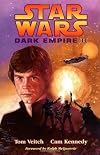
Here we have Veitch's second effort, sequel to the first Dark Empire, that picks up shortly after the first. The Emperor is finally dead... whoop, spoke too soon. A lazy plot point gets even lazier. One thing I really enjoyed about the Thrawn trilogy was seeing someone OTHER than the Emperor threaten the burgeoning New Republic, and Veitch seems to have taken a huge step backwards. In fact, the further into the Dark Empire story, the less of Zahn's work seems to be recognized. General Bel show more Iblis? Nowhere to be found, even though he became a huge part of the Republic by the end. The Bothans? Relegated back to spy duty, apparently. It strains my suspension of disbelief to see so much of the progress made by the Republic in Zahn's trilogy just get completely erased by the return of the Emperor (which, again, seems lazy to me).
Then we see Luke start to rebuild the Jedi order, which is probably the very best part of these stories. Except for his immediate fall for the young Jem. "I feel like we've known each other for thousands of years." Really, Luke? Really? And to make matters worse, Veitch immediately takes her out of the picture. Did an editor realize he was screwing up the Luke/Mara potential and give him a swift kick in the pants?
Again, these stories are enjoyable, but from a standpoint of the larger expanded universe, they seem not to take into account anything else from any other writers (minus the Tales of the Jedi: Sith War storyline which Veitch was a part of crafting along with Kevin J. Anderson). show less
Then we see Luke start to rebuild the Jedi order, which is probably the very best part of these stories. Except for his immediate fall for the young Jem. "I feel like we've known each other for thousands of years." Really, Luke? Really? And to make matters worse, Veitch immediately takes her out of the picture. Did an editor realize he was screwing up the Luke/Mara potential and give him a swift kick in the pants?
Again, these stories are enjoyable, but from a standpoint of the larger expanded universe, they seem not to take into account anything else from any other writers (minus the Tales of the Jedi: Sith War storyline which Veitch was a part of crafting along with Kevin J. Anderson). show less
Lists
Awards

You May Also Like


Associated Authors
Statistics
- Works
- 135
- Also by
- 6
- Members
- 2,029
- Popularity
- #12,665
- Rating
- 3.4
- Reviews
- 26
- ISBNs
- 80
- Languages
- 5
- Favorited
- 1