
Jeff Apter
Author of Never Enough: The Story of The Cure
About the Author
Jeff Apter is an Australian-based music writer, who has been reporting on popular culture for the past 15 years
Works by Jeff Apter
Tagged
Common Knowledge
- Gender
- male
- Occupations
- journalist
biographer - Nationality
- Australia
- Places of residence
- Wollongong, New South Wales, Australia
- Map Location
- Australia
Members
Reviews
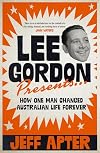
Jeff Apter has made a solid slot for himself as not just one of the most prolific but one of the very best music industry writers in Australia, from his days at Rolling Stone to his formidable list of biographies in book form.
Apter’s books are not slapdash marketing efforts cashing in on some well known artist, but real attempts to get inside the lives of some of our major recording artists and musical influences.
So, obviously, I’m an admirer, based on the 10 books of his I’ve read. show more It’s no coincidence that many of his profiles have been of creative artists whose lives have been touched by drama and, often, tragedy. They make great reading. At the same time, Apter’s books frequently go beyond the personal to set his subjects’ lives in the social and cultural contexts of their times.
If that sounds dry and academic, Apter’s books are far from it. They’re engaging – gripping even – as well as funny, sad, dramatic, and very revealing.
His latest, Lee Gordon Presents …, takes this approach to new heights.
In a nutshell, Lee Gordon was an American promoter, entrepreneur and impresario, who came to Australia in the early 1950s and revolutionised the music scene. Other books by Apter recount how Australian performers broke through from Australia to overseas markets (with varying success), but Gordon’s story is about someone who came here ands opened up Australia as a market for overseas acts, and high quality ones, at that. Some of the names will surprise you.
In the process, Gordon dragged Australia from a culturally conservative place unencumbered by great passion or free thinking, to a venue eager for the popular music that was changing the world. That, in itself, is a remarkable achievement, one that left an indelible mark on our music scene.
But, as Apter reveals, Gordon’s story is also one of stark contradictions: vaulting ambition curbed by crippling over-reach, supreme self-confidence and raging self-doubt, and ultimately a self-fulfilling prophecy of doom and early death.
Rarely has one person invested in so many ventures that made him rich and changed our culture, tempered by so many that failed at the time, leaving him near destitute. That his failures later became successes for those who followed him just adds to the drama.
Over and under all his achievements lay his single greatest ambition that he wanted to be his masterstroke, to bring Elvis Presley to Australia. It was an ambition he would never achieve.
And for added drama, he always predicted – correctly – that he would die young.
It really is an amazing tale, and Apter tells it exceedingly well.
His research is impeccable, and he crafts a very winning description of Sydney life in the early 50s to set the scene for Gordon’s outrageously ambitious schemes. And then how that life changed.
Sadly, he also paints a very clear picture of a man who was confused about his own life, who was aware of his own failings, who mixed with the both the right and the wrong people, and who failed to deal with his mental health issues.
Apter is an extremely adept writer (I bet his editors love him), understanding how structure affects how people read a book. Deciding how you start and how you finish a work of narrative non-fiction is not easy, let alone building and sustaining interest through the middle bits.
Nor is figuring out the tone and voice to use. Apter is not a Hunter S. Thompson gonzo, nor even an immersive Tom Wolfe new journalist. He retains a detachment, a journalistic reserve that allows him to present the facts of Gordon’s life along with accounts from people who knew him and worked with him that lets us draw our own conclusions.
Lee Gordon Presents … left me feeling sad for someone who died so young, who had so many grand ideas, gloried in so many successes, and barely survived so many failures – all the while challenging and changing our social and cultural mores and permanently changing the way we perceived ourselves.
Apter is to be congratulated for bringing him to our deeper attention.
One of my books of the year, so far. Highly recommended. show less
Apter’s books are not slapdash marketing efforts cashing in on some well known artist, but real attempts to get inside the lives of some of our major recording artists and musical influences.
So, obviously, I’m an admirer, based on the 10 books of his I’ve read. show more It’s no coincidence that many of his profiles have been of creative artists whose lives have been touched by drama and, often, tragedy. They make great reading. At the same time, Apter’s books frequently go beyond the personal to set his subjects’ lives in the social and cultural contexts of their times.
If that sounds dry and academic, Apter’s books are far from it. They’re engaging – gripping even – as well as funny, sad, dramatic, and very revealing.
His latest, Lee Gordon Presents …, takes this approach to new heights.
In a nutshell, Lee Gordon was an American promoter, entrepreneur and impresario, who came to Australia in the early 1950s and revolutionised the music scene. Other books by Apter recount how Australian performers broke through from Australia to overseas markets (with varying success), but Gordon’s story is about someone who came here ands opened up Australia as a market for overseas acts, and high quality ones, at that. Some of the names will surprise you.
In the process, Gordon dragged Australia from a culturally conservative place unencumbered by great passion or free thinking, to a venue eager for the popular music that was changing the world. That, in itself, is a remarkable achievement, one that left an indelible mark on our music scene.
But, as Apter reveals, Gordon’s story is also one of stark contradictions: vaulting ambition curbed by crippling over-reach, supreme self-confidence and raging self-doubt, and ultimately a self-fulfilling prophecy of doom and early death.
Rarely has one person invested in so many ventures that made him rich and changed our culture, tempered by so many that failed at the time, leaving him near destitute. That his failures later became successes for those who followed him just adds to the drama.
Over and under all his achievements lay his single greatest ambition that he wanted to be his masterstroke, to bring Elvis Presley to Australia. It was an ambition he would never achieve.
And for added drama, he always predicted – correctly – that he would die young.
It really is an amazing tale, and Apter tells it exceedingly well.
His research is impeccable, and he crafts a very winning description of Sydney life in the early 50s to set the scene for Gordon’s outrageously ambitious schemes. And then how that life changed.
Sadly, he also paints a very clear picture of a man who was confused about his own life, who was aware of his own failings, who mixed with the both the right and the wrong people, and who failed to deal with his mental health issues.
Apter is an extremely adept writer (I bet his editors love him), understanding how structure affects how people read a book. Deciding how you start and how you finish a work of narrative non-fiction is not easy, let alone building and sustaining interest through the middle bits.
Nor is figuring out the tone and voice to use. Apter is not a Hunter S. Thompson gonzo, nor even an immersive Tom Wolfe new journalist. He retains a detachment, a journalistic reserve that allows him to present the facts of Gordon’s life along with accounts from people who knew him and worked with him that lets us draw our own conclusions.
Lee Gordon Presents … left me feeling sad for someone who died so young, who had so many grand ideas, gloried in so many successes, and barely survived so many failures – all the while challenging and changing our social and cultural mores and permanently changing the way we perceived ourselves.
Apter is to be congratulated for bringing him to our deeper attention.
One of my books of the year, so far. Highly recommended. show less
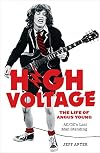
I finally caught up with another Australian music industry book that’s been around a while.
Jeff Apter published High Voltage in 2017, the year AC/DC’s co-founder Malcolm Young and the band’s first co-producer George Young died, leaving their brother Angus, as the cover blurb puts it, the band’s “Last Man Standing” and the focus of this book.
It’s by no means Apter’s first coverage of AC/DC: he’d previously ghost written bass player Mark Evans’ Dirty Deeds (2011), early show more manager Michael Browning’s Dog Eat Dog (2015), and photographer Philip Morris’ It’s A Long Way (2015). He also later wrote Malcolm Young: The Man Who Made AC/DC (2019) and Bad Boy Boogie (2021) about Bon Scott.
As a Rolling Stone journalist, Apter interviewed Angus in 2001 and as early as 1977 listened to the band in a Haymarket side street (being 15, he couldn’t get inside the venue). So Apter is well qualified to write about AC/DC and, in particular, Angus Young. And it really shows in High Voltage.
The book is impeccably researched, as Apter’s books always are (he’s written at least 20, most of them about musicians and the industry) and presented in a serious journalistic style that really suits what is one of the most amazing stories in rock and roll, how a couple of Scottish immigrant teenagers started a band in Australia that became one of the true behemoths of international rock, resisting and flying in the face of musical trends that flared up and withered away around them for over 40 years.
That’s not to say they weren’t influenced as they developed their sound – big brother George’s experience with The Easybeats being a good example of both the good and the bad that could happen.
They also went through personnel changes in AC/DC – some chosen as band members fell out of favour, some forced such as the death of Bon Scott, the retirement of Brian Johnson to save what was left of his hearing, and the onset of dementia in Malcolm.
Through it all, Angus remained the tea drinking, chain smoking genius with a screaming Gibson, a wild man in schoolboy uniform flailing madly on stage without missing a note and a quiet, reserved husband to his wife in their Dutch mansion off stage. That so many brilliant musicians express their admiration for Angus is testament to his talent.
It’s a story that needed to be told, and Apter tells it brilliantly, the highs and the lows, the excitement, the disappointments, the determination, the enormous wealth, the personal costs, and the worldwide fame.
Apter is particularly adept at conveying both life in a recording studio wrangling with producers, and on stage from cramped pubs to festival stages in front of hundreds of thousands of fans.
On a side note, as a word nerd who reads a lot of books, this is one of the very, very few where I did not spot a single typo or error – and I look for them, believe me.
It’s funny that I only came to High Voltage this year because the author had some stock he wanted to clear, so I bought direct from him, which brought the added bonus of a nice hand-written note on the flyleaf.
Jeff, you were right to tell me to “Buckle up!”, it was indeed quite a ride.
Highly recommended. show less
Jeff Apter published High Voltage in 2017, the year AC/DC’s co-founder Malcolm Young and the band’s first co-producer George Young died, leaving their brother Angus, as the cover blurb puts it, the band’s “Last Man Standing” and the focus of this book.
It’s by no means Apter’s first coverage of AC/DC: he’d previously ghost written bass player Mark Evans’ Dirty Deeds (2011), early show more manager Michael Browning’s Dog Eat Dog (2015), and photographer Philip Morris’ It’s A Long Way (2015). He also later wrote Malcolm Young: The Man Who Made AC/DC (2019) and Bad Boy Boogie (2021) about Bon Scott.
As a Rolling Stone journalist, Apter interviewed Angus in 2001 and as early as 1977 listened to the band in a Haymarket side street (being 15, he couldn’t get inside the venue). So Apter is well qualified to write about AC/DC and, in particular, Angus Young. And it really shows in High Voltage.
The book is impeccably researched, as Apter’s books always are (he’s written at least 20, most of them about musicians and the industry) and presented in a serious journalistic style that really suits what is one of the most amazing stories in rock and roll, how a couple of Scottish immigrant teenagers started a band in Australia that became one of the true behemoths of international rock, resisting and flying in the face of musical trends that flared up and withered away around them for over 40 years.
That’s not to say they weren’t influenced as they developed their sound – big brother George’s experience with The Easybeats being a good example of both the good and the bad that could happen.
They also went through personnel changes in AC/DC – some chosen as band members fell out of favour, some forced such as the death of Bon Scott, the retirement of Brian Johnson to save what was left of his hearing, and the onset of dementia in Malcolm.
Through it all, Angus remained the tea drinking, chain smoking genius with a screaming Gibson, a wild man in schoolboy uniform flailing madly on stage without missing a note and a quiet, reserved husband to his wife in their Dutch mansion off stage. That so many brilliant musicians express their admiration for Angus is testament to his talent.
It’s a story that needed to be told, and Apter tells it brilliantly, the highs and the lows, the excitement, the disappointments, the determination, the enormous wealth, the personal costs, and the worldwide fame.
Apter is particularly adept at conveying both life in a recording studio wrangling with producers, and on stage from cramped pubs to festival stages in front of hundreds of thousands of fans.
On a side note, as a word nerd who reads a lot of books, this is one of the very, very few where I did not spot a single typo or error – and I look for them, believe me.
It’s funny that I only came to High Voltage this year because the author had some stock he wanted to clear, so I bought direct from him, which brought the added bonus of a nice hand-written note on the flyleaf.
Jeff, you were right to tell me to “Buckle up!”, it was indeed quite a ride.
Highly recommended. show less
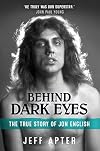
Finished Behind Dark Eyes by Jeff Apter last night – LATE last night coz I couldn’t stop reading.
This is a cracking good read for a number of reasons.
Jon English was a fascinating bloke. A Sydney westie who carved a career in rock & pop, theatre and TV out of a powerful voice and striking looks. And a lot of sweat. A passionate man who didn’t always make the best decisions but became an icon for a generation or more of Australian pop culture.
Jeff Apter is an excellent writer, who knows show more how to let a story tell itself (or makes it look that way). You get a great sense of the flow of English’s life, cleverly bookended by the revelatory breakthrough of Jesus Christ Superstar and his doomed efforts to stage his own rock musical. It’s amazing how much of 40 years is packed into 250 pages.
It’s intimate. The book is filled with nuanced and aware observations by his colleagues, friends and family members. Everyone acknowledges the man’s unique talents and no-one ignores his flaws. Where his family talks about him are the most poignant, revealing parts of the book. There’s no need for the author to philosophise, all the characters do that for him, including English himself.
The setting. The 1960s migrant experience, pub rock and Countdown: three massive influences that shaped our pop culture and whose influence continues. In this case, you can add Jesus Christ Superstar – it seems like half our pop royalty went through that show. And for those keeping count, the three Aussie rock bio touchstones of George Young, Michael Gudinski and Philip Mortlock all crop up.
I admit that I’m a sucker for a rock bio and I hoover up anything that helps me to put my own life into context – there’s so much in this book that resonates strongly with me, and that won’t be true for everyone. But if you grew up in Australia in the 60s and 70s and you know the guy who went from leotards as Judas to purple tights as The Pirate King – this is a book for you. show less
This is a cracking good read for a number of reasons.
Jon English was a fascinating bloke. A Sydney westie who carved a career in rock & pop, theatre and TV out of a powerful voice and striking looks. And a lot of sweat. A passionate man who didn’t always make the best decisions but became an icon for a generation or more of Australian pop culture.
Jeff Apter is an excellent writer, who knows show more how to let a story tell itself (or makes it look that way). You get a great sense of the flow of English’s life, cleverly bookended by the revelatory breakthrough of Jesus Christ Superstar and his doomed efforts to stage his own rock musical. It’s amazing how much of 40 years is packed into 250 pages.
It’s intimate. The book is filled with nuanced and aware observations by his colleagues, friends and family members. Everyone acknowledges the man’s unique talents and no-one ignores his flaws. Where his family talks about him are the most poignant, revealing parts of the book. There’s no need for the author to philosophise, all the characters do that for him, including English himself.
The setting. The 1960s migrant experience, pub rock and Countdown: three massive influences that shaped our pop culture and whose influence continues. In this case, you can add Jesus Christ Superstar – it seems like half our pop royalty went through that show. And for those keeping count, the three Aussie rock bio touchstones of George Young, Michael Gudinski and Philip Mortlock all crop up.
I admit that I’m a sucker for a rock bio and I hoover up anything that helps me to put my own life into context – there’s so much in this book that resonates strongly with me, and that won’t be true for everyone. But if you grew up in Australia in the 60s and 70s and you know the guy who went from leotards as Judas to purple tights as The Pirate King – this is a book for you. show less

Appropriately enough, I finished this book, subtitled How Australian Music Changed the World, on Australia Day.
That’s appropriate on two fronts.
First, the focus of Up from Down Under is the success of Australian bands in the US and other overseas markets, specifically Peter Allen, Helen Reddy, Olivia Newton John, the Little River Band, the Bee Gees, Air Supply, Rick Springfield, Men at Work, INXS, Keith Urban and Gotye. What better day to read about an Aussie invasion?
Second, it’s just show more about perfect reading for a long weekend. Those 11 stories get told in 15 chapters over 250 pages, nicely set up for consuming just a chapter at a time, or cruising through the whole thing.
Before I started this, I assumed it would have a straightforward structure of one band or musician per chapter – but it’s much cleverer than that.
Each chapter does tend to give most of the attention to one or two performers, but that’s because over time the focus shifts as one or other act tries to crack the big time overseas. Apter cleverly puts the spotlight on each story, while retaining a fairly straight chronological order.
That also allows Apter to show how interwoven a lot of the stories are: some of the same people, venues, problems and achievements crop up again and again. And, of course, related stories come out – you can hardly discuss Rick Springield and LRB’s Beeb Birtles without explaining Zoot, can you?
As you’d hope, each story carries a lot of detail without becoming fetishistic about it, and there are some great snacks for trivia buffs.
The more recent stories are the briefest, but then those stories are still being wriiten, to some extent. Most attention is given to the breakthrough acts of the 70s and 80s – and that was a time when a range of Australians seemed to hit the top again and again. Apter digs into their motivations, their plans and the often unexpected ways their careers took off once they left Australian shores.
There are two other things I really liked about this book. Apter has drawn a really clear picture of who was doing what, when and where. For example, it’s very interesting to see which parts of the US respond to the Australian acts and where the Aussies choose to base themslves. It’s fascinating to see who was in LA, who went to New York, who ended up in Florida – and who they worked with.
Second, the characters of the performers really shine through. I’d say the average music fan will emerge from this book with a much clearer picture of who people like Helen Reddy, Peter Allen and Olivia Newton John really are or were. It’s unshamedly emotional at times, frustration and anger often shine through, and reaching the top often simply means starting the slide back down.
All of which makes for compelling reading. Highly recommended. show less
That’s appropriate on two fronts.
First, the focus of Up from Down Under is the success of Australian bands in the US and other overseas markets, specifically Peter Allen, Helen Reddy, Olivia Newton John, the Little River Band, the Bee Gees, Air Supply, Rick Springfield, Men at Work, INXS, Keith Urban and Gotye. What better day to read about an Aussie invasion?
Second, it’s just show more about perfect reading for a long weekend. Those 11 stories get told in 15 chapters over 250 pages, nicely set up for consuming just a chapter at a time, or cruising through the whole thing.
Before I started this, I assumed it would have a straightforward structure of one band or musician per chapter – but it’s much cleverer than that.
Each chapter does tend to give most of the attention to one or two performers, but that’s because over time the focus shifts as one or other act tries to crack the big time overseas. Apter cleverly puts the spotlight on each story, while retaining a fairly straight chronological order.
That also allows Apter to show how interwoven a lot of the stories are: some of the same people, venues, problems and achievements crop up again and again. And, of course, related stories come out – you can hardly discuss Rick Springield and LRB’s Beeb Birtles without explaining Zoot, can you?
As you’d hope, each story carries a lot of detail without becoming fetishistic about it, and there are some great snacks for trivia buffs.
The more recent stories are the briefest, but then those stories are still being wriiten, to some extent. Most attention is given to the breakthrough acts of the 70s and 80s – and that was a time when a range of Australians seemed to hit the top again and again. Apter digs into their motivations, their plans and the often unexpected ways their careers took off once they left Australian shores.
There are two other things I really liked about this book. Apter has drawn a really clear picture of who was doing what, when and where. For example, it’s very interesting to see which parts of the US respond to the Australian acts and where the Aussies choose to base themslves. It’s fascinating to see who was in LA, who went to New York, who ended up in Florida – and who they worked with.
Second, the characters of the performers really shine through. I’d say the average music fan will emerge from this book with a much clearer picture of who people like Helen Reddy, Peter Allen and Olivia Newton John really are or were. It’s unshamedly emotional at times, frustration and anger often shine through, and reaching the top often simply means starting the slide back down.
All of which makes for compelling reading. Highly recommended. show less
You May Also Like


Associated Authors
Statistics
- Works
- 35
- Members
- 454
- Popularity
- #54,063
- Rating
- 3.4
- Reviews
- 11
- ISBNs
- 126
- Languages
- 5