
Geoffrey McGeachin
Author of The Diggers Rest Hotel
About the Author
Image credit: abc.net.au
Series
Works by Geoffrey McGeachin
Tagged
Common Knowledge
- Gender
- male
- Nationality
- Australia
- Birthplace
- Melbourne, Victoria, Australia
- Associated Place (for map)
- Victoria, Australia
Members
Reviews

It's always interesting to see a favoured author head off in another direction, and THE DIGGERS REST HOTEL is a big directional switch for Geoffrey McGeachin. Moving away from the madcap all-Australian James Bond of the Alby Murdoch books, we are introduced to a new character, a new timeframe and a very different approach.
Set in post World War II Victoria THE DIGGERS REST HOTEL introduces Charlie Berlin. A pilot during the war, back to the police on his return, Charlie is deeply traumatised. show more Sent to Albury-Wodonga to investigate a series of robberies that have suddenly become violent, this is also a story of the after-affects of war. Alongside the robbery, a subsequent murder and Charlie's own story, there are glimpses of the damage done on the home-front as well. The man whose son was a victim of a brutal death, and the brother who survived. The young Australian photographer and would-be newspaper reporter, who has her own family tales of difficulty for her German-born parents.
The information that came with this book highlights how the author has used the stories of his own father's wartime experiences as both an airman and a POW in Europe, as well as his childhood recollections of growing up in country-town Australia. It's a very realistic portrayal of country Australia - be it in the late 1940's or even more recently (well in this reader's memory anyway). Balance that small-town, closed environment, and the changes that are coming over a society traumatised and profoundly changed by the war and those who did and didn't return, against the individual story of one man who was so profoundly affected by events in Europe, and well, you end up with something that's entertaining, moving and affecting.
THE DIGGERS REST HOTEL isn't a straight up police procedural, this book is about a man who, as damaged and fragile as he is, is an observationist. Along with the personal perspective that this book is built upon, there is also an investigation - finding the motorbike riding gang who have terrorised and robbed multiple Railway locations, and then the horrific murder of a young Chinese girl in the town. There is also a fragile and tentative love story. There is also some stark examples of the differences between acceptable social conventions then, and now. Domestic violence, racism, thuggery, sexism, double standards - they are all touched upon, displayed but not dwelled upon.
Undoubtedly the great strength of THE DIGGERS REST HOTEL is the character study of Charlie Berlin, followed very closely by the affects of war on everyone, even in a small country-town deep within Australia - on the border of New South Wales and Victoria. Charlie Berlin is a wonderfully flawed human policeman, doing his duty, falling apart and picking himself back up again. THE DIGGERS REST HOTEL really does remind you that in the days post World War II there wasn't counselling, there wasn't retraining, there wasn't support. There was just the demons, and the jobs that had to be done, and alcohol and there were those that found a way to fit back in, and those that never did. show less
Set in post World War II Victoria THE DIGGERS REST HOTEL introduces Charlie Berlin. A pilot during the war, back to the police on his return, Charlie is deeply traumatised. show more Sent to Albury-Wodonga to investigate a series of robberies that have suddenly become violent, this is also a story of the after-affects of war. Alongside the robbery, a subsequent murder and Charlie's own story, there are glimpses of the damage done on the home-front as well. The man whose son was a victim of a brutal death, and the brother who survived. The young Australian photographer and would-be newspaper reporter, who has her own family tales of difficulty for her German-born parents.
The information that came with this book highlights how the author has used the stories of his own father's wartime experiences as both an airman and a POW in Europe, as well as his childhood recollections of growing up in country-town Australia. It's a very realistic portrayal of country Australia - be it in the late 1940's or even more recently (well in this reader's memory anyway). Balance that small-town, closed environment, and the changes that are coming over a society traumatised and profoundly changed by the war and those who did and didn't return, against the individual story of one man who was so profoundly affected by events in Europe, and well, you end up with something that's entertaining, moving and affecting.
THE DIGGERS REST HOTEL isn't a straight up police procedural, this book is about a man who, as damaged and fragile as he is, is an observationist. Along with the personal perspective that this book is built upon, there is also an investigation - finding the motorbike riding gang who have terrorised and robbed multiple Railway locations, and then the horrific murder of a young Chinese girl in the town. There is also a fragile and tentative love story. There is also some stark examples of the differences between acceptable social conventions then, and now. Domestic violence, racism, thuggery, sexism, double standards - they are all touched upon, displayed but not dwelled upon.
Undoubtedly the great strength of THE DIGGERS REST HOTEL is the character study of Charlie Berlin, followed very closely by the affects of war on everyone, even in a small country-town deep within Australia - on the border of New South Wales and Victoria. Charlie Berlin is a wonderfully flawed human policeman, doing his duty, falling apart and picking himself back up again. THE DIGGERS REST HOTEL really does remind you that in the days post World War II there wasn't counselling, there wasn't retraining, there wasn't support. There was just the demons, and the jobs that had to be done, and alcohol and there were those that found a way to fit back in, and those that never did. show less
I am becoming addicted to Australian authors.
Have you read The Shepherds Hut yet?
Set in the late 40's around Melbourne, a country full of men back from the war, almost none of them untouched by what they experienced, trying to fit back in. And Australia with its endemic crime, corruption, and violence, what could possibly go wrong?
A crime procedural of the highest order. A sympathetic character in an unsympathetic land but nothing too soft, that's left to the dame!
It's not a gipping story as show more in the way of a suspense/thriller but it is a compelling story. Very evocative, you could smell the stale sweat on unwashed bodies, feel the bruises when you moved and craved that cigarette.
I think this is why I have gotten so enamoured of Australian authors. The land becomes a major character in all their novels, a brooding silence in the background, something that shapes every person whether they like it, know it, or not. They become the voice of the land is a weird but authentic way.
I've got the second and third in this series and am taking my time, savouring them. show less
Have you read The Shepherds Hut yet?
Set in the late 40's around Melbourne, a country full of men back from the war, almost none of them untouched by what they experienced, trying to fit back in. And Australia with its endemic crime, corruption, and violence, what could possibly go wrong?
A crime procedural of the highest order. A sympathetic character in an unsympathetic land but nothing too soft, that's left to the dame!
It's not a gipping story as show more in the way of a suspense/thriller but it is a compelling story. Very evocative, you could smell the stale sweat on unwashed bodies, feel the bruises when you moved and craved that cigarette.
I think this is why I have gotten so enamoured of Australian authors. The land becomes a major character in all their novels, a brooding silence in the background, something that shapes every person whether they like it, know it, or not. They become the voice of the land is a weird but authentic way.
I've got the second and third in this series and am taking my time, savouring them. show less
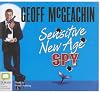
I first discovered McGeachin (delightfully read by Peter Hoskings - but then I'm a sucker for the Australian accent) in a book called Fat, Fifty and F**cked. It was a hysterical novel/thriller featuring a one-breasted librarian. (No, I'm not telling.)
In this "spy" novel (Alby Murdoch is a spy only in the sense that he's head of the Australian black ops unit,) Alby is called to the harbor one fine summer morning to discover that someone has anchored an LNG tanker in the middle. Now, LNG show more tankers are interesting floating bombs. Requiring that the gas be kept at -260F to remain a liquid, they are well insulated and strong. If a tank is breached the liquid instantly turns to gas and the fire that results is sort of like an atomic bomb. For those who care, several of these ships arrive every week at four different terminals in the U.S. (And you're worried about airplanes flying into buildings? A missile into one of these babies and New York would be history.) Now, back to fantasy.
Turns out the ship is there as a decoy only and the real mission was to steal two nuclear-tipped missiles from an American cruiser docked in the harbor. The thieves had inside help on the cruiser and the only thing they had in common was they were all members of the ship's choir. This leads to a very funny interchange between our hero, a combination James Bond and Pink Panther, and the local feel-good-God-wants-us-to-be-rich minister. Won't describe any more of the plot. Very enjoyable. Get the audio.
Refs: http://hormuz.robertstrausscenter.org/lng_tankers show less
In this "spy" novel (Alby Murdoch is a spy only in the sense that he's head of the Australian black ops unit,) Alby is called to the harbor one fine summer morning to discover that someone has anchored an LNG tanker in the middle. Now, LNG show more tankers are interesting floating bombs. Requiring that the gas be kept at -260F to remain a liquid, they are well insulated and strong. If a tank is breached the liquid instantly turns to gas and the fire that results is sort of like an atomic bomb. For those who care, several of these ships arrive every week at four different terminals in the U.S. (And you're worried about airplanes flying into buildings? A missile into one of these babies and New York would be history.) Now, back to fantasy.
Turns out the ship is there as a decoy only and the real mission was to steal two nuclear-tipped missiles from an American cruiser docked in the harbor. The thieves had inside help on the cruiser and the only thing they had in common was they were all members of the ship's choir. This leads to a very funny interchange between our hero, a combination James Bond and Pink Panther, and the local feel-good-God-wants-us-to-be-rich minister. Won't describe any more of the plot. Very enjoyable. Get the audio.
Refs: http://hormuz.robertstrausscenter.org/lng_tankers show less
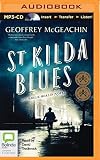
ST KILDA BLUES is the third Charlie Berlin novel from dual Ned Kelly Award winning author Geoffrey McGeachin. Starting out just after WWII, this series is as much a character study of Charlie Berlin and the after affects of war, as it is a police procedural. It's the great strength of these 3 books, and why they are increasingly earning the attention and commendation that they deserve.
McGeachin doesn't make things easy for his central character though. Berlin is still suffering the after show more affects of the war, even though it's 1967, the summer of love, and Melbourne is changing rapidly. His family is also changing, with his daughter travelling overseas, his son in the Army and his wife increasingly working on her own career. Berlin's happy for his wife, worried about his daughter, and troubled by his son. The background to all of these changes in the family are elegantly dotted throughout the story, although, as with any series with such a strong focus on character, it's best if you can read them all in order. The other factor that's not changed much is the perilous nature of his policing career. ST KILDA BLUES starts out with Berlin sidelined in the fraud squad, pulled back into the disappearance of a young girl because of the pressure from above to solve the case quickly.
Alongside the brilliant character portrayal there's also a really strong sense of place and time. Melbourne in the late 1960's comes alive through McGeachin's obviously, photographer's eye. The place, people, culture and fashions are all vividly described, as are the little touches of change - the increasing availability of food from other cultures, the changes in social structures, even the driving routes through the city. For somebody who knows the place it's pitch perfect, if you've never been there, and certainly not in that era, then you've got a time and place to explore, and picture clearly.
Both of these aspects pull no focus away from plot however, and despite this being "yet another serial killer" novel, that aspect is handled as you'd expect from an author like this. It's horrendous what is happening to these young girls, but it's handled respectfully. The killer might be an awful human being, but there is some explanation as to why, and absolutely no excusing. There's small insights into his mind, into events in his early life that are chilling, but not gratuitous. What's particularly sobering is the affect that the extent of the crimes have on a straight down the line, upright, and loving, decent bloke like Berlin.
But those affects are nothing compared to the finale of this book. After the case is solved, after the victim's are acknowledged and the families given an answer to their disappearances, life goes on. Even allowing for the cards that Berlin's been played in his life, what comes next is devastating. An unusual conclusion to a police procedural, the ending of ST KILDA BLUES will be hard for fans of Charlie Berlin. But life's not easy, and police, as with the rest of us, have lives to lead, families to raise, people to love. And to lose.
http://www.austcrimefiction.org/review/review-st-kilda-blues-geoffrey-mcgeachin show less
McGeachin doesn't make things easy for his central character though. Berlin is still suffering the after show more affects of the war, even though it's 1967, the summer of love, and Melbourne is changing rapidly. His family is also changing, with his daughter travelling overseas, his son in the Army and his wife increasingly working on her own career. Berlin's happy for his wife, worried about his daughter, and troubled by his son. The background to all of these changes in the family are elegantly dotted throughout the story, although, as with any series with such a strong focus on character, it's best if you can read them all in order. The other factor that's not changed much is the perilous nature of his policing career. ST KILDA BLUES starts out with Berlin sidelined in the fraud squad, pulled back into the disappearance of a young girl because of the pressure from above to solve the case quickly.
Alongside the brilliant character portrayal there's also a really strong sense of place and time. Melbourne in the late 1960's comes alive through McGeachin's obviously, photographer's eye. The place, people, culture and fashions are all vividly described, as are the little touches of change - the increasing availability of food from other cultures, the changes in social structures, even the driving routes through the city. For somebody who knows the place it's pitch perfect, if you've never been there, and certainly not in that era, then you've got a time and place to explore, and picture clearly.
Both of these aspects pull no focus away from plot however, and despite this being "yet another serial killer" novel, that aspect is handled as you'd expect from an author like this. It's horrendous what is happening to these young girls, but it's handled respectfully. The killer might be an awful human being, but there is some explanation as to why, and absolutely no excusing. There's small insights into his mind, into events in his early life that are chilling, but not gratuitous. What's particularly sobering is the affect that the extent of the crimes have on a straight down the line, upright, and loving, decent bloke like Berlin.
But those affects are nothing compared to the finale of this book. After the case is solved, after the victim's are acknowledged and the families given an answer to their disappearances, life goes on. Even allowing for the cards that Berlin's been played in his life, what comes next is devastating. An unusual conclusion to a police procedural, the ending of ST KILDA BLUES will be hard for fans of Charlie Berlin. But life's not easy, and police, as with the rest of us, have lives to lead, families to raise, people to love. And to lose.
http://www.austcrimefiction.org/review/review-st-kilda-blues-geoffrey-mcgeachin show less
Lists
Awards

You May Also Like


Associated Authors
Statistics
- Works
- 7
- Members
- 270
- Popularity
- #85,637
- Rating
- 3.9
- Reviews
- 38
- ISBNs
- 78