
James W. Fowler
Author of Stages of Faith: The Psychology of Human Development and the Quest for Meaning
About the Author
James W. (Jim) Fowler was born in Reidsville, North Carolina, on October 12, 1940, the son of a Methodist minister. Fowler received a B.A. from Duke University in 1962, a B.D. from Drew Theological Seminary in 1965, and a Ph.D. from Harvard in 1971. Fowler is the author of To See the Kingdom: The show more Theological Vision of H. Richard Niebur. He has also written several books on faith development, including Becoming Adult, Becoming Christian: Adult Development and Christian Faith; Stages of Faith: The Psychology of Human Development and the Quest for Meaning; and Faithful Change: The Personal and Public Challenges of Postmodern Life. He has contributed to numerous other books, and is co-author of Life Maps: Conversations on the Journey of Faith; Trajectories in Faith: Five Life Stories; and Toward Moral and Religious Maturity. Faith development, an area Fowler became interested in early in his career, has become a central focus not only in his writing, but in his research and teaching. He taught at Harvard Divinity School and Boston College before moving to Emory University, in Atlanta, where he is the director of the Center for Faith Development. (Bowker Author Biography) show less
Image credit: via Emory University
Works by James W. Fowler
Stages of Faith: The Psychology of Human Development and the Quest for Meaning (1981) — Author — 1,142 copies, 5 reviews
Stages of Faith and Religious Development: Implications for Church, Education, and Society (1991) — Author — 29 copies
Caring for the commonweal : education for religious and public life (1991) — Editor — 8 copies, 1 review
Associated Works
Tagged
Common Knowledge
- Canonical name
- Fowler, James W.
- Birthdate
- 1940
- Gender
- male
- Education
- Duke University
Drew Theological Seminary
Harvard University - Occupations
- theologian
minister - Organizations
- Emory University
United Methodist Church
Harvard Divinity School
Boston College - Nationality
- USA
- Places of residence
- Boston, Massachusetts, USA
Atlanta, Georgia, USA - Associated Place (for map)
- USA
Members
Reviews
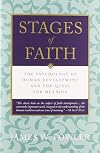
This is a classic! The scholarship is readily apparent. Whether or not you agree with the stages described in this book, you will certainly be challenged to THINK and THAT makes all the difference!
The fact that Fowler separates "Faith" from religion is CRITICAL, and will, I will bet, trip up many readers that are already 'prejudiced' to think in a particular way. But stick with the book to the end and make up your mind AFTER you have read it cover-to-cover and you will be rewarded with new show more perspective that transcends the "religious categories" to which faith is often related.
This book helps one develop an understanding that one's "faith" development most often goes hand-in-hand with "cognitive" development, though one may be "arrested" at any stage in faith development by NOT experiencing "crises" that challenge one's previous stage that would cause most people to re-think their present narrow belief system and incorporate new ideas. Often, particular religious or secular organizations and institutions limit one's experience of such crises by limiting one's exposure to the ideas, struggles and opinions of others that would normally cause one to have to struggle with and widen one's beliefs to make sense of the world.
This book is much more than what I can summarize simply in such few sentences; that is why it is very worthwhile reading! show less
The fact that Fowler separates "Faith" from religion is CRITICAL, and will, I will bet, trip up many readers that are already 'prejudiced' to think in a particular way. But stick with the book to the end and make up your mind AFTER you have read it cover-to-cover and you will be rewarded with new show more perspective that transcends the "religious categories" to which faith is often related.
This book helps one develop an understanding that one's "faith" development most often goes hand-in-hand with "cognitive" development, though one may be "arrested" at any stage in faith development by NOT experiencing "crises" that challenge one's previous stage that would cause most people to re-think their present narrow belief system and incorporate new ideas. Often, particular religious or secular organizations and institutions limit one's experience of such crises by limiting one's exposure to the ideas, struggles and opinions of others that would normally cause one to have to struggle with and widen one's beliefs to make sense of the world.
This book is much more than what I can summarize simply in such few sentences; that is why it is very worthwhile reading! show less
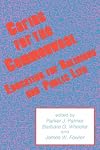
This book addresses the crisis in American social and religious life. It is in disarray because older images of common purpose have lost their power, and compelling new images have not yet been formed.

Does life have meaning or purpose? When you are most discouraged, what gets you up in he morning to return to the struggle? When and where do you experience wonder,awe, or ecstasy?

This book was required reading in the education program at Princeton Theological Seminary. It contains a helpful model of faith development based on educational psychology which informs the activities effective for students of various ages in religious education.
Lists
You May Also Like


Associated Authors
Statistics
- Works
- 13
- Also by
- 1
- Members
- 2,076
- Popularity
- #12,373
- Rating
- 3.5
- Reviews
- 6
- ISBNs
- 24
- Languages
- 1
- Favorited
- 1