
Winifred Conkling
Author of Hidden figures : the true story of four black women and the space race
About the Author
Winifred Conkling is a freelance writer specializing in health and consumer topics. She is the author of more than fifteen nonfiction books. Her articles have appeared in a number of national magazines, including American Health, McCall's, Consumer Reports, and Reader's Digest. She lives in show more northern Virginia with her husband and three children show less
Works by Winifred Conkling
Hidden figures : the true story of four black women and the space race (2018) 1,788 copies, 69 reviews
Radioactive! How Irène Curie and Lise Meitner Revolutionized Science and Changed the World (2016) 131 copies, 4 reviews
Passenger on the Pearl: The True Story of Emily Edmonson's Flight from Slavery (2015) 90 copies, 4 reviews
Getting Pregnant Naturally: Healthy Choices To Boost Your Chances Of Conceiving Without Fertility Drugs (1999) 51 copies, 1 review
The Complete Guide to Vitamins, Herbs, and Supplements: The Holistic Path to Good Health (2006) 27 copies
Heroism Begins with Her: Inspiring Stories of Bold, Brave, and Gutsy Women in the U.S. Military (2019) 25 copies
Smart-Wiring Your Baby's Brain: What You Can Do to Stimulate Your Child During the Critical First Three Years (2001) 21 copies
Tagged
Common Knowledge
- Gender
- female
- Education
- Vermont College of Fine Arts (MFA|Writing for Children and Young Adults)
- Birthplace
- Chevy Chase, Maryland, USA
- Map Location
- USA
Members
Reviews
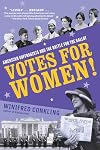
I missed reading this during the 19th amendment's centenary, but finishing it on an historic Inauguration Day seems fitting. Not only is this an interesting history of the fight for universal suffrage, it's also a look at the challenges of political action, the risks of pushing too hard or not hard enough and of being divided by the myth of the zero-sum game. The racist words of Anthony and Stanton are disappointing to read but unsurprising.

Sylvia never expected to be at the center of a landmark legal battle; all she wanted was to enroll in school.
Aki never expected to be relocated to a Japanese internment camp in the Arizona desert; all she wanted was to stay on her family farm and finish the school year.
The two girls certainly never expected to know each other, until their lives intersected in Southern California during a time when their country changed forever.
Here is the remarkable story based on true events of Sylvia show more Mendez and Aki Munemitsu, two ordinary girls living in extraordinary times. When Sylvia and her brothers are not allowed to register at the same school Aki attended and are instead sent to a “Mexican” school, the stage is set for Sylvia’s father to challenge in court the separation of races in California’s schools. Ultimately, Mendez vs. Westminster School District led to the desegregation of California schools and helped build the case that would end school segregation nationally.
Through extensive interviews with Sylvia and Aki—still good friends to this day—Winifred Conkling brings to life two stories of persistent courage in the face of tremendous odds. show less
Aki never expected to be relocated to a Japanese internment camp in the Arizona desert; all she wanted was to stay on her family farm and finish the school year.
The two girls certainly never expected to know each other, until their lives intersected in Southern California during a time when their country changed forever.
Here is the remarkable story based on true events of Sylvia show more Mendez and Aki Munemitsu, two ordinary girls living in extraordinary times. When Sylvia and her brothers are not allowed to register at the same school Aki attended and are instead sent to a “Mexican” school, the stage is set for Sylvia’s father to challenge in court the separation of races in California’s schools. Ultimately, Mendez vs. Westminster School District led to the desegregation of California schools and helped build the case that would end school segregation nationally.
Through extensive interviews with Sylvia and Aki—still good friends to this day—Winifred Conkling brings to life two stories of persistent courage in the face of tremendous odds. show less
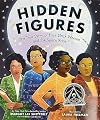
Thanks to the book by the same name for adults, as well as the successful movie based on that book, many people know the story of the four African-American women who helped NASA send men into space. Now the author and an illustrator have teamed up to bring the story to children.
Dorothy Vaughan, Mary Jackson, Katherine Johnson, and Christine Darden were “really good" at math, and they loved it enough to want to make a career out of it. Dorothy Vaughan got interested during WWII, out of a show more desire to serve the country by working for the National Advisory Committee for Aeronautics [NACA], the government agency that designed airplanes. This was in the 1940’s, when “computers” were actually persons who did math by hand. But the government agency was in the state of Virginia, where “Jim Crow” laws were in effect.
[Jim Crow is a term adapted from the song “Jump Jim Crow” performed by a white minstrel in blackface. It came to mean the social customs, policies, and laws put in place to maintain the hierarchy of whites over blacks. The Jim Crow Era lasted from the end of Reconstruction after the Civil War to the Civil Rights Movement of the 1950s and 1960s.]
Thus, in Virginia, blacks and whites could not eat in the same restaurants, drink from the same water fountains, use the same restrooms, attend the same schools, sit by each other in theaters, and so on.
But Dorothy had confidence that she was so good at math, the NACA would overlook her color. She was indeed offered a job at NACA’s Langley Laboratory in Hampton, Virginia, in 1943, although she had to work in a separate building with other black “computers.” She stayed on after the war, as the Americans were trying to build faster and safer planes.
In 1951, Mary Jackson got a job as a computer at Langley, helping test model airplanes in wind tunnels. Mary was also a computer but wanted to be an engineer. The obstacles were great: she was not only a woman, she was a black woman. But she refused to give up, and eventually became the first African-American female engineer at Langley.
Katherine Johnson applied to the lab in 1953, doing math that analyzed the effects of turbulence on airplanes. Being so good at what she did also helped her, like the others, overcome the barriers put in her way on account of being both black and female.
In the 1950’s, Langley bought a machine computer, and Dorothy helped program the machines. She also taught other black computer women to program.
In 1957, Russia launched Sputnik into space, and now the “space race” was on. NACA changed its name to the National Aeronautics and Space Administration, or NASA, and the people at Langley were tasked with figuring out how to send astronaut John Glenn into space and back to earth safely. Katherine helped calculate the trajectories for the rocket. Even though NASA was now using machine computers, Glenn wanted Katherine to double-check the machine computer’s calculations before he would get into the rocket. Only when she confirmed them did he blast off into space.
Christine Darden came to Langley in 1967. As the author reports, Christine wanted to become an engineer, and thanks to Dorothy, Mary, and Katherine, she knew it was possible.
NASA meanwhile, was now working on getting a man to the moon:
“The next adventure wouldn’t be easy and would require lots of tests and lots more numbers. But Dorothy, Mary, Katherine, and Christine knew one thing: with hard work, perseverance, and a love of math, anything was possible.”
The book concludes with a timeline that goes from 1903 (the first powered flight) to 1969 (the first humans landing on the moon). The career spans of Dorothy, Mary, Katherine, and Christine are also shown on the timeline. Short biographies follow for each woman - “Meet the Computers.” Finally, there is a glossary, and an Author’s Note. In the Note, Shetterly writes:
“It’s my hope that the heroines of Hidden Figures will spark the imaginations of the next generation of readers - and the next generation of scientists, mathematicians, and engineers - and encourage them to ride their dreams as high as their talent and determination will take them.”
The terrific illustrations by Laura Freeman use bold colors to display the well-researched historical events the book describes. Her artwork is simple, and yet attitude is all over the faces of these four determined women! Freeman includes so many clever but subtle touches. She adds patterns to clothes and math symbols to dreams. To depict changes during the Civil Rights movements, she shows a diverse group of people holding hands, presumably inside a bus, while images of Civil Rights icons appear through the windows.
And Freeman realized her own dreams in becoming an artist. I love this reminiscence by the illustrator in an interview:
“. . . .I was about five when, after looking at a beautiful children’s book, I asked my mom about the pictures and she told me that it was someone’s job to create them. I thought: ‘Wow, that’s a job?’”
Evaluation: It’s so gratifying to see more books for kids about women who persisted against huge odds to make a difference in any field, but especially those of science and math. The book isn’t as exciting as the film of course, but it is perfect for the younger audience for whom it is intended. show less
Dorothy Vaughan, Mary Jackson, Katherine Johnson, and Christine Darden were “really good" at math, and they loved it enough to want to make a career out of it. Dorothy Vaughan got interested during WWII, out of a show more desire to serve the country by working for the National Advisory Committee for Aeronautics [NACA], the government agency that designed airplanes. This was in the 1940’s, when “computers” were actually persons who did math by hand. But the government agency was in the state of Virginia, where “Jim Crow” laws were in effect.
[Jim Crow is a term adapted from the song “Jump Jim Crow” performed by a white minstrel in blackface. It came to mean the social customs, policies, and laws put in place to maintain the hierarchy of whites over blacks. The Jim Crow Era lasted from the end of Reconstruction after the Civil War to the Civil Rights Movement of the 1950s and 1960s.]
Thus, in Virginia, blacks and whites could not eat in the same restaurants, drink from the same water fountains, use the same restrooms, attend the same schools, sit by each other in theaters, and so on.
But Dorothy had confidence that she was so good at math, the NACA would overlook her color. She was indeed offered a job at NACA’s Langley Laboratory in Hampton, Virginia, in 1943, although she had to work in a separate building with other black “computers.” She stayed on after the war, as the Americans were trying to build faster and safer planes.
In 1951, Mary Jackson got a job as a computer at Langley, helping test model airplanes in wind tunnels. Mary was also a computer but wanted to be an engineer. The obstacles were great: she was not only a woman, she was a black woman. But she refused to give up, and eventually became the first African-American female engineer at Langley.
Katherine Johnson applied to the lab in 1953, doing math that analyzed the effects of turbulence on airplanes. Being so good at what she did also helped her, like the others, overcome the barriers put in her way on account of being both black and female.
In the 1950’s, Langley bought a machine computer, and Dorothy helped program the machines. She also taught other black computer women to program.
In 1957, Russia launched Sputnik into space, and now the “space race” was on. NACA changed its name to the National Aeronautics and Space Administration, or NASA, and the people at Langley were tasked with figuring out how to send astronaut John Glenn into space and back to earth safely. Katherine helped calculate the trajectories for the rocket. Even though NASA was now using machine computers, Glenn wanted Katherine to double-check the machine computer’s calculations before he would get into the rocket. Only when she confirmed them did he blast off into space.
Christine Darden came to Langley in 1967. As the author reports, Christine wanted to become an engineer, and thanks to Dorothy, Mary, and Katherine, she knew it was possible.
NASA meanwhile, was now working on getting a man to the moon:
“The next adventure wouldn’t be easy and would require lots of tests and lots more numbers. But Dorothy, Mary, Katherine, and Christine knew one thing: with hard work, perseverance, and a love of math, anything was possible.”
The book concludes with a timeline that goes from 1903 (the first powered flight) to 1969 (the first humans landing on the moon). The career spans of Dorothy, Mary, Katherine, and Christine are also shown on the timeline. Short biographies follow for each woman - “Meet the Computers.” Finally, there is a glossary, and an Author’s Note. In the Note, Shetterly writes:
“It’s my hope that the heroines of Hidden Figures will spark the imaginations of the next generation of readers - and the next generation of scientists, mathematicians, and engineers - and encourage them to ride their dreams as high as their talent and determination will take them.”
The terrific illustrations by Laura Freeman use bold colors to display the well-researched historical events the book describes. Her artwork is simple, and yet attitude is all over the faces of these four determined women! Freeman includes so many clever but subtle touches. She adds patterns to clothes and math symbols to dreams. To depict changes during the Civil Rights movements, she shows a diverse group of people holding hands, presumably inside a bus, while images of Civil Rights icons appear through the windows.
And Freeman realized her own dreams in becoming an artist. I love this reminiscence by the illustrator in an interview:
“. . . .I was about five when, after looking at a beautiful children’s book, I asked my mom about the pictures and she told me that it was someone’s job to create them. I thought: ‘Wow, that’s a job?’”
Evaluation: It’s so gratifying to see more books for kids about women who persisted against huge odds to make a difference in any field, but especially those of science and math. The book isn’t as exciting as the film of course, but it is perfect for the younger audience for whom it is intended. show less
At a time when “colored” water fountains and separate bathrooms also meant that African-Americans were excluded from many good jobs, Dorothy Vaughan, Mary Jackson, Katherine Johnson, and Christine Darden made themselves indispensable to the National Advisory Committee for Aeronautics, which became NASA in 1958.
These four African-American trailblazing mathematicians worked as NASA computers before machines performed mathematical computations for the space program despite sexism and show more segregation that made their jobs extremely difficult. In one spread, Freeman uses the gutter to separate these four women from several white women, illustrating how the black and the white computers worked apart, used separate bathrooms, and ate in separate lunchrooms despite working on the same kinds of assignments. While Shetterly and co-author Conkling emphasize these women’s tenacity, the picture-book lacks some aspects of their characters that the Hidden Figures film to which this is a companion captures well: their subversion, their senses of humor, and the community they built among black NASA employees as conditions improved. Their somber expressions throughout most of the illustrations imply that they found little enjoyment in their work, but their longevity at NASA suggests otherwise. Rich backmatter offers a timeline of historical events, biographies, a glossary, and an author’s note from Shetterly.
An important story to tell about four heroines, one that will lead young readers to the longer, more-nuanced coverage available when they are ready . (Informational picture book. 5-8)
-Kirkus Review show less
These four African-American trailblazing mathematicians worked as NASA computers before machines performed mathematical computations for the space program despite sexism and show more segregation that made their jobs extremely difficult. In one spread, Freeman uses the gutter to separate these four women from several white women, illustrating how the black and the white computers worked apart, used separate bathrooms, and ate in separate lunchrooms despite working on the same kinds of assignments. While Shetterly and co-author Conkling emphasize these women’s tenacity, the picture-book lacks some aspects of their characters that the Hidden Figures film to which this is a companion captures well: their subversion, their senses of humor, and the community they built among black NASA employees as conditions improved. Their somber expressions throughout most of the illustrations imply that they found little enjoyment in their work, but their longevity at NASA suggests otherwise. Rich backmatter offers a timeline of historical events, biographies, a glossary, and an author’s note from Shetterly.
An important story to tell about four heroines, one that will lead young readers to the longer, more-nuanced coverage available when they are ready . (Informational picture book. 5-8)
-Kirkus Review show less
Lists
Awards


You May Also Like


Associated Authors
Statistics
- Works
- 22
- Members
- 2,790
- Popularity
- #9,212
- Rating
- 4.4
- Reviews
- 97
- ISBNs
- 71
- Languages
- 3
