
Penelope Curtis
Author of Sculpture 1900-1945
About the Author
Image credit: Penelope Curtis
Works by Penelope Curtis
The Human Factor: The Figure in Contemporary Sculpture (Hayward Gallery, London - Exhibition Catalogues) (2014) 11 copies
Sculpture in Painting: The Representation of Sculpture in Painting from Titian to the Present (2009) 8 copies
Associated Works
Alexander Calder: performing sculpture {catalogue Tate Modern 2015-2016} (2015) — Contributor — 47 copies
Tagged
Common Knowledge
- Birthdate
- 1961
- Gender
- female
- Education
- University of Oxford
- Occupations
- museum director
curator (Henry Moore Institute, Leeds)
director (Calouste Gulbenkian Museum, Lisbon) - Organizations
- Tate Britain
Calouste Gulbenkian Museum, Lisbon
Henry Moore Institute, Leeds - Nationality
- UK
- Birthplace
- London, England, UK
- Associated Place (for map)
- England, UK
Members
Reviews

This is the comprehensive and scholarly catalogue for Modern British Sculpture, an imaginative exhibition held at the London home of the Royal Academy of Arts in the first quarter of 2011. ‘Modern’ in this context covers sculpture from Frederic Leighton’s An Athlete Struggling with a Python from the late 19th century to works by the likes of Damien Hirst, Urs Fischer and Rebecca Warren from the closing years of the 20th century.
Gallery exhibitions of sculpture are necessarily show more constrained by the limited space, not just to contain the works but also to allow them to be properly viewed. This show does not try to cover all aspects of 20th C. British sculpture, still less to show all the major artists. The curators state that their aim is to examine some of the key questions that Sculptors in the 20th century have had to address, not least ‘What is sculpture?’
The first room invited consideration of the difference between figurative and abstract sculpture in monumentalising life and death, comparing Lutyen’s Cenotaph and Epstein’s series of statues dealing with life and death made to adorn the facade of the BMA building in London’s Strand. The catalogue gives a full account of the sad fate of these latter works.
In the second room the curators present a number of statues, wall reliefs and fragments from around the world, the sort of thing which provided a rich source of inspiration to British sculptors as they started to move away from Classical realism. These pieces were the spoils of Empire and so a particularly British phenomenon. The room is set out with the sources and their echoes confronting each other. Two Assyrian reliefs of military actions flank a plaster relief made by Charles Sargeant Jagger for a Belgian Memorial for the Great War showing Belgian peasants helping British wounded. This is striking for the very purposeful, even aggressive, expressions of the peasants compared with the rather broken British faces. A crouching figure of a Sun Goddess by Epstein squats beside an extraordinarily flawless seated baboon from Egypt in the 14th century BC. There are fragments of sculpture showing the depredations of age, notably a leopard’s head and trunk from Halicarnassus, that nonetheless retain their artistic power: the new sculptors recognised this and embraced the idea of creating incomplete images. I found this room the most instructive and it contained the work I would have most liked to take home, an Eric Gill relief, Nude Girl with Hair.
The next room was completely dominated by Epstein’s massive alabaster statue of Adam. The figure looks upwards as he presses up with his huge arms. There was a echo from the pose of the Statue of Moai Hava from Easter Island in the previous room, although its anatomical features are suggested rather than shown. Adam, however is much more detailed, particularly his genitals and musculature. He had a rather unhappy and undignified career in the hands of showmen who displayed his charms to adult-only audiences for a shilling or two until rescued by Lord Harewood and given a more fitting home. My only reservation about this powerful piece is the pale, translucent stone of which it is made. The swollen ankles and distended scrotum made me think of anasarca.
More formal statuary is shown next, followed by a display of ceramics demonstrating how ancient oriental pieces influenced British studio potters like Bernard Leach and in turn the relation between his work and the small scale works of his associates, Barbara Hepworth and Ben Nicholson.
All of the next room is given to two large public works by Hepworth and the other giant of mid 20th century sculpture, Henry Moore. If it is a stand-off, I think Hepworth wins this one.
A room with a reconstructed installation first shown in the 1950s by Victor Pasmore and Richard Hamilton leads the viewer away from the more comfortable, tactile and, at least sometimes, beautiful earlier pieces towards more recent works where technical skill and craftsmanship seem of little account and concept is paramount. Widely considered to be his best work, Anthony Caro’s Early One Morning straddles the gap. The fire-engine red metal structure, mostly rectangular but with some lightening curves, cries out to be clambered over but we are kept at arm’s length. After this we are into an area of assemblages of found objects, random rock, fire bricks and the like as well as photographs, films, and even timetables and a wall full of Page 3 girls. Two works stood out.
The first, by Damien Hirst, Let’s Eat Outside Today, was a vitrine containing plastic patio furniture and an abandoned barbecue. The rotting remains of a meal were on the table and slabs of raw meat sat on the grill. For good measure a bleeding cow’s head lay under the table. The piece was enlivened by thousands of bluebottles flying around, eating, breeding and dying. The curators suggest it shows a peculiarly British interest in social and class behaviour: I am sceptical.
The second, Nul, Comma, Nul, by Stuart Brisley had more to say. A large rusting metal box had one end removed and replaced by a grille. A bright light pointing straight at the viewer made it hard to see what was inside but it gradually appeared that the floor was covered with disordered clothing. There were hints of other objects including a garden hand fork(?) looking uncomfortably like a skeletal hand. It seemed a place of death.
I was left with an uncomfortable, but transient, feeling of personal narrow-mindedness at my reluctance to grant some of these works the status of ‘Art’. Whatever the creator may be thinking or what message he intends the viewer to take away, I find it near impossible to take seriously a rectangular arrangement of bricks on the floor, or random white rocks laid out as a path, or three fluorescent lights hung at odd angles. It may be that the perpetrators of these objects do possess craft skills, but such skills are not evident in the constructions. I think the curators have left the visitor with their opinion as to what sculpture is. show less
Gallery exhibitions of sculpture are necessarily show more constrained by the limited space, not just to contain the works but also to allow them to be properly viewed. This show does not try to cover all aspects of 20th C. British sculpture, still less to show all the major artists. The curators state that their aim is to examine some of the key questions that Sculptors in the 20th century have had to address, not least ‘What is sculpture?’
The first room invited consideration of the difference between figurative and abstract sculpture in monumentalising life and death, comparing Lutyen’s Cenotaph and Epstein’s series of statues dealing with life and death made to adorn the facade of the BMA building in London’s Strand. The catalogue gives a full account of the sad fate of these latter works.
In the second room the curators present a number of statues, wall reliefs and fragments from around the world, the sort of thing which provided a rich source of inspiration to British sculptors as they started to move away from Classical realism. These pieces were the spoils of Empire and so a particularly British phenomenon. The room is set out with the sources and their echoes confronting each other. Two Assyrian reliefs of military actions flank a plaster relief made by Charles Sargeant Jagger for a Belgian Memorial for the Great War showing Belgian peasants helping British wounded. This is striking for the very purposeful, even aggressive, expressions of the peasants compared with the rather broken British faces. A crouching figure of a Sun Goddess by Epstein squats beside an extraordinarily flawless seated baboon from Egypt in the 14th century BC. There are fragments of sculpture showing the depredations of age, notably a leopard’s head and trunk from Halicarnassus, that nonetheless retain their artistic power: the new sculptors recognised this and embraced the idea of creating incomplete images. I found this room the most instructive and it contained the work I would have most liked to take home, an Eric Gill relief, Nude Girl with Hair.
The next room was completely dominated by Epstein’s massive alabaster statue of Adam. The figure looks upwards as he presses up with his huge arms. There was a echo from the pose of the Statue of Moai Hava from Easter Island in the previous room, although its anatomical features are suggested rather than shown. Adam, however is much more detailed, particularly his genitals and musculature. He had a rather unhappy and undignified career in the hands of showmen who displayed his charms to adult-only audiences for a shilling or two until rescued by Lord Harewood and given a more fitting home. My only reservation about this powerful piece is the pale, translucent stone of which it is made. The swollen ankles and distended scrotum made me think of anasarca.
More formal statuary is shown next, followed by a display of ceramics demonstrating how ancient oriental pieces influenced British studio potters like Bernard Leach and in turn the relation between his work and the small scale works of his associates, Barbara Hepworth and Ben Nicholson.
All of the next room is given to two large public works by Hepworth and the other giant of mid 20th century sculpture, Henry Moore. If it is a stand-off, I think Hepworth wins this one.
A room with a reconstructed installation first shown in the 1950s by Victor Pasmore and Richard Hamilton leads the viewer away from the more comfortable, tactile and, at least sometimes, beautiful earlier pieces towards more recent works where technical skill and craftsmanship seem of little account and concept is paramount. Widely considered to be his best work, Anthony Caro’s Early One Morning straddles the gap. The fire-engine red metal structure, mostly rectangular but with some lightening curves, cries out to be clambered over but we are kept at arm’s length. After this we are into an area of assemblages of found objects, random rock, fire bricks and the like as well as photographs, films, and even timetables and a wall full of Page 3 girls. Two works stood out.
The first, by Damien Hirst, Let’s Eat Outside Today, was a vitrine containing plastic patio furniture and an abandoned barbecue. The rotting remains of a meal were on the table and slabs of raw meat sat on the grill. For good measure a bleeding cow’s head lay under the table. The piece was enlivened by thousands of bluebottles flying around, eating, breeding and dying. The curators suggest it shows a peculiarly British interest in social and class behaviour: I am sceptical.
The second, Nul, Comma, Nul, by Stuart Brisley had more to say. A large rusting metal box had one end removed and replaced by a grille. A bright light pointing straight at the viewer made it hard to see what was inside but it gradually appeared that the floor was covered with disordered clothing. There were hints of other objects including a garden hand fork(?) looking uncomfortably like a skeletal hand. It seemed a place of death.
I was left with an uncomfortable, but transient, feeling of personal narrow-mindedness at my reluctance to grant some of these works the status of ‘Art’. Whatever the creator may be thinking or what message he intends the viewer to take away, I find it near impossible to take seriously a rectangular arrangement of bricks on the floor, or random white rocks laid out as a path, or three fluorescent lights hung at odd angles. It may be that the perpetrators of these objects do possess craft skills, but such skills are not evident in the constructions. I think the curators have left the visitor with their opinion as to what sculpture is. show less
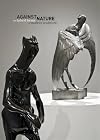
This exhibition introduces little known sculptors from across Europe and the Americas and places them in a freakish family tree which also includes some of the ‘iconic’ examples of modern sculpture. It suggests a new way of looking at the emergence of modern sculpture and at its underlying continuities circa 1890s – 1980s.
This catalogue also includes specially commissioned photography of the exhibition in Leeds and a picture essay compiled by Stephen Feeke and Ellen Tait. Published on show more the occasion of the exhibition at Henry Moore Institute, Leeds, 7 February – 4 May 2008, and Skulptuur Instituut, Scheveningen, 16 May – 7 September 2008.
Sculpture is about much more than marble busts and bronze figures. It’s an exciting
time for sculpture because it is being broken down and allied to all different kinds of media, such as film, drawing, architecture, performance and photography.
Against Nature: The hybrid forms of modern sculpture' is the exciting new exhibition at the Henry Moore Institute in Leeds this winter. This exhibition continues the Institute’s ethos to promote the appreciation of sculpture as a pertinent contemporary art form with a rich and varied history.
Curators, Dr. Jon Wood and Stephen Feeke, are keen to highlight the Henry Moore Institute’s strong commitment to sculpture, through research, exhibitions, and archives, which also includes a collection of audio visual materials such as slides and DVDs. Their commitment to multi-media highlights that audiences’ perceptions of sculpture are shifting. According to Stephen, it is apparent that artists and the public have realised that “sculpture is about much than marble busts and bronze figures” and Jon adds, “It’s an exciting time for sculpture because it is being broken down and allied to all different kinds of media, such as film, drawing, architecture, performance and photography. The definitions are much more malleable. It is an extremely liberating practice to be involved in.” Jon further argues that sculpture is the only medium that provides such freedom from restraint, unlike other forms such as painting; sculptors are not restricted in their choice of canvas or materials.
Sculpture is often seen as one discipline, but the curators are interested in expanding the remit, Stephen says, “For some people, sculpture is a narrow field. We’re here to broaden the scope.” Another aim of the exhibition is to contemplate how sculpture is featured in other media. “Sculpture can be anything”, says Stephen, and this concept is precisely what Against Nature intends to promote.
Jon and Stephen initially became interested in the theme of hybrids because of their respective interest in the avant-garde movements of surrealism, futurism, constructivism, vorticism and symbolism. There was an awareness that these isms have never been fully appreciated in sculpture, and were typically synonymous with other artistic movements. The curators came to a swift realisation that the hybrid process of taking one thing and changing it into another was a very sculptural idea. It soon became their joint concern to present construction as a central impulse to sculptural enterprise.
The exhibition also embraces the international life of the hybrid sculpture, and its ability to adapt beyond otherwise grounded definitions. The sculptors included in the exhibition have varying levels of notoriety. Artists such as: Jean Arp, Max Ernst, Isamu Noguchi and Raymond Mason will feature and this should instil the viewer with a varied and global conception of hybridism. The use of hybridism as a form of expression “resonates and ripples across the 20th century and across artistic movements”, yet the composition of these hybrid forms are in constant flux. In Against Nature the fluidity of transition from one form to another represents hybridism very subtly at times, although many of the sculptures are obviously hybrid in nature, embodying deliberately multi-partite beings.
By Leafy Ways, a retrospective of the early work of Ivor Abrahams, is an exhibition that runs alongside the main show and focuses on the unusual use and representation of nature. The clear connections with hybrid form become apparent in what Jon describes as Abrahams’ preoccupation with “de-familiarising the familiar.”
In Against Nature, the curators purposely made the bold decision to exclude contemporary forms of hybrid sculpture, with the latest piece dating from the late 1980s. Jon says, “This decision was made to ensure that all the present work that is being made can be seen in light of this exhibition, as a sort of pre-history. We wanted to leave the potential open in a full as possible way for the contemporary arts scene. If we had shown work by the Chapman brothers, it would be a shame to say you have to understand the Chapman brothers to understand Jacob Epstein. That’s not true. Not going up to the present seems a way of keeping the possibility open.”
The historical significance of some of the works in Against Nature represent an acceptance of the theory of evolution. To say that sculpture was “against nature” during this time period suggests two lines of enquiry: firstly that sculpture could create impossible beings that went beyond the natural order, which evolution could potentially deliver; secondly, that sculpture presents an absurd fantasy, created by means of realistic modelling, so as to suggest their “real life” existence. The impact of Darwinism and the role of genetics appear to be momentous; Stephen says, “Without Darwin, some of the earlier works would never have happened.”
The exhibit begins with Metamorphic Creatures, which takes much of its inspiration from classical mythology; figures of centaurs, chimeras and sphinxes that were an important preoccupation for artists during the late 19th century are among the featured exhibits. A further theme, explored in the section entitled Modern Monsters develops the view of sculpture as a reaction to the pressures of industrialisation. The notion of sculpture as a form of evolution is brought into the foreground with Hortisculpture, which shows a sometimes-sinister manipulation of plants, but also presents how sculpture exists in a state of perpetual growth. Jon says, “Making sculpture can sometimes be a lot like grafting, cross-fertilizing and cross-pollinating to make unusual and new kinds of plants. They are part human and part plant.”
Against Nature traces the history of modern sculpture from the very origin of its basic principles. The exhibit questions the purpose and presentation of sculpture and suggests that the evolutionary impulse of this art form not only encouraged its development, but is also an indication of the flexibility of our perceptions. Against Nature: The hybrid forms of modern sculpture and By Leafy Ways ran from 7 February until 4 May 2008 at the Henry Moore Institute in Leeds. show less
This catalogue also includes specially commissioned photography of the exhibition in Leeds and a picture essay compiled by Stephen Feeke and Ellen Tait. Published on show more the occasion of the exhibition at Henry Moore Institute, Leeds, 7 February – 4 May 2008, and Skulptuur Instituut, Scheveningen, 16 May – 7 September 2008.
Sculpture is about much more than marble busts and bronze figures. It’s an exciting
time for sculpture because it is being broken down and allied to all different kinds of media, such as film, drawing, architecture, performance and photography.
Against Nature: The hybrid forms of modern sculpture' is the exciting new exhibition at the Henry Moore Institute in Leeds this winter. This exhibition continues the Institute’s ethos to promote the appreciation of sculpture as a pertinent contemporary art form with a rich and varied history.
Curators, Dr. Jon Wood and Stephen Feeke, are keen to highlight the Henry Moore Institute’s strong commitment to sculpture, through research, exhibitions, and archives, which also includes a collection of audio visual materials such as slides and DVDs. Their commitment to multi-media highlights that audiences’ perceptions of sculpture are shifting. According to Stephen, it is apparent that artists and the public have realised that “sculpture is about much than marble busts and bronze figures” and Jon adds, “It’s an exciting time for sculpture because it is being broken down and allied to all different kinds of media, such as film, drawing, architecture, performance and photography. The definitions are much more malleable. It is an extremely liberating practice to be involved in.” Jon further argues that sculpture is the only medium that provides such freedom from restraint, unlike other forms such as painting; sculptors are not restricted in their choice of canvas or materials.
Sculpture is often seen as one discipline, but the curators are interested in expanding the remit, Stephen says, “For some people, sculpture is a narrow field. We’re here to broaden the scope.” Another aim of the exhibition is to contemplate how sculpture is featured in other media. “Sculpture can be anything”, says Stephen, and this concept is precisely what Against Nature intends to promote.
Jon and Stephen initially became interested in the theme of hybrids because of their respective interest in the avant-garde movements of surrealism, futurism, constructivism, vorticism and symbolism. There was an awareness that these isms have never been fully appreciated in sculpture, and were typically synonymous with other artistic movements. The curators came to a swift realisation that the hybrid process of taking one thing and changing it into another was a very sculptural idea. It soon became their joint concern to present construction as a central impulse to sculptural enterprise.
The exhibition also embraces the international life of the hybrid sculpture, and its ability to adapt beyond otherwise grounded definitions. The sculptors included in the exhibition have varying levels of notoriety. Artists such as: Jean Arp, Max Ernst, Isamu Noguchi and Raymond Mason will feature and this should instil the viewer with a varied and global conception of hybridism. The use of hybridism as a form of expression “resonates and ripples across the 20th century and across artistic movements”, yet the composition of these hybrid forms are in constant flux. In Against Nature the fluidity of transition from one form to another represents hybridism very subtly at times, although many of the sculptures are obviously hybrid in nature, embodying deliberately multi-partite beings.
By Leafy Ways, a retrospective of the early work of Ivor Abrahams, is an exhibition that runs alongside the main show and focuses on the unusual use and representation of nature. The clear connections with hybrid form become apparent in what Jon describes as Abrahams’ preoccupation with “de-familiarising the familiar.”
In Against Nature, the curators purposely made the bold decision to exclude contemporary forms of hybrid sculpture, with the latest piece dating from the late 1980s. Jon says, “This decision was made to ensure that all the present work that is being made can be seen in light of this exhibition, as a sort of pre-history. We wanted to leave the potential open in a full as possible way for the contemporary arts scene. If we had shown work by the Chapman brothers, it would be a shame to say you have to understand the Chapman brothers to understand Jacob Epstein. That’s not true. Not going up to the present seems a way of keeping the possibility open.”
The historical significance of some of the works in Against Nature represent an acceptance of the theory of evolution. To say that sculpture was “against nature” during this time period suggests two lines of enquiry: firstly that sculpture could create impossible beings that went beyond the natural order, which evolution could potentially deliver; secondly, that sculpture presents an absurd fantasy, created by means of realistic modelling, so as to suggest their “real life” existence. The impact of Darwinism and the role of genetics appear to be momentous; Stephen says, “Without Darwin, some of the earlier works would never have happened.”
The exhibit begins with Metamorphic Creatures, which takes much of its inspiration from classical mythology; figures of centaurs, chimeras and sphinxes that were an important preoccupation for artists during the late 19th century are among the featured exhibits. A further theme, explored in the section entitled Modern Monsters develops the view of sculpture as a reaction to the pressures of industrialisation. The notion of sculpture as a form of evolution is brought into the foreground with Hortisculpture, which shows a sometimes-sinister manipulation of plants, but also presents how sculpture exists in a state of perpetual growth. Jon says, “Making sculpture can sometimes be a lot like grafting, cross-fertilizing and cross-pollinating to make unusual and new kinds of plants. They are part human and part plant.”
Against Nature traces the history of modern sculpture from the very origin of its basic principles. The exhibit questions the purpose and presentation of sculpture and suggests that the evolutionary impulse of this art form not only encouraged its development, but is also an indication of the flexibility of our perceptions. Against Nature: The hybrid forms of modern sculpture and By Leafy Ways ran from 7 February until 4 May 2008 at the Henry Moore Institute in Leeds. show less

Barbara Hepworth's career spanned five decades, from 1925 to 1975. Her style moved from figuration, through geometric and organic abstraction, to the internationally acclaimed grandeur of her large-scale, post-war work. Her best known sculpture is associated with the landscape around St. Ives in Cornwall: 'I used colour and strings in many of the carvings ... The colour plunged me into the depths of water, caves or shadows deeper than the carved concavities themselves. The strings were the show more tension I felt between myself and the sea, the wind or the hills.'
This publication focuses on Hepworth's unique carvings. It reassesses her reputation in the light of attention recently paid to her contemporaries, Ben Nicholson and Henry Moore and offers the opportunity to look afresh at a major British artist. show less
This publication focuses on Hepworth's unique carvings. It reassesses her reputation in the light of attention recently paid to her contemporaries, Ben Nicholson and Henry Moore and offers the opportunity to look afresh at a major British artist. show less
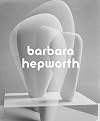
Catalogue of exhibition in Tate London; Kröller-Müller, Otterlo; Arp Mseum Bahnhof Rolandseck. For Otterlo it is a kind of coming back home as the opening exhibition of the rebuild Rietveld Pavilion in 1963 was also a show of sculptures by Barbara. Kent's article about the devotion of Babara to Christian Science and the Anglican Church and how it affected (some of?) her sculptures is convincing but a little bit shocking for her 'modernist reputation'. Very nice and also convincing essay's show more about how Barbara used the media to present her sculptures in 'her chosen light'. Also nice 'history' about what was the apotheose of the exhibition the 'Guarea Wood-Carvings'. Good plates of exhibited works but it stays impossible to document 'the feeling' of materials and 3 D in 2D. show less
You May Also Like


Associated Authors
Statistics
- Works
- 53
- Also by
- 7
- Members
- 365
- Popularity
- #65,882
- Rating
- 3.8
- Reviews
- 9
- ISBNs
- 47
- Languages
- 2