
Lavinia R. Davis (1909–1961)
Author of Hobby Horse Hill
About the Author
Works by Lavinia R. Davis
Evidence unseen 2 copies
The journals of Lavinia Riker Davis 2 copies
Spinney and Spike and the B-29 2 copies
Summer Is Fun 1 copy
Clown Dog 1 copy
Threat of dragons 1 copy
Barren heritage 1 copy
Taste of vengeance 1 copy
Reference to death 1 copy
A Very Special Pet 1 copy
Plough Penny Mystery 1 copy
Journals 1 copy
We all go away 1 copy
Associated Works
Tagged
Common Knowledge
- Legal name
- Davis, Lavinia Riker
- Other names
- Farmer, Wendell (pseudonym)
- Birthdate
- 1909
- Date of death
- 1961
- Gender
- female
Members
Reviews
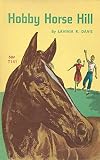
Oh, my, what a nostalgia trip. I couldn't remember the title or author, but had very clear if fragmentary memories of this book from my childhood, bought for 50 cents through the Scholastic Books program at my elementary school. Through a roundabout series of clicks through Facebook, I stumbled on someone else's memory of the details and promptly ordered it through Abebooks.com. The brittle little paperback that arrived was the same edition I recalled. And I loved this little thing almost as show more much as I had as a girl. The privileged child Terry is farmed out to her rural cousins' home for the summer, their only tenuous connection is a love of horses, though Terry thinks she is rather better in the saddle than she actually is. The Wades are an independent, rough-and-tumble bunch, and their mutual discomfort with each other is ratherly tenderly drawn. Through a series of escapades, projects and adventures, the kids learn to appreciate each other and bond through their beloved horses and ponies (plus dogs, a lively littlest brother, a kindly artsy mother, a rather remote but ultimately good father, and a goat). Published in 1939, it's a sweet, warm-hearted story written by a knowledgeable horsewoman (who knows that when you compete at a horse show, you usually don't win); the writing is fluid and surprisingly adult for a book aimed at pre-teens (..."said Rod judiciously," an elderly dog "waddles sagely"). A historical note: Terry's parents are absent on a business trip to Europe, and her nanny is referred to as "Fraulein," but there is no note of what was looming in Europe at that time. Yeah, it's a privileged white upper-class population (there is a brief and awkward rather "noblesse oblige" encounter with an impoverished family of Irish -or maybe Cockney, hard to tell... - immigrants), but I was overall gently pleased to find this beloved book of my childhood stood up quite well, with valid lessons about tolerance, generosity and responsibility gracefully included. show less

When Lyb (Elizabeth) and Sandy Hardwicke discover secluded Buttonwood Island in the Black River near their Connecticut farm, the sister and brother are delighted at the prospect of spending their summer days in such a magical spot. The appearance on the scene of their new neighbor, Sig (Sigourney) O'Hara, seems at first to spell trouble, but the three children are soon friends, making plans to refurbish the old barn on the island, and set up their own riding club.
The second "pony book" I show more have read by Lavinia R. Davis, after Hobby Horse Hill, Buttonwood Island details the summer adventures of three children, all of whom confront some personal difficulty or challenge in the course of the story. Forceful Lyb must contend with her inner insecurity, and learn to put on less of a "show," Sandy overcomes his fear of riding the mare Winsome, and Sig discovers that it is possible to win the respect of his demanding father.
Davis' narrative is rather conventional, although readers with a taste for vintage children's books will probably be entertained by the period slang. Published in 1940, the book features lots of characters who describe things as "swell" and "punk." The sub-plot involving the discovery of Indian artifacts on Buttonwood Island is a little more troubling, and the many casual references to Native Americans will strike contemporary readers as patronizing and racist. Given what little I know of the contentious issue of Indian burial grounds, the discovery of Podunk remains in the last part of the story is particularly disturbing. Given that the descendants of the Podunk are still to be found among the Schaghticoke people of Connecticut, the idea that their ancestors' belongings would be given to a young white boy, seems rather tasteless. show less
The second "pony book" I show more have read by Lavinia R. Davis, after Hobby Horse Hill, Buttonwood Island details the summer adventures of three children, all of whom confront some personal difficulty or challenge in the course of the story. Forceful Lyb must contend with her inner insecurity, and learn to put on less of a "show," Sandy overcomes his fear of riding the mare Winsome, and Sig discovers that it is possible to win the respect of his demanding father.
Davis' narrative is rather conventional, although readers with a taste for vintage children's books will probably be entertained by the period slang. Published in 1940, the book features lots of characters who describe things as "swell" and "punk." The sub-plot involving the discovery of Indian artifacts on Buttonwood Island is a little more troubling, and the many casual references to Native Americans will strike contemporary readers as patronizing and racist. Given what little I know of the contentious issue of Indian burial grounds, the discovery of Podunk remains in the last part of the story is particularly disturbing. Given that the descendants of the Podunk are still to be found among the Schaghticoke people of Connecticut, the idea that their ancestors' belongings would be given to a young white boy, seems rather tasteless. show less

When Terry White goes to spend her summer holidays with her Wade cousins in rural Connecticut, the nervous New York girl feels somewhat intimidated by her rough-and-tumble relatives, and their horse-mad ways. Hobby Horse Hill seems oddly chaotic and informal to a young woman used to always looking neat and clean. But Kate and Roddy Wade don't care about Terry's clothes - they want to know whether she can handle herself on a horse...
Published in 1939, and long out-of-print, Hobby Horse Hill show more is one of those stories - quite common in children's literature - in which the protagonist finds herself thrust into unfamiliar circumstances for a period of time (usually on holiday), learns a new set of skills, and gains a greater degree of self-confidence. When done well, this formula can be quite involving, even moving. Unfortunately, Lavinia R. Davis' narrative never really came alive for me, and I had difficulty caring about Terry's (very predictable) trials and tribulations.
The story was pleasant enough, but hardly memorable, and I wouldn't recommend that readers go out of their way to find it. That said, I did find it deliciously ironic, after reading so many British children's novels in which Americans feature as exotic curiosities, that the "low-class" Jarvis family here are recent English immigrants. Of course Americans believe that they should be egalitarian, so Terry learns not to look down on the Jarvises, but the turn-around was amusing. show less
Published in 1939, and long out-of-print, Hobby Horse Hill show more is one of those stories - quite common in children's literature - in which the protagonist finds herself thrust into unfamiliar circumstances for a period of time (usually on holiday), learns a new set of skills, and gains a greater degree of self-confidence. When done well, this formula can be quite involving, even moving. Unfortunately, Lavinia R. Davis' narrative never really came alive for me, and I had difficulty caring about Terry's (very predictable) trials and tribulations.
The story was pleasant enough, but hardly memorable, and I wouldn't recommend that readers go out of their way to find it. That said, I did find it deliciously ironic, after reading so many British children's novels in which Americans feature as exotic curiosities, that the "low-class" Jarvis family here are recent English immigrants. Of course Americans believe that they should be egalitarian, so Terry learns not to look down on the Jarvises, but the turn-around was amusing. show less
This is such a cute book. I would describe it as a book for older siblings, before people starting worrying about such matters there for it is much funner and less annoying.
Lists
Awards


You May Also Like


Associated Authors
Statistics
- Works
- 37
- Also by
- 1
- Members
- 273
- Popularity
- #84,853
- Rating
- 3.3
- Reviews
- 6
- ISBNs
- 4