
Bradley Denton
Author of Buddy Holly Is Alive and Well on Ganymede
About the Author
Image credit: Bradley Denton, portrait by David Lee Anderson
Works by Bradley Denton
Sergeant Chip [novella] 9 copies
Skidmore 3 copies
Naked, Stoned, and Stabbed 3 copies
The Adakian Eagle 2 copies
Captain Coyote's Last Hunt 2 copies
Killing Weeds 2 copies
We Love Lydia Love 2 copies
The Hero Of The Night 2 copies
The Flight of Morpho Girl 1 copy
The Music Of The Spheres 1 copy
Bad Brass 1 copy
Una voce da Ganimede 1 copy
The Chaff He Will Burn 1 copy
The Summer We Saw Diana 1 copy
Top Of The Charts 1 copy
In The Fullness Of Time 1 copy
The Sin-eater Of The Kaw 1 copy
Blackburn Bakes Cookies 1 copy
Bloody Bunnies 1 copy
HUna Ivoce da Ganimede 1 copy
Associated Works
The Year's Best Science Fiction: Tenth Annual Collection (1993) — Contributor — 476 copies, 5 reviews
The Year's Best Fantasy and Horror: Eighth Annual Collection (1995) — Contributor — 329 copies, 6 reviews
The Best From Fantasy and Science Fiction: The Fiftieth Anniversary Anthology (1999) — Contributor — 128 copies, 3 reviews
The Year's Best Science Fiction and Fantasy for Teens: First Annual Collection (2005) — Contributor — 84 copies, 2 reviews
One Lamp: Alternate History Stories from The Magazine of Fantasy & Science Fiction (2003) — Contributor — 49 copies
The Magazine of Fantasy and Science Fiction October/November 1994, Vol. 87, No. 4 & 5 (1994) — Author — 34 copies, 1 review
The Magazine of Fantasy and Science Fiction October 1990, Vol. 79, No. 4 (1990) — Contributor — 20 copies, 1 review
The Magazine of Fantasy and Science Fiction September 2004, Vol. 107, No. 3 (2004) — Author — 14 copies
The Magazine of Fantasy and Science Fiction November 1986, Vol. 71, No. 5 (1986) — Contributor — 12 copies, 1 review
The Magazine of Fantasy and Science Fiction June 1989, Vol. 76, No. 6 (1989) — Contributor — 9 copies
FenCon VIII — Contributor — 1 copy
Tagged
Common Knowledge
- Canonical name
- Denton, Bradley
- Legal name
- Denton, Bradley Clayton
- Birthdate
- 1958-06-07
- Gender
- male
- Education
- University of Kansas (BA - Astronomy and English, MA - English)
- Agent
- Matt Bialer (Sanford J. Greenburger Associates, Inc.)
- Nationality
- USA
- Birthplace
- Wichita, Kansas, USA
- Places of residence
- Towanda, Kansas, USA
Lawrence, Kansas, USA
Austin, Texas, USA - Associated Place (for map)
- Kansas, USA
Members
Reviews

Oliver Vale was conceived on the night Buddy Holly died in 1959. 30 years later, a broadcast of Holly interrupts regular TV programming. Holly says to contact Oliver Vale for assistance. It becomes apparent that this was no local broadcast interruption, but worldwide, and that it in fact originates from Ganymede, one of Jupiter’s moons. And it shows no sign of stopping.
Now everyone from the FCC to a Bible-thumping preacher with a broad reach to coach potatoes worldwide blames Vale for not show more being able to watch their regular shows. Vale goes on the run and has to contend with a bald hitman, a robot doberman, and a very angry Republican woman who uses the most creative swears and insults I have ever encountered. All this is interspersed with flashbacks to Vale's odd upbringing by a woman obsessed with rock and roll who was convinced that Atlanteans (of the famously lost city) are trying to get in contact with her and others of the world. What if she was right?
My dad recommended this book to me, which just goes to show how well he knows me. I have never read a weirder book than this one, and considering my reading tastes, that's really saying something. There was a rumor about a film version of this book bouncing around a few years ago. If it ever actually sees the light of day, I will be first in line to buy a ticket. It's weird and wonderful and funny. If you want a good laugh or just enjoy Buddy Holly, you should give this book a read. show less
Now everyone from the FCC to a Bible-thumping preacher with a broad reach to coach potatoes worldwide blames Vale for not show more being able to watch their regular shows. Vale goes on the run and has to contend with a bald hitman, a robot doberman, and a very angry Republican woman who uses the most creative swears and insults I have ever encountered. All this is interspersed with flashbacks to Vale's odd upbringing by a woman obsessed with rock and roll who was convinced that Atlanteans (of the famously lost city) are trying to get in contact with her and others of the world. What if she was right?
My dad recommended this book to me, which just goes to show how well he knows me. I have never read a weirder book than this one, and considering my reading tastes, that's really saying something. There was a rumor about a film version of this book bouncing around a few years ago. If it ever actually sees the light of day, I will be first in line to buy a ticket. It's weird and wonderful and funny. If you want a good laugh or just enjoy Buddy Holly, you should give this book a read. show less
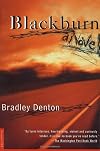
A short, interesting character study of a serial killer, starting from his disturbed childhood and going on through his killing years as we read how and why he picked his victims. Learning at a young age that people lied about most things, he developed his own code of ethics. Eventually, when someone failed to live up to his code he began to feel that they must be punished. His crimes weren’t elaborate or planned, usually just gut reaction to once again being disappointed in human show more nature.
We see that this disappointment started young with his parents. His father was a bully and a loser at life who took his temper out on his wife and son. His mother, bullied and beaten, was a coward who allowed her son to take the brunt of her husband’s anger. Eventually, Jimmy has had to suffer one cruelty too many and leaves home. Drifting from job to job and state to state, Jimmy deals out his form of punishment to many, always males. In fact, one of his rules is that he never kills women.
I was absorbed in this read about a boy who never really had a chance. You can’t help but feel sorry for him as he tries to do the “right” thing and live by a moral code, but can’t stand by when he sees others abusing their power and mistreating weaker people or animals. Blackburn is a quick read that most probably simplifies the psychology behind Jimmy’s actions, but nevertheless, I was glued to the pages as I followed Jimmy’s story to it’s conclusion. show less
We see that this disappointment started young with his parents. His father was a bully and a loser at life who took his temper out on his wife and son. His mother, bullied and beaten, was a coward who allowed her son to take the brunt of her husband’s anger. Eventually, Jimmy has had to suffer one cruelty too many and leaves home. Drifting from job to job and state to state, Jimmy deals out his form of punishment to many, always males. In fact, one of his rules is that he never kills women.
I was absorbed in this read about a boy who never really had a chance. You can’t help but feel sorry for him as he tries to do the “right” thing and live by a moral code, but can’t stand by when he sees others abusing their power and mistreating weaker people or animals. Blackburn is a quick read that most probably simplifies the psychology behind Jimmy’s actions, but nevertheless, I was glued to the pages as I followed Jimmy’s story to it’s conclusion. show less
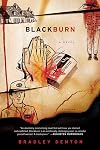
All of us have thought about killing other people. It might be the mechanic who cheated you, the professor who unfairly gave you a bad grade, etc. That being said, Blackburn is a book in which the main character actually acts upon these urges.
Jimmy Blackburn has been put down all his life. His parents abuse him, and he's looked at as a failure in life. So, when a cruel police officer harasses him outside a church, Blackburn, having had enough, kills him. This begins a crusade against show more unfairness and immorality in society. Blackburn begins a crusade against those who wrong others and him.
The story is horrifying and thought provoking at the same time. Blackburn rises against society's ills. However, as the book winds down, he is seen not as a public crusader, but as a serial killer. Are his actions wrong because society doesn't condone murder or is he providing a public service by disposing of some of the scum out there? I found myself asking this question after finishing this book.
Read this now. It is not an easy read, but you will be the better for it once you finish. show less
Jimmy Blackburn has been put down all his life. His parents abuse him, and he's looked at as a failure in life. So, when a cruel police officer harasses him outside a church, Blackburn, having had enough, kills him. This begins a crusade against show more unfairness and immorality in society. Blackburn begins a crusade against those who wrong others and him.
The story is horrifying and thought provoking at the same time. Blackburn rises against society's ills. However, as the book winds down, he is seen not as a public crusader, but as a serial killer. Are his actions wrong because society doesn't condone murder or is he providing a public service by disposing of some of the scum out there? I found myself asking this question after finishing this book.
Read this now. It is not an easy read, but you will be the better for it once you finish. show less
Visionary writers like Bradley Denton often remain below the radar of public consciousness. Denton’s masterful 1993 novel Blackburn introduced the concept of the moralistic serial killer, a full decade before [a:Jeff Lindsay|10482|Jeff Lindsay|http://photo.goodreads.com/authors/1198012537p2/10482.jpg] parlayed a similar idea into four popular novels and the highly successful Showtime series featuring blood-spatter expert and killer Dexter Morgan. Denton’s book garnered a 1993 Bram Stoker show more nomination, glowing critical praise, and little else. Due in a large part to Dexter’s success, Blackburn was reprinted in 2007.
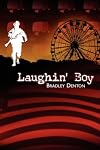
By mid-2001, Denton completed the fictional Laughin’ Boy, relating the horrors and fallout from the largest terrorist action enacted on U.S. soil. The events of September 11, 2001 made the material an anathema to major publishers. The title languished in unpublished-book limbo until 2005, when Subterranean Press selected it for an extremely limited print run of 750 signed copies and 26 signed leatherbound editions. Earlier this fall, Wheatland Press finally released Denton’s powerful, postmodern tale in a general trade edition.
On Saturday, May 20, 2000, at an outdoor music festival in Wichita, Kansas, masked gunmen launched an explosive attack killing scores of people. Amidst the chaos, a dying dentist records Danny Clayton on video, unharmed, but his face covered in the blood of others.
That isn’t what shocks and enrages us, though.
What shocks and enrages us are the happy bleats coming from his open mouth. What shocks and enrages us are the curves of his cheek muscles and the light flashing from his white teeth and aqua eyes.
What shocks and enrages us is the sudden sure knowledge that he is neither weeping nor in hysterics. There is no grief, horror, or insanity in what he does.
He is, purely and simply, laughing his ass off.
Post attack, the media fixates on the so-called Laughin’ Boy instead of the tragedy itself. Danny quickly emerges as the most hated man in America. He loses his teaching job and the bereaved threaten his family. Under FBI protective custody, Danny receives treatment from famed husband-and-wife radio psychologist team Dr. Ralph and Carla DeWitt:
He looked at Dr. Ralph. “You mean the way I’ve been laughing. You know that I don’t want to?”
Dr. Ralph nodded. “Of course. Many people have hysterical reactions to traumatic events, but that’s not quite what we believe has happened to you. If you would, please, tell me your reaction to what my wife is holding.”
Danny turned toward Dr. Carla, who showed him a large color photograph of a man, woman, and little boy who had all been disemboweled. Their eyes were open, and their faces were frozen in expressions of pain and horror.
So Danny’s aching belly convulsed, and he twisted onto his side. It was a bad attack, and the more he tried to stop it, the worse it got. He curled up into a fetal ball.
While under the DeWitts’ care, Danny befriends two other remarkable patients: Porno Girl, a virginal lawyer who is obsessed with pornography — the raunchier and nastier the better — and the white Racist Ranger, a top-notch FBI agent compelled to speak in the same African-American 19th-century dialect as Jim from [a:Mark Twain|1655|Mark Twain|http://photo.goodreads.com/authors/1170645482p2/1655.jpg]’s The Adventures of Huckleberry Finn. The despised trio lies at the center of a violent struggle that only began in Wichita.
Throughout his riveting satirical novel, Denton successfully incorporates text equivalents of several early 21st-century mass communication modes, including video clips, newsgroup posts, sound bites, internet group chat, talk shows, and web pages alongside the more traditional-looking therapy transcripts and linear prose episodes. He wisely centers the story on the tragic tale of Laughin’ Boy, forcing us to take a hard look at contemporary media and its ability to derail society from the important to the trivial:
Cut back to HOST, who steps up onto the stage, where a platform holds five chairs in a curving row. The infamous dying-dentist video of Laughin’ Boy begins playing on a giant screen behind the chairs.
HOST: That man doesn’t look ill or hysterical, does he? He looks as if he has his wits about him and is enjoying what’s happening, doesn’t he?
AUDIENCE: Yeahhh! [Plus assorted disparaging remarks.:]
The video running on the giant screen zooms in and freezes on Laughin’ Boy’s face. This image will provide a backdrop of blood-streaked hilarity for most of the show.
HOST: Well, our first guests today claim that this so-called “Laughin’ Boy” does in fact have a previously unknown mental disorder, and that his behavior is therefore not at all his fault!
AUDIENCE: Booooooo!
Bradley Denton achieves a truly rare literary feat: a near-perfect satire that relies not on humor but rather a [a:Marshall McLuhan|455|Marshall McLuhan|http://www.goodreads.com/images/nophoto/nophoto-M-50x66.jpg] view of reality. Like most of Denton’s works, the excellent novel derives its strength from the absurd, presented in an intelligent and extremely well-crafted manner. Hopefully, the insightful Laughin’ Boy will at last create that Denton blip on the radar of public consciousness.
(This reviewed originally appeared in the San Antonio Current, November 29, 2008.) show less
By mid-2001, Denton completed the fictional Laughin’ Boy, relating the horrors and fallout from the largest terrorist action enacted on U.S. soil. The events of September 11, 2001 made the material an anathema to major publishers. The title languished in unpublished-book limbo until 2005, when Subterranean Press selected it for an extremely limited print run of 750 signed copies and 26 signed leatherbound editions. Earlier this fall, Wheatland Press finally released Denton’s powerful, postmodern tale in a general trade edition.
On Saturday, May 20, 2000, at an outdoor music festival in Wichita, Kansas, masked gunmen launched an explosive attack killing scores of people. Amidst the chaos, a dying dentist records Danny Clayton on video, unharmed, but his face covered in the blood of others.
That isn’t what shocks and enrages us, though.
What shocks and enrages us are the happy bleats coming from his open mouth. What shocks and enrages us are the curves of his cheek muscles and the light flashing from his white teeth and aqua eyes.
What shocks and enrages us is the sudden sure knowledge that he is neither weeping nor in hysterics. There is no grief, horror, or insanity in what he does.
He is, purely and simply, laughing his ass off.
Post attack, the media fixates on the so-called Laughin’ Boy instead of the tragedy itself. Danny quickly emerges as the most hated man in America. He loses his teaching job and the bereaved threaten his family. Under FBI protective custody, Danny receives treatment from famed husband-and-wife radio psychologist team Dr. Ralph and Carla DeWitt:
He looked at Dr. Ralph. “You mean the way I’ve been laughing. You know that I don’t want to?”
Dr. Ralph nodded. “Of course. Many people have hysterical reactions to traumatic events, but that’s not quite what we believe has happened to you. If you would, please, tell me your reaction to what my wife is holding.”
Danny turned toward Dr. Carla, who showed him a large color photograph of a man, woman, and little boy who had all been disemboweled. Their eyes were open, and their faces were frozen in expressions of pain and horror.
So Danny’s aching belly convulsed, and he twisted onto his side. It was a bad attack, and the more he tried to stop it, the worse it got. He curled up into a fetal ball.
While under the DeWitts’ care, Danny befriends two other remarkable patients: Porno Girl, a virginal lawyer who is obsessed with pornography — the raunchier and nastier the better — and the white Racist Ranger, a top-notch FBI agent compelled to speak in the same African-American 19th-century dialect as Jim from [a:Mark Twain|1655|Mark Twain|http://photo.goodreads.com/authors/1170645482p2/1655.jpg]’s The Adventures of Huckleberry Finn. The despised trio lies at the center of a violent struggle that only began in Wichita.
Throughout his riveting satirical novel, Denton successfully incorporates text equivalents of several early 21st-century mass communication modes, including video clips, newsgroup posts, sound bites, internet group chat, talk shows, and web pages alongside the more traditional-looking therapy transcripts and linear prose episodes. He wisely centers the story on the tragic tale of Laughin’ Boy, forcing us to take a hard look at contemporary media and its ability to derail society from the important to the trivial:
Cut back to HOST, who steps up onto the stage, where a platform holds five chairs in a curving row. The infamous dying-dentist video of Laughin’ Boy begins playing on a giant screen behind the chairs.
HOST: That man doesn’t look ill or hysterical, does he? He looks as if he has his wits about him and is enjoying what’s happening, doesn’t he?
AUDIENCE: Yeahhh! [Plus assorted disparaging remarks.:]
The video running on the giant screen zooms in and freezes on Laughin’ Boy’s face. This image will provide a backdrop of blood-streaked hilarity for most of the show.
HOST: Well, our first guests today claim that this so-called “Laughin’ Boy” does in fact have a previously unknown mental disorder, and that his behavior is therefore not at all his fault!
AUDIENCE: Booooooo!
Bradley Denton achieves a truly rare literary feat: a near-perfect satire that relies not on humor but rather a [a:Marshall McLuhan|455|Marshall McLuhan|http://www.goodreads.com/images/nophoto/nophoto-M-50x66.jpg] view of reality. Like most of Denton’s works, the excellent novel derives its strength from the absurd, presented in an intelligent and extremely well-crafted manner. Hopefully, the insightful Laughin’ Boy will at last create that Denton blip on the radar of public consciousness.
(This reviewed originally appeared in the San Antonio Current, November 29, 2008.) show less
Lists
Awards


You May Also Like


Associated Authors
Statistics
- Works
- 41
- Also by
- 33
- Members
- 1,037
- Popularity
- #24,830
- Rating
- 3.7
- Reviews
- 20
- ISBNs
- 43
- Languages
- 4
- Favorited
- 4