
John Kessel
Author of Rewired: The Post-Cyberpunk Anthology
About the Author
Disambiguation Notice:
This John Kessel (ends in 1 L, no initial) writes and edits science fiction. He lives and teaches in North Carolina.
This is NOT the historian John L. Kessell (ends in LL, one initial), who writes about the presence of Spain in the American southwest.
Image credit: Wikipedia user Jjkessel
Series
Works by John Kessel
The Baum Plan for Financial Independence: and Other Stories (2008) — Author — 221 copies, 16 reviews
The Closet 3 copies
Clean 3 copies
The Franchise 3 copies
Buddha Nostril Bird {short story} 3 copies
Friend 3 copies
Iteration 2 copies
Faustfeathers: A Comedy 2 copies
The Family Vacation 2 copies
Credibility 1 copy
The Silver Man 1 copy
Crosswhen no. 1 1 copy
Crosswhen No. 8 1 copy
Man 1 copy
Other Stories 1 copy
The Ghost 1 copy
Animals 1 copy
Judgment Call {short story} 1 copy
The Lecturer 1 copy
The President's Channel 1 copy
The Einstein Express 1 copy
Consolation (short story) 1 copy
Associated Works
The Year's Best Science Fiction: Twenty-First Annual Collection (2004) — Contributor — 575 copies, 6 reviews
The Year's Best Science Fiction: Twentieth Annual Collection (2003) — Contributor — 525 copies, 1 review
The Year's Best Science Fiction: Eighteenth Annual Collection (2001) — Contributor — 504 copies, 2 reviews
The Year's Best Science Fiction: Fifteenth Annual Collection (1998) — Contributor — 469 copies, 2 reviews
The Year's Best Science Fiction: Thirteenth Annual Collection (1996) — Contributor — 454 copies, 4 reviews
The Year's Best Science Fiction: Fourteenth Annual Collection (1997) — Contributor — 447 copies, 2 reviews
The Best of the Best: 20 Years of the Year's Best Science Fiction (2005) — Contributor — 438 copies, 20 reviews
The Year's Best Science Fiction: Eighth Annual Collection (1991) — Contributor — 416 copies, 6 reviews
The Norton Book of Science Fiction: North American Science Fiction, 1960-1990 (1993) — Contributor — 346 copies, 6 reviews
The Year's Best Science Fiction: Twenty-Seventh Annual Collection (2010) — Contributor — 321 copies, 6 reviews
The Locus Awards: Thirty Years of the Best in Science Fiction and Fantasy (2004) — Contributor — 290 copies, 11 reviews
The Year's Best Fantasy and Horror: Eighteenth Annual Collection (2005) — Contributor — 231 copies, 5 reviews
The Year's Best Science Fiction: Fourth Annual Collection (1987) — Contributor — 219 copies, 1 review
The Year's Best Science Fiction: Thirty-Third Annual Collection (2016) — Contributor — 190 copies, 2 reviews
The Very Best of the Best: 35 Years of The Year's Best Science Fiction (2019) — Contributor — 182 copies, 1 review
The Best Science Fiction and Fantasy of the Year, Volume 5 (2011) — Contributor — 166 copies, 4 reviews
The Best Science Fiction and Fantasy of the Year, Volume 3 (2009) — Contributor — 151 copies, 2 reviews
The Very Best of Fantasy & Science Fiction: Sixtieth Anniversary Anthology (2009) — Contributor — 151 copies, 6 reviews
The Year's Best Science Fiction: First Annual Collection (1984) — Contributor — 148 copies, 1 review
The Best Science Fiction and Fantasy of the Year, Volume 4 (2010) — Contributor — 141 copies, 2 reviews
Nebula Awards 30: SFWA's Choices For The Best Science Fiction And Fantasy Of The Year (Nebula Awards Showcase) (1996) — Contributor — 89 copies, 2 reviews
The Best Fantasy Stories from the Magazine of Fantasy & Science Fiction (1985) — Contributor — 77 copies, 2 reviews
Nebula Awards 27: SFWA's Choices for the Best Science Fiction and Fantasy of the Year (1993) — Contributor — 61 copies, 1 review
Nebula Awards 29: SFWA's Choices For The Best Science Fiction And Fantasy Of The Year (Nebula Awards Showcase) (1995) — Contributor — 57 copies
Field of Fantasies: Baseball Stories of the Strange and Supernatural (2014) — Contributor — 46 copies
Light Years and Dark: Science Fiction and Fantasy of and for Our Time (1984) — Contributor — 37 copies
The Magazine of Fantasy and Science Fiction October/November 1994, Vol. 87, No. 4 & 5 (1994) — Book reviewer — 34 copies, 1 review
The Magazine of Fantasy and Science Fiction October 1990, Vol. 79, No. 4 (1990) — Contributor — 20 copies, 1 review
The Magazine of Fantasy and Science Fiction June/July 2009, Vol. 116, Nos. 6 & 7 (2013) — Contributor — 19 copies, 1 review
The Magazine of Fantasy and Science Fiction January 1991, Vol. 80, No. 1 (1991) — Contributor — 18 copies
Isaac Asimov's Science Fiction Magazine: Vol. 10, No. 3 [March 1986] (1986) — Contributor — 16 copies
The Magazine of Fantasy and Science Fiction December 1980, Vol. 59, No. 6 (1980) — Author — 15 copies
The Magazine of Fantasy and Science Fiction September 1982, Vol. 63, No. 3 (1982) — Contributor — 14 copies
The Magazine of Fantasy and Science Fiction November/December 2010, Vol. 119, No. 5 & 6 (2010) — Author — 13 copies, 1 review
Isaac Asimov's Science Fiction Magazine: Vol. 7, No. 10 [October 1983] (1983) — Contributor — 13 copies
The Magazine of Fantasy and Science Fiction 68. Mythen der nahen Zukunft. (1984) — Contributor — 7 copies
Millemondi Inverno 1996 — Contributor — 2 copies
Tagged
Common Knowledge
- Legal name
- Kessel, John Joseph Vincent
- Birthdate
- 1950-09-24
- Gender
- male
- Education
- University of Kansas (PhD | English | 1981)
- Occupations
- science fiction writer
fantasy writer - Organizations
- Science Fiction and Fantasy Writers of America
- Relationships
- Gunn, James (teacher)
Fowler, Therese Anne (wife) - Nationality
- USA
- Birthplace
- Buffalo, New York, USA
- Places of residence
- Raleigh, North Carolina, USA
Buffalo, New York, USA - Disambiguation notice
- This John Kessel (ends in 1 L, no initial) writes and edits science fiction. He lives and teaches in North Carolina.
This is NOT the historian John L. Kessell (ends in LL, one initial), who writes about the presence of Spain in the American southwest. - Associated Place (for map)
- USA
Members
Discussions
Pride and Prometheus in I Love Jane Austen (June 2009)
Reviews
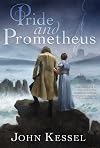
Pride and Prometheus by John Kessel is a darkly magical re-imagining that fuses two great classics- Mary Shelley's Frankenstein and Jane Austen's Pride and Prejudice- into a seamless narrative. A chance encounter between Mary Bennett and Victor Frankenstein sets in motion a series of relationships that will leave them both forever changed. Victor is travelling with his friend Henry, brooding over his promise to his Creature to create a bride for him. As the pair have travelled, Victor has show more slowly been collecting the equipment and tools needed. He plans to part from Henry for a time, retiring to the remote Orkneys to complete his project. All that remains is to secure the body of a young woman.
Victor's quest brings him in contact with Mary Bennett, that ends with an invitation to visit Pemberley, where Mary and her sister Kitty are currently staying. Both women are somewhat distressed over having reached their third decade and still being unmarried. Mary has some small hopes that Victor may yet save her from the life of an old maid. He has expressed some signs of interest. Victor's stay in Pemberley does indeed net him the body he needs, and he continues on to Emray Island, shadowed all the while by his Creature. And by Mary, who has gone after him in the wake of devastating events, hoping to find answers as to the cause. She ends up travelling in the Creature's company, learning more about Victor, and what the Creature seeks. Slowly, Mary begins to see the Creature, whom she calls Adam, as less a monster and more a human. Unfortunately, Victor does not accept that possibility. Can he still keep his promise in light of these feelings?
Pride and Prometheus keeps faith with the styles of the original works, while still allowing the author's own voice to shine through. This story is told through Mary, Victor, and the Creature's eyes. Victor and the Creature speak as first person, while Mary's part is third person. It was neat to see the overlapping events from these myriad perspectives, each so very different from the other. As always, my heart ached for the Creature, and how he is treated. To be abandoned even as you are born, first of your kind, has to be deeply scarring. His conflicted nature shows clear and strong. He wants to despise humans, yet grows to accept Mary at the least. It was nice to see how Mary grew to regard him as acquaintance, if not friend. She helps him in as many ways as he helped her. I love that even the nested aspect of Frankenstein was kept, encapsulating the final events of that story when Mary chances to meet a person from the ship that found Victor in the Arctic, and from where the Creature stole his body.
This story is a fantastically creepy homage to Shelley's Gothic masterpiece and Austen's Regency classic. It is a bold and well-played tale that will keep you reading long into the night. Recommended for those who love Frankenstein and/or Pride and Prejudice, and for any who love a good crossover sci-fi work.
***Many thanks to Netgalley and Saga Press for providing an egalley in exchange for a fair and honest review. Review for the Manhattan Book Review. show less
Victor's quest brings him in contact with Mary Bennett, that ends with an invitation to visit Pemberley, where Mary and her sister Kitty are currently staying. Both women are somewhat distressed over having reached their third decade and still being unmarried. Mary has some small hopes that Victor may yet save her from the life of an old maid. He has expressed some signs of interest. Victor's stay in Pemberley does indeed net him the body he needs, and he continues on to Emray Island, shadowed all the while by his Creature. And by Mary, who has gone after him in the wake of devastating events, hoping to find answers as to the cause. She ends up travelling in the Creature's company, learning more about Victor, and what the Creature seeks. Slowly, Mary begins to see the Creature, whom she calls Adam, as less a monster and more a human. Unfortunately, Victor does not accept that possibility. Can he still keep his promise in light of these feelings?
Pride and Prometheus keeps faith with the styles of the original works, while still allowing the author's own voice to shine through. This story is told through Mary, Victor, and the Creature's eyes. Victor and the Creature speak as first person, while Mary's part is third person. It was neat to see the overlapping events from these myriad perspectives, each so very different from the other. As always, my heart ached for the Creature, and how he is treated. To be abandoned even as you are born, first of your kind, has to be deeply scarring. His conflicted nature shows clear and strong. He wants to despise humans, yet grows to accept Mary at the least. It was nice to see how Mary grew to regard him as acquaintance, if not friend. She helps him in as many ways as he helped her. I love that even the nested aspect of Frankenstein was kept, encapsulating the final events of that story when Mary chances to meet a person from the ship that found Victor in the Arctic, and from where the Creature stole his body.
This story is a fantastically creepy homage to Shelley's Gothic masterpiece and Austen's Regency classic. It is a bold and well-played tale that will keep you reading long into the night. Recommended for those who love Frankenstein and/or Pride and Prejudice, and for any who love a good crossover sci-fi work.
***Many thanks to Netgalley and Saga Press for providing an egalley in exchange for a fair and honest review. Review for the Manhattan Book Review. show less
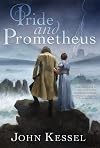
John Kessel’s Pride and Prometheus is fan fiction in the best sense of the term. In days of long ago yore, students learning to compose in Latin might be assigned to write an Ovidian ode or an oration in the manner of Cicero. Kessel, who teaches creative writing at N.C. State, has upped the stakes by having characters from Jane Austen interact with characters from Mary Shelley. Note: This is not a pastiche like Pride and Prejudice with Zombies. Kessel treats both stories seriously and show more gives the world views of both writers the respect they deserve. I was especially impressed with how well he preserves the style of both. Mary Bennet, now a spinster at 31, struggles to preserve her rational morality when confronted with the chaotic passion of Victor and his creature. Pride and Prejudice and Frankenstein were published only four years apart, but Kessel makes it clear that they come from diverging worlds with quickly changing language. show less
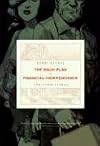
John Kessel is an incredibly talented writer, and this collection serves as an excellent introduction to his work. His range as a writer is simply astonishing. This book alone contains a lunar gender study, a reformed criminal tale, and a surprisingly brilliant Mary Shelly meets Jane Austin story (despite it's groan worth title, Pride and Prometheus).
There is not a dud in this collection, however it suffers a bit due to its main virtue. The collection as a whole doesn't fit together to my show more liking. There is just enough cohesion amongst the stories to make me feel that there should be something more in this book. It's an arbitrary failing, but it does separate this collection from some others (Kelly Link's Magic for Beginners comes to mind) that I'd consider to be truly great. show less
There is not a dud in this collection, however it suffers a bit due to its main virtue. The collection as a whole doesn't fit together to my show more liking. There is just enough cohesion amongst the stories to make me feel that there should be something more in this book. It's an arbitrary failing, but it does separate this collection from some others (Kelly Link's Magic for Beginners comes to mind) that I'd consider to be truly great. show less
 This review was written for LibraryThing Early Reviewers.
I got turned on to this collection by a truly glowing review by Matthew Claxton in his Unsettling Futures newsletter, and I can confirm this book delivers. Sycamore Hill is an invite-only science fiction writer's workshop, the post-graduate version of Clarion and its ilk. Given that Bruce Sterling is my favorite living science-fiction author and I recognized a handful of names on the cover as heavy writers with big ideas and serious chops, I figured I'd give it a look.
I was really too young show more to experience 90s science-fiction when it happened, but this was actually a golden moment for the genre. Serious futurism was out from under the mushroom cloud binary of the Cold War, and the writers were GenX and Boomers at the peak of their abilities. It was slightly more possible to make a living writing fiction, before a certain Everything Store that owns this website and the maw of Digital Content consumed everything. Science-fiction was still a ghetto, before every Iowa Writer's Workshop literary fic head decided that straight realism wasn't enough and they could write about clones and diseases and digitally altered selves, but it was a ghetto with ambition!
What elevates this collection is that it brings the reader into the magic circle of artistic creation, with short notes of the authors reacting to each other's stories in the Milford Method style (and as S.L. Huang among others have pushed back, Milford is not the only method), and you can see where pros think a story is weak, and how it was improved.
Sterling's "Bicycle Repairman" leads the collection, and is a favorite. I also enjoyed Jonathan Lethem's "The Hardened Criminals" as a prison drama of absent fathers, Maureen F. McHugh’s "Homesick" in it's study of a dedicated dancer, and Alexander Jablokov "The Fury at Colonus", a retelling of the myth of Orestes from the point of view of the Fury as a cop facing down retirement in a setting half mythic Greece and half suburbia.
As Claxton points out, they don't make them like this any more. Even as we've been liberated from the burdens of physical text, we're bound by ever shorter attention spans. Intersections is a fine vintage, and well worth reading! show less
I was really too young show more to experience 90s science-fiction when it happened, but this was actually a golden moment for the genre. Serious futurism was out from under the mushroom cloud binary of the Cold War, and the writers were GenX and Boomers at the peak of their abilities. It was slightly more possible to make a living writing fiction, before a certain Everything Store that owns this website and the maw of Digital Content consumed everything. Science-fiction was still a ghetto, before every Iowa Writer's Workshop literary fic head decided that straight realism wasn't enough and they could write about clones and diseases and digitally altered selves, but it was a ghetto with ambition!
What elevates this collection is that it brings the reader into the magic circle of artistic creation, with short notes of the authors reacting to each other's stories in the Milford Method style (and as S.L. Huang among others have pushed back, Milford is not the only method), and you can see where pros think a story is weak, and how it was improved.
Sterling's "Bicycle Repairman" leads the collection, and is a favorite. I also enjoyed Jonathan Lethem's "The Hardened Criminals" as a prison drama of absent fathers, Maureen F. McHugh’s "Homesick" in it's study of a dedicated dancer, and Alexander Jablokov "The Fury at Colonus", a retelling of the myth of Orestes from the point of view of the Fury as a cop facing down retirement in a setting half mythic Greece and half suburbia.
As Claxton points out, they don't make them like this any more. Even as we've been liberated from the burdens of physical text, we're bound by ever shorter attention spans. Intersections is a fine vintage, and well worth reading! show less
Lists
Awards


You May Also Like


Associated Authors
Statistics
- Works
- 79
- Also by
- 105
- Members
- 2,346
- Popularity
- #10,930
- Rating
- 3.7
- Reviews
- 78
- ISBNs
- 59
- Languages
- 7
- Favorited
- 1


