
Teresa Marrone
Author of Mushrooms of the Upper Midwest: A Simple Guide to Common Mushrooms (Mushroom Guides)
About the Author
Teresa Marrone is the author of cookbooks, field guides, and regional books. She is active in her local food scene and has written food-related profiles and features for magazines across the Midwestern United States. She lives in Minneapolis, Minnesota.
Series
Works by Teresa Marrone
Mushrooms of the Upper Midwest: A Simple Guide to Common Mushrooms (Mushroom Guides) (2014) 126 copies, 1 review
Mushrooms of the Northeast: A Simple Guide to Common Mushrooms (Mushroom Guides) (2016) 72 copies, 1 review
The Beginner's Guide to Dehydrating Food, 2nd Edition: How to Preserve All Your Favorite Vegetables, Fruits, Meats, and Herbs (2018) 56 copies, 1 review
The Back-Country Kitchen: Camp Cooking for Canoeists, Hikers, and Anglers (1997) 47 copies, 1 review
The Beginner's Guide to Making and Using Dried Foods: Preserve Fresh Fruits, Vegetables, Herbs, and Meat with a Dehydrator, a Kitchen Oven, or the Sun (2014) 30 copies, 2 reviews
Wild Berries & Fruits Field Guide of the Rocky Mountain States (Wild Berries & Fruits Identification Guides) (2012) 14 copies
Tagged
Common Knowledge
- Birthdate
- 1955-04-12
- Gender
- female
- Places of residence
- Minneapolis, Minnesota, USA
- Associated Place (for map)
- Minnesota, USA
Members
Reviews
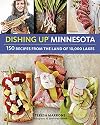
This is like a travel guide and cookbook in one. Very homey, with a lot of fish recipes since that is what a lot of us do here. The recipes are familiar with a foodie flair but not too different to make them inaccessible. I grew up on lefse and walleye and wild rice. Scratch that. My whole food existence was built upon those three staples and continues to revolve around them to this day. This cookbook definitely respects that.
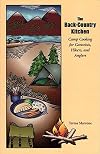
This is the trail cookbook that I go to first and last, my favorite.
The Back-Country Kitchen by Teresa Marrone mixes supermarket-available and home-dehydrated ingredients for rehydration or minimal cooking on the trail. The recipes vary in complexity from dressing up instant grits with cheese and egg to Cajun Venison Tenderloin. They also range from backpacking to cabin cooking.
The twenty page chapter on dehydrating food at home is all you'll ever need and probably worth the price of the show more book. Want to know how to dry eggplant or kiwi? It is covered concisely, with equivalents between dehydrated and fresh so you can adapt recipes. With home-dried ingredients, you are ready for these tasty recipes or the simpler ones in Freezer Bag Cooking, your choice.
Of course, the recipes are also worth the price. Look for yummies like planked fish held down with bacon or cabin cooking with a can of cherries to season the venison. I made a the Lentil-Bulgur Chili with fresh ingredients at home and the family declared it a keeper. People love the same recipe in the backcountry with dehydrated veg. show less
The Back-Country Kitchen by Teresa Marrone mixes supermarket-available and home-dehydrated ingredients for rehydration or minimal cooking on the trail. The recipes vary in complexity from dressing up instant grits with cheese and egg to Cajun Venison Tenderloin. They also range from backpacking to cabin cooking.
The twenty page chapter on dehydrating food at home is all you'll ever need and probably worth the price of the show more book. Want to know how to dry eggplant or kiwi? It is covered concisely, with equivalents between dehydrated and fresh so you can adapt recipes. With home-dried ingredients, you are ready for these tasty recipes or the simpler ones in Freezer Bag Cooking, your choice.
Of course, the recipes are also worth the price. Look for yummies like planked fish held down with bacon or cabin cooking with a can of cherries to season the venison. I made a the Lentil-Bulgur Chili with fresh ingredients at home and the family declared it a keeper. People love the same recipe in the backcountry with dehydrated veg. show less

Mushroom ID is very, very hard. I have had 5 books open in front of me and google searches, but come up empty on many occasions. That's why I keep buying mushroom books. This one is pretty good, but isn't as well organized as some. It groups mushrooms loosely by type and color, such as funnel caps or red russulas. It does have excellent descriptions and points to differentiate between similar shrooms. There are little skull and crossbone pics for the real killers. Mostly I use it for show more confirmation of an ID I've already come to with other books. It is good for elimination purposes in a sense since it covers such a small part of the US. Plus it's cute. Like many mushrooms. show less
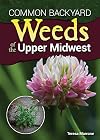
It isn't usual that I find a field guide where I have seen nearly every plant listed, but this one is true to the title: these are definitely weeds, and ubiquitous in the upper midwest. The descriptions are excellent, the pictures are mostly good, and it isn't unusual to have more than one picture showing different structures. For usefulness, I rate it down, as it appears to be structured in a format the average lay person may not find handy. Another downside, common in field guides that show more focus on specific areas, is the range. A few field guides actually tell you where the plant can be found in general; this one, like many, focuses only on the states it covers. That is not a strength, it is a weakness, because many people who don't spend their entire life in one place (or even some of those that do) might want to compare the region with other regions. Overall, recommended for the average lay person, but you will probably want to invest in at least one more field guide for the region; there are several good ones. show less
Lists
Dehydrating food (1)
Awards

You May Also Like


Associated Authors
Statistics
- Works
- 23
- Members
- 686
- Popularity
- #36,874
- Rating
- 4.4
- Reviews
- 11
- ISBNs
- 37
- Languages
- 1