
Anjet Daanje
Author of The Remembered Soldier
About the Author
Image credit: Anjet Daanje
Works by Anjet Daanje
Tagged
Common Knowledge
- Legal name
- Boer, Anjet den
- Other names
- Daanje, Anjet
- Birthdate
- 1965
- Gender
- female
- Education
- Universiteit Utrecht (doctoraal wiskunde)
- Awards and honors
- Constantijn Huygensprijs (2023)
- Nationality
- Netherlands
- Birthplace
- Wijster, Midden-Drenthe, Drenthe, Nederland
- Map Location
- Netherlands
Members
Reviews
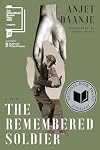
An omniscient stream of consciousness that spirals in hypnotic, repetitious loops that quickly become addictive. That's how I'll describe the style of Anjet Daanje's blockbuster (562 pp) novel, THE REMEMBERED SOLDIER (2025, translated from the Dutch by David McKay). I thoroughly enjoyed this book, set in postwar Belgium, and Germany, in 1922-1923. The principal characters are a shell-shocked, amnesiac Flemish soldier who, at the start of the novel, is a patient in a Ghent asylum, and show more Julienne Coppens, the woman who comes to claim him as her MIA husband, Amand. Against the advice of the hospital doctors, she has him discharged and takes him home with her to Kortijk, where they own a photography studio, and begins the tedious, often heartbreaking process of reintroducing him to their two children and to his previous life before the war. Sometimes he doesn't believe her, and indeed, her story of their earlier life keeps changing, has gaps. Initially they are desperately poor, but their lot improves as Amand becomes more active in the business. The long-separated couple's personal relationship is slow, but gradually deepens into something loving and even intensely erotic. Their daily routines are examined minutely, from their waking rituals - he dresses, goes outside to fill the coal scuttle to build a fire to heat the water for their morning ablutions - to their work routines - she retouches the glass negatives, he develops and prints the photos, mostly portraits, often of himself in full Flemish military uniform, posing with numerous war widows - a very profitable sideline. But he is also continuously plagued by trench warfare nightmares and also has dreams of a very different previous life. Julie tries to give comfort and help dispel these vivid dreams. They begin to prosper and make plans to move to a better location and living quarters. Then Amand's dreams become more specific and he begins to remember more and everything changes.
That "omniscient stream of consciousness" method I mentioned is paramount to the story. Because Daanje uses no quotation marks for dialogue and the "he said, she said" back and forth are all part of continuous, often long extended paragraphs, which all include what the characters are thinking as they speak. So you have to pay attention. This may sound problematic for the reader, but I was so immediately sucked into their story that I quickly adapted.
Depictions of postwar Belgium in the 1920s, and later, Germany too, are important to the story. I found myself researching place names - yes, Kortijk is a real town, and the Leye river and villages around it were also real. Even the Bastos cigarettes they shared were real.
I won't say anymore about this very intimate and complex story of marriage and memory, as I don't want to spoil it. But I loved this book. All five hundred sixty-two pages of it. My very highest recommendation.
- Tim Bazzett, author of the memoir, BOOKLOVER show less
That "omniscient stream of consciousness" method I mentioned is paramount to the story. Because Daanje uses no quotation marks for dialogue and the "he said, she said" back and forth are all part of continuous, often long extended paragraphs, which all include what the characters are thinking as they speak. So you have to pay attention. This may sound problematic for the reader, but I was so immediately sucked into their story that I quickly adapted.
Depictions of postwar Belgium in the 1920s, and later, Germany too, are important to the story. I found myself researching place names - yes, Kortijk is a real town, and the Leye river and villages around it were also real. Even the Bastos cigarettes they shared were real.
I won't say anymore about this very intimate and complex story of marriage and memory, as I don't want to spoil it. But I loved this book. All five hundred sixty-two pages of it. My very highest recommendation.
- Tim Bazzett, author of the memoir, BOOKLOVER show less
Rating: 5* of five 2025's SIX stars of five from me!
The Publisher Says: An extraordinary love story and a captivating novel about the power of memory and imagination.
Flanders 1922. After serving as a soldier in the Great War, Noon Merckem has lost his memory and lives in a psychiatric asylum. Countless women, responding to a newspaper ad, visit him there in the hope of finding their spouse who vanished in battle. One day a woman, Julienne, appears and recognizes Noon as her husband, the show more photographer Amand Coppens, and takes him home against medical advice. But their miraculous reunion doesn’t turn out the way that Julienne wants her envious friends to believe. Only gradually do the two grow close, and Amand’s biography is pieced together on the basis of Julienne’s stories about him. But how can he be certain that she’s telling the truth? In The Remembered Soldier, Anjet Daanje immerses us in the psyche of a war-traumatized man who has lost his identity. When Amand comes to doubt Julienne’s word, the reader is caught up in a riveting spiral of confusion that only the greatest of literature can achieve.
I RECEIVED A DRC FROM THE PUBLISHER VIA EDELWEISS+. THANK YOU.
My Review: Deeply satisfying, immersive, emotionally intense, and really long.
Okay. You can go buy one now. Ebook, trade paper, whatever, the choice is yours on format. Reading it ought not to be a choice not to.
The ecstatic terror of being someone..."this is what it is like to be someone"...who belongs to someone, who is known to someone, whose voice and habits and smells aren't case notes but facts of a shared life...permeates Noon (Amand now) from every axis and angle. Julienne is now real. He has a wife and she not only knows him but wants him (unlike other men in the asylum whose wives families whoevers do not have strength to bear them up) back with her and their children (children? oh god) to create anew the life that war stole from them all. But here are losses too, what is to become of Basiel his electively mute buddy? what of Maurice Constant Jules? and this is where Julienne becomes, to my mind, the single luckiest person on this planet to rediscover a man she was amazingly lucky to find in the first place. He (Amand) has room in his hour of grace bestowed to care for and about those he will leave to become someone, restored to life, to his life again. At last. But the men he leaves in the asylum? Only in body. They're still with him.
Bodies. How incredibly important bodies are in, and after, war breaks them. A body is a thing we use to carry our memories that grow our feelings and shape our personas. All of those are plurals. Plurality and duality and dichotomy are the lot of all bodies, most especially as we move them through...whatever time is, listen if the physics geniuses assembled at Solvay in Belgium a mere five years after this book takes place didn't have a clue what time *is* what chance do I have...time, and things happen to around in us. Children, for example, happen. How? "The usual way" glibly tossed off, but how usual is any way?
What makes me so very happy as I re-experience this story after abandoning it back in March, stuck in my hate-fog as Felonious Yam and cronies began their assault on us, only to pick it up on Thursday morning and finish all close-to-six-hundred pages on Friday afternoon, is the respect for my intelligence this book embodies from beginning to end. Julienne never once comes across as anything other than sincere, Amand never steps into any role but the one of honorable man, no one tells me what to think of their foibles, failings, fallings-short.
What I look for, every time I pick out a story to read, is the one that will make it impossible for me to do the ordinary thing, find faults, even ones that normal people wouldn't care about, and instead surrender to the story's currents and tides, falling in falling down falling in love.
That's what happened here. I hope you'll follow me, hope you'll have that experience, hope this read will fulfill you the way it did me.
I'll note that Goodreads has hundreds of Flemish-language reviews that award four and five stars. show less
The Publisher Says: An extraordinary love story and a captivating novel about the power of memory and imagination.
Flanders 1922. After serving as a soldier in the Great War, Noon Merckem has lost his memory and lives in a psychiatric asylum. Countless women, responding to a newspaper ad, visit him there in the hope of finding their spouse who vanished in battle. One day a woman, Julienne, appears and recognizes Noon as her husband, the show more photographer Amand Coppens, and takes him home against medical advice. But their miraculous reunion doesn’t turn out the way that Julienne wants her envious friends to believe. Only gradually do the two grow close, and Amand’s biography is pieced together on the basis of Julienne’s stories about him. But how can he be certain that she’s telling the truth? In The Remembered Soldier, Anjet Daanje immerses us in the psyche of a war-traumatized man who has lost his identity. When Amand comes to doubt Julienne’s word, the reader is caught up in a riveting spiral of confusion that only the greatest of literature can achieve.
I RECEIVED A DRC FROM THE PUBLISHER VIA EDELWEISS+. THANK YOU.
My Review: Deeply satisfying, immersive, emotionally intense, and really long.
Okay. You can go buy one now. Ebook, trade paper, whatever, the choice is yours on format. Reading it ought not to be a choice not to.
Maybe this is the last time he will walk down the familiar corridor as the man called Noon Merckem, that door there on the left with those welcoming panes of glass could mean the end of his existence, weak in the knees like a man being dragged to the gallows, that's how he feels in this instant, as the hope that sustained him, the certainty that everything would be new and better beyond imagining and normal at last, that he would pass through that everyday door and be another man when he came out, a man with a home and a family and a life outside these walls, all drains away. And he comes to a halt on the sun-dappled tiles and Brother Reginald turns toward him and sees the desperation on his face and murmurs that God will never test Noon more harshly than he can bear, and gives an encouraging nod, and Noon remains silent, because in his four years here he has not seen much to reassure him about God's notions of what is bearable.
The ecstatic terror of being someone..."this is what it is like to be someone"...who belongs to someone, who is known to someone, whose voice and habits and smells aren't case notes but facts of a shared life...permeates Noon (Amand now) from every axis and angle. Julienne is now real. He has a wife and she not only knows him but wants him (unlike other men in the asylum whose wives families whoevers do not have strength to bear them up) back with her and their children (children? oh god) to create anew the life that war stole from them all. But here are losses too, what is to become of Basiel his electively mute buddy? what of Maurice Constant Jules? and this is where Julienne becomes, to my mind, the single luckiest person on this planet to rediscover a man she was amazingly lucky to find in the first place. He (Amand) has room in his hour of grace bestowed to care for and about those he will leave to become someone, restored to life, to his life again. At last. But the men he leaves in the asylum? Only in body. They're still with him.
Bodies. How incredibly important bodies are in, and after, war breaks them. A body is a thing we use to carry our memories that grow our feelings and shape our personas. All of those are plurals. Plurality and duality and dichotomy are the lot of all bodies, most especially as we move them through...whatever time is, listen if the physics geniuses assembled at Solvay in Belgium a mere five years after this book takes place didn't have a clue what time *is* what chance do I have...time, and things happen to around in us. Children, for example, happen. How? "The usual way" glibly tossed off, but how usual is any way?
What makes me so very happy as I re-experience this story after abandoning it back in March, stuck in my hate-fog as Felonious Yam and cronies began their assault on us, only to pick it up on Thursday morning and finish all close-to-six-hundred pages on Friday afternoon, is the respect for my intelligence this book embodies from beginning to end. Julienne never once comes across as anything other than sincere, Amand never steps into any role but the one of honorable man, no one tells me what to think of their foibles, failings, fallings-short.
What I look for, every time I pick out a story to read, is the one that will make it impossible for me to do the ordinary thing, find faults, even ones that normal people wouldn't care about, and instead surrender to the story's currents and tides, falling in falling down falling in love.
That's what happened here. I hope you'll follow me, hope you'll have that experience, hope this read will fulfill you the way it did me.
I'll note that Goodreads has hundreds of Flemish-language reviews that award four and five stars. show less
...the opposite of truth is not untruth but uncertainty..."
A man waits in a room of an asylum in Flanders for the woman who will decide if he is her husband. It's 1922, and he has been here for four years, devoid of memories, yet haunted by nightmares. Does he want to be found, to become a husband to a woman he doesn't remember? Or would it be better to remain as he is, with his haunted fellow veterans? So begins this lengthy novel of the horrors of war and the difficulties of returning to show more life afterward. It's a novel about marriage, about PTSD, and about memories and how they are formed and shaped. It's about lies versus secrets and their effect on relationships.
I enjoyed this novel with its quiet intensity that builds to a fast-paced ending. I was hooked from the opening scenes of a man without memories waiting to be found, and although I thought I knew where the book was going, it wasn't quite as expected, and the journey was engrossing. I was a couple of hundred pages into the novel before I realized how long the sentences were, so caught up was I in the dream-like flow of language.
The book has been nominated for the 2025 National Book Awards Longlist for Translated Literature, and if the judges have the patience to work their way through 563 pages, it may well win, for the translation is seamless, with enough retained language differences to remind us where we are. show less
A man waits in a room of an asylum in Flanders for the woman who will decide if he is her husband. It's 1922, and he has been here for four years, devoid of memories, yet haunted by nightmares. Does he want to be found, to become a husband to a woman he doesn't remember? Or would it be better to remain as he is, with his haunted fellow veterans? So begins this lengthy novel of the horrors of war and the difficulties of returning to show more life afterward. It's a novel about marriage, about PTSD, and about memories and how they are formed and shaped. It's about lies versus secrets and their effect on relationships.
I enjoyed this novel with its quiet intensity that builds to a fast-paced ending. I was hooked from the opening scenes of a man without memories waiting to be found, and although I thought I knew where the book was going, it wasn't quite as expected, and the journey was engrossing. I was a couple of hundred pages into the novel before I realized how long the sentences were, so caught up was I in the dream-like flow of language.
The book has been nominated for the 2025 National Book Awards Longlist for Translated Literature, and if the judges have the patience to work their way through 563 pages, it may well win, for the translation is seamless, with enough retained language differences to remind us where we are. show less
In Daanje’s novel, Julienne, a woman in her early thirties, locates a man she claims is her husband, Amand Coppens, in a Ghent asylum four years after the Armistice of 1918. He had gone missing in 1917 and remains amnesic and shellshocked. She nevertheless brings him home to Kortrijk in West Flanders, where the two run a photography studio focused on memorializing the missing and the dead. Julienne strategically uses her long search for her husband and the seemingly “miraculous” show more recovery of Amand to lure grief-stricken widows to her business, suggesting to the vulnerable that her good fortune could also be theirs. Having a photo taken with Amand in uniform could be a kind of lucky charm.
The couple and their two children (a boy and a girl who seem an almost incidental feature of the novel) attempt to carry on living. Amand has no memory of his former life with Julienne, and her stories of their marriage and her own experiences during the war are marred by inconsistencies. Although Amand appears to make some psychological progress early on, in time he decompensates, becoming increasingly prone to episodes of erratic behaviour and explosive violence, which he later does not recall. He is unable to recognize Julienne during these spells. Then, memories of another woman, Käthe, and a farm in Germany begin to intrude, and Amand comes to believe his real name is Louis. So, to which of these two women was this shellshocked soldier married prior to the war? One reads to find the answer to that question as well as to discover:
(1) the traumatic events that explain Amand’s disordered behaviour and fixations;
(2) the reasons behind Julienne’s long search for her husband years after his disappearance;
(3) the secrets Julienne and Amand/Louis keep from one another;
(4) if Käthe is, in fact, real;
(5) the fate of Amand/Louis: will he be returned to the asylum or have a life with one of the women?
Initially, the novel looked promising, but I quickly grew impatient with its excesses. I question whether even ruthless editorial excision of large portions of this 576-page tedious and seemingly interminable door-stopper would have saved the book for me. Having said that, I think massive cuts could only have improved it. I can’t think of any work of fiction more in need of a paring down than The Remembered Soldier. As the published text stands, its endless run-on sentences (a mix of comma splices and unfettered streams of independent clauses tacked together with the omnipresent “and”) are a real killer. Here’s a sample of Daanje’s prose—a more modest one as samples go, since only ten “ands” appear here, when there are often a good deal more.
And the children return to school and they sit at the kitchen table together and she still doesn’t say a word about it, and eventually he says it himself, he didn’t have an episode this morning, and she nods as if she already knew, and she gets up and starts to clear the table and talks about how much they’ve earned in the past week, those handbills were a good idea, and he lets the soothing flow of conversation carry him onward, the familiar feeling of being at home, and the thought of how finite everything is, how fleeting, doesn’t feel oppressive, every breath is precious, every minute with her, every minute he thinks of her.
Almost every paragraph reads like this. Concision isn’t Daanje’s thing. Initially, I was stunned by the number of conjunctions per square inch, but I gave up my incredulous counting of them early on. This, apparently, is the author’s “style”, one in which the story is almost lost in the rambling present-tense telling.
Add to that: accounts of Julienne and Amand’s innumerable walks, multitudinous cigarette breaks, daily meals, household routines, their taking and processing of photographs; frequent, exceedingly tiresome sex scenes; and play-by-play descriptions of Amand’s dreams, nightmares, flashbacks, delusions and hallucinations, all related to his battlefield experiences. Over and over and over again, every smile, frown, laugh and tear is documented. This makes for an exasperating, sometimes torturous reading experience—a complete slog—even as the main characters’ decisions and actions become increasingly nonsensical. Was it the author’s intention to have her audience suffer along with the shell-shocked husband and the woman who has claimed him, or did Daanje simply wish to pound events into the reader’s head to ensure he wouldn’t fall prey to her protagonist’s affliction? I’d argue that the middle section of the novel should’ve been cut back by 200 to 300 pages. Yes, that much.
There’s the kernel of a good novel here—about World War I, PTSD, amnesia, memory and memorialization, guilt, loss, identity, and the challenges of attempting to reintegrate a traumatized soldier into family and civilian life, but the repetition (detail upon detail mercilessly and monotonously piled on the reader) become a form of literary oppression. What on earth was the editor thinking, allowing this hulking, patience-trying tome out into the world as is?
Reader, I finished it. For the life of me, I do not know how. show less
The couple and their two children (a boy and a girl who seem an almost incidental feature of the novel) attempt to carry on living. Amand has no memory of his former life with Julienne, and her stories of their marriage and her own experiences during the war are marred by inconsistencies. Although Amand appears to make some psychological progress early on, in time he decompensates, becoming increasingly prone to episodes of erratic behaviour and explosive violence, which he later does not recall. He is unable to recognize Julienne during these spells. Then, memories of another woman, Käthe, and a farm in Germany begin to intrude, and Amand comes to believe his real name is Louis. So, to which of these two women was this shellshocked soldier married prior to the war? One reads to find the answer to that question as well as to discover:
(1) the traumatic events that explain Amand’s disordered behaviour and fixations;
(2) the reasons behind Julienne’s long search for her husband years after his disappearance;
(3) the secrets Julienne and Amand/Louis keep from one another;
(4) if Käthe is, in fact, real;
(5) the fate of Amand/Louis: will he be returned to the asylum or have a life with one of the women?
Initially, the novel looked promising, but I quickly grew impatient with its excesses. I question whether even ruthless editorial excision of large portions of this 576-page tedious and seemingly interminable door-stopper would have saved the book for me. Having said that, I think massive cuts could only have improved it. I can’t think of any work of fiction more in need of a paring down than The Remembered Soldier. As the published text stands, its endless run-on sentences (a mix of comma splices and unfettered streams of independent clauses tacked together with the omnipresent “and”) are a real killer. Here’s a sample of Daanje’s prose—a more modest one as samples go, since only ten “ands” appear here, when there are often a good deal more.
And the children return to school and they sit at the kitchen table together and she still doesn’t say a word about it, and eventually he says it himself, he didn’t have an episode this morning, and she nods as if she already knew, and she gets up and starts to clear the table and talks about how much they’ve earned in the past week, those handbills were a good idea, and he lets the soothing flow of conversation carry him onward, the familiar feeling of being at home, and the thought of how finite everything is, how fleeting, doesn’t feel oppressive, every breath is precious, every minute with her, every minute he thinks of her.
Almost every paragraph reads like this. Concision isn’t Daanje’s thing. Initially, I was stunned by the number of conjunctions per square inch, but I gave up my incredulous counting of them early on. This, apparently, is the author’s “style”, one in which the story is almost lost in the rambling present-tense telling.
Add to that: accounts of Julienne and Amand’s innumerable walks, multitudinous cigarette breaks, daily meals, household routines, their taking and processing of photographs; frequent, exceedingly tiresome sex scenes; and play-by-play descriptions of Amand’s dreams, nightmares, flashbacks, delusions and hallucinations, all related to his battlefield experiences. Over and over and over again, every smile, frown, laugh and tear is documented. This makes for an exasperating, sometimes torturous reading experience—a complete slog—even as the main characters’ decisions and actions become increasingly nonsensical. Was it the author’s intention to have her audience suffer along with the shell-shocked husband and the woman who has claimed him, or did Daanje simply wish to pound events into the reader’s head to ensure he wouldn’t fall prey to her protagonist’s affliction? I’d argue that the middle section of the novel should’ve been cut back by 200 to 300 pages. Yes, that much.
There’s the kernel of a good novel here—about World War I, PTSD, amnesia, memory and memorialization, guilt, loss, identity, and the challenges of attempting to reintegrate a traumatized soldier into family and civilian life, but the repetition (detail upon detail mercilessly and monotonously piled on the reader) become a form of literary oppression. What on earth was the editor thinking, allowing this hulking, patience-trying tome out into the world as is?
Reader, I finished it. For the life of me, I do not know how. show less
Lists
Awards


You May Also Like


Associated Authors
Statistics
- Works
- 11
- Members
- 622
- Popularity
- #40,475
- Rating
- 4.0
- Reviews
- 45
- ISBNs
- 38
- Languages
- 4
- Favorited
- 1
