

Bliss Broyard
Author of One Drop: My Father's Hidden Life; A Story of Race and Family Secrets
About the Author
Works by Bliss Broyard
Associated Works
Tagged
Common Knowledge
- Canonical name
- Broyard, Bliss
- Birthdate
- 1966-09-05
- Gender
- female
- Relationships
- Broyard, Anatole (father)
- Nationality
- USA
- Associated Place (for map)
- USA
Members
Reviews

Been making my way slowly through this memoir-cum-family history for a few weeks now. I purchased it some years back after reading Anatole Broyard's posthumous memoir, KAFKA WAS THE RAGE. I remember reading Broyard's NYTimes column and book reviews back in college and for years after. As expected, I greatly enjoyed his book. And now there's this exhaustively researched and often very personal book, ONE DROP (2007), from Bliss Broyard, his daughter. In it she tells of learning, just months show more before he died in 1990, that her father was Black and had been "passing" his whole adult life. Wanting to learn more, she spent the next dozen years researching her family history, from her father's Creole roots in New Orleans to his parents' move to New York, and also learned about his bachelor days and the many women he dated, an early first marriage, and his Army years as a "White" officer commanding a Black company in WWII, and his postwar years as a struggling writer in Greenwich Village, where he met other writers like James Baldwin, Ralph Ellison and Norman Mailer, and finally landing his signature prestigious job with the NYTimes, marrying (at 40) and moving to the White suburbs in Connecticut, where Bliss and her brother grew up, spending summers on Martha's Vineyard. In addition to all these deeply personal elements, there are whole chapters about the Broyard ancestry going back hundreds of years. These "historical" sections I tended to skim-read, finding them less interesting, even a bit tedious. But like her father, Bliss Broyard is an excellent writer, and, overall, I found the Broyard family story to be very interesting and applaud the author. I always enjoyed her father's work, and found her deep dive into his past a fascinating and revealing read about a man who made some hard choices that had far-reaching family consequences. Very highly recommended.
- Tim Bazzett, author of the memoir, BOOKLOVER show less
- Tim Bazzett, author of the memoir, BOOKLOVER show less
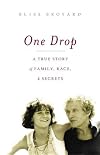
Anatole Broyard was the New York Times' daily book reviewer for quite a few years. He lived an upper middle class (though usually overextended) life, raising his and his wife's two children in Southport, Connecticut. Shortly before his death, his wife insisted that he tell their children his secret. They learned that his family background was not solely French, but Creole and of mixed race. By the "one drop" rule that had applied in some Southern states, he was black, and had been "passing show more for white" since his high school graduation. For Broyard's daughter, Bliss, this revelation explained a great deal about her father and his family, but raised many more questions. This book is her attempt to answer them.
Bliss spent many years researching her family history, seeking out relatives near and distant, and in the process learning a lot about black, and specifically Creole, history, and about the history of "passing" in America.
[book: One Drop] was fascinating, if a bit overlong, especially in the middle of the book, where I learned rather more about Reconstruction in Louisiana than I needed to understand the family's story. I can certainly sympathize with the author, being a genealogist and family historian myself; it's sometimes hard to draw the line between the historical background the reader needs in order to put the ancestors' stories into context, and an exhaustive treatment that would be better saved for an actual history text.
Anatole Broyard was a complex person to begin with, and his experience of "passing" probably increased that complexity. Although he obviously loved his children very much, his all but repudiation of his birth family affected them negatively. One of the saddest parts of the book was Bliss's feeling, mentioned more than once, that to her father, friends once chosen were to be loved unconditionally; but family members had to earn, and keep on earning, his love. show less
Bliss spent many years researching her family history, seeking out relatives near and distant, and in the process learning a lot about black, and specifically Creole, history, and about the history of "passing" in America.
[book: One Drop] was fascinating, if a bit overlong, especially in the middle of the book, where I learned rather more about Reconstruction in Louisiana than I needed to understand the family's story. I can certainly sympathize with the author, being a genealogist and family historian myself; it's sometimes hard to draw the line between the historical background the reader needs in order to put the ancestors' stories into context, and an exhaustive treatment that would be better saved for an actual history text.
Anatole Broyard was a complex person to begin with, and his experience of "passing" probably increased that complexity. Although he obviously loved his children very much, his all but repudiation of his birth family affected them negatively. One of the saddest parts of the book was Bliss's feeling, mentioned more than once, that to her father, friends once chosen were to be loved unconditionally; but family members had to earn, and keep on earning, his love. show less
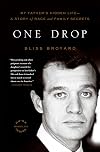
Anatole Broyard spent most of his life equivocating about his ethnicity. His children were not aware of their father's ethnic heritage until the end of his life. In this memoir, Bliss Broyard attempts to explore what might have driven her father to conceal, or at least obscure, the fact that his forebears were black, and what might have driven him to estrange himself from his family. The book is at its best when Broyard is exploring a blend of history and genealogy in efforts to better show more understand the forces that might have influenced her father's decision. When she explores her own emotional reactions, or speculates about her father's motives, the book loses power. Her relentless mining of her own emotional reactions seems tedious and often trivial. I would recommend this book only to those who are familiar with Broyard's work and life, and only then with reservations. show less

Heard as audiobook quite a while ago & forgot to write a review then. It says something about the strength of Broyard's writing that it came to mind now, when I needed to remember "that book" about how a family, and a nation, discloses or not their racial heritage.
Awards


You May Also Like


Associated Authors
Statistics
- Works
- 3
- Also by
- 2
- Members
- 437
- Popularity
- #55,994
- Rating
- 3.7
- Reviews
- 8
- ISBNs
- 10
- Languages
- 1
- Favorited
- 1