
Essie Mae Washington-Williams (1925–2013)
Author of Dear Senator
About the Author
Works by Essie Mae Washington-Williams
Associated Works
Tagged
Common Knowledge
- Birthdate
- 1925-10-12
- Date of death
- 2013-02-03
- Gender
- female
- Education
- South Carolina State University
- Occupations
- teacher
- Relationships
- Thurmond, Strom (father)
- Nationality
- USA
- Birthplace
- Edgefield, South Carolina, USA
- Places of residence
- Los Angeles, California, USA
- Place of death
- Columbia, South Carolina, USA
- Associated Place (for map)
- South Carolina, USA
Members
Reviews

Hmmm. On the one hand, this book has some relevance as a memoir and an historical document. Incidents such as the one involving Strom Thurmond and Carrie Butler were not uncommon across the South, and there were/are many like the author who were/are either the results of such unions, or have heard stories about such. The fact that she is bringing the events of her life to prominence is notable in itself. However, her reaction to and attitude concerning these events are problematic, and this show more is where the book does not live up to its potential.
As noted in some earlier reviews, there seems to be a lack of emotion and honesty in the book, and I agree wholeheartedly. I understand that people are individuals, and that they interpret certain events differently. However, I felt that Washington-Williams didn't display half of the anger and frustration that one would expect from someone who grew up the way she did. For one thing, she talks about the relationship between her father and mother as if it were a consensual relationship, rather than a coerced one enforced by centuries of racism and the devaluation of Black women and girls' bodies. No, Strom Thurmond did not "love" her mother. The fact remains that this was a 15-year-old girl who had no choice in the matter. The author shows nearly no emotion for her mother at all, nor does she attempt to understand her position. There is no outrage at the fact that a 23-year-old man was preying on a minor, using his privilege to do so.
Another issue is the author's willingness to absorb all aspects of her Southern heritage. No one should be ashamed of who they are, and I believe that they should be made aware of and celebrate all aspects of their culture. No one is asking Ms. Washington-Williams to choose between the two aspects of her identity. But she seems to feel that way, and she keeps asserting that she is "not just" African-American or white, but both. She has also joined the Daughters of the American Revolution and the United Daughters of the Confederacy. My question is, why would she want to be affiliated with these two groups, long representative of overt racism and exclusion? There are other Southern organizations to join that would reflect her heritage but also not be offensive. Furthermore, she states that membership in such organizations via her father has allowed her to trace her family history all the way back, while trying to do the same for her mother presents a brick wall. She's so nonchalant about the latter, unaware (choosing to ignore?) that events orchestrated by her father's ancestors, as well as the larger power structure (which she has joined) have made that brick wall possible.
However, the most glaring and disturbing issue with the book is the way that the author is all too ready to excuse her father for his shameful behavior. Forgiveness is one thing; I have no problem with that. I understand that she wanted her father's love, and all that entailed. I understand that this approach may be her coping device to sort out complex and confusing emotions. I understand that the author was raised in a different time, and carries with her many of the customs from that period. I also understand that the system which permitted her father to act the way he did may have a more profound effect on her psyche than she's willing to admit, and that she may have internalized negative attitudes. That being said, her father still isn't off the hook. Throughout the text, Ms. Washington-Williams constantly recasts her father's character, instead of seeing him for what he really was. A complex human being, to be sure, but also a virulent and unapologetic racist who, despite fathering her, felt that one half of her lineage, with whom he mixed his genetic material, was not worthy of basic human rights and respect, to put it lightly. She tries to rectify this fact by portraying him as a flawed, but generally decent man. Even though she didn't agree with his views on segregation, by supporting him in nearly everything else, she actually substantiates his viewpoint. Whereas she views him sending her mother money a sign of his interest and devotion, it seems obvious to everyone else that it was an attempt to keep his secret that wasn't a secret as covert as possible. She even defended Thurmond against her family members when they told her that they didn't like him, which is more than understandable.
What's even more pitiful is the fact that the author is giving her father the devotion, respect, and admiration that he doesn't really deserve, and which he probably wouldn't have wanted from her in the first place. Most times, the truth presents itself in shades of gray. But there are times when it really is as simple as black and white. The problem is that the author is not, or does not, want to view it this way. With all due respect, I believe that Ms. Washington-Williams has internalized a lot more negativity that she's willing to admit, and it comes off as apologist and self-hating. I feel that she needs to reexamine herself and think truly about what has happened. Is she really so eager to gain her father's acceptance and love, even after his death, that she is willing to whitewash his actions? In this aspect, I feel a little sorry for her, because although she claims that she is at peace, it is obvious that she is still struggling. show less
As noted in some earlier reviews, there seems to be a lack of emotion and honesty in the book, and I agree wholeheartedly. I understand that people are individuals, and that they interpret certain events differently. However, I felt that Washington-Williams didn't display half of the anger and frustration that one would expect from someone who grew up the way she did. For one thing, she talks about the relationship between her father and mother as if it were a consensual relationship, rather than a coerced one enforced by centuries of racism and the devaluation of Black women and girls' bodies. No, Strom Thurmond did not "love" her mother. The fact remains that this was a 15-year-old girl who had no choice in the matter. The author shows nearly no emotion for her mother at all, nor does she attempt to understand her position. There is no outrage at the fact that a 23-year-old man was preying on a minor, using his privilege to do so.
Another issue is the author's willingness to absorb all aspects of her Southern heritage. No one should be ashamed of who they are, and I believe that they should be made aware of and celebrate all aspects of their culture. No one is asking Ms. Washington-Williams to choose between the two aspects of her identity. But she seems to feel that way, and she keeps asserting that she is "not just" African-American or white, but both. She has also joined the Daughters of the American Revolution and the United Daughters of the Confederacy. My question is, why would she want to be affiliated with these two groups, long representative of overt racism and exclusion? There are other Southern organizations to join that would reflect her heritage but also not be offensive. Furthermore, she states that membership in such organizations via her father has allowed her to trace her family history all the way back, while trying to do the same for her mother presents a brick wall. She's so nonchalant about the latter, unaware (choosing to ignore?) that events orchestrated by her father's ancestors, as well as the larger power structure (which she has joined) have made that brick wall possible.
However, the most glaring and disturbing issue with the book is the way that the author is all too ready to excuse her father for his shameful behavior. Forgiveness is one thing; I have no problem with that. I understand that she wanted her father's love, and all that entailed. I understand that this approach may be her coping device to sort out complex and confusing emotions. I understand that the author was raised in a different time, and carries with her many of the customs from that period. I also understand that the system which permitted her father to act the way he did may have a more profound effect on her psyche than she's willing to admit, and that she may have internalized negative attitudes. That being said, her father still isn't off the hook. Throughout the text, Ms. Washington-Williams constantly recasts her father's character, instead of seeing him for what he really was. A complex human being, to be sure, but also a virulent and unapologetic racist who, despite fathering her, felt that one half of her lineage, with whom he mixed his genetic material, was not worthy of basic human rights and respect, to put it lightly. She tries to rectify this fact by portraying him as a flawed, but generally decent man. Even though she didn't agree with his views on segregation, by supporting him in nearly everything else, she actually substantiates his viewpoint. Whereas she views him sending her mother money a sign of his interest and devotion, it seems obvious to everyone else that it was an attempt to keep his secret that wasn't a secret as covert as possible. She even defended Thurmond against her family members when they told her that they didn't like him, which is more than understandable.
What's even more pitiful is the fact that the author is giving her father the devotion, respect, and admiration that he doesn't really deserve, and which he probably wouldn't have wanted from her in the first place. Most times, the truth presents itself in shades of gray. But there are times when it really is as simple as black and white. The problem is that the author is not, or does not, want to view it this way. With all due respect, I believe that Ms. Washington-Williams has internalized a lot more negativity that she's willing to admit, and it comes off as apologist and self-hating. I feel that she needs to reexamine herself and think truly about what has happened. Is she really so eager to gain her father's acceptance and love, even after his death, that she is willing to whitewash his actions? In this aspect, I feel a little sorry for her, because although she claims that she is at peace, it is obvious that she is still struggling. show less
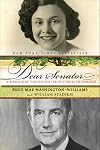
This is an amazing memoir by Strom Thurmond's Black daughter, Essie Mae. Yes! That Strom Thurmond. Her mother was a 16-year old Black maid employed by Strom Thurmond's family. Whether he loved Essie Mae's mother as much as was claimed in the book cannot be judged without bias. However, her writing suggests that Thurmond loved both of them and it was just politics that kept him from acknowledging them. It is certainly shocking to learn that the Southern champion of segregation had a loving show more relationship with his hidden family, but that is what she says and there is no reason not to believe it. As a teacher and lover of history, Ms. Washington-Williams brings life to the reality that was the United States — both North and South — for Black people in the 1940's through the end of the century. Through the eyes of a Black person she talks about segregation, racial inequality, her father's love, which grew in expression over the years, and her own love for her father, despite the circumstances. It is an extraordinary story, especially to those of us who look upon Strom Thurmond as one of the worst of the worst of Southern segregationists. This honest and heartfelt story told by Ms. Washington-Willams is well worth reading. show less
Many would likely take Essie Mae's husband's side regarding how she kept secret her relationship to Sen. Strom Thurmond, given the senator's political stance. But she relates her story and experience in a way that helped me appreciate the very emotionally and culturally complex situation she was in. It cannot have been easy to be relegated to the sidelines as your biological father ascended the political ladder to greater heights ("greater" in the sense of going beyond being a small-town show more lawyer, and not that I believe he was a great man). It also speaks to Essie Mae's deep sense of respect and discretion that she did not come out until after his death, and even then, reluctantly. A provocative autobiography that will have readers examining their own views on race and power in this country. show less
This book is Essie Mae’s story and a living historic chronicle of the life and times intertwined with her real life situation. Williams's story can be viewed as a tragedy of the American south with its unenlightened prejudices and hypocrisies; but it also can be viewed as a story of family ties, of love and honor. Her restraint and respect for her father in an ugly period of our history--one that included segregation, racism and Jim Crow is incredible, which help to mitigate the harsh show more realities of her circumstances.
An argument can be made that since her mother, Carrie was in the employ of the Thurmonds, their sex may not have been entirely consentual (much like Thomas Jefferson and Sally Hemmings). Strom Thurmond didn't have to do any of the things he chose to do for his mulatto daughter and he risked a lot by making special trips to see Essie Mae and giving her cash. He also can't be blamed for his daughter's long silence. He never told her to not tell anyone. That was Essie Mae's choice alone.
Essie Mae shows herself to be far more forgiving than most other people would be. Accepting her father's shortcomings whilst never agreeing with his policies and ideals but most poignantly of all she proves herself to be a good and loyal daughter, something that Strom Thurmond did not deserve in my opinion.
There is one moment that I had to question in this book. When Essie Mae leaves her children in California to attend her husband, Julius’ funeral. I understand the financial part (help from her father at this time would have been then) but the emotional deprivation of saying goodbye to their father seemed crucial. Still, Washington's story is one of courage, perseverance and grace.
I would have liked to see pictures of her mother, aunt and uncle in “Dear Senator” and she never explains what happens to relatives including her brother Willie, Father/Uncle and Cousin Calvin.
This is an amazing story by Washington of learning to accept and love her father and the legacy of her birth. The story is well written, fascinating and bittersweet to read. This book is not only personal but very factual. This is an interesting historical document. “Dear Senator is written with candor, honesty, sadness and spirit. show less
An argument can be made that since her mother, Carrie was in the employ of the Thurmonds, their sex may not have been entirely consentual (much like Thomas Jefferson and Sally Hemmings). Strom Thurmond didn't have to do any of the things he chose to do for his mulatto daughter and he risked a lot by making special trips to see Essie Mae and giving her cash. He also can't be blamed for his daughter's long silence. He never told her to not tell anyone. That was Essie Mae's choice alone.
Essie Mae shows herself to be far more forgiving than most other people would be. Accepting her father's shortcomings whilst never agreeing with his policies and ideals but most poignantly of all she proves herself to be a good and loyal daughter, something that Strom Thurmond did not deserve in my opinion.
There is one moment that I had to question in this book. When Essie Mae leaves her children in California to attend her husband, Julius’ funeral. I understand the financial part (help from her father at this time would have been then) but the emotional deprivation of saying goodbye to their father seemed crucial. Still, Washington's story is one of courage, perseverance and grace.
I would have liked to see pictures of her mother, aunt and uncle in “Dear Senator” and she never explains what happens to relatives including her brother Willie, Father/Uncle and Cousin Calvin.
This is an amazing story by Washington of learning to accept and love her father and the legacy of her birth. The story is well written, fascinating and bittersweet to read. This book is not only personal but very factual. This is an interesting historical document. “Dear Senator is written with candor, honesty, sadness and spirit. show less
Awards


You May Also Like


Associated Authors
Statistics
- Works
- 1
- Also by
- 1
- Members
- 221
- Popularity
- #101,334
- Rating
- 3.7
- Reviews
- 11
- ISBNs
- 4
- Favorited
- 1