
Michele Norris
Author of The Grace of Silence: A Memoir
About the Author
Image credit: National Book Festival, Washington, DC - 2010
Works by Michele Norris
Our Hidden Conversations: What Americans Really Think About Race and Identity (2024) 120 copies, 2 reviews
Associated Works
Tagged
Common Knowledge
- Other names
- Norris, Michele L.
- Birthdate
- 1961-09-07
- Gender
- female
- Education
- University of Minnesota
- Occupations
- journalist
- Nationality
- USA
- Birthplace
- Minnesota, USA
- Places of residence
- Washington, D.C., USA
Minneapolis, Minnesota, USA - Associated Place (for map)
- Minnesota, USA
Members
Reviews
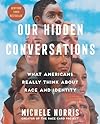
Our Hidden Conversations by Michele Norris is a fascinating journey through the many thoughts Americans have about race and identity.
I think the book description gives a good enough idea of how the responses in this book came to be, so I will focus more on what the book itself does. Responses are grouped loosely and to good effect. Comments that might support as well as disagree with each other are close together, usually on the same page. Longer responses and the periodic background piece show more written by Norris helps connect each section.
I actually read this almost two months ago and thought I had reviewed it already. The reason I thought that speaks directly to one of the positive things this book can do. I brought up some of these comments to friends, across races and to the extent I could across the political spectrum (I admittedly don't have as many right-wing friends as I once did, and we disagree on the explanation, so I won't get into it). Because I explained the concept of the book and exchanged ideas with people, I just assumed I had posted a review. It wasn't until I saw it in my reader in a folder that doesn't hold reviewed books, that I discovered my error. Yet those conversations were great, always insightful, sometimes frustrating, sometimes a bit sad, but also very good at bringing us together.
You'll see comments you can relate to and some you find unfathomable. Reading them in the groups in which they're placed, with many being longer than the original prompt asked for, you move beyond just nodding or shaking your head and begin to see some nuance, some perspectives you might not have considered. Most of all, you see the human beings behind these comments. Maybe not the specific person for each, but a composite that reminds you that perspective, even one you disagree with, offers a way to connect and understand. Not agree, not condone, but understand nonetheless. If you can be honest with yourself you'll likely recognize yourself in some of the comments you now disagree with, maybe even see some remnants of thoughts that you have since left behind. And, if you're white, you'll hopefully see that what seems like a small slight to you can represent a potential threat to someone else in certain situations.
Basically, this book puts individuals to ideas. Maybe vague thoughts you've had, maybe ways you know family members or friends to be, when put into words are so impactful. Some intolerance sounds so asinine when put into words, and some incidents that seem small you'll see are large when someone feels they are directed at them.
While I would certainly recommend this to anyone wanting to understand some of the ideas permeating our culture I think it would make an excellent book to use as a discussion guide. Start conversations with friends and relatives, and not just those who might think as you do. Discuss, genuinely discuss, these comments and how you all view them. Try to bracket any anger or frustration and look instead for common ground and understanding. Even if no one walks away changed on the spot, the discussion will linger in everyone's minds and change may yet occur.
Reviewed from a copy made available by the publisher via NetGalley. show less
I think the book description gives a good enough idea of how the responses in this book came to be, so I will focus more on what the book itself does. Responses are grouped loosely and to good effect. Comments that might support as well as disagree with each other are close together, usually on the same page. Longer responses and the periodic background piece show more written by Norris helps connect each section.
I actually read this almost two months ago and thought I had reviewed it already. The reason I thought that speaks directly to one of the positive things this book can do. I brought up some of these comments to friends, across races and to the extent I could across the political spectrum (I admittedly don't have as many right-wing friends as I once did, and we disagree on the explanation, so I won't get into it). Because I explained the concept of the book and exchanged ideas with people, I just assumed I had posted a review. It wasn't until I saw it in my reader in a folder that doesn't hold reviewed books, that I discovered my error. Yet those conversations were great, always insightful, sometimes frustrating, sometimes a bit sad, but also very good at bringing us together.
You'll see comments you can relate to and some you find unfathomable. Reading them in the groups in which they're placed, with many being longer than the original prompt asked for, you move beyond just nodding or shaking your head and begin to see some nuance, some perspectives you might not have considered. Most of all, you see the human beings behind these comments. Maybe not the specific person for each, but a composite that reminds you that perspective, even one you disagree with, offers a way to connect and understand. Not agree, not condone, but understand nonetheless. If you can be honest with yourself you'll likely recognize yourself in some of the comments you now disagree with, maybe even see some remnants of thoughts that you have since left behind. And, if you're white, you'll hopefully see that what seems like a small slight to you can represent a potential threat to someone else in certain situations.
Basically, this book puts individuals to ideas. Maybe vague thoughts you've had, maybe ways you know family members or friends to be, when put into words are so impactful. Some intolerance sounds so asinine when put into words, and some incidents that seem small you'll see are large when someone feels they are directed at them.
While I would certainly recommend this to anyone wanting to understand some of the ideas permeating our culture I think it would make an excellent book to use as a discussion guide. Start conversations with friends and relatives, and not just those who might think as you do. Discuss, genuinely discuss, these comments and how you all view them. Try to bracket any anger or frustration and look instead for common ground and understanding. Even if no one walks away changed on the spot, the discussion will linger in everyone's minds and change may yet occur.
Reviewed from a copy made available by the publisher via NetGalley. show less
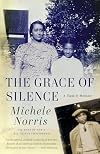
Michele Norris's exploration of her family history is a stunning tale of systemic racial injustice, thoroughly researched and reported, but it also raises questions about all family's and their histories: who conceals what facts, and why. Certainly, her book spoke to me not only about her family but about my own immigrant grandparents, whose stories are only partially known. Who decides what will be passed on and what will be hidden? Norris discusses these questions and they have been with show more me since finishing "The Grace of Silence". show less
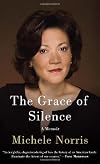
This memoir by Michele Norris, cohost of NPR's All Things Considered, delivers an informative, compelling view of race relations in the US. In uncovering long hidden instances from her family's past including her father being shot by a policeman and her Grandmother traveling around making pancakes as Aunt Jemima, she explores racism past and present. The book is thoughtful, informative and well researched. The ongoing struggle is also illuminated by examples from our nation's history. In show more addition to enjoying a well written memoir, I have gained more specific insights than available from my privileged white male perspective. show less
I came across this book as my girlfriend was weeding through her room. In 2011-2012 all students at Sac State (where she was) were encouraged to read it, and it was assigned for her composition class. She didn’t care for it too much. Her loss, I say.
Norris’s name might be familiar to you who listen to NPR. She is one of their news correspondents. In 2011 she began writing a book about Obama and what his election means for African-Americans. She wound up writing a book diving into her show more family history and how it intertwined with many seminal events in black history. She found out things about her maternal grandma and her father that they hid from her (and everyone else) for life.
Her maternal grandma, it turned out, worked as an “Aunt Jemima” saleswoman in the ‘30s and ‘40s. Norris even managed to turn up a newspaper article about her grandma, celebrating her achievement as a representative of a major brand. Aunt Jemima was actually based on racist “slave mammy” stereotypes, evoking nostalgia of pre-Civil War days. Norris tries to dive into her grandma’s mind and make sense of the ambivalence she would have felt, using something traumatically racist for her own benefit and fortune.
She also found out that her father had been shot by a white cop as a young man. She was shocked. Her dad, the most law-abiding man she ever knew, a man who worked hard and took pride in his perfect garden and polished car – attacked a cop. This was in 1946, in Birmingham, a city later reviled during the Civil Rights era as the “most segregated city in America.” He had just returned from his armed forces tour overseas. Norris does some amazing searching to find police records from that time, and interviews some elderly people who were involved in her dad’s shooting and arrest.
But why did he never say? This is where Norris captures the “grace of silence.” Her grandma, dad, and all her other relatives scarred and traumatized by racism were not passive or too frightened to speak, she argues. Instead they chose to not dwell on the negative. But how, Norris asks, can the healing begin without any testimony? She understands the grace of silence, but prefers the catharsis of opening old wounds. Thankfully her way of writing about those wounds is clear, deftly mixing personal and political. Her conclusion – about bringing in everyone to conversations on racism, not just victims – is spot-on. A neat book. show less
Norris’s name might be familiar to you who listen to NPR. She is one of their news correspondents. In 2011 she began writing a book about Obama and what his election means for African-Americans. She wound up writing a book diving into her show more family history and how it intertwined with many seminal events in black history. She found out things about her maternal grandma and her father that they hid from her (and everyone else) for life.
Her maternal grandma, it turned out, worked as an “Aunt Jemima” saleswoman in the ‘30s and ‘40s. Norris even managed to turn up a newspaper article about her grandma, celebrating her achievement as a representative of a major brand. Aunt Jemima was actually based on racist “slave mammy” stereotypes, evoking nostalgia of pre-Civil War days. Norris tries to dive into her grandma’s mind and make sense of the ambivalence she would have felt, using something traumatically racist for her own benefit and fortune.
She also found out that her father had been shot by a white cop as a young man. She was shocked. Her dad, the most law-abiding man she ever knew, a man who worked hard and took pride in his perfect garden and polished car – attacked a cop. This was in 1946, in Birmingham, a city later reviled during the Civil Rights era as the “most segregated city in America.” He had just returned from his armed forces tour overseas. Norris does some amazing searching to find police records from that time, and interviews some elderly people who were involved in her dad’s shooting and arrest.
But why did he never say? This is where Norris captures the “grace of silence.” Her grandma, dad, and all her other relatives scarred and traumatized by racism were not passive or too frightened to speak, she argues. Instead they chose to not dwell on the negative. But how, Norris asks, can the healing begin without any testimony? She understands the grace of silence, but prefers the catharsis of opening old wounds. Thankfully her way of writing about those wounds is clear, deftly mixing personal and political. Her conclusion – about bringing in everyone to conversations on racism, not just victims – is spot-on. A neat book. show less
Awards


You May Also Like


Associated Authors
Statistics
- Works
- 3
- Also by
- 3
- Members
- 456
- Popularity
- #53,830
- Rating
- 3.9
- Reviews
- 24
- ISBNs
- 13