
Heather McGhee (1) (1980–)
Author of The Sum of Us: What Racism Costs Everyone and How We Can Prosper Together
For other authors named Heather McGhee, see the disambiguation page.
Works by Heather McGhee
The Sum of Us: What Racism Costs Everyone and How We Can Prosper Together (2021) 1,258 copies, 25 reviews
Associated Works
Four Hundred Souls: A Community History of African America, 1619-2019 (2021) — Contributor — 1,167 copies, 25 reviews
Tagged
Common Knowledge
- Legal name
- McGhee, Heather Charisse
- Birthdate
- 1980-06-06
- Gender
- female
- Education
- Yale University (BA, American Studies)
University of California, Berkeley (JD) - Agent
- Henry Reisch
Tina Bennett
Dorian Karchmar - Nationality
- USA
- Birthplace
- Chicago, Illinois, USA
- Places of residence
- Barcelona, Catalonia, Spain
New York, New York, USA - Associated Place (for map)
- USA
Members
Reviews
this is an excellent and thought-provoking book. It is often depressing, as you would expect, although McGhee also presents reasons for hope.
McGhee runs down the racist, anti-Black roots of many of the major societal problems in America today, examining at the same time the ways in which these policies have also greatly harmed whites along the way. Her thesis, as per the title, is that working and middle class whites have been sold a "Zero Sum" philosophy: if Blacks "win," whites, by show more definition, "lose." So, for one easy example, welfare programs that would help many more whites than Blacks must be bad nevertheless, because Blacks are "takers" who don't deserve taxpayer help. Never mind the number of poor whites who would be lifted as well.
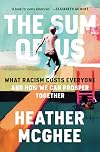
McGhee uses as her operating metaphor (as per the book's cover art) the history of public swimming pools. During the middle part of the 20th century, communities across the country, including across the South, had built public swimming pools. They were symbols in many cases of civic pride, gathering places for often thousands of people. However, when the law mandated that these pools be integrated, community after community closed the facilities, often filling the pools in and covering them over, rather than comply with that new law. So not only were Blacks kept out, but tens of thousands of white people lost their public swimming pools as well.
The book examines the housing/mortgage crisis, environmental racism, redlining, voting rights, disengenuous "color blindness" and several more issues, which all come under McGhee's microscope to convincing effect. There is also a chapter on the psychic toll that racism takes on whites called "The Hidden Wound," the title taken from Wendell Berry's 1968 book of the same name.
The book's final chapter, though, is titled "The Solidarity Dividend," and outlines several successful grass roots, cross-ethnic efforts currently underway at the grass roots level both in individual communities and across the country. McGhee spent a lot of time crossing the country and investigating her thesis and she has a career's worth of experience in policy advocating and organizing to draw on, as well.
Finally, the book is clearly and engagingly written, and does not come across as a polemic. McGhee seems to me to be writing out of sorrow and, often, frustration, but also out of love and hope for the future. She lays out the problems and conditions of our times exceedingly well, and suggests what could be a doable roadmap for the future. show less
McGhee runs down the racist, anti-Black roots of many of the major societal problems in America today, examining at the same time the ways in which these policies have also greatly harmed whites along the way. Her thesis, as per the title, is that working and middle class whites have been sold a "Zero Sum" philosophy: if Blacks "win," whites, by show more definition, "lose." So, for one easy example, welfare programs that would help many more whites than Blacks must be bad nevertheless, because Blacks are "takers" who don't deserve taxpayer help. Never mind the number of poor whites who would be lifted as well.
McGhee uses as her operating metaphor (as per the book's cover art) the history of public swimming pools. During the middle part of the 20th century, communities across the country, including across the South, had built public swimming pools. They were symbols in many cases of civic pride, gathering places for often thousands of people. However, when the law mandated that these pools be integrated, community after community closed the facilities, often filling the pools in and covering them over, rather than comply with that new law. So not only were Blacks kept out, but tens of thousands of white people lost their public swimming pools as well.
The book examines the housing/mortgage crisis, environmental racism, redlining, voting rights, disengenuous "color blindness" and several more issues, which all come under McGhee's microscope to convincing effect. There is also a chapter on the psychic toll that racism takes on whites called "The Hidden Wound," the title taken from Wendell Berry's 1968 book of the same name.
The book's final chapter, though, is titled "The Solidarity Dividend," and outlines several successful grass roots, cross-ethnic efforts currently underway at the grass roots level both in individual communities and across the country. McGhee spent a lot of time crossing the country and investigating her thesis and she has a career's worth of experience in policy advocating and organizing to draw on, as well.
Finally, the book is clearly and engagingly written, and does not come across as a polemic. McGhee seems to me to be writing out of sorrow and, often, frustration, but also out of love and hope for the future. She lays out the problems and conditions of our times exceedingly well, and suggests what could be a doable roadmap for the future. show less
There have been a lot of exceptional, high-publicity books on institutional racism published in recent years (e.g., Caste, Project 1619, How to Be Antiracist, Between the World and Me), and this one should be right up there on that shelf. McGhee's focus is on the numbers: what is the actual, numerical cost ($$) to all of us when financially insecure, conservative white folks, who are fully accepting (even proud of) their position on the second-to-last rung on the social ladder, as long as show more they can count on at least one other, more oppressed group on the rung below them, vote against their own interests and financial well-being. Spoiler: the costs are staggering. We could all be doing so much better. Immediately in the first chapter I found myself taking screenshots of meaningful passages, but very quickly there got to be so many that I had to abandon that angle, which indicates to me that anyone I might share these excerpts with would be well-served to read the book themselves. Sadly, some passages feel tragically and heartbreakingly optimistic in hindsight, following the 2024 election and the current nightmare that is January 2026 in Minnesota. Help. show less
An emphatically all-American guide to the high cost of racism—with a hopeful path forward.
In this condensed version of her 2021 adult original, South Side of Chicago native McGhee explores the toll racial injustice past and present takes on the life of every American. She compiles her work—half investigative journalism, half master class in sociopolitical research—in this accessible, abridged (but no less intellectual) volume. McGhee delves deeply into the zero-sum ideologies that are show more rooted in this nation’s origin story and underpin how freedoms were first conceived in direct relation to the enslavement of Africans, convincing many White Americans that Black and brown suffering was requisite to White success. A wide array of first-person accounts framed by quantitative data and McGhee’s own experiences as president of a noted research and advocacy think tank make for compelling storytelling about a tradition of White supremacy compromising all corners of public, private, and political life, from education to health care. The central argument of the book, however, is that our understanding of key social justice concepts is limited: We tend not to recognize that while racism is demonstrably and violently harmful to non-White people, it also results in White Americans’ suffering in marked and measurable ways. McGhee challenges many strongly held narratives; ultimately, with its tangible takeaways, this offering is optimistically forward looking and grounded in solidarity.
Of great value to anyone who values straight-to-the-point, thorough writing on race in America. (link to references) (Nonfiction. 13-18)
-Kirkus Review show less
In this condensed version of her 2021 adult original, South Side of Chicago native McGhee explores the toll racial injustice past and present takes on the life of every American. She compiles her work—half investigative journalism, half master class in sociopolitical research—in this accessible, abridged (but no less intellectual) volume. McGhee delves deeply into the zero-sum ideologies that are show more rooted in this nation’s origin story and underpin how freedoms were first conceived in direct relation to the enslavement of Africans, convincing many White Americans that Black and brown suffering was requisite to White success. A wide array of first-person accounts framed by quantitative data and McGhee’s own experiences as president of a noted research and advocacy think tank make for compelling storytelling about a tradition of White supremacy compromising all corners of public, private, and political life, from education to health care. The central argument of the book, however, is that our understanding of key social justice concepts is limited: We tend not to recognize that while racism is demonstrably and violently harmful to non-White people, it also results in White Americans’ suffering in marked and measurable ways. McGhee challenges many strongly held narratives; ultimately, with its tangible takeaways, this offering is optimistically forward looking and grounded in solidarity.
Of great value to anyone who values straight-to-the-point, thorough writing on race in America. (link to references) (Nonfiction. 13-18)
-Kirkus Review show less
If you only read one book about race and racism, make it this one! McGhee does a deep dive into all aspects of racism, melding together many of the themes and research of other excellent books about race; Biased, the New Jim Crow, The Color of Law, the Color of Money, and Dying of Whiteness. She shows how the US was built on racism and why we our current culture and economics continue to be part of the zero sum mindset of white America. She tries to give some optimistic outlooks for the show more future in the last story in the book, sighting racial strides in communities like Lewiston, ME, and other small towns in America, and while I hope this is the trend, I can't help thinking it's one step forward two steps back. Rich white men still have most of the power, and I don't see them giving it up any time in the near future. show less
Lists
Awards


You May Also Like


Associated Authors
Statistics
- Works
- 2
- Also by
- 2
- Members
- 1,321
- Popularity
- #19,458
- Rating
- 4.4
- Reviews
- 27
- ISBNs
- 18