
William Caxton
Author of Caxton: The Description of Britain
About the Author
Image credit: Courtesy of the NYPL Digital Gallery (image use requires permission from the New York Public Library)
Works by William Caxton
The Epic of the Beast: Consisting of English Translations of the History of Reynard the Fox and Physiologus (1925) 11 copies
The Booke of Ovyde Named Methamorphose (British Writers of the Middle Ages and the Early Modern Period) (2013) 6 copies
The Golden Legend, or, Lives of the Saints as Englished by William Caxton : Volume V (2015) 3 copies
William Caxton 3 copies
Paris and Vienne and Blanchardyn and Eglantine (Middle English Texts) (English and Old French Edition) (2023) 2 copies
Quatuor sermones : reprinted from the first edition printed by William Caxton at Westminster 2 copies
The history of Jason — Translator — 1 copy
The Lyfe of Saynt Margrete 1 copy
The Lyf of Seynt Kenelme, kynge and martir: from Caxton's Golden Legend, with a note on the origin of the text (2010) 1 copy
The Lyfe of Saynt George 1 copy
Godeffroy of Boloyne : or, the siege and conqueste of Jerusalem / tr. by William Caxton ; ed. by Mary Noyes Covin 1 copy, 1 review
The English Charlemagne Romances. Part. III: The Lyf of the Noble and Crysten Prynce, Charles the Grete (2016) 1 copy
Caxton leaf (a single leaf from Ordinale seu pica scandium sum Sarum) (2x photographic print) 1 copy
Canterbury Tales 1 copy
Associated Works
The Canterbury Tales [Norton Critical Edition, 2nd ed.] (2005) — Contributor — 676 copies, 5 reviews
The Golden Legend: Readings on the Saints (1259) — Translator, some editions — 637 copies, 8 reviews
The English scholar's library of old and modern works, 3 of 4 volumes — Contributor — 1 copy
Fables of Aesop - Printed from the Veronese Edition of MCCCCLXXIX in Latin Verses and the Italian Version by Accio Zucco. Two volumes. — Translator, some editions — 1 copy
Tagged
Common Knowledge
- Birthdate
- 1420 (approximate)
- Date of death
- 1492-03 (approximate)
1491 (Old Calendar) - Gender
- male
- Education
- The Mercer's Company
- Occupations
- merchant
diplomat
translator
printer
publisher - Organizations
- Company of Merchant Adventurers of London
- Nationality
- England
- Birthplace
- The Weald of Kent, England
- Places of residence
- Kent, England
Brugge (now Belgium)
Cologne (now Germany) - Burial location
- St. Margaret's, Westminster Abbey, London, UK
- Map Location
- UK
Members
Reviews

"And this booke is maad for nede and prouffyte of all god folke / As fer as they in redynge or heeryng of it shall mowe vnderstande and fele the forsayd subtyl deceytes that dayly ben vsed in the worlde / not to thentente that men shold eschewe and kepe hym from the subtyl and false shrewis that they be not deceyuyd." And so begins William Caxton's 1481 translation of the medieval beast epic concerning Reynard the Fox, in which the cunning vulpine hero triumphs over his enemy, Isegrim the show more Wolf, and is twice exonerated in the court of King Noble the Lion, despite overwhelming odds against him. The moral ambiguity of the tale is early hinted at, in the introductory passage quoted above, as Caxton (and presumably his source before him, the Dutchman Gheraert Leeu), directs his readers toward the 'correct' interpretation of the tale: i.e. that it provides a warning about the cunning villains in this world, who, like Reynard, use their subtle wiles to manipulate others and get their way. And Reynard is certainly a master manipulator! His unerring sense of what tack to use, in persuading others to do as he wishes, makes for a number of humorous passages.
Caxton's Reynard is an important book for many reasons. It represents the first time that the full history of Reynard, which originally appeared in the mid-twelfth century in the Latin poem The Ysengrimus, before making its way into the French (Le Roman de Renart), German (Reinhart Fuchs) and Dutch (Reynaert de Vos) traditions, appeared in English. Although certain elements of the story had appeared before - the story of Reynard and Chanticleer can be found in Chaucer's The Nun's Priest's Tale of the Cock and the Fox, in his Canterbury Tales, and there is a Middle English poem, The Fox and the Wolf, which contains some of Reynard and Isegrim's rivalry - Caxton marks the point at which Reynard's full story enters the English language. The book is also significant because it was one of the earliest printed books in English. Caxton was the first to use the printing press for English language work, beginning in 1473, so his Reynard was created as part of a revolutionary new development in English letters. It is also significant because it was written at a time of great change in the English language itself, coming at the end of the medieval and dawn of the modern periods in England, as Middle English was giving way to its modern descendent.
As a contemporary reader, I sometimes found the language here challenging. It is less familiar than Shakespeare's English, but more intelligible that Chaucer's (naturally). Fortunately, the edition I read, printed in 1970 by Oxford University Press, included a glossary at the rear. Certain archaic words, such as 'dasse,' the old word for a badger, greatly appealed to me! Other words were borrowed by Caxton from his Dutch original, the prose Die Historie van Reynaert de Vos. Although not a text I used directly for my dissertation on children's retellings of Reynard, this was (of course) my starting point, in terms of my more general research into Reynard in English. I'm not sure to whom I would recommend it. Reynard lovers, obviously. Also, perhaps, to those interested in early modern English texts. show less
Caxton's Reynard is an important book for many reasons. It represents the first time that the full history of Reynard, which originally appeared in the mid-twelfth century in the Latin poem The Ysengrimus, before making its way into the French (Le Roman de Renart), German (Reinhart Fuchs) and Dutch (Reynaert de Vos) traditions, appeared in English. Although certain elements of the story had appeared before - the story of Reynard and Chanticleer can be found in Chaucer's The Nun's Priest's Tale of the Cock and the Fox, in his Canterbury Tales, and there is a Middle English poem, The Fox and the Wolf, which contains some of Reynard and Isegrim's rivalry - Caxton marks the point at which Reynard's full story enters the English language. The book is also significant because it was one of the earliest printed books in English. Caxton was the first to use the printing press for English language work, beginning in 1473, so his Reynard was created as part of a revolutionary new development in English letters. It is also significant because it was written at a time of great change in the English language itself, coming at the end of the medieval and dawn of the modern periods in England, as Middle English was giving way to its modern descendent.
As a contemporary reader, I sometimes found the language here challenging. It is less familiar than Shakespeare's English, but more intelligible that Chaucer's (naturally). Fortunately, the edition I read, printed in 1970 by Oxford University Press, included a glossary at the rear. Certain archaic words, such as 'dasse,' the old word for a badger, greatly appealed to me! Other words were borrowed by Caxton from his Dutch original, the prose Die Historie van Reynaert de Vos. Although not a text I used directly for my dissertation on children's retellings of Reynard, this was (of course) my starting point, in terms of my more general research into Reynard in English. I'm not sure to whom I would recommend it. Reynard lovers, obviously. Also, perhaps, to those interested in early modern English texts. show less
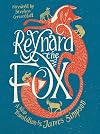
I HATED this but read it bc I'd never read more than a brief summary of the Reynard tale before. The translation is...fine. Uneven in register but that likely matches the source. The footnotes are pretty great & the Caxton info was helpful.
But JFC. Reynard is a fucking sociopath and any alleged humor to be found here is entirely at the expense of the innocent, gullible, disabled, weak, small, young, elderly, etc.
Contains somewhat graphic rape and rampant gaslighting. Actual foxes should show more sue for libel.
However, it's super interesting that a folk tale published in the 1470s should so aptly reflect the present day split bt glorified villainy among the powerful and desultory wishing for justice among the hapless.
And also that one is orange. show less
But JFC. Reynard is a fucking sociopath and any alleged humor to be found here is entirely at the expense of the innocent, gullible, disabled, weak, small, young, elderly, etc.
Contains somewhat graphic rape and rampant gaslighting. Actual foxes should show more sue for libel.
However, it's super interesting that a folk tale published in the 1470s should so aptly reflect the present day split bt glorified villainy among the powerful and desultory wishing for justice among the hapless.
And also that one is orange. show less
Caxton printed two editions of this book. The second has woodcuts minor textual variants. This is essentially a reprint of the second edition. A very nicely made book with good critical apparatus, lacking only a pronunciation guide. Chaucer and I have reached a compromise whereby I pronounce him however the hell I like but I do it the same all the time. Caxton is Middle English but it's on the cusp, so nearly modern, I wasn't quite sure what I was doing. In the end, this not being poetry, I show more just translated as I read.
I can see why this was so popular at the time with its chatty style and excellent anecdotes. I think it's also worth noting that at a time when books were only for the rich this book reinforces the feudal status quo. Today its perhaps most interesting for the picture it paints of a society now gone. It also has a reference to first sleep. I lived without electricity for some months and can personally attest to this phenomenon. I had been told it was recorded in a number of medieval texts but this is the first time I have myself come across a reference. show less
I can see why this was so popular at the time with its chatty style and excellent anecdotes. I think it's also worth noting that at a time when books were only for the rich this book reinforces the feudal status quo. Today its perhaps most interesting for the picture it paints of a society now gone. It also has a reference to first sleep. I lived without electricity for some months and can personally attest to this phenomenon. I had been told it was recorded in a number of medieval texts but this is the first time I have myself come across a reference. show less

From the back cover: "a fascinating insight into Britain in the Middle Ages and a vivid account of Britain's history from the perspective of the later middle ages." Caxton based his work on a 14th c latin work the "Polychronicon" or Universal History, 176 pages, illustrated with woodcuts and paintings from the period.
Lists
You May Also Like


Associated Authors
Statistics
- Works
- 59
- Also by
- 14
- Members
- 425
- Popularity
- #57,428
- Rating
- 3.8
- Reviews
- 7
- ISBNs
- 55
- Languages
- 3