
Albert Maltz (1908–1985)
Author of The Robe [1953 film]
About the Author
Image credit: wikimedia.org
Works by Albert Maltz
Simon McKeever utazása 4 copies
Holnap is nap lesz - regény 3 copies
Vuur in de nacht 2 copies
Incident on a Street Corner 2 copies
Selected Stories 2 copies
Geschichte eines Januar 2 copies
Simon McKeevers reise 1 copy
Man Will Not Die 1 copy
La legione nera 1 copy
Putování Simona MacKeevera 1 copy
A tüzes nyíl I 1 copy
Egy január története 1 copy
Associated Works
Years of Protest: A Collection of American Writings of the 1930's (1967) — Contributor — 44 copies, 1 review
The Best Short Stories of 1941 and the Yearbook of the American Short Story (1941) — Contributor — 11 copies
The Best Short Stories of 1939 and the Yearbook of the American Short Story (1939) — Contributor — 8 copies
The Best Short Stories of 1936 and the Yearbook of the American Short Story (1936) — Contributor — 5 copies
Vader is de beste — Author — 3 copies
Tagged
Common Knowledge
- Canonical name
- Maltz, Albert
- Other names
- Sherry, John B.
- Birthdate
- 1908-10-28
- Date of death
- 1985-04-26
- Gender
- male
- Education
- Columbia University
Yale School of Drama - Occupations
- author
screenwriter
playwright - Relationships
- Larkin, Margaret (wife)
- Nationality
- USA
- Birthplace
- Brooklyn, New York, USA
- Places of residence
- Brooklyn, New York, USA (birthplace)
- Place of death
- Los Angeles, California, USA
- Associated Place (for map)
- New York, USA
Members
Reviews
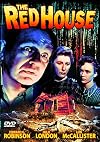
Delmer Daves wrote and directed this engrossing film about a long-hidden secret in the woods haunting a young farm girl’s happiness and future. Beautiful cinematography from Bery Glennon and an atmospheric score from Miklos Rozsa set a very special mood as young rural love struggles against buried secrets in the woods.
Daves does an excellent job balancing the tender romance of a lonely young girl with a noir drama of stark intensity. Allene Roberts stands out as the sweet young girl trying show more to blossom, giving a memorable performance. Lon McCallister is also quite good as the young farm boy who comes to slowly care for her against his shallow but sultry girlfriend’s (Julie London) wishes. The centerpiece of the film is an ominous red house deep in the woods that holds a paralyzing fear for Edward G. Robinson. Sort of a cross between Our Town and The Strange Love of Martha Ivers in mood, it all works somehow, creating a memorable film experience.
Daves captures both the sweetness and beauty of country life using Glennon’s camera and a lovely score by Rozsa to frame young Meg. Allene Roberts is the real star of this film despite fine performances from screen veterans like Robinson and Judith Anderson. She gives her character depth and sweetness that wins over the viewer, who hopes that it is enough to win over Nath (Lon McCallister).
Pete Morgan (Edward G. Robinson) hires Nath on as help to Meg’s delight, but soon Pete’s strange and paranoid behavior regarding the woods intrudes on all their lives. Only his sister, Ellen (Judith Anderson) knows the truth, and she isn’t talking. Anderson is fine as a woman who has sacrificed any happiness she might once have had with the town doctor to stay on the farm with her brother and help raise the adopted Meg. Warnings and even threats from Pete about the woods and the red house only heighten the curiosity of Nath and Meg, and of course the viewer.
A rural atmosphere and innocent romance complicated by a dark mystery make for engrossing viewing. Julie London is good as Nath’s shallow and fickle girlfriend, lured by the danger of Teller (Rory Calhoun), the guy Pete has hired to keep everyone away from the red house and those ominous woods that scream.
Fine performances, good direction, and a very special mood augment a good story. Allene Roberts is wonderful here and it is her performance as the sweet Meg viewers will remember most. A forgotten classic. show less
Daves does an excellent job balancing the tender romance of a lonely young girl with a noir drama of stark intensity. Allene Roberts stands out as the sweet young girl trying show more to blossom, giving a memorable performance. Lon McCallister is also quite good as the young farm boy who comes to slowly care for her against his shallow but sultry girlfriend’s (Julie London) wishes. The centerpiece of the film is an ominous red house deep in the woods that holds a paralyzing fear for Edward G. Robinson. Sort of a cross between Our Town and The Strange Love of Martha Ivers in mood, it all works somehow, creating a memorable film experience.
Daves captures both the sweetness and beauty of country life using Glennon’s camera and a lovely score by Rozsa to frame young Meg. Allene Roberts is the real star of this film despite fine performances from screen veterans like Robinson and Judith Anderson. She gives her character depth and sweetness that wins over the viewer, who hopes that it is enough to win over Nath (Lon McCallister).
Pete Morgan (Edward G. Robinson) hires Nath on as help to Meg’s delight, but soon Pete’s strange and paranoid behavior regarding the woods intrudes on all their lives. Only his sister, Ellen (Judith Anderson) knows the truth, and she isn’t talking. Anderson is fine as a woman who has sacrificed any happiness she might once have had with the town doctor to stay on the farm with her brother and help raise the adopted Meg. Warnings and even threats from Pete about the woods and the red house only heighten the curiosity of Nath and Meg, and of course the viewer.
A rural atmosphere and innocent romance complicated by a dark mystery make for engrossing viewing. Julie London is good as Nath’s shallow and fickle girlfriend, lured by the danger of Teller (Rory Calhoun), the guy Pete has hired to keep everyone away from the red house and those ominous woods that scream.
Fine performances, good direction, and a very special mood augment a good story. Allene Roberts is wonderful here and it is her performance as the sweet Meg viewers will remember most. A forgotten classic. show less
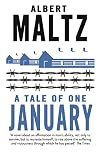
Set in 1945 Poland and inspired by true events, The Tale of One January by Albert Maltz tells the story of six prisoners of Auschwitz who manage to escape the Death March and take shelter in an abandoned factory in a neighboring town.
In January 1945, Claire, a Frenchwoman and Lini, a Dutch Jew manage to escape during the Death March from Auschwitz by hiding in a haystack during a halt in their journey. Four men from another death march also have the same idea and the six of them decide to show more stay together until the advancing Russian Army arrives. (They can hear the distant sounds of the Russian rocket guns slowly getting closer). The men were non –Jewish political prisoners -two of the men, Otto and Norbert were German; Jurek was Polish and Andrey was Russian. Claire, multilingual and having worked as a translator with the SS, helps them communicate with one another. The group of six manages to find shelter in an abandoned factory in a nearby village where they believe they would be safe from the eyes of the retreating German Army. As the narrative progresses we follow this group as they spend the next few days as they each share stories of their lives from before the war, the events that led to their arrest and what they envision for their future. A local farmer helps them with food and water and after years spent in the horrific concentration camps, their new circumstances are cause of both elation and reflection. The clean water, the freedom to bathe, sleep and eat on their own time, and simple meals of potatoes and cabbage while making them happy also trigger traumatic memories.
“We’ve moved from Auschwitz to paradise.”
This is a character-driven story and the author delves into the psyche of these six people who spent years in captivity, fighting for survival. We witness moments of fear, hope, sorrow, grief, anger, empathy, resentment, kindness, trust, friendship and attraction and desperation – a spectrum of reactions and emotions that rise to the surface – proof that after everything they have endured, they have not lost themselves completely.
Originally published only in England in 1967 this is the first time the novel is being published in the USA. The author, one of the Hollywood Ten, had been blacklisted on account of which his book was not published in the United States. Do read the Introduction by Patrick Chura, where he discusses the historical context and the people and events that inspired this novel. I would suggest, however, that you read the Introduction after reading the novel.
Heartbreaking, brutal yet incredibly moving, this is a short novel but not an easy read. A must-read for those who enjoy WWII fiction inspired by true events and people.
Many thanks to Bloomsbury USA and NetGalley for the much-appreciated digital review copy. All opinions expressed in this review are my own.
Please note that certain terminology might offend some if viewed from a contemporary lens but were contextually relevant in the era in which this story is based.
“For the rest of my life I’ll talk about Auschwitz and Fascism. I’ll talk on street corners if I’m able. I’ll write articles and send them to newspapers. What did we suffer for to let people forget it?” show less
In January 1945, Claire, a Frenchwoman and Lini, a Dutch Jew manage to escape during the Death March from Auschwitz by hiding in a haystack during a halt in their journey. Four men from another death march also have the same idea and the six of them decide to show more stay together until the advancing Russian Army arrives. (They can hear the distant sounds of the Russian rocket guns slowly getting closer). The men were non –Jewish political prisoners -two of the men, Otto and Norbert were German; Jurek was Polish and Andrey was Russian. Claire, multilingual and having worked as a translator with the SS, helps them communicate with one another. The group of six manages to find shelter in an abandoned factory in a nearby village where they believe they would be safe from the eyes of the retreating German Army. As the narrative progresses we follow this group as they spend the next few days as they each share stories of their lives from before the war, the events that led to their arrest and what they envision for their future. A local farmer helps them with food and water and after years spent in the horrific concentration camps, their new circumstances are cause of both elation and reflection. The clean water, the freedom to bathe, sleep and eat on their own time, and simple meals of potatoes and cabbage while making them happy also trigger traumatic memories.
“We’ve moved from Auschwitz to paradise.”
This is a character-driven story and the author delves into the psyche of these six people who spent years in captivity, fighting for survival. We witness moments of fear, hope, sorrow, grief, anger, empathy, resentment, kindness, trust, friendship and attraction and desperation – a spectrum of reactions and emotions that rise to the surface – proof that after everything they have endured, they have not lost themselves completely.
Originally published only in England in 1967 this is the first time the novel is being published in the USA. The author, one of the Hollywood Ten, had been blacklisted on account of which his book was not published in the United States. Do read the Introduction by Patrick Chura, where he discusses the historical context and the people and events that inspired this novel. I would suggest, however, that you read the Introduction after reading the novel.
Heartbreaking, brutal yet incredibly moving, this is a short novel but not an easy read. A must-read for those who enjoy WWII fiction inspired by true events and people.
Many thanks to Bloomsbury USA and NetGalley for the much-appreciated digital review copy. All opinions expressed in this review are my own.
Please note that certain terminology might offend some if viewed from a contemporary lens but were contextually relevant in the era in which this story is based.
“For the rest of my life I’ll talk about Auschwitz and Fascism. I’ll talk on street corners if I’m able. I’ll write articles and send them to newspapers. What did we suffer for to let people forget it?” show less
During a Nazi death march two women bury themselves under straw to escape. While sleeping in the straw, four men hide themselves also. When the Nazi's march everyone else off, the six wait, finally emerging free. The six bind together to survive and share resources. While escaping through the countryside, they take refuge in an abandoned factory. With Nazi and Russian forces closing in, survival becomes uncertain.
This was an absolutely fascinating book. The characters were dynamic and show more unique, each struggling through horrendous circumstances. The bond and interplay between the six was interesting to watch and kept the story moving. This story really needed an epilogue. Despite this criticism, 4 out of 5 stars. show less
This was an absolutely fascinating book. The characters were dynamic and show more unique, each struggling through horrendous circumstances. The bond and interplay between the six was interesting to watch and kept the story moving. This story really needed an epilogue. Despite this criticism, 4 out of 5 stars. show less
For more bookish posts please visit https://www.ManOfLaBook.com
A Tale of One January by Albert Maltz is a historical-fiction story of two women who escaped from a Nazi death March in January, 1945. Mr. Maltz was a playwright, screenwriter, and author. He was one of the Hollywood Ten jailed to refuse to testify before Congress about the Communist Party.
Lini, a Dutch Jew; and Claire, a blonde French anti-fascist who is working as a translator for the SS in Auschwitz, manage to escape during show more the Death march from their Nazi captures. The two friends have helped each other survive in the concentration camp.
The two meet four men who help them survive the winter and the retreating German army. The four are Norbert, a German; Jurek, a Pole; Otto, an Austrian, and a Russian POW, Andrey. The men are political prisoners (except Andrey) and are not Jewish.
The author was living in Mexico City, as he was blacklisted in the United States. in 1960 he met Dounia Wasserstrom, a French woman and political prisoner, who worked as an SS interpreter in Auschwitz. When the Russian Army was advancing on the camp, the prisoners where being marched to an unknown destination. This is when Mrs. Wasserstrom and her friend made their escape.
Mrs. Wasserstrom, a Ukrainian Jew, testified against the Auschwitz SS men in Frankfurt. Part of her testimony was used in The Investigation, a play by Peter Weiss.
This book was first published in 1967, but only in England, as American publishers wouldn’t agree to publish it.
This is a short book, and I honestly thought it was translated as some of the narrative is clunky. I soon figured out that A Tale of One January by Albert Maltz is written in a way to mimic Eastern European accents.
It was refreshing to read Holocaust literature which isn’t blatantly attempting to squeeze tears out of the reader. It was equally as refreshing to read an actual historical-fiction, as oppose to fiction which takes place in the past.
An interesting aspect of the book is how the things which are taken for granted, are viewed as luxuries after a time spent in hell. An ice bath, for example, is not just a pleasure, but helps the protagonists become human, scraping the filth of the consternation camp off of them.
Small acts of kindness by a local farmer, and other acts by the prisoners themselves, slowly give them their humanity back. There’s a lot to this short book, and that’s not even considering its historical significance. show less
A Tale of One January by Albert Maltz is a historical-fiction story of two women who escaped from a Nazi death March in January, 1945. Mr. Maltz was a playwright, screenwriter, and author. He was one of the Hollywood Ten jailed to refuse to testify before Congress about the Communist Party.
Lini, a Dutch Jew; and Claire, a blonde French anti-fascist who is working as a translator for the SS in Auschwitz, manage to escape during show more the Death march from their Nazi captures. The two friends have helped each other survive in the concentration camp.
The two meet four men who help them survive the winter and the retreating German army. The four are Norbert, a German; Jurek, a Pole; Otto, an Austrian, and a Russian POW, Andrey. The men are political prisoners (except Andrey) and are not Jewish.
The author was living in Mexico City, as he was blacklisted in the United States. in 1960 he met Dounia Wasserstrom, a French woman and political prisoner, who worked as an SS interpreter in Auschwitz. When the Russian Army was advancing on the camp, the prisoners where being marched to an unknown destination. This is when Mrs. Wasserstrom and her friend made their escape.
Mrs. Wasserstrom, a Ukrainian Jew, testified against the Auschwitz SS men in Frankfurt. Part of her testimony was used in The Investigation, a play by Peter Weiss.
This book was first published in 1967, but only in England, as American publishers wouldn’t agree to publish it.
This is a short book, and I honestly thought it was translated as some of the narrative is clunky. I soon figured out that A Tale of One January by Albert Maltz is written in a way to mimic Eastern European accents.
It was refreshing to read Holocaust literature which isn’t blatantly attempting to squeeze tears out of the reader. It was equally as refreshing to read an actual historical-fiction, as oppose to fiction which takes place in the past.
An interesting aspect of the book is how the things which are taken for granted, are viewed as luxuries after a time spent in hell. An ice bath, for example, is not just a pleasure, but helps the protagonists become human, scraping the filth of the consternation camp off of them.
Small acts of kindness by a local farmer, and other acts by the prisoners themselves, slowly give them their humanity back. There’s a lot to this short book, and that’s not even considering its historical significance. show less
Lists
Awards


You May Also Like


Associated Authors
Statistics
- Works
- 35
- Also by
- 15
- Members
- 785
- Popularity
- #32,426
- Rating
- 3.6
- Reviews
- 17
- ISBNs
- 51
- Languages
- 4