
Christina Meldrum
Author of Madapple
Works by Christina Meldrum
Tagged
Common Knowledge
- Canonical name
- Meldrum, Christina
- Gender
- female
- Education
- University of Michigan
Harvard Law School, J.D. - Occupations
- intern
litigator
author - Organizations
- Shearman and Sterling
International Commission of Jurists, Geneva, Switzerland
WOW - Nationality
- USA
- Places of residence
- San Francisco Bay Area, California, USA
- Associated Place (for map)
- California, USA
Members
Reviews

This is the book that The Poisonwood Bible could have been had its author not been so uneven in writing, characterization, and plot. Amaryllis in Blueberry is written beautifully, the voices and inner longings of each member of the Slepy family are there for the reader, accessible, but often mysterious. It's like catching bits of someone as they walk past curtains - here a shadow, there an arm - the movement of the body and the movement of the curtains making something else entirely.
The show more Slepy family is in trouble - you can see it even before they flee to West Africa. Too many secrets, too much silence in the fabric of the family itself. They might be a picture-perfect photograph of a happy normal family, but the reality is very different.
I loved Ms. Meldrum's writing about Africa. I also liked that while some of her characters saw the people around them as savages, the author never stoops to that, but always sees them as a people and as a culture of great complexity, spirituality, and beauty.
There is a delicacy in the writing and in the tone as the story unfolds and secret after secret is brought to the light. I couldn't help but wonder as I finished the book what hope these people had upon their return home. It was all so broken apart that I can't decide whether or not they'll put the pieces together again in a function way. show less
The show more Slepy family is in trouble - you can see it even before they flee to West Africa. Too many secrets, too much silence in the fabric of the family itself. They might be a picture-perfect photograph of a happy normal family, but the reality is very different.
I loved Ms. Meldrum's writing about Africa. I also liked that while some of her characters saw the people around them as savages, the author never stoops to that, but always sees them as a people and as a culture of great complexity, spirituality, and beauty.
There is a delicacy in the writing and in the tone as the story unfolds and secret after secret is brought to the light. I couldn't help but wonder as I finished the book what hope these people had upon their return home. It was all so broken apart that I can't decide whether or not they'll put the pieces together again in a function way. show less
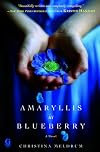
While the synopsis may be reminiscent of The Poisonwood Bible, in actuality Amaryllis in Blueberry is decidedly different. Secrets are at the heart of this novel, as each character, major and minor, pretends to be something he or she is not. These secrets end up driving all major characters to actions that surprise the others and help progress the plot.
The plot itself is intriguing, as the novel opens with Seena as the narrator as the reader quickly discovers that she is on trial for Dick's show more death. From those first pages, the reader knows that there is a key point that is missing from Seena's story. Ms. Meldrum then takes the reader on a ride through all of the characters' points-of-view to uncover the truth and the complex reasoning behind everyone's actions. Each change in narrator adds a bit more complexity to the story while uncovering various motives and rational explanations for each's behavior. It is a fascinating study into the mind of a character, what keeps a character going, and what he or she is willing to hide from others and from him or herself.
Secrets are often the driving force in novels because everyone has them, and everyone will often go to great lengths to protect them. While Ms. Meldrum's use of each character's secrets are essential to the family's eventual move to Africa and Dick's fate, it is the character interactions that bring heart to the novel. Each character is flawed but not outlandishly so. Each wants to be loved and to find acceptance within his or her own circle of influence - something to which most readers can relate. Added to this dynamic is the idea of religion and its overpowering ability to influence certain behaviors without specifically engaging the mind.
Amaryllis in Blueberry is one of those novels that is steeped in symbolism and allegory, to the point where one reading of the novel is not sufficient to uncover all of the hidden feelings, foreshadowing, and other subtle points. Thankfully, Ms. Meldrum wrote the novel in such a way that each re-read allows the reader to peel back more of the layers of this rather complex novel but an initial read is just as satisfying and surprising in its own right.
Amaryllis in Blueberry is not an easy read, and as you can tell, it is an even more difficult novel to review. There is so much that occurs in the novel that one can spend hours dissecting only the more important aspects of the novel. The language. adjusted for each narrator, is outstanding. Ms. Meldrum excels in differentiating between the older Grace, Catie, Tessa and younger Yllis, highlighting their pain and struggles through a scarcity of words that enhance the overall novel. Unlike The Poisonwood Bible, Amaryllis in Blueberry is a novel that demands the closest attention and rewards readers with an experience that is not just mental but emotional. All of the characters find a way to wriggle under one's skin and cross that boundary of impartiality in a reader. The end result is a novel that challenges a reader but compensates one's efforts through breathtaking visuals, subtle emotions and story that forces one to rethink what it means to love. show less
The plot itself is intriguing, as the novel opens with Seena as the narrator as the reader quickly discovers that she is on trial for Dick's show more death. From those first pages, the reader knows that there is a key point that is missing from Seena's story. Ms. Meldrum then takes the reader on a ride through all of the characters' points-of-view to uncover the truth and the complex reasoning behind everyone's actions. Each change in narrator adds a bit more complexity to the story while uncovering various motives and rational explanations for each's behavior. It is a fascinating study into the mind of a character, what keeps a character going, and what he or she is willing to hide from others and from him or herself.
Secrets are often the driving force in novels because everyone has them, and everyone will often go to great lengths to protect them. While Ms. Meldrum's use of each character's secrets are essential to the family's eventual move to Africa and Dick's fate, it is the character interactions that bring heart to the novel. Each character is flawed but not outlandishly so. Each wants to be loved and to find acceptance within his or her own circle of influence - something to which most readers can relate. Added to this dynamic is the idea of religion and its overpowering ability to influence certain behaviors without specifically engaging the mind.
Amaryllis in Blueberry is one of those novels that is steeped in symbolism and allegory, to the point where one reading of the novel is not sufficient to uncover all of the hidden feelings, foreshadowing, and other subtle points. Thankfully, Ms. Meldrum wrote the novel in such a way that each re-read allows the reader to peel back more of the layers of this rather complex novel but an initial read is just as satisfying and surprising in its own right.
Amaryllis in Blueberry is not an easy read, and as you can tell, it is an even more difficult novel to review. There is so much that occurs in the novel that one can spend hours dissecting only the more important aspects of the novel. The language. adjusted for each narrator, is outstanding. Ms. Meldrum excels in differentiating between the older Grace, Catie, Tessa and younger Yllis, highlighting their pain and struggles through a scarcity of words that enhance the overall novel. Unlike The Poisonwood Bible, Amaryllis in Blueberry is a novel that demands the closest attention and rewards readers with an experience that is not just mental but emotional. All of the characters find a way to wriggle under one's skin and cross that boundary of impartiality in a reader. The end result is a novel that challenges a reader but compensates one's efforts through breathtaking visuals, subtle emotions and story that forces one to rethink what it means to love. show less

I hate that this took me so long to read. This was a WONDERFUL book! Aslaug was a such an interesting character to read about. To me, this story is about love and family, where you come from and how that shapes who you are and what you believe - both through genetics and through environment. Aslaug didn't grow up like I did. She didn't have electricity or friends, fast food or a daily trip in a car. She picked wild flowers and berries and made meals out of them. She knows all of the plants show more and their medicinal uses as well as how they can harm. Her life is so different from mine that I couldn't help but be completely fascinated by her. And each chapter reveals a new truth and a new piece of evidence and a new glimpse into her strange life.
I also liked the added "mystery" within the story as it leaps back and forth in time from the trial and the parts of the past that the trial is currently working through. I had so many guesses from the first part that I wasn't sure I was right.
The writing was so captivating. I read this as an audio and I wish I'd had the physical book. I would have read this in hours - it was so hard to stop reading because the story absolutely sucked me in.
My only complaint was that it went a little too far for me. I enjoyed it up until it became about the fire. I liked the story about a girl found in her backyard and all that went with that storyline. Once the trial shifted and we met a whole new cast of characters, I was less drawn in and this became more about religion (to me) than the story I had enjoyed.
BUT I did still like it and I'm so glad I finally read it! show less
I also liked the added "mystery" within the story as it leaps back and forth in time from the trial and the parts of the past that the trial is currently working through. I had so many guesses from the first part that I wasn't sure I was right.
The writing was so captivating. I read this as an audio and I wish I'd had the physical book. I would have read this in hours - it was so hard to stop reading because the story absolutely sucked me in.
My only complaint was that it went a little too far for me. I enjoyed it up until it became about the fire. I liked the story about a girl found in her backyard and all that went with that storyline. Once the trial shifted and we met a whole new cast of characters, I was less drawn in and this became more about religion (to me) than the story I had enjoyed.
BUT I did still like it and I'm so glad I finally read it! show less
Review: Embarking on tragedy, Amaryllis in Blueberry is a deep, probing novel surrounding the implications and consequences of neglect, unfaithfulness, and ignorance upon a middle-class suburban family whose fate is redirected as a result of thoughtless actions and their reckless outcomes. As a whole, I feel this book tries too hard to have as profound an effect as The Poisonwood Bible did, with a reference right inside the jacket flap. Now, I've read The Poisonwood Bible and it's one of my show more favorites; I know Amaryllis in Blueberry is not exactly the same—the themes, morals, and overall effect are all different—but the premise itself is one that cannot be created without being compared: a mother, father, and four daughters are plucked out of Betty Crocker America and plopped into the wilderness that is Africa, and their lives are changed forever.
Here's a line that sums up the Slepys:
"[They] are all islands unto themselves, and while each island may have clean water and electricity and toilets that flush, being isolated on an island is lonely indeed."
Each of the characters, while extensively explored and unrooted, are at their foundation, very shallow. I didn't particularly like or dislike any of them.
Dick Slepy, head of household, is extremely ordinary and particularly foolish for constantly urging the impossible:
"[He] thinks he can will himself a Dane and will his wife affectionate and will his children respectful, [and also] thinks demanding a perfect family, while snapping a photo of what looks like one, is the equivalent of having one."
Seena, on the other hand, is complex and ephemeral, like the angel of death herself, but she's equally out of touch with reality, and so even though Meldrum does fabulously at portraying her mother's perspective, I didn't know whether to have compassion or resentment for her. Seena's actions are the pivot point of the entire novel, and their repercussions will take away breaths, taint souls, smother goodness, stain lives, and stalk her forever; this in and of itself was fascinating to read, fascinating discover how small acts of selfishness and of passion could unravel and destroy what's left of everything.
Stylistically Amaryllis in Blueberry is profuse in description, but still frustratingly vague. While I liked the richness, I found Meldrum's prose too redundant and syrupy at times.
However, in terms of message and delivery, I was awed by the convoluted, conscious way in which the painful truths of the human heart are presented in the backdrop of Africa. The last few chapters will especially consume—and not to mention, confuse—you, so even thought it starts off sluggishly, I definitely recommend reading it until the very end.
Pros: Fantastic biblical allusions and references to Greek mythology // Gorgeous prose // Vivid, memorable, and well-expressed characters // Poignant, tender message about humanity and society
Cons: Flowery language that isn't as penetrating as it would like to be; I had to reread some sentences several times to get their meanings // Far-fetched attempt at imitating The Poisonwood Bible
Love: "... Envy is not green. And rage isn't red hot, and the blues have nothing to do with blue. Envy is more dust-colored, a transparent sort of gray. It quivers, like heat rising. Rage itself is not any shade of red—it's not any color at all. It's a smell, a fried-up fish. Melancholy? The blues? Melancholy's more of a shimmer than any color. And it creeps: blues on the move."
Verdict:Christina Meldrum skillfully examines the exquisite human psyche by bringing to light the importance—and devastation—of deception, hidden meaning, falsified untruths, and verified dismissals; this is what makes Amaryllis in Blueberry thought-provoking, strangely beautiful, and absolutely stirring. While some of the prose was a bit too lavish, and the idea of an ordinary American family meeting its ruin upon being caught up in Africa, unoriginal (Barbara Kingsolver ripoff, hello), in its essence, this book is a rare and startling glimpse at a tragedy turned extraordinary, brimming with perceptive truth and soul.
Rating: 8 out of 10 hearts (4 stars): An engaging read; highly recommended.
Source: Complimentary copy provided by LibraryThing Member Reviews in exchange for an honest and unbiased review (thank you!). show less
Here's a line that sums up the Slepys:
"[They] are all islands unto themselves, and while each island may have clean water and electricity and toilets that flush, being isolated on an island is lonely indeed."
Each of the characters, while extensively explored and unrooted, are at their foundation, very shallow. I didn't particularly like or dislike any of them.
Dick Slepy, head of household, is extremely ordinary and particularly foolish for constantly urging the impossible:
"[He] thinks he can will himself a Dane and will his wife affectionate and will his children respectful, [and also] thinks demanding a perfect family, while snapping a photo of what looks like one, is the equivalent of having one."
Seena, on the other hand, is complex and ephemeral, like the angel of death herself, but she's equally out of touch with reality, and so even though Meldrum does fabulously at portraying her mother's perspective, I didn't know whether to have compassion or resentment for her. Seena's actions are the pivot point of the entire novel, and their repercussions will take away breaths, taint souls, smother goodness, stain lives, and stalk her forever; this in and of itself was fascinating to read, fascinating discover how small acts of selfishness and of passion could unravel and destroy what's left of everything.
Stylistically Amaryllis in Blueberry is profuse in description, but still frustratingly vague. While I liked the richness, I found Meldrum's prose too redundant and syrupy at times.
However, in terms of message and delivery, I was awed by the convoluted, conscious way in which the painful truths of the human heart are presented in the backdrop of Africa. The last few chapters will especially consume—and not to mention, confuse—you, so even thought it starts off sluggishly, I definitely recommend reading it until the very end.
Pros: Fantastic biblical allusions and references to Greek mythology // Gorgeous prose // Vivid, memorable, and well-expressed characters // Poignant, tender message about humanity and society
Cons: Flowery language that isn't as penetrating as it would like to be; I had to reread some sentences several times to get their meanings // Far-fetched attempt at imitating The Poisonwood Bible
Love: "... Envy is not green. And rage isn't red hot, and the blues have nothing to do with blue. Envy is more dust-colored, a transparent sort of gray. It quivers, like heat rising. Rage itself is not any shade of red—it's not any color at all. It's a smell, a fried-up fish. Melancholy? The blues? Melancholy's more of a shimmer than any color. And it creeps: blues on the move."
Verdict:Christina Meldrum skillfully examines the exquisite human psyche by bringing to light the importance—and devastation—of deception, hidden meaning, falsified untruths, and verified dismissals; this is what makes Amaryllis in Blueberry thought-provoking, strangely beautiful, and absolutely stirring. While some of the prose was a bit too lavish, and the idea of an ordinary American family meeting its ruin upon being caught up in Africa, unoriginal (Barbara Kingsolver ripoff, hello), in its essence, this book is a rare and startling glimpse at a tragedy turned extraordinary, brimming with perceptive truth and soul.
Rating: 8 out of 10 hearts (4 stars): An engaging read; highly recommended.
Source: Complimentary copy provided by LibraryThing Member Reviews in exchange for an honest and unbiased review (thank you!). show less
This review was written for LibraryThing Member Giveaways.
Awards


You May Also Like


Statistics
- Works
- 2
- Members
- 769
- Popularity
- #33,094
- Rating
- 3.6
- Reviews
- 75
- ISBNs
- 17
- Languages
- 2
- Favorited
- 2


