
Paul Elwork
Author of The Girl who Would Speak for the Dead
Works by Paul Elwork
Associated Works
Tagged
Common Knowledge
- Gender
- male
- Education
- Arcadia University (MA)
Temple University (BA) - Agent
- Daniel Lazar
- Places of residence
- Philadelphia, Pennsylvania, USA
- Associated Place (for map)
- Pennsylvania, USA
Members
Reviews
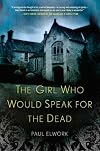
Grief is a tricky thing. It can cause someone to give up, to barricade oneself behind closed doors and remove oneself from the world as a way to compensate. Conversely, it can cause one to romanticize the past, to view a relationship through rose-colored glasses and consider past situations as better than they actually were. Yet, no matter how one reacts to grief, the one overarching issue that everyone has is the lack of closure. It is this need for closure in which the Stewart twins find show more themselves ensnared.
The Girl Who Would Speak for the Dead explores this world of grief through the eyes of Emily, as she deals with the repercussions of her actions and understands just how far one is willing to go to obtain closure with a dearly departed. The story ultimately crosses generations, with Emily uncovering family secrets and the impact of grief on her own ancestors. These secrets are intriguing, but Emily's reactions to them are what make the story. Emily is an interesting character, seemingly heartless and yet filled with guilt. Watching Emily uncover the power she has over people and struggling with this guilt is at once horrifying and yet hopeful. She understands that she is fulfilling a need within people's lives, and her discovery of just how tenuous the line is between helping and hurting is fascinating.
For those who are have read about the Fox sisters in previous novels, like Deborah Noyes' Captivity, it would be easy to dismiss The Girl Who Would Speak for the Dead. Yet, unlike these other novels, Mr. Elwork explores the deception behind the Spiritualism movement and how easy it would be to take advantage of grieving people with minimal effort. This approach is refreshing in its honesty, and yet, he writes in such a way that the line between fact and fiction is blurred, and what seems like deception becomes a form of therapy.
The Girl Who Would Speak for the Dead is one of those novels that sounds simple in its concept but ends up being so much more detailed in its execution. To describe it as a novel about grief is too simplistic, as is the idea that it is about deception. It is about that and so much more. When done poorly, something this complicated could be confusing and distracting. However, Mr. Elwork is able to bring together all the of the elements in a most effective manner, creating a story that is creepy and yet heart wrenching. Amy Einhorn Books has done it again with a novel that is fresh and immensely enjoyable in a psychologically uncomfortable way. show less
The Girl Who Would Speak for the Dead explores this world of grief through the eyes of Emily, as she deals with the repercussions of her actions and understands just how far one is willing to go to obtain closure with a dearly departed. The story ultimately crosses generations, with Emily uncovering family secrets and the impact of grief on her own ancestors. These secrets are intriguing, but Emily's reactions to them are what make the story. Emily is an interesting character, seemingly heartless and yet filled with guilt. Watching Emily uncover the power she has over people and struggling with this guilt is at once horrifying and yet hopeful. She understands that she is fulfilling a need within people's lives, and her discovery of just how tenuous the line is between helping and hurting is fascinating.
For those who are have read about the Fox sisters in previous novels, like Deborah Noyes' Captivity, it would be easy to dismiss The Girl Who Would Speak for the Dead. Yet, unlike these other novels, Mr. Elwork explores the deception behind the Spiritualism movement and how easy it would be to take advantage of grieving people with minimal effort. This approach is refreshing in its honesty, and yet, he writes in such a way that the line between fact and fiction is blurred, and what seems like deception becomes a form of therapy.
The Girl Who Would Speak for the Dead is one of those novels that sounds simple in its concept but ends up being so much more detailed in its execution. To describe it as a novel about grief is too simplistic, as is the idea that it is about deception. It is about that and so much more. When done poorly, something this complicated could be confusing and distracting. However, Mr. Elwork is able to bring together all the of the elements in a most effective manner, creating a story that is creepy and yet heart wrenching. Amy Einhorn Books has done it again with a novel that is fresh and immensely enjoyable in a psychologically uncomfortable way. show less
I used to enjoy writing snarky reviews about books I didn't like. I don't anymore. If this weren't an ER book, I wouldn't write this review. Now, I'm well aware of the great effort and skill it takes to write any novel, even one that doesn't quite live up to its potential. I also now wonder if there isn't something about me that didn't mesh with the book, rather than the book not meshing with me.
I wanted to like [The Girl who would Speak for the Dead]. It's a great premise, a historical show more novel loosely based on spiritualism and the infamous Fox sisters who profited on the grief that was ever-present in the wake of World War I and the flu epidemic that actually killed more people than the war. Elwork's themes include naivete, the need for closure and forgiveness, and the need to defend one's beliefs. If you know someone badly needs to believe, but also know the basis for their belief is a hoax, what do you do?
I've been trying to figure out why the book didn't work for me. It had several elements I like, but on the whole, the characterization didn't feel driven. None of the main characters badly wanted anything. They didn't take charge. They muddle along through their "game" which gets out of their control. The peripheral characters had deep desires, and the main characters used those desires. The main characters did their best to avoid thinking about the fact they were using people. I didn't like what the main characters were doing, and I didn't like them either. Not that you need to like characters in a book, but the plot lacked tension too. It did pick up in the end, but by then, Elwork had already lost me. I wanted a richer, ethically murkier book than this was. I'm glad other people are enjoying it, but this one isn't for me. show less
I wanted to like [The Girl who would Speak for the Dead]. It's a great premise, a historical show more novel loosely based on spiritualism and the infamous Fox sisters who profited on the grief that was ever-present in the wake of World War I and the flu epidemic that actually killed more people than the war. Elwork's themes include naivete, the need for closure and forgiveness, and the need to defend one's beliefs. If you know someone badly needs to believe, but also know the basis for their belief is a hoax, what do you do?
I've been trying to figure out why the book didn't work for me. It had several elements I like, but on the whole, the characterization didn't feel driven. None of the main characters badly wanted anything. They didn't take charge. They muddle along through their "game" which gets out of their control. The peripheral characters had deep desires, and the main characters used those desires. The main characters did their best to avoid thinking about the fact they were using people. I didn't like what the main characters were doing, and I didn't like them either. Not that you need to like characters in a book, but the plot lacked tension too. It did pick up in the end, but by then, Elwork had already lost me. I wanted a richer, ethically murkier book than this was. I'm glad other people are enjoying it, but this one isn't for me. show less
 This review was written for LibraryThing Early Reviewers.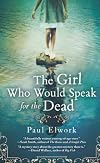
Well this one was a bust. The blurbs were what sold it to me and after finishing the book I still can't figure out why it got such good blurbs from good writers. Anyway, here it goes: this is the story of 13 year old twins Emily and Michael who one day decide to start scamming people into making them believe that they can contact the dead. As imagined, this scam runs out of control and there are awful consequences as an aftermath. Entertwined is the story of their family heritage and the show more love triangle between their mother, their dead father and their father's best friend from college. In general, a slow read that kept me going just to see when it would pick up, which sadly, never did. On to the next one! show less

A book with a promising premise and a sadly mediocre execution. The Girl Who Would Speak for the Dead is based loosely on the idea of the Fox sisters, who convinced many that they could communicate with the dead through a series of 'knocks' that were in actuality created through cracking joints in their feet.
It's an interesting premise, and with the right story to surround it it ought to have things to say about life and death and truth and deception and grief and healing. And the book show more /tries/. It clearly /wants/ to say these things. It just never manages it.
The characterization is thin to non-existent, and this fact is noticeable very early on. If this hadn't been an ER book, I'm not sure I would've made it past the first few chapters. Elwork doesn't build people, he builds vessels for his premise (which comes uncomfortably close to feeling like a gimmick).
The story is just as thin. Emily discovers her talent, her brother pulls the idea of convincing other children that she is speaking to ghosts out of nowhere, and they proceed to spend a summer duping first the neighborhood children and then a small group of older ladies. Nothing particularly builds, and through it all it's difficult to care even a little. Elwork comes close when Emily begins to visit the father of a friend, whose son died in WWI, but ultimately even that has a sort of 'pasted on' feel.
It's made worse by intervening chapters that reveal the amazingly boring history of the house Emily lives in. Worse still is the way these chapters hang onto the story and absolutely refuse to carry any thematic weight or provide any sense of continuity. In fact, the first several were so confusing and random that it wasn't until the third that I even realized what they were meant to be. They feel like nothing more than padding.
This is a book with one very small idea, and no big ones. A premise is not enough to carry a novel, for all that this one certainly tries. I didn't hate the book - I was simply bored with it, from start to finish. I wouldn't bother. show less
It's an interesting premise, and with the right story to surround it it ought to have things to say about life and death and truth and deception and grief and healing. And the book show more /tries/. It clearly /wants/ to say these things. It just never manages it.
The characterization is thin to non-existent, and this fact is noticeable very early on. If this hadn't been an ER book, I'm not sure I would've made it past the first few chapters. Elwork doesn't build people, he builds vessels for his premise (which comes uncomfortably close to feeling like a gimmick).
The story is just as thin. Emily discovers her talent, her brother pulls the idea of convincing other children that she is speaking to ghosts out of nowhere, and they proceed to spend a summer duping first the neighborhood children and then a small group of older ladies. Nothing particularly builds, and through it all it's difficult to care even a little. Elwork comes close when Emily begins to visit the father of a friend, whose son died in WWI, but ultimately even that has a sort of 'pasted on' feel.
It's made worse by intervening chapters that reveal the amazingly boring history of the house Emily lives in. Worse still is the way these chapters hang onto the story and absolutely refuse to carry any thematic weight or provide any sense of continuity. In fact, the first several were so confusing and random that it wasn't until the third that I even realized what they were meant to be. They feel like nothing more than padding.
This is a book with one very small idea, and no big ones. A premise is not enough to carry a novel, for all that this one certainly tries. I didn't hate the book - I was simply bored with it, from start to finish. I wouldn't bother. show less
This review was written for LibraryThing Early Reviewers.You May Also Like


Associated Authors
Statistics
- Works
- 2
- Also by
- 1
- Members
- 228
- Popularity
- #98,696
- Rating
- 3.1
- Reviews
- 34
- ISBNs
- 7
