

Morris Bishop (1893–1973)
Author of The Middle Ages
About the Author
Morris Bishop (1893-1973) was educated & taught for many years at Cornell University. One of the worlds most lucid & knowledgeable commentators on the Middle Ages, he was also a biographer, a translator, & a masterly writer of light verse. (Bowker Author Biography)
Image credit: painting by Alison Mason Kingsbury
Works by Morris Bishop
Paramount poems 2 copies
Spilt Milk 1 copy
Associated Works
The Tavern Lamps Are Burning: Literary Journeys through Six Regions and Four Centuries of New York State (1964) — Contributor — 24 copies
Tagged
Common Knowledge
- Legal name
- Bishop, Morris Gilbert
- Birthdate
- 1893-04-15
- Date of death
- 1973-11-20
- Gender
- male
- Education
- Cornell University (BA)
Cornell University (MA) - Occupations
- scholar
historian
biographer
essayist
translator
anthologist - Organizations
- American Academy of Arts and Letters (Literature, 1973)
- Nationality
- USA
- Birthplace
- New York, New York, USA
- Places of residence
- Ithaca, New York, USA
Brantford, Ontario, Canada
Yonkers, New York, USA - Associated Place (for map)
- New York, USA
Members
Reviews
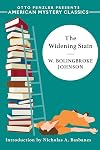
When The Widening Stain was released in 1942, the author was identified as one W. Bolingbroke Johnson, described as a middlebrow from Rabbit Hash, Kentucky, and a graduate of the Okmulgee Agricultural and Mechanical Institute. Now Rabbit Hash, Kentucky is a real place, and Okmulgee A&M is now part of Oklahoma State, but there was no W. Bolingbroke Johnson. The author was actually a Cornell University Romance language and classics professor and scholar named Morris Bishop, who never admitted show more that he penned this novel. Sadly, this was Bishop’s only mystery, although he did grace the world with many, many scholarly books, journal articles, comic poetry — and limericks, many in The New Yorker. Saturday Evening Post and Life magazines.
In The Widening Stain, 30-something librarian Gilda Gorham finds herself drawn into unobtrusively investigating what the police deemed an accidental death; however, Miss Gorham has her doubts. Clever and insightful, Miss Gorham realizes the murderer before the police — and what a thrilling ending!
Whether or not Bishop based these characters on real Cornell fixtures, you can judge; they seemed pretty true to life to me, having worked at the University of Miami. And the description of the university library is based on Cornell’s. Perhaps that’s why Bishop couldn’t admit to writing it! Too many angry colleagues! Or perhaps he thought it would lower his standing in academia. Either way, it’s a pity he didn’t give us more adventures with the intrepid Miss Gorham. I am grateful to Penzler Publishers and American Mysteries Classics for reissuing this fine mystery, even if it will be the only one by Bishop
In the interest of full disclosure, I received this book from NetGalley, Penzler Publishers and American Mysteries Classics in exchange for an honest review. show less
In The Widening Stain, 30-something librarian Gilda Gorham finds herself drawn into unobtrusively investigating what the police deemed an accidental death; however, Miss Gorham has her doubts. Clever and insightful, Miss Gorham realizes the murderer before the police — and what a thrilling ending!
Whether or not Bishop based these characters on real Cornell fixtures, you can judge; they seemed pretty true to life to me, having worked at the University of Miami. And the description of the university library is based on Cornell’s. Perhaps that’s why Bishop couldn’t admit to writing it! Too many angry colleagues! Or perhaps he thought it would lower his standing in academia. Either way, it’s a pity he didn’t give us more adventures with the intrepid Miss Gorham. I am grateful to Penzler Publishers and American Mysteries Classics for reissuing this fine mystery, even if it will be the only one by Bishop
In the interest of full disclosure, I received this book from NetGalley, Penzler Publishers and American Mysteries Classics in exchange for an honest review. show less
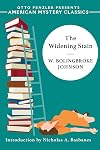
Apologies for this herky-jerky babble. First coffee of the day. Just finished this novel this morning as I couldn't quite do it last night. Had to know how it ended.
W. Bolingbroke Johnson of Rabbit Hash, Kentucky was really Morris Bishop, scholar, historian, essayist and translator. This is the only mystery he wrote, more's the pity. Yes, it's a bit dated (1942) perhaps that's part of why I liked it. You know, this could easily be a period play along the lines of "Good News". It would be a show more stretch to work in the jitterbug in lieu of the Varsity Drag as the story hardly leaves the library. Hmm. Maybe some clever playwright could make it into a murder mystery musical. Singing in the stacks like prisoners in Jailhouse Rock? I can see it. It sure feels like a play.
The story takes place in a university library (presumably Cornell; Bishop was the university historian). The central character is a plucky librarian, Gilda Gorham. Gilda is a keen observer, clever, and gutsy. Despite some undertones of sexism (the assumption at the end is she must marry a professor--it seems inevitable and almost arbitrary, as though she could just pull a name from a jar and be satisfied with the result) Two professors are found dead and a cherished manuscript is stolen. Gilda is no wilting hothouse flower. She solves the murders and confronts the killer with an admirable level of confidence.
The mystery withholds much information, so it's unlikely that one could unravel the whodunnit or at least the underlying motive before it is revealed. The motive is a bit of a surprise; can't say I've run across this explanation before. It's a good one. Would it hold up in modern times? I wonder.
One of the satellite professors in Gilda's world is a limerick fancier, so the book is dusted with clever limericks-- a perk if you like them and these are playful, not overly bawdy.
Conclusion: This would appeal to mystery lovers who enjoy an academic setting. I didn't know "bibliomystery" was a sub-genre. This is a fun one.
Bravo Otto Penzler for bringing it back for new audiences. show less
W. Bolingbroke Johnson of Rabbit Hash, Kentucky was really Morris Bishop, scholar, historian, essayist and translator. This is the only mystery he wrote, more's the pity. Yes, it's a bit dated (1942) perhaps that's part of why I liked it. You know, this could easily be a period play along the lines of "Good News". It would be a show more stretch to work in the jitterbug in lieu of the Varsity Drag as the story hardly leaves the library. Hmm. Maybe some clever playwright could make it into a murder mystery musical. Singing in the stacks like prisoners in Jailhouse Rock? I can see it. It sure feels like a play.
The story takes place in a university library (presumably Cornell; Bishop was the university historian). The central character is a plucky librarian, Gilda Gorham. Gilda is a keen observer, clever, and gutsy. Despite some undertones of sexism (the assumption at the end is she must marry a professor--it seems inevitable and almost arbitrary, as though she could just pull a name from a jar and be satisfied with the result) Two professors are found dead and a cherished manuscript is stolen. Gilda is no wilting hothouse flower. She solves the murders and confronts the killer with an admirable level of confidence.
The mystery withholds much information, so it's unlikely that one could unravel the whodunnit or at least the underlying motive before it is revealed. The motive is a bit of a surprise; can't say I've run across this explanation before. It's a good one. Would it hold up in modern times? I wonder.
One of the satellite professors in Gilda's world is a limerick fancier, so the book is dusted with clever limericks-- a perk if you like them and these are playful, not overly bawdy.
Conclusion: This would appeal to mystery lovers who enjoy an academic setting. I didn't know "bibliomystery" was a sub-genre. This is a fun one.
Bravo Otto Penzler for bringing it back for new audiences. show less
Two suspicious deaths and a rare-book theft at a university library would normally be the purview of the police, but in this case Gilda Gorham, chief cataloguer at the library, feels compelled to investigate. Normally I am skeptical of amateur sleuths, but Gilda was mostly sensible in her sleuthing. That said, the means by which she got the killer to confess was rather dangerous, and I wasn’t fond of the way that the solution was revealed. The introduction to this book in its American show more Mystery Classics reprint is really interesting and well worth reading, as is the book if you like mysteries set in an academic environment. show less
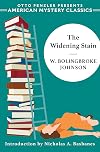
**I received an advanced listening copy of this book from the publisher through NetGalley in exchange for an honest review**
Johnson's mystery set in an academic library has layers of humor and intrigue, which makes this an overall enjoyable book. Gilda's character was delightful - parts stereotypical librarian but yet parts struggling to break away from the confines of 1940s mores - and I would have loved to read further books featuring Gilda as the amateur sleuth. The quirks of the show more professors and other library staff were amusing, and the mystery itself held my interest. A great example of a classic mystery novel, and I can see why Penzler Publishers selected this as part of the American Mystery Classics series.
As for the voice narration, it took me some time to adapt to the various voices and characterizations. Admittedly, it is not often I listen to a male reader - it just seems the books I listen to tend to be voiced by a female - so it takes me some time to adapt to the narration. However, once I did, I thought it was well done. show less
Johnson's mystery set in an academic library has layers of humor and intrigue, which makes this an overall enjoyable book. Gilda's character was delightful - parts stereotypical librarian but yet parts struggling to break away from the confines of 1940s mores - and I would have loved to read further books featuring Gilda as the amateur sleuth. The quirks of the show more professors and other library staff were amusing, and the mystery itself held my interest. A great example of a classic mystery novel, and I can see why Penzler Publishers selected this as part of the American Mystery Classics series.
As for the voice narration, it took me some time to adapt to the various voices and characterizations. Admittedly, it is not often I listen to a male reader - it just seems the books I listen to tend to be voiced by a female - so it takes me some time to adapt to the narration. However, once I did, I thought it was well done. show less
Lists
You May Also Like


Associated Authors
Statistics
- Works
- 31
- Also by
- 18
- Members
- 1,538
- Popularity
- #16,740
- Rating
- 3.7
- Reviews
- 21
- ISBNs
- 53
- Languages
- 3