
Michael Camille (1958–2002)
Author of Image on the Edge: The Margins of Medieval Art
About the Author
Michael Camille is Professor of Art History at the University of Chicago, where he has taught since completing his PhD at Cambridge University. He is the author of numerous articles on medieval art
Image credit: University of Chicago News Office
Works by Michael Camille
Associated Works
Printing the Written Word: The Social History of Books, Circa 1450-1520 (1991) — Contributor — 40 copies
Tagged
Common Knowledge
- Canonical name
- Camille, Michael
- Birthdate
- 1958-03-06
- Date of death
- 2002-04-29
- Gender
- male
- Education
- Peterhouse College, University of Cambridge (BA | 1980 | MA | 1982 | Ph.D | 1985)
- Occupations
- professor
art historian - Organizations
- University of Chicago
- Cause of death
- brain tumor
- Nationality
- UK
- Birthplace
- Keighley, Yorkshire, England, UK
- Places of residence
- Keighley, Yorkshire, England, UK (birth)
Chicago, Illinois, USA - Place of death
- Chicago, Illinois, USA
- Associated Place (for map)
- Keighley, Yorkshire, England, UK
Members
Reviews
Image on the Edge: The Margins of Medieval Art (Reaktion Books - Essays in Art and Culture) by Michael Camille
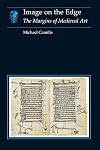
As someone who, upon having their first experience with a real medieval manuscript, was confounded when the title page had what appeared to be a projectile vomiting peacock doodled into the margins by some ancient monk, this book was very illuminating. This book offers a very interesting look at the meanings behind medieval artwork and structures, whilst also telling me what to make of the little half naked men on goats and vomiting peacocks which seemed to make a mockery of ancient show more manuscripts. Those monks must have gone a little stir crazy being stuck in their monastery all that time. :D show less
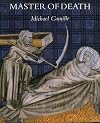
I really wanted to read this. It's full of impressive detail and deep research, but unfortunately it's also full of annoying postmodern rhetoric that only got in the way of what could have been a fascinating study. I gave up after reading about a third of the book.
Camille explores the marginal art of medieval manuscripts, usually discussing how it can be used to react against the main text of the manuscripts, allowing the margins of society to be represented on the margins of the page. There are times the book seems to not so much present an interpretation as go "Look what neat stuff I found!" but that might be forgivable given some of the stuff Camille found. There's a lot of pooping in the margins, apparently. (At one point he gives us the sentence, show more "His anus is indistinguishable from the many fascinating rectums paraded by monkeys throughout the book.") A fun read, though you often wish he could linger over an image and really go in-depth; it might help better substantiate his occasional broad generalizations. (But no index! Why do works of nonfiction without indices even exist?) show less
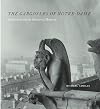
This unfortunately posthumous publication wonderfully examines the re-imagination and re-discovery of the past. After the enlightenment, the romantic 19th century re-discovered the artistic merits of the medieval, Gothic world, re-creating it and re-interpreting it according to the 19th century customs. Many of the famous gargoyles and chimeras of Notre Dame de Paris don't happen to be authentic from medieval times but have been designed and commissioned by the French equivalent to Ruskin, show more Eugène Viollet-le-Duc, whose own spleen had a major influence on the new old Notre Dame. He in turn was inspired by Victor Hugo and Jules Michelet. Every era creates its own image of the past - the out-of-date past is most visible in old museums which have failed to keep up with the times.
Notre Dame de Paris is unfortunately too modern. At the beginning of the new millennium, some of the chimeras became a new Disneyfied face lift, removing the psychological depth and turning them into family-friendly mascots ideal to sell merchandise. The author couldn't complain though, as he had marred his upper arm with unaesthetic tattoo versions of the chimeras. While I found his homosexual interpretation of the chimeras fascinating, I think it is too subjective, a case of the eyes of the beholder. What is missing is a chapter of those modern chimeras, the superheroes. Batman and Spider-Man on their perches looking down on the city below. The author was still alive when the vampire boom started. An obvious Gothic connection missed.
Overall, though, this is a great publication linking art history, medieval history and architecture which makes one dream about Paris. show less
Notre Dame de Paris is unfortunately too modern. At the beginning of the new millennium, some of the chimeras became a new Disneyfied face lift, removing the psychological depth and turning them into family-friendly mascots ideal to sell merchandise. The author couldn't complain though, as he had marred his upper arm with unaesthetic tattoo versions of the chimeras. While I found his homosexual interpretation of the chimeras fascinating, I think it is too subjective, a case of the eyes of the beholder. What is missing is a chapter of those modern chimeras, the superheroes. Batman and Spider-Man on their perches looking down on the city below. The author was still alive when the vampire boom started. An obvious Gothic connection missed.
Overall, though, this is a great publication linking art history, medieval history and architecture which makes one dream about Paris. show less
Lists
Awards

You May Also Like


Associated Authors
Statistics
- Works
- 12
- Also by
- 4
- Members
- 1,094
- Popularity
- #23,490
- Rating
- 4.1
- Reviews
- 11
- ISBNs
- 36
- Languages
- 5
- Favorited
- 2