
About the Author
Graham Russell Gao Hodges is the George Dorland Langdon, Jr. Professor of History and African-and Latin American Studies at Colgate University. He is author of many books, including David Ruggles: A Radical Black Abolitionist and the Underground Railroad in New York City and Taxi! A Social History show more of the New York City Cabdriver. show less
Works by Graham Russell Gao Hodges
Friends of Liberty: A Tale of Three Patriots, Two Revolutions, and the Betrayal that Divided a Nation: Thomas Jefferson, Thaddeus Kosciuszko, and Agrippa Hull (2008) 95 copies, 2 reviews
David Ruggles: A Radical Black Abolitionist and the Underground Railroad in New York City (2010) 39 copies
Slavery and Freedom in the Rural North: African Americans in Monmouth County, New Jersey, 1665-1865 (1997) 23 copies, 1 review
The Black loyalist directory : African Americans in exile after the American Revolution (1995) 15 copies
"Pretends to Be Free": Runaway Slave Advertisements from Colonial and Revolutionary New York and New Jersey (1994) 13 copies
Anna May Wong 1 copy
Associated Works
Roberts' Guide for Butlers and Household Staff (1827) — Editor, some editions — 159 copies, 2 reviews
Tagged
Common Knowledge
- Other names
- Hodges, Graham
Russell, Graham - Gender
- male
- Education
- New York University (PhD|1982)
- Organizations
- Colgate University
- Nationality
- USA
- Associated Place (for map)
- USA
Members
Reviews
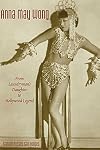
In Anna May Wong: From Laundryman’s Daughter to Hollywood Legend, Graham Russell Gao Hodges examines Wong’s film career, arguing that “she was caught between caustic denunciations of her career and the hegemonic power of Orientalism” (pg. xviii). Despite this, “she became a unique actor whose transnational life and career crossed political, racial, and sexual borders” (pg. xviii). Hodges structures his biography around Wong’s film career, drawing upon archival records, show more published accounts in the press, and more, though he acknowledges that her complicated legacy has led her own relatives to withhold access to family archives. Despite this, her letters in other collections and her candor in interviews makes it possible for Hodges to forefront Wong’s own voice in his account.
Describing her upbringing, Hodges writes, “Although she always identified herself as Chinese, her personality was open to and partly shaped by other Americans. Eventually her search for identity pushed Anny May into travel and the transient reality of film” (pg. 5). Turning to her early film career in her teens, Hodges argues, “While Anna May lived in a Chinese home, she worked in a western industry, one whose product further alienated her from her birth culture. Parental tensions, domestic grief, youthful rebellion, and celluloid fantasies pushed Anna May far into hidden racial and personal grief” (pg. 23).
Hodges argues of Wong’s input into her on-screen persona, “By using her emotions, hairstyles, choice of costumes, gestures, and words, she was staging a Chinese persona on the screen in ways that the Western director and screenwriter were unlikely to understand. As a teenager, Anna May manipulated the western myths of Madame Butterfly to represent Asian cultural currents. In the midst of this newfound glory, there were troubling signs. Her role as a sexually available Chinese woman, ready to be exploited by an older American businessman, would eventually earn her resentful criticism in China” (pg. 34). He continues, “The dilemma for Anna May Wong was increasingly obvious… her chances of moving up from supporting or featured player to star were improbably. Production codes against interracial kissing meant that she could not graduate to star billing, even in film with Orientalist themes” (pg. 57). Discussing her interactions with the public, both press and fans, Hodges writes, “Studious respected her professionalism, noting that she was always prepared, and never muffed her lines. Journalists found her charming, accessible, and witty… It is not too much of a jump to argue that Anna May Wong, the laundryman’s daughter, was one of the most sophisticated women in the world” (pgs. 116-117). Hodges argues, “Anna May was a consummate professional. As a Chinese American woman who had pondered her identity for years, she had the talent and intelligence to portray a good wife, mother, worker, and, unquestionably, the victim of her husband’s pomposity and deceit” (pg. 137). Despite her skill, the studios declined to cast her in the feature adaptation of Pearl Buck’s The Good Earth, though the film made excessive use of yellow-face and so she inadvertently avoided the type of work she was then looking to grow beyond. After developing a career in Hollywood, Wong turned to Europe for new opportunity. Hodges writes, “Anna May’s acting gave her special freedom to fashion her own story. Coming to Berlin was her first big step in making her own transnational identity, which surpassed the keen, city-bound observations of the flaneur” (pg. 70). Though she found greater freedom in Europe, she still had to contend with centuries of imperialist stereotypes and racism in the film industry (pg. 80).
Meanwhile, in China, her roles had earned the ire of the Nationalist Government, though she still appealed to a mass audience (pg. 111). Her connections with respected Chinese film and theatre stars as well as the Chinese ambassador, coupled with her relief work in the U.S. for the Chinese affected by Japanese imperialism, helped to earn her greater respect in the country of her ancestors (pg. 166). She continued to support the Chinese cause in the war against Japan throughout the 19402 in interviews and even promotional cookbooks advertising Chinese cuisine (pg. 185). Despite this, Madame Chiang Kai-Shek’s snub of Wong resulted in “the injection of elitist Chinese Republican attitudes about Anna May Wong into American thought. Soong Meiling’s ill regard of Anna May was later adopted by left-wing scholars in the United States and is largely responsible for the eclipse of her reputation in America” (pg. 188). Hodges concludes, “Because Anna May’s legacy is Janus-faced, with meaning inside and outside of Asian American society, recasting her memory requires more breadth and subtlety than is needed for the worthy men and women who were pathbreakers in other fields” (pg. 211). Only recently have scholars and the public begun to appreciate the nuance of her career and her place in society. Hodges work is instrumental in refashioning that legacy and, with Gemma Chan and Nina Yang Bongiovi’s forthcoming Anna May Wong biopic based on Hodges’ book, hopefully her career will continue to receive the attention it deserves. show less
Describing her upbringing, Hodges writes, “Although she always identified herself as Chinese, her personality was open to and partly shaped by other Americans. Eventually her search for identity pushed Anny May into travel and the transient reality of film” (pg. 5). Turning to her early film career in her teens, Hodges argues, “While Anna May lived in a Chinese home, she worked in a western industry, one whose product further alienated her from her birth culture. Parental tensions, domestic grief, youthful rebellion, and celluloid fantasies pushed Anna May far into hidden racial and personal grief” (pg. 23).
Hodges argues of Wong’s input into her on-screen persona, “By using her emotions, hairstyles, choice of costumes, gestures, and words, she was staging a Chinese persona on the screen in ways that the Western director and screenwriter were unlikely to understand. As a teenager, Anna May manipulated the western myths of Madame Butterfly to represent Asian cultural currents. In the midst of this newfound glory, there were troubling signs. Her role as a sexually available Chinese woman, ready to be exploited by an older American businessman, would eventually earn her resentful criticism in China” (pg. 34). He continues, “The dilemma for Anna May Wong was increasingly obvious… her chances of moving up from supporting or featured player to star were improbably. Production codes against interracial kissing meant that she could not graduate to star billing, even in film with Orientalist themes” (pg. 57). Discussing her interactions with the public, both press and fans, Hodges writes, “Studious respected her professionalism, noting that she was always prepared, and never muffed her lines. Journalists found her charming, accessible, and witty… It is not too much of a jump to argue that Anna May Wong, the laundryman’s daughter, was one of the most sophisticated women in the world” (pgs. 116-117). Hodges argues, “Anna May was a consummate professional. As a Chinese American woman who had pondered her identity for years, she had the talent and intelligence to portray a good wife, mother, worker, and, unquestionably, the victim of her husband’s pomposity and deceit” (pg. 137). Despite her skill, the studios declined to cast her in the feature adaptation of Pearl Buck’s The Good Earth, though the film made excessive use of yellow-face and so she inadvertently avoided the type of work she was then looking to grow beyond. After developing a career in Hollywood, Wong turned to Europe for new opportunity. Hodges writes, “Anna May’s acting gave her special freedom to fashion her own story. Coming to Berlin was her first big step in making her own transnational identity, which surpassed the keen, city-bound observations of the flaneur” (pg. 70). Though she found greater freedom in Europe, she still had to contend with centuries of imperialist stereotypes and racism in the film industry (pg. 80).
Meanwhile, in China, her roles had earned the ire of the Nationalist Government, though she still appealed to a mass audience (pg. 111). Her connections with respected Chinese film and theatre stars as well as the Chinese ambassador, coupled with her relief work in the U.S. for the Chinese affected by Japanese imperialism, helped to earn her greater respect in the country of her ancestors (pg. 166). She continued to support the Chinese cause in the war against Japan throughout the 19402 in interviews and even promotional cookbooks advertising Chinese cuisine (pg. 185). Despite this, Madame Chiang Kai-Shek’s snub of Wong resulted in “the injection of elitist Chinese Republican attitudes about Anna May Wong into American thought. Soong Meiling’s ill regard of Anna May was later adopted by left-wing scholars in the United States and is largely responsible for the eclipse of her reputation in America” (pg. 188). Hodges concludes, “Because Anna May’s legacy is Janus-faced, with meaning inside and outside of Asian American society, recasting her memory requires more breadth and subtlety than is needed for the worthy men and women who were pathbreakers in other fields” (pg. 211). Only recently have scholars and the public begun to appreciate the nuance of her career and her place in society. Hodges work is instrumental in refashioning that legacy and, with Gemma Chan and Nina Yang Bongiovi’s forthcoming Anna May Wong biopic based on Hodges’ book, hopefully her career will continue to receive the attention it deserves. show less
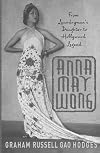
Anna May Wong? Try Anna May Goddess. What a fantastic and informative read this was, about an actress I really admire. She was a pioneer, and I had no idea just how much unfairness she faced. There was the racist backdrop of course, which was particularly bad against Chinese-Americans from roughly 1870 to 1940, and author Graham Hodges provides excellent context with the laws and attitudes of the times. In Hollywood there were limits on roles she could play, and she was often confined to show more stereotypes, not allowed to kiss a white actor onscreen, and almost always needing to die at the end, which Hodges shows us again and again as he marches through her filmography. Her ironic and casual comment about it was that her epitaph should read “She died a thousand deaths,” but she internalized her disappointments.
Because Hollywood was producing movies that contained overt or subtle racism against Asians, and often had white actors in ‘yellow-face’ playing them, Wong also faced a lot of scorn and backlash from China, and with overseas Chinese intellectuals. She was also Cantonese, which was a negative with the Nationalist Chinese government, and they were also shocked and critical of her outward displays of sexuality, her flapper lifestyle, and how much skin she showed. Early on, her father also thought she was ‘disgracing the family’, and pushed her to get married. She faced a triple whammy of racism, sexism, and cultural conservatism. Wong rejected Rudyard Kipling’s line, oft-quoted in movies of the day about the dangers of racial mixing and miscegenation, that “East is East and West is West, and never the twain shall meet,” and herself drew the best from both worlds, but was judged harshly in both.
It’s all a bit heartbreaking to read, because she carried herself with such dignity and grace, often incorporated subtle elements of Chinese culture into her films, and always fought for better parts and better movies. She was cheerful, charming, and endearing, both publically and privately. She spent years in Berlin and London, and travelled all over Europe, learning multiple languages and moving in elite circles. She was fashionable, cosmopolitan, and sophisticated, and yet pragmatic and self-effacing. She was a third generation American, and one of the great events of her life was returning to her ancestral home in China in 1936, despite the criticism and in one case, getting rocks thrown at her.
Anna May Wong’s biggest disappointment of her professional life was when the lead roles for the film version of Pearl Buck’s ‘The Good Earth’ were given to white actors, as casting director Albert Lewin argued that “despite their ethnicity, they [Asian-American actors] did not fit his conception of what Chinese people looked like.” Good Lord. And so, despite frequently garnering rave reviews from critics in America and Europe, she was never quite able to take the next step into being a superstar.
Hodges does a good job with taking us through her life, in chapters that align well to its phases. It was fascinating to me that she had fallen in love with movies at an early age, playing hooky to go the cinema, hanging around film shoots at age 9, and, showing her persistence early on, getting her first uncredited part at age 14. As her career developed she played many small roles, servants, mistresses, and prostitutes, but she put effort into learning aspects of even the smallest roles before performing, and made the most of them. She broke through in the ‘The Toll of the Sea’ (1922) at age 17, and then later in ‘The Thief of Bagdad’ (1924). She played with major stars and stood up well to them, e.g. with Marlene Dietrich in ‘Shanghai Express’ (1932). I love how Hodges lists her entire body of work in the appendices, and it gave me plenty of films to explore.
He also covers her personal life in respectful ways that are honest, and not sensationalistic. Anna May Wong was sexually free and had affairs with several white Hollywood directors, Tod Browning among them, and the ‘love of her life’, Eric Maschwitz. She also may have had a dalliance with Marlene Dietrich, and as Hodges puts it “if anything, the tryst demonstrates Anna May’s adventurous character and willingness to cross boundaries.” She was athletic; swimming, skiing, riding horses, and playing tennis. She loved carousing, and often returned from nights out at 7 a.m. Unfortunately, she drank too much, and starting at the age of 43 would have liver trouble, leading to a tragically early demise at 56.
Whew. Someone really should make a movie about this woman.
Hodges’ book is meticulously researched and very well annotated, and it’s clear a great deal of effort went into it. The photographs included are wonderful, and it would have been nice to see a lot more, particularly as others are alluded to regularly in the text. He also could have done with better editing; there are places with repetition and a level of detail which could have been excised. With that said, you can see how inspiring his subject was to me, and I really appreciated how much information he gathered about her, and from such a wide range of sources. Not my usual type of read, but maybe it ought to be. show less
Because Hollywood was producing movies that contained overt or subtle racism against Asians, and often had white actors in ‘yellow-face’ playing them, Wong also faced a lot of scorn and backlash from China, and with overseas Chinese intellectuals. She was also Cantonese, which was a negative with the Nationalist Chinese government, and they were also shocked and critical of her outward displays of sexuality, her flapper lifestyle, and how much skin she showed. Early on, her father also thought she was ‘disgracing the family’, and pushed her to get married. She faced a triple whammy of racism, sexism, and cultural conservatism. Wong rejected Rudyard Kipling’s line, oft-quoted in movies of the day about the dangers of racial mixing and miscegenation, that “East is East and West is West, and never the twain shall meet,” and herself drew the best from both worlds, but was judged harshly in both.
It’s all a bit heartbreaking to read, because she carried herself with such dignity and grace, often incorporated subtle elements of Chinese culture into her films, and always fought for better parts and better movies. She was cheerful, charming, and endearing, both publically and privately. She spent years in Berlin and London, and travelled all over Europe, learning multiple languages and moving in elite circles. She was fashionable, cosmopolitan, and sophisticated, and yet pragmatic and self-effacing. She was a third generation American, and one of the great events of her life was returning to her ancestral home in China in 1936, despite the criticism and in one case, getting rocks thrown at her.
Anna May Wong’s biggest disappointment of her professional life was when the lead roles for the film version of Pearl Buck’s ‘The Good Earth’ were given to white actors, as casting director Albert Lewin argued that “despite their ethnicity, they [Asian-American actors] did not fit his conception of what Chinese people looked like.” Good Lord. And so, despite frequently garnering rave reviews from critics in America and Europe, she was never quite able to take the next step into being a superstar.
Hodges does a good job with taking us through her life, in chapters that align well to its phases. It was fascinating to me that she had fallen in love with movies at an early age, playing hooky to go the cinema, hanging around film shoots at age 9, and, showing her persistence early on, getting her first uncredited part at age 14. As her career developed she played many small roles, servants, mistresses, and prostitutes, but she put effort into learning aspects of even the smallest roles before performing, and made the most of them. She broke through in the ‘The Toll of the Sea’ (1922) at age 17, and then later in ‘The Thief of Bagdad’ (1924). She played with major stars and stood up well to them, e.g. with Marlene Dietrich in ‘Shanghai Express’ (1932). I love how Hodges lists her entire body of work in the appendices, and it gave me plenty of films to explore.
He also covers her personal life in respectful ways that are honest, and not sensationalistic. Anna May Wong was sexually free and had affairs with several white Hollywood directors, Tod Browning among them, and the ‘love of her life’, Eric Maschwitz. She also may have had a dalliance with Marlene Dietrich, and as Hodges puts it “if anything, the tryst demonstrates Anna May’s adventurous character and willingness to cross boundaries.” She was athletic; swimming, skiing, riding horses, and playing tennis. She loved carousing, and often returned from nights out at 7 a.m. Unfortunately, she drank too much, and starting at the age of 43 would have liver trouble, leading to a tragically early demise at 56.
Whew. Someone really should make a movie about this woman.
Hodges’ book is meticulously researched and very well annotated, and it’s clear a great deal of effort went into it. The photographs included are wonderful, and it would have been nice to see a lot more, particularly as others are alluded to regularly in the text. He also could have done with better editing; there are places with repetition and a level of detail which could have been excised. With that said, you can see how inspiring his subject was to me, and I really appreciated how much information he gathered about her, and from such a wide range of sources. Not my usual type of read, but maybe it ought to be. show less
A sort of joint biography of Jefferson, Kósciuszko, and Agrippa "Grippy" Hull, a free black man who served Kósciuszko during the Revolution and went on to lead a successful life in Stockbridge, Massachusetts after the war. Nash and Hodges focus on the connections between the three men, though Hull by necessity gets short shrift given the dearth of surviving documentation of his life (and the authors do the thing that annoys me most when writing about someone in this situation: "supposing" show more that Hull "must have read" such and such, or presuming that he felt or acted in ways that we simply cannot know).
The bulk of the book is concerned with Jefferson's handling of Kósciuszko's will, which was designed to allow Jefferson to use the proceeds from Kósciuszko's American estates to fund the education and manumission of Jefferson's slaves and others. Jefferson decided he didn't want to abide by these terms, and spent several years trying to figure out how to extricate himself from the wishes of his longtime friend. The legal maneuvering was complex, and Nash and Hodges ably reconstruct the narrative of this period.
Imperfect, but very interesting nonetheless, and for its account of the Jefferson-Kósciuszko estate wranglings, quite worth a read. show less
The bulk of the book is concerned with Jefferson's handling of Kósciuszko's will, which was designed to allow Jefferson to use the proceeds from Kósciuszko's American estates to fund the education and manumission of Jefferson's slaves and others. Jefferson decided he didn't want to abide by these terms, and spent several years trying to figure out how to extricate himself from the wishes of his longtime friend. The legal maneuvering was complex, and Nash and Hodges ably reconstruct the narrative of this period.
Imperfect, but very interesting nonetheless, and for its account of the Jefferson-Kósciuszko estate wranglings, quite worth a read. show less
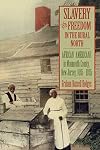
Focusing on the development of a single African American community in eastern New Jersey, Professor Hodges examines the experience of slavery and freedom in the rural North. This unique social history addresses many long held assumptions about the experience of slavery and emancipation outside the plantation South. Hodges weaves an intricate pattern of life and death, work and worship, from the earliest settlement to the end of the Civil War.
Lists
Entertainment (1)
You May Also Like


Associated Authors
Statistics
- Works
- 15
- Also by
- 3
- Members
- 413
- Popularity
- #58,990
- Rating
- 3.7
- Reviews
- 7
- ISBNs
- 46