
Poppy Adams
Author of The Sister
About the Author
Image credit: Rob Sturges
Works by Poppy Adams
Her Dad's Best Friend 2 copies
"Motylek". 1 copy
Tagged
Common Knowledge
- Birthdate
- 1972-10-29
- Gender
- female
- Education
- Durham University
- Occupations
- documentary filmmaker
author - Organizations
- Discovery Channel
British Broadcasting Corporation - Agent
- Judith Murray (Greene and Heaton)
- Nationality
- UK
- Places of residence
- London, England, UK
- Associated Place (for map)
- England, UK
Members
Reviews
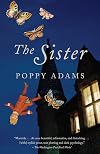
Two sisters reunited after a mysterious grudge kept them apart for decades, an aristocratic manor house fallen into disrepair, family secrets galore. Sounds like the formula for a great read! But The Sister also takes a few unexpected left turns with the story. The narrator, Ginny, is an unreliable narrator, but not because she's duplicitous or manipulative; instead, she just doesn't understand people. She can talk endlessly about her scientific observations of moths, and she can accurately show more observe the actions of the people around her, but when it comes to understanding their feelings and motives, she simply cannot see what is right in front of her.
Ginny is a fascinating character. It's hard to make someone so oblivious both believable and sympathetic, but author Poppy Adams does a great job. The spookiness of the setting also provides a ton of atmosphere -- the isolated house, the scientific specimens strewn throughout the rooms, the brief interventions by others whose motives are completely unfathomable to Ginny and thus to us. As a result, though, the other sister, Vivian, suffers as a character because we never quite know what her role in the story is. Vivian has problems of her own, clearly, but were her feelings about the family any more accurate than Ginny's?
Altogether, this was an interesting puzzle of a story with fascinatingly ambiguous characters, but a little too ambiguous to be entirely satisfying. show less
Ginny is a fascinating character. It's hard to make someone so oblivious both believable and sympathetic, but author Poppy Adams does a great job. The spookiness of the setting also provides a ton of atmosphere -- the isolated house, the scientific specimens strewn throughout the rooms, the brief interventions by others whose motives are completely unfathomable to Ginny and thus to us. As a result, though, the other sister, Vivian, suffers as a character because we never quite know what her role in the story is. Vivian has problems of her own, clearly, but were her feelings about the family any more accurate than Ginny's?
Altogether, this was an interesting puzzle of a story with fascinatingly ambiguous characters, but a little too ambiguous to be entirely satisfying. show less
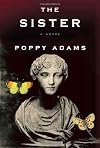
I enjoyed Poppy Adams's debut novel a great deal. Shortly after meeting the narrator, Ginny, we share her questions, "Why is her sister Vivi coming home now after a nearly 5 decade absence? What does she want?" Soon we discover that something seems off with Ginny. Her viewpoint is skewed in a way that is hard to put a finger on but is nevertheless quite obviously erratic.
The story takes place over a few days after Vivi's return, but also jumps back in time to paint a portrait of a very odd show more family who by turns seem eccentric and crazy. The setting of a mostly closed off crumbling gothic mansion with no furniture adds to the creepy feeling.
There is a fair amount of detailed focus on Ginny and her father's study of moths. Some readers complain about that emphasis, but I found it added to the story generally. There was a time or two towards the end where I felt that the detail interrupted the narrative flow, but I also felt that having flow interrupted by a focus on moths was true for Ginny as well.
We never hear another voice besides Ginny's which makes this all the more enoyable because the ground is always shifting a little underfoot as we strain to understand what is true and what is off due to the weird filter of Ginny's voice. Given Adams's strict adherence to never showing us a viewpoint other than Ginny's, I feel okay about there being many unanswered questions at the end of this book.
In some ways, this book is hard to review without giving away details that should be left for the reader to discover in the story itself. Let me just say, I sped through it in my eagerness to figure it out.
Review pertains to Advance Reader's Edition. show less
The story takes place over a few days after Vivi's return, but also jumps back in time to paint a portrait of a very odd show more family who by turns seem eccentric and crazy. The setting of a mostly closed off crumbling gothic mansion with no furniture adds to the creepy feeling.
There is a fair amount of detailed focus on Ginny and her father's study of moths. Some readers complain about that emphasis, but I found it added to the story generally. There was a time or two towards the end where I felt that the detail interrupted the narrative flow, but I also felt that having flow interrupted by a focus on moths was true for Ginny as well.
We never hear another voice besides Ginny's which makes this all the more enoyable because the ground is always shifting a little underfoot as we strain to understand what is true and what is off due to the weird filter of Ginny's voice. Given Adams's strict adherence to never showing us a viewpoint other than Ginny's, I feel okay about there being many unanswered questions at the end of this book.
In some ways, this book is hard to review without giving away details that should be left for the reader to discover in the story itself. Let me just say, I sped through it in my eagerness to figure it out.
Review pertains to Advance Reader's Edition. show less
In her debut novel, The Sister, former BBC producer Poppy Adams used her photographer’s eye and mind to conjure up a unique tale of two sisters, Ginny and Viv, and their lifetime of secrets that tore their family apart. The story opened with Ginny, in her seventies, waiting for the arrival of her sister, Vivien, who she has not seen in almost fifty years. Once Vivien arrived, the reader must decipher between a past and present story line that unravels the disastrous family secrets – and show more keeps the reader wondering which sister is in the right until the last few chapters.
The Hitchcock-weird feeling of the characters can be downright bone chilling. Ginny narrated the story, and throughout her tale, little idiosyncrasies cropped up about Ginny, like her wearing of two wristwatches – one standard and one digital – that she meticulously checked for accuracy against her bedroom alarm clock. Or the drawer full of cannabis tea bags that she maintained to help her with arthritic pain but never liked to use because it caused a lack of symmetry in the drawer. Adams “spoon fed” Ginny’s personality quarks to the reader throughout The Sister, resulting in the nagging hunch that Ginny may not be a reliable narrator.
Then Adams, through Ginny’s narration, drew a picture of Vivien that was equally unsettling. Vivien was selfish and attention seeking, often manipulating her relationship with Ginny for her own gains. Ginny had a major inferiority complex with her sister, and the way Vivien was depicted, one could see why: smart, beautiful and full of creative ideas. You never get the sense though that Viv was a good person (through Ginny’s eyes), but the reader cannot doubt the love between them.
The Sister has the making of a great novel, especially for readers of Gothic literature: an old house, eccentric characters and a secret to be discovered. However, it has an obvious flaw – The Moths. The sisters’ father, Clive, was an expert in moths and taught his craft to Ginny when she was a teenager. Throughout the first half of the novel, The Moths are major characters. The reader learned about different types of moths, their importance to scientific research, how one caught them, how to kill them, how they transform from a caterpillar into a moth and what’s inside the cocoon during the transformation process.
All of this scientific knowledge took up pages of the story. While it was well written, it bogged the story down. When the reader finished, you can see how and why moths were important to The Sister’s plot, but perhaps Adams could have arrived at this point in different way. I almost abandoned The Sister because of the darned moths – and though I am glad I did not, I still have to shake my head about why they took up such a prominent place during the first half of the novel.
Once you get past The Moths, the suspense and mystery built masterfully into a real page-turner. I would recommend The Sister to readers with that disclaimer: have patience during the first half of the book and then prepare to be awed during the second. Adams made a promising debut, and I look forward to her future stories. show less
The Hitchcock-weird feeling of the characters can be downright bone chilling. Ginny narrated the story, and throughout her tale, little idiosyncrasies cropped up about Ginny, like her wearing of two wristwatches – one standard and one digital – that she meticulously checked for accuracy against her bedroom alarm clock. Or the drawer full of cannabis tea bags that she maintained to help her with arthritic pain but never liked to use because it caused a lack of symmetry in the drawer. Adams “spoon fed” Ginny’s personality quarks to the reader throughout The Sister, resulting in the nagging hunch that Ginny may not be a reliable narrator.
Then Adams, through Ginny’s narration, drew a picture of Vivien that was equally unsettling. Vivien was selfish and attention seeking, often manipulating her relationship with Ginny for her own gains. Ginny had a major inferiority complex with her sister, and the way Vivien was depicted, one could see why: smart, beautiful and full of creative ideas. You never get the sense though that Viv was a good person (through Ginny’s eyes), but the reader cannot doubt the love between them.
The Sister has the making of a great novel, especially for readers of Gothic literature: an old house, eccentric characters and a secret to be discovered. However, it has an obvious flaw – The Moths. The sisters’ father, Clive, was an expert in moths and taught his craft to Ginny when she was a teenager. Throughout the first half of the novel, The Moths are major characters. The reader learned about different types of moths, their importance to scientific research, how one caught them, how to kill them, how they transform from a caterpillar into a moth and what’s inside the cocoon during the transformation process.
All of this scientific knowledge took up pages of the story. While it was well written, it bogged the story down. When the reader finished, you can see how and why moths were important to The Sister’s plot, but perhaps Adams could have arrived at this point in different way. I almost abandoned The Sister because of the darned moths – and though I am glad I did not, I still have to shake my head about why they took up such a prominent place during the first half of the novel.
Once you get past The Moths, the suspense and mystery built masterfully into a real page-turner. I would recommend The Sister to readers with that disclaimer: have patience during the first half of the book and then prepare to be awed during the second. Adams made a promising debut, and I look forward to her future stories. show less
The fabric of this story is lepidoptery. If you are not interested in moths then don't read this book. It's OK but nothing special.
Lists
Awards


You May Also Like


Statistics
- Works
- 5
- Members
- 892
- Popularity
- #28,723
- Rating
- 3.4
- Reviews
- 81
- ISBNs
- 35
- Languages
- 7
- Favorited
- 2