

Kenneth E. Kirk (1886–1954)
Author of The Vision of God, The Christian Doctrine of the Summum Bonum
About the Author
Image credit: Kenneth Kirk on right
Works by Kenneth E. Kirk
Conscience and Its Problems: An Introduction to Casuistry (Library of Theological Ethics) (1999) 32 copies, 1 review
The Threshold of Ethics 2 copies
Associated Works
Tagged
Common Knowledge
- Canonical name
- Kirk, Kenneth E.
- Legal name
- Kirk, Kenneth Escott
- Birthdate
- 1886
- Date of death
- 1954
- Gender
- male
- Occupations
- Bishop of Oxford (1937-1954)
Members
Reviews

This book has two problems which have to be taken into account when reading it.
The first is that it was written as a response to a very specific issue (the formation of the Church of South India which allowed for the continuation without reordination of non-episcopally ordained ministers) which has since passed into history (with the passage of time, all priests in the Church are now episcopally ordained). Similar issues affect other intercommunion discussions, but not to the same degree, as show more institutional fusion is not in issue.
The second is that the current assessment of the first and second-century sources has changed. In particular, "Hippolytus" Apostolic Tradition would now be dated later and would not be considered as reliable evidence of second-century uses. This means that one has to read Dom Gregory Dix's contribution with some care. Modern views would probably downplay the degree of continuity with Jewish practice which Dix argued for.
However, the book remains both readable and valuable, especially for the contributions by Farrer and Dix, although they have to be read with awareness of more recent contributions to the discussion. In particular, Dix's separation of the issue of apostolicity from that of a fixed structure of church government and his emphasis on the very early period's theology of addition, rather than succession to the apostolate, which ran contrary to the style of "root and branch" theories beloved of earlier Anglo-Catholics. show less
The first is that it was written as a response to a very specific issue (the formation of the Church of South India which allowed for the continuation without reordination of non-episcopally ordained ministers) which has since passed into history (with the passage of time, all priests in the Church are now episcopally ordained). Similar issues affect other intercommunion discussions, but not to the same degree, as show more institutional fusion is not in issue.
The second is that the current assessment of the first and second-century sources has changed. In particular, "Hippolytus" Apostolic Tradition would now be dated later and would not be considered as reliable evidence of second-century uses. This means that one has to read Dom Gregory Dix's contribution with some care. Modern views would probably downplay the degree of continuity with Jewish practice which Dix argued for.
However, the book remains both readable and valuable, especially for the contributions by Farrer and Dix, although they have to be read with awareness of more recent contributions to the discussion. In particular, Dix's separation of the issue of apostolicity from that of a fixed structure of church government and his emphasis on the very early period's theology of addition, rather than succession to the apostolate, which ran contrary to the style of "root and branch" theories beloved of earlier Anglo-Catholics. show less

These Bampton lectures for 1928 by one of the greatest Anglican moral theologians bring together liturgy, spirituality, theology and ethics to trace the development of Christian thinking and argue that because 'the end of life is the vision of God' the highest prerogative of the Christian is the activity of worship and that only there do we find the key to ethical problems. Note that this work appears also in an abridged version.
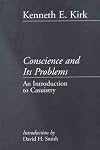
Classic Anglican discussion of conscience first published in 1927. Part One is major section introducing idea of conscience (esp ch 1) and Part Two shows practical application. This reprint includes introductory essay on Kirk’s work.
The Vision of God: The Christian Doctrine of the Summum Bonum : The Bampton Lectures for 1928 by Kenneth E. Kirk

Christian doctrine of summum bonum
Lists
You May Also Like


Associated Authors
Statistics
- Works
- 25
- Also by
- 1
- Members
- 305
- Popularity
- #77,180
- Rating
- 3.0
- Reviews
- 5
- ISBNs
- 14