
Valeri R. Helterbran
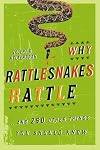
Author of Why Rattlesnakes Rattle: ...and 250 Other Things You Should Know
Works by Valeri R. Helterbran
Tagged
Common Knowledge
- Gender
- female
- Occupations
- school principal
Associate professor, Professional Studies in Education, Indiana University of Pennsylvania
non-fiction writer - Short biography
- Valeri Russell Helterbran, educator and author, is an associate professor in the Professional Studies in Education Department at Indiana University of Pennsylvania in Indiana, Pennsylvania. She is a lifelong educator who has taught at the elementary and secondary levels.
In addition, she was a middle-school and high-school principal for almost two decades. She was named as 2005 Pennsylvania Teacher Educator of the Year by The Pennsylvania Association of Colleges and Teacher Educators.
Author of two additional books, she also publishes a weekly column in her local newspaper, The Ligonier Echo, called “Things Every Kid Should Know.”
A native of Virginia, Valeri now lives in Ligonier, Pennsylvania, with her husband….and she loves her black pug, Rambles. - Nationality
- USA
- Birthplace
- Virginia, USA
- Places of residence
- Ligonier, Pennsylvania, USA
- Associated Place (for map)
- USA
Members
Reviews
Usually, I rather enjoy books like this, these little collections of random interesting facts, but I have to say, this one kind of left me cold. I think it's mostly that it's too heavy on the "random" part and too light on the "interesting" part. There are certainly a few examples of the sort of thing I expect from such a book: little bits of information that make me go, "Huh, I didn't know that!" and feel ever-so-slightly richer for having corrected that lack. But a lot of it is stuff that show more really is just common knowledge (e.g."What is a lobbyist?", "What is a blog?"), or else so obscure and odd that I find it difficult to imagine hardly anyone actually asking the questions it somehow feels the need to answer (e.g. "Why do we swear by Alexander's beard?"). Some of the questions seem like surely they must have interesting stories behind them, to merit inclusion, but quickly disappoint. Like, why does Pittsburgh have an "h" on the end of it? Eh, well, it just does. For a while, the post office tried to change as part of an attempt to make place name spellings more regular, but people who lived there didn't like it, so they changed it back. Gosh, riveting stuff! Thanks for telling me that! And probably at least half of the entries just define or give the etymological histories of various words and phrases, some of which do have fairly colorful histories behind them and some of which, um, don't. Even the more interesting subjects are presented in a writing style that's not making any particular attempt to be engaging, though. And I'm afraid the pictures don't help, either. They're all small, muddy black-and-white photos, few of which illustrate anything useful. Many of them relate only very tangentially to things mentioned in passing, enough so that I suspect some of them are an attempt to inject a sense of playfulness that's missing in the text, but mostly they just make the whole thing look amateurish.
All of which probably sounds more relentlessly negative than I really want to be. Because, honestly, it's not bad. I did learn a few things from it, and it's probably a perfectly fine book to keep in the bathroom and browse through while you're taking care of business, if that's something you like to do. It's just that, if you want a collection of interesting facts you didn't know and probably should have, there are way better examples out there. show less
All of which probably sounds more relentlessly negative than I really want to be. Because, honestly, it's not bad. I did learn a few things from it, and it's probably a perfectly fine book to keep in the bathroom and browse through while you're taking care of business, if that's something you like to do. It's just that, if you want a collection of interesting facts you didn't know and probably should have, there are way better examples out there. show less
 This review was written for LibraryThing Early Reviewers.
This book is a series of short (1-2 page) articles answering fairly specific questions (e.g., "What is Gout?" "Who Was Vince Lombardi?"), grouped into 7 chapters by theme (Nature, The Human Body, Language, Holidays, Humanities/Culture, Cuisine, and Geography). In its original incarnation, the book was a newspaper column, and it never really gets away from that--the answers are short and exactly to the point, with little room for long excursus on related topics (though this, to the author's show more credit, does occasionally happen). I didn't detect any factual errors in the book, but it was a rather lifeless affair overall.
When one compares it to the Uncle John's Bathroom Reader series (and let's be honest, that's where a book like this will be read), it falls a bit flat. The style is much more educational and straightforward (unsurprising, given the author's background in education), without the flair for humor or entertainment that the Bathroom Readers possess in spades; it also lacks the longer articles in the BR series (sometimes 3-4 pages long) that allow for more in-depth coverage of a topic.
The formatting, too, is a bit prosaic; the spacing of the text rows makes for relatively easy reading but it's dull to look at, and the rather mundane black and white photography inserted only adds to the amateurish feel of the whole thing. A redesign of the interior would probably go a long way toward making the book more appealing, as well as a tweaking of the style and depth of the articles.
It's not a bad book; it's just not a great one. Give it a read once you've burned through Uncle John and the like. show less
When one compares it to the Uncle John's Bathroom Reader series (and let's be honest, that's where a book like this will be read), it falls a bit flat. The style is much more educational and straightforward (unsurprising, given the author's background in education), without the flair for humor or entertainment that the Bathroom Readers possess in spades; it also lacks the longer articles in the BR series (sometimes 3-4 pages long) that allow for more in-depth coverage of a topic.
The formatting, too, is a bit prosaic; the spacing of the text rows makes for relatively easy reading but it's dull to look at, and the rather mundane black and white photography inserted only adds to the amateurish feel of the whole thing. A redesign of the interior would probably go a long way toward making the book more appealing, as well as a tweaking of the style and depth of the articles.
It's not a bad book; it's just not a great one. Give it a read once you've burned through Uncle John and the like. show less
This review was written for LibraryThing Early Reviewers.
This was well written with an inclusive mix of topics. It has a fairly serious tone, lacking the humor of the Imponderables series, which is not bad, just different. The author is an educator and shows a love for education that is admirable in today’s society.
This review was written for LibraryThing Early Reviewers.
Taken from Valeri Helterbran’s column in the Ligonier Echo, Why rattlesnakes rattle : ---and 250 other things you should know is a book of facts, divided into seven main sections, sometimes a bit arbitrarily. Each question, such as “What is dry cleaning?” or “What is a tycoon?”, is followed by a short answer. Occasionally there are illustrations and/or a website for further information. There is an index which allows for quick checks to see if a wanted fact is covered in the book. show more The author also provides a short resource section but gave no book titles nor web addresses for the organizations/professional societies listed, certainly a weakness in this type of book.
The author starts by listing why lifelong learning is important and many ways to accomplish this goal, her book being one of them. Written in easy to understand language, the book can be picked up and sections read in any order. The book reminded me of the children’s classic Tell me why by Arkady Leokum with its strong emphasis on science and customs but Helterbran goes further by having sections on word usage, holidays and other things. But the depth of Leokum cannot be overlooked. Helterbran spreads her pure science over several sections so the index becomes necessary to find items such as on medicine and chemistry which are in the Humanities section. And be aware that, writing for a Pennsylvania newspaper, there are questions of interest to residents of that state.
There are illustrations but not where especially needed. I know what a sporran is but, had I not, a picture would be so much better than just text. The paragraphs on the difference between carat and karat would have been improved by having a chart with the differences between diamond weights, say using a round diamond. There is no picture of the Pennsylvania flag to accompany an explanation of its symbolism. Yet there are pictures accompanying articles where not really necessary. We all know what a cat looks like, what a mound of snow entails, etc., but not what a sundog or cenotaph looks like.
In spite of the reservations listed, I would recommend this book, especially for young readers, along with her previous title, Why flamingos are pink. If you enjoy lifelong learning and love quirky facts, this book is for you. show less
The author starts by listing why lifelong learning is important and many ways to accomplish this goal, her book being one of them. Written in easy to understand language, the book can be picked up and sections read in any order. The book reminded me of the children’s classic Tell me why by Arkady Leokum with its strong emphasis on science and customs but Helterbran goes further by having sections on word usage, holidays and other things. But the depth of Leokum cannot be overlooked. Helterbran spreads her pure science over several sections so the index becomes necessary to find items such as on medicine and chemistry which are in the Humanities section. And be aware that, writing for a Pennsylvania newspaper, there are questions of interest to residents of that state.
There are illustrations but not where especially needed. I know what a sporran is but, had I not, a picture would be so much better than just text. The paragraphs on the difference between carat and karat would have been improved by having a chart with the differences between diamond weights, say using a round diamond. There is no picture of the Pennsylvania flag to accompany an explanation of its symbolism. Yet there are pictures accompanying articles where not really necessary. We all know what a cat looks like, what a mound of snow entails, etc., but not what a sundog or cenotaph looks like.
In spite of the reservations listed, I would recommend this book, especially for young readers, along with her previous title, Why flamingos are pink. If you enjoy lifelong learning and love quirky facts, this book is for you. show less
This review was written for LibraryThing Early Reviewers.Statistics
- Works
- 4
- Members
- 29
- Popularity
- #460,289
- Rating
- 3.3
- Reviews
- 10
- ISBNs
- 6

