
Josep Ferrater Mora (1912–1991)
Author of Diccionario de filosofía
About the Author
Works by Josep Ferrater Mora
Diccionario De Grandes Filosofos / Dictionary of Great Philosophers 2 (K-Z) (Biblioteca Tematica / Thematic Library) (Spanish Edition) (2002) 6 copies, 1 review
Diccionario De Grandes Filosofos / Dictionary of Great Philosophers 1 (A-J) (Biblioteca Tematica / Thematic Library) (Spanish Edition) (2002) 6 copies, 1 review
Les formes de la vida catalana. 3 copies
Razón y verdad y otros ensayos. Edición y prólogo de Amauri F. Gutiérrez Coto (1999) 3 copies, 1 review
La filosofia en el mundo de hoy. 2 copies
El hombre en la encrucijada 2 copies
Obras selectas 2 copies
La señorita Goldie 2 copies
Inleiding tot de moderne filosofie 2 copies
De Joan Oliver a Pere Quart 2 copies
Diccionario de Filosofía L-Z 2 copies
Una mica de tot 2 copies
El hombre y su medio y otros ensayos 2 copies
Visões da História 1 copy
Diccionario de Filosofia I 1 copy
Les formes de la vida catalana i altres assaigs (LABUTXACA Book 701) (Catalan Edition) (2012) 1 copy
Qué es la lógica 1 copy
Modos de hacer filosofía 1 copy
El juego de la verdad 1 copy
DICCIONARIO DE FILOSOFIA A-Z 1 copy
Diccionario de filosofía A-K 1 copy
El sentido de la muerte 1 copy
Diccionario de Filosofía A-J 1 copy
Diccionario de Filosofia II 1 copy
Associated Works
Tagged
Common Knowledge
- Canonical name
- Ferrater Mora, Josep
- Other names
- Ferrater Mora, José
Ferrater Mora, Jose - Birthdate
- 1912-10-30
- Date of death
- 1991-01-30
- Gender
- male
- Awards and honors
- Creu de Sant Jordi (1984)
- Nationality
- Spain
- Associated Place (for map)
- Spain
Members
Reviews
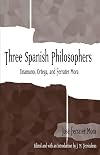
Jose Ferrater Mora’s Three Spanish Philosophers is a look into the current philosophical work being done by Spanish thinkers. Mora, a philosopher in his own right, tries to interpret, blend, and comment on the works of Miguel de Unamuno (1864-1936) and Josa Ortega y Gasset (1883-1955). These two analyses form a sort of prelude to his own work, which is presented as the third part of the book. It’s a rather odd situation for this work. Mora died in 1991, and this edition came out in 2003. show more His widow Priscilla Cohn and fellow philosopher Prof. Josep-Maria Terricabras have curated and updated this edition. Each chapter is from a separate work he wrote, but here they are combined to show a progression in Spanish thought from the beginning of the 20th century to the end.
Starting with Unamuno, he sees a contrarian stance that he attributes to years of political repression. But it wasn’t contrary for contrary’s sake. It was agitate the spirits of the nation, to rattle the cage, so to speak. Unamuno believed that to be, you must first be against one’s self. To be Spanish, to be a member of country that created the Quixote, you had to rail against the windmills of reality to truly understand it. Ortega, following a few decades later, wove Spanish philosophy into discussions on art, music, life, culture, history, and every else he encountered. As he matured as a thinker, he progressed from objectivism to perspectivism to ratio-vitalism (I’m still fuzzy on the distinctions between these, however). Teachings culminate in the belief that human life is the basic reality because all other realities are perceived from within it. While Unamuno pressed for the edges of and the antidotes to reality, Ortega tried to find its core. Mora’s philosophy, coming in the latter half of the 20th century, seeks to integrate the others. His investigations into the philosophies of life and death incorporate ideas of what makes the reality of life and existence a reality at all.
Suffice to say, it’s all pretty heady stuff, but Mora’s compilation isn’t terribly difficult to understand. You just can’t let yourself get distracted by other things while reading. This one takes some time, but there are some genuine insights here. There’s also a fair amount of modern Spanish history that helps to explain some of the contexts that each philosopher lived in. If you like reading philosophy, then this one would not be a bad one to add to your shelves. A thick but interesting read. show less
Starting with Unamuno, he sees a contrarian stance that he attributes to years of political repression. But it wasn’t contrary for contrary’s sake. It was agitate the spirits of the nation, to rattle the cage, so to speak. Unamuno believed that to be, you must first be against one’s self. To be Spanish, to be a member of country that created the Quixote, you had to rail against the windmills of reality to truly understand it. Ortega, following a few decades later, wove Spanish philosophy into discussions on art, music, life, culture, history, and every else he encountered. As he matured as a thinker, he progressed from objectivism to perspectivism to ratio-vitalism (I’m still fuzzy on the distinctions between these, however). Teachings culminate in the belief that human life is the basic reality because all other realities are perceived from within it. While Unamuno pressed for the edges of and the antidotes to reality, Ortega tried to find its core. Mora’s philosophy, coming in the latter half of the 20th century, seeks to integrate the others. His investigations into the philosophies of life and death incorporate ideas of what makes the reality of life and existence a reality at all.
Suffice to say, it’s all pretty heady stuff, but Mora’s compilation isn’t terribly difficult to understand. You just can’t let yourself get distracted by other things while reading. This one takes some time, but there are some genuine insights here. There’s also a fair amount of modern Spanish history that helps to explain some of the contexts that each philosopher lived in. If you like reading philosophy, then this one would not be a bad one to add to your shelves. A thick but interesting read. show less

LES FORMES DE LA VIDA CATALANA I ALTRES ASSAIGS
Les formes de la vida catalana i altres assaigs és una reflexió necessària i vigent sobre els catalans i sobre Catalunya, feta per un dels més grans filòsofs que ha donat el país. L'assaig de Ferrater Mora (complementat en aquest volum amb altres textos crucials de l'autor) és una obra de referència imprescindible: tan imprescindible com Notícia de Catalunya, de Jaume Vicens Vives, o Nosaltres, els valencians, de Joan Fuster. Amb show more ocasió del centenari del naixement de Ferrater Mora, labutxaca recupera aquest seu volum fonamental, l'amplia amb un text inèdit i hi afegeix una presentació escrita expressament per Salvador Giner. show less
Les formes de la vida catalana i altres assaigs és una reflexió necessària i vigent sobre els catalans i sobre Catalunya, feta per un dels més grans filòsofs que ha donat el país. L'assaig de Ferrater Mora (complementat en aquest volum amb altres textos crucials de l'autor) és una obra de referència imprescindible: tan imprescindible com Notícia de Catalunya, de Jaume Vicens Vives, o Nosaltres, els valencians, de Joan Fuster. Amb show more ocasió del centenari del naixement de Ferrater Mora, labutxaca recupera aquest seu volum fonamental, l'amplia amb un text inèdit i hi afegeix una presentació escrita expressament per Salvador Giner. show less
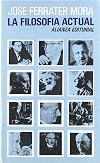
Sólo me pareció relevante la primera mitad del libro sobre la exposición de las diferentes corrientes filosóficas. Ilustrativa la del marxismo (ortodoxo y heterodoxo), así como la de la filosofía analítca. Sus ensayos sobre la sociedad contemporánea y el papel de la filosofía: me cagaron las bolas.

"Razón y verdad" es un artículo marcado por polémicas que se suscitaban en la incipiente España franquista acerca de la filosofía de la religión. "La filosofía y el idioma" postula la defensa de una expresión filosófica en castellano. "Hombres e ideas, recoge textos consagrados a autores concretos de la filosofía de habla hispana o universal.
Nov 27, 2020Spanish
Lists
Awards

You May Also Like


Statistics
- Works
- 101
- Also by
- 2
- Members
- 841
- Popularity
- #30,399
- Rating
- 4.1
- Reviews
- 31
- ISBNs
- 118
- Languages
- 3