
Jerrold M. Post (1934–2020)
Author of The Mind of the Terrorist: The Psychology of Terrorism from the IRA to al-Qaeda
About the Author
Jerrold Morton Post was an American psychiatrist, born on February 8, 1934 in New Haven, Connecticut. He was a graduate of Yale in 1956 and Yale School of Medicine in 1960. He completed his residency at Harvard Medical School and had a two-year fellowship at St. Elizabeth's, a psychiatric hospital show more in Washington. He was the inventor of political psychology. He worked as an analyst for the Central Intelligence Agency and founded the Center for the Analysis of Personality and Political Behavior. He was the author of 14 books and numerous medical articles. His last book, written with Stephanie Doucette, was Dangerous Charisma: The Political Psychology of Donald Trump and his Followers. Jerrold M. Post died on November 22, 2020. He was 86. (Bowker Author Biography) show less
Image credit: USAF Counterproliferation Center
(cpc.au.af.mil)
Works by Jerrold M. Post
The Mind of the Terrorist: The Psychology of Terrorism from the IRA to al-Qaeda (2007) 65 copies, 2 reviews
The Psychological Assessment of Political Leaders: With Profiles of Saddam Hussein and Bill Clinton (2003) — Editor — 37 copies
Leaders and Their Followers in a Dangerous World: The Psychology of Political Behavior (2004) 35 copies
Know Thy Enemy: Profiles of Adversary Leaders and Their Strategic Cultures (2003) — Editor; Contributor — 10 copies
Military Studies in the Jihad Against the Tyrants: The Al-Qaeda Training Manual (2004) — Editor — 2 copies
Associated Works
Tagged
Common Knowledge
- Legal name
- Post, Jerrold Morton
- Birthdate
- 1934-02-08
- Date of death
- 2020-11-22
- Gender
- male
- Education
- Harvard University (Residency)
Yale University (MD) - Occupations
- psychiatrist
intelligence analyst
professor (Psychology) - Organizations
- Central Intelligence Agency (Founder - Center for the Analysis of Personality and Political Behavior)
George Washington University - Cause of death
- COVID-19
- Nationality
- USA
- Birthplace
- New Haven, Connecticut, USA
- Places of residence
- Bethesda, Maryland, USA
- Place of death
- Washington, D.C., USA
- Associated Place (for map)
- USA
Members
Reviews

An uneven text. Although the author is a psychologist, he frequently strays from the area of his expertise, and from the advertised topic of the book. Instead of a tight discussion of the empirical findings of the "mind" of the terrorist, the chapters frequently stray to discuss wide-ranging historical and political events. Some of that background is indeed necessary, but it shouldn't be at the expense of crafting a good model of the psychology of radicalization and how and who and why one show more becomes a terrorist, and especially a suicide terrorist.
On the positive side, he describes a wider range of groups than most other similar books (FARC, Shining Path) and recognizes that this is not simply a phenomenon arising out of Islam. There have been Jewish and Christian terrorists as well. show less
On the positive side, he describes a wider range of groups than most other similar books (FARC, Shining Path) and recognizes that this is not simply a phenomenon arising out of Islam. There have been Jewish and Christian terrorists as well. show less

This is an amazingly thorough look at terrorism – its history and its causes. The author differentiates terrorism into subcategories: those that carry on their parents’ beliefs, those that go against their parents’ beliefs and those who commit these acts for religious purposes by looking at different examples of each. He then gives some great advice for how to successfully deal with modern terrorism that make sense. This book is filled with some great insights and advice that modern show more politicians should take a look at before developing policies on these issues. show less
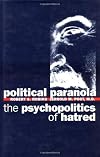
Paranoia is an underlying theme in political life. While healthy suspicion is invaluable to leaders, extreme cases are disastrous for citizens and nations alike. Arguing that humans have a natural tendency toward paranoia based on the fear of strangers and the need for friends, Robins and Post (When Illness Strikes the Leader: The Dilemma of the Captive King, LJ 2/15/93) examine the role of paranoia in the political context. They first discuss the basic elements of the paranoid condition, show more then explore past paranoid episodes (Salem witch hunts,) paranoid societies (the Dobu society of New Guinea), and conspiracy thinking. Along the way, they examine the paranoid regimes of Pol Pot, Idi Amin, Joseph Stalin, and Adolf Hitler as well as those of Jim Jones, David Koresh, and Middle East terrorists. The result is a fine complement to Anton Neumayr's Dictators in the Mirror of Medicine: Napoleon, Hitler, Stalin (Medi-Ed Pr., 1995).
Paranoia is not an obscure mental state afflicting some individuals but a widespread condition of modern societies, say the authors of this engrossing book. Robins and Post describe the paranoid personality, explain why paranoia is part of human evolutionary history, and examine the conditions that must exist before the message of the paranoid takes root in a vulnerable population, leading to mass movements and genocidal violence. show less
Paranoia is not an obscure mental state afflicting some individuals but a widespread condition of modern societies, say the authors of this engrossing book. Robins and Post describe the paranoid personality, explain why paranoia is part of human evolutionary history, and examine the conditions that must exist before the message of the paranoid takes root in a vulnerable population, leading to mass movements and genocidal violence. show less
Lists
You May Also Like


Associated Authors
Statistics
- Works
- 15
- Also by
- 1
- Members
- 264
- Popularity
- #87,285
- Rating
- 3.7
- Reviews
- 3
- ISBNs
- 30