
Jessica Stern
Author of Terror in the Name of God: Why Religious Militants Kill
About the Author
Jessica Stern is a research professor at Boston University's Pardee School of Global Studies and a Fellow at the FXB Center for Health and Human Rights at Harvard's School of Public Health. She served on the Clinton administration's National Security Council Staff. She is the author of Denial: A show more Memoir of Terror; Terror in the Name of God: Why Religious Militants Kill (a New York Times Notable Book of the Year); and The Ultimate Terrorists. J.M. Berger is a fellow with George Washington University's Program on Extremism and the author of Jihad Joe: Americans Who Go to War in the Name of Islam, a critically acclaimed history of the American jihadist movement. He is a regular contributor to Foreign Policy magazine and his website, lntelwire.com, has published thousands of declassified documents on the September 11 attacks and the Oklahoma City bombing. show less
Works by Jessica Stern
Terror in the Name of God: Why Religious Militants Kill (2003) — Author; Narrator, some editions — 499 copies, 6 reviews
Surrounded #1: June 2006 1 copy
Associated Works
Undercover Jihadi: Inside the Toronto 18, Al Qaeda Inspired, Homegrown, Terrorism in the West (2014) — Foreword, some editions — 9 copies, 2 reviews
Stories from the Field: A Guide to Navigating Fieldwork in Political Science (2020) — Contributor — 3 copies
Tagged
Common Knowledge
- Birthdate
- 1958-02-11
- Gender
- female
- Education
- Barnard College (B.A.|Chemistry|1985)
Massachusetts Institute of Technology (M.S.|Chemical Engineering|1988)
Harvard University (Ph.D.|Public Policy|1992) - Organizations
- Bill Clinton administration (1994-1995)
Trilateral Commission
Council on Foreign Relations
World Economic Forum - Nationality
- USA
- Places of residence
- Cambridge, Massachusetts, USA
- Associated Place (for map)
- Massachusetts, USA
Members
Reviews

She was raped as a young girl but grew up to be a writer and expert on terrorism. She interviewed terrorists in war zones and willingly put herself in dangerous situations. She began to realize that her emotionless reaction to danger and stress and calmness in such situations was unusual. She resisted the idea that she might have PTSD but decided to research her own rape, hoping to interview her rapist. She was able to work with one of the detectives and get records about her case, but it show more turned out that he was dead. But there had been at least 44 other victims. She made it a project to interview some of them, the rapist's family and people who'd known him, and her family members.
Her father was a Holocaust survivor who had similar reactions to stress, and there had been a lot of secrets and stress in her family. Her mother died when she was very young, of cancer probably caused by radiation treatments her own doctor father gave her for overactive thyroid. But her mother was never spoken of in the family.
She's honest and ruthless about examining her feelings: how one of her PTSD symptoms is the feeling of being hyper aware and in control during dangerous situations, which she likes. The complicated feelings about being a "victim" vs. a "survivor" and her dislike of people who seem to remain in victimhood. Her father dismissed her feelings as "candy-assed" and "navel-gazing" but I found them fascinating. show less
Her father was a Holocaust survivor who had similar reactions to stress, and there had been a lot of secrets and stress in her family. Her mother died when she was very young, of cancer probably caused by radiation treatments her own doctor father gave her for overactive thyroid. But her mother was never spoken of in the family.
She's honest and ruthless about examining her feelings: how one of her PTSD symptoms is the feeling of being hyper aware and in control during dangerous situations, which she likes. The complicated feelings about being a "victim" vs. a "survivor" and her dislike of people who seem to remain in victimhood. Her father dismissed her feelings as "candy-assed" and "navel-gazing" but I found them fascinating. show less
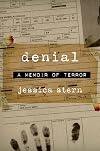
Although it is written in sparse readable prose and is highly intelligent and insightful, this is neither a pleasant nor a brutal read. Ms. Stern, an expert in terrorism, uncovers the source of her own terror - her childhood rape and its consequences. With the help of police, FBI contacts, and friends, Ms. Stern dares to delve into the life of her rapist - that unknown person who so affected her life. In doing so she is forced to consider how wide-ranging the after effects, how much of what show more she is good at and what she chooses to research is related to these effects, and ultimately to begin to confront her own anger and damage.
The thing I liked most about this book was its rawness. Ms. Stern is at the very beginning of understanding and facing what happened and is unafraid to display the raw anger that churns inside of her. I respected her refusal to be a stereotypical victim - trembling and cowed, always broken never to be repaired. Instead she takes hold of the event and its inherent complications, learns as much as she can, and honestly displays her emotions - rage, sadness, fear, bewilderment, compassion, and more rage. So often women deny themselves the full range of emotions, squishing themselves into the accepted. Ms. Stern isn't interested in the acceptable.
As Faulkner said, "The past is never dead. It's not even past." This is a terrible thing to face head on. All the happenings in our lives, even the most horrible, are still right there, just under the surface, waiting to re-emerge. Ms. Stern accomplishes this with grace and an eye toward facing it all down, no matter how frightening.
There are places in this book that are strangely detached in that dissociative way so familiar to anyone who has experienced trauma. I can think of no better way to express the way PTSD moves through the brain and manifests itself to the external world.
Even better is Ms. Stern's acknowledgment of this dissociative feeling and the way it made it possible for her to do the work she has done - interviewing thousands of terrorists in dangerous places all over the world to better understand what drives them. Her willingness to explore the ways she has coped and turned certain aspects of PTSD to her professional advantage is particularly insightful and brave. We should learn from bad things, but so often the positive learnings are never expressed.
Altogether a remarkable book and worthwhile read. show less
The thing I liked most about this book was its rawness. Ms. Stern is at the very beginning of understanding and facing what happened and is unafraid to display the raw anger that churns inside of her. I respected her refusal to be a stereotypical victim - trembling and cowed, always broken never to be repaired. Instead she takes hold of the event and its inherent complications, learns as much as she can, and honestly displays her emotions - rage, sadness, fear, bewilderment, compassion, and more rage. So often women deny themselves the full range of emotions, squishing themselves into the accepted. Ms. Stern isn't interested in the acceptable.
As Faulkner said, "The past is never dead. It's not even past." This is a terrible thing to face head on. All the happenings in our lives, even the most horrible, are still right there, just under the surface, waiting to re-emerge. Ms. Stern accomplishes this with grace and an eye toward facing it all down, no matter how frightening.
There are places in this book that are strangely detached in that dissociative way so familiar to anyone who has experienced trauma. I can think of no better way to express the way PTSD moves through the brain and manifests itself to the external world.
Even better is Ms. Stern's acknowledgment of this dissociative feeling and the way it made it possible for her to do the work she has done - interviewing thousands of terrorists in dangerous places all over the world to better understand what drives them. Her willingness to explore the ways she has coped and turned certain aspects of PTSD to her professional advantage is particularly insightful and brave. We should learn from bad things, but so often the positive learnings are never expressed.
Altogether a remarkable book and worthwhile read. show less
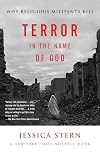
The entire planet is now subject of terrorist attack. This book seeks to answer why the most religious become the most murderous. The unique aspect of the work is that Berger interviews terrorists in a number of countries and seeks to provide context for a group's grievances. Fundamental to Islamic Jihadists is a sense of humiliation at the hands of modernity; while other nations profit, Islamic nations muddle through as they have done for one thousand years. There is genuine revulsion at show more aspects of the New World Order and globalization: for example, the secularism of major international organizations such as the UN and World bank, rampant consumerism, the empowerment of women and minorities, freedom of religion, and a blind spot about how all this effects Muslim populations. A variety of "management styles" are examined as they are employed by various groups, and also the role of the state (which often supports these groups until they grow too powerful and then turn on the governments that helped them.) Informative, well-written, and possibly the best book yet about explaining the motivations of suicide bombers. show less
Reviewing a book about rape is difficult. Being raped is a woman's greatest fear and can be the source of a woman's greatest shame. How does a reader critically analyze a story so personal, so damaging, and so removed from her own life?
This separation between myself and the author was consistently apparent, and not just regarding the rape. The relationships Stern had with her family horrified me. While Stern acknowledges her father, her grandmother, and her grandfather's flaws, she show more continually professes love and respect for them. I, on the other hand, found them deplorable and had difficulty relating to the woman who forgave them their transgressions and idiosyncrasies. While Stern expresses disgust at the abuse of others - and their acceptance of it - it's as if she barely recognizes the abuse inflicted on her by her own family.
I will say, however, that this separation of reader and author/protagonist did not distract me from the story. Oddly enough, the absolute disparity between us is a large part of what kept me reading. I wanted to know her mind; try to puzzle out how she thought, how she justified and rationalized, how she coped.
While I struggled a bit with the first half of the book - I think in part due to my distance from Stern - I flew through the second half of the book. Perhaps it just took some time for me to be comfortable with a narrator I could not relate to and with the subject matter which is so painful in so many ways. This is not an easy story to read. There is so much violence, so much terror, and so much of it is mishandled by those involved. show less
This separation between myself and the author was consistently apparent, and not just regarding the rape. The relationships Stern had with her family horrified me. While Stern acknowledges her father, her grandmother, and her grandfather's flaws, she show more continually professes love and respect for them. I, on the other hand, found them deplorable and had difficulty relating to the woman who forgave them their transgressions and idiosyncrasies. While Stern expresses disgust at the abuse of others - and their acceptance of it - it's as if she barely recognizes the abuse inflicted on her by her own family.
I will say, however, that this separation of reader and author/protagonist did not distract me from the story. Oddly enough, the absolute disparity between us is a large part of what kept me reading. I wanted to know her mind; try to puzzle out how she thought, how she justified and rationalized, how she coped.
While I struggled a bit with the first half of the book - I think in part due to my distance from Stern - I flew through the second half of the book. Perhaps it just took some time for me to be comfortable with a narrator I could not relate to and with the subject matter which is so painful in so many ways. This is not an easy story to read. There is so much violence, so much terror, and so much of it is mishandled by those involved. show less
Awards


You May Also Like


Associated Authors
Statistics
- Works
- 8
- Also by
- 4
- Members
- 1,090
- Popularity
- #23,566
- Rating
- 3.6
- Reviews
- 22
- ISBNs
- 44
- Languages
- 7