
Yi Munyol
Author of Our Twisted Hero
About the Author
Image credit: via Goodreads
Works by Yi Munyol
불멸 2 Immortality. 2 (Korean edition) 2 copies
그대 다시는 고향에 가지 못 하리 (Geudae dasi-neun gohyang-e gaji mot hari, you will never be able to go hom (2003) 2 copies
초한지 9 1 copy
레테의 戀歌 1 copy
초한지 1 1 copy
초한지 2 1 copy
초한지 3 1 copy
초한지 4 1 copy
초한지 5 1 copy
초한지 6 1 copy
초한지 7 1 copy
초한지 8 1 copy
선택 1 copy
초한지 1 copy
호모 엑세쿠탄스 3 1 copy
호모 엑세쿠탄스 2 1 copy
이문열의 삼국지 1 copy
초한지 1-10 1 copy
호모 엑세쿠탄스 1-3 1 copy
추락하는 것은 날개가 있다 1 copy
Our Twisted Hero 1 copy
Associated Works
Tagged
Common Knowledge
- Legal name
- 이문열
- Birthdate
- 1948-05-18
- Gender
- male
- Education
- Seoul National University
- Awards and honors
- Ho-Am Prize in the Arts (1999)
- Nationality
- Korea
South Korea - Birthplace
- Seoul, South Korea
- Places of residence
- Seoul, South Korea (birthplace)
- Associated Place (for map)
- Seoul, South Korea
Members
Reviews
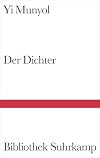
This novel is a fictionalized biography of the Korean poet Kim Pyong-yon. I must admit that I had never heard of Yi Munyol before my colleague brought the book to my attention, but apparently he is one of the most popular South Korean authors. There are parallels between Kim Pyong-yon's and Yi Munyol's lives, and the story has also been interpreted as the story of Korean writers in general.
Kim Pyong-yon is born to a rich and noble family, but their fortune comes to an end when his show more grandfather becomes a traitor and joins a group of northern rebels. According to Korean culture, the following generations are shunned, and his parents, his brothers and the boy himself have to flee and live in poverty. The novel explores how he becomes a poet in the aftermath.
Yi Munyol himself was born to an upper class family, but his father defected to North Korea, and being the son of a traitor had a devastating effect on his life.
It was very hard for me to get into this novel, mainly because the narrative perspective is so far removed from the actual story that it almost feels like reading a legend. Because of this, the story felt weirdly emotionless to me, although it is such a sad story. The second half was more interesting, especially because different purposes and the raison d'être of poetry are explored and presented.
All in all, the novel has a dreamlike quality and I am sure that I would have understood it better if I knew more about Korean culture. It was an interesting and at times fascinating read, but also laborious! show less
Kim Pyong-yon is born to a rich and noble family, but their fortune comes to an end when his show more grandfather becomes a traitor and joins a group of northern rebels. According to Korean culture, the following generations are shunned, and his parents, his brothers and the boy himself have to flee and live in poverty. The novel explores how he becomes a poet in the aftermath.
Yi Munyol himself was born to an upper class family, but his father defected to North Korea, and being the son of a traitor had a devastating effect on his life.
It was very hard for me to get into this novel, mainly because the narrative perspective is so far removed from the actual story that it almost feels like reading a legend. Because of this, the story felt weirdly emotionless to me, although it is such a sad story. The second half was more interesting, especially because different purposes and the raison d'être of poetry are explored and presented.
All in all, the novel has a dreamlike quality and I am sure that I would have understood it better if I knew more about Korean culture. It was an interesting and at times fascinating read, but also laborious! show less
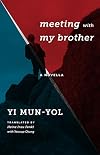
After the Korean War, Yi’s father had deserted his family in South Korea and defected to the North. Now, years later, as the two countries contemplate reunification, Yi has learned not only of his father’s death but that he had another family in North Korea. He decides to meet his half-brother. At first, the meeting seems unlikely to accomplish anything because of shared distrust but, slowly, as the two trade stories of their lives, interestingly often mirroring each other, they begin to show more realize that although there are clearly differences, perhaps much of what they thought they knew or were taught about each other was not the whole truth.
Meeting with My Brother was written by South Korean author Yi Mun-Yol in 1994 and translated by Heinz Insu Fenkl with Yoosap Chang. The novella is both a semiautobiographical account of Yi’s own life – his father defected to the North after the war - and an examination of the differences and similarities between the two nations and the effects that reunification might have on both sides. Today, as the US and N Korea seem to be facing off in a deadly game of chicken, this book gives a fascinating, and surprisingly nuanced and sympathetic view of North Korea questioning many of the stereotypes of both the North and the South.
Meeting with MY Brother is short and the pacing is slow but that doesn’t mean it wasn’t a very interesting read. Not only did I enjoy it but of all the books I have read this year, it may be the most important. It has made me question most of what I though I knew about North Korea and, in his nuanced portrayal of a country painted black by the western press, it provides hope that a peaceful solution to the rising conflict can be reached. I cannot recommend it highly enough to anyone who is interested to see a different view of Korea than that portrayed in western media.
Thanks to Netgalley and Columbia University Press for the opportunity to read this book in exchange for an honest review show less
Meeting with My Brother was written by South Korean author Yi Mun-Yol in 1994 and translated by Heinz Insu Fenkl with Yoosap Chang. The novella is both a semiautobiographical account of Yi’s own life – his father defected to the North after the war - and an examination of the differences and similarities between the two nations and the effects that reunification might have on both sides. Today, as the US and N Korea seem to be facing off in a deadly game of chicken, this book gives a fascinating, and surprisingly nuanced and sympathetic view of North Korea questioning many of the stereotypes of both the North and the South.
Meeting with MY Brother is short and the pacing is slow but that doesn’t mean it wasn’t a very interesting read. Not only did I enjoy it but of all the books I have read this year, it may be the most important. It has made me question most of what I though I knew about North Korea and, in his nuanced portrayal of a country painted black by the western press, it provides hope that a peaceful solution to the rising conflict can be reached. I cannot recommend it highly enough to anyone who is interested to see a different view of Korea than that portrayed in western media.
Thanks to Netgalley and Columbia University Press for the opportunity to read this book in exchange for an honest review show less
Meeting With My Brother is a compelling story on two deliberately related themes as Yi Mun-Yol describes his first encounter with a younger brother he has never met. Towards the end of the Korean War Yi's father, an ardent supporter of the communist regime, fled into North Korea, leaving behind his wife and children in the hope that they would soon be reunited. As Korea remained divided this never came to pass and in trying to trace his father Yi discovers that he has remarried and raised a show more second family. It's a deeply personal narrative as Yi discovers that his father has recently died and is given the opportunity to meet one of his unknown siblings. The meeting is difficult and thought the narrative is restrained Yi manages to evoke the discomfort, the resentments, the misunderstandings and the uncertainty as two men bound by blood, but little else, jockey for understanding. It's an uncomfortable read but an affective one. Their culture, experience and politics are very different and they struggle to bridge religious and ideological gaps.
Alongside this exploration of the meaning of family runs a wider theme, that of the desirability and viability of a reunited Korea. This is addressed most directly in Yi's conversation with and about a pro-unificationist known as "Mr Unification". Interactions between this idealist and other more wary characters reveal the many challenges facing any plans for a united Korea. Mr Unifications calls on ties blood and a shared land and history, in short that a single "people" should have a single nation.
Yi's reservations about easy reunification based on such a romanticisation of a semi-historical, semi-mythological past are clear scepticism and caution and the practical difficulties and ideological tensions are openly discussed but they are most profoundly illustrated through his discussions with his brother. During these fraught exchanges there are some fascinating insights into Confucian and clan observations and rituals in South Korea and their equivalents (or lack thereof) in the North. The intricacies of family etiquette, particularly regarding the sons' relative responsibilities in honouring their dead father can occasionally be overwhelming but the confusion is actually a powerful support for the story as Yi's brother is equally unfamiliar with them and it becomes clear that a lack of an equally shared tradition shared ground causes suspicion and resentment. There is certainly a possibility for accord but the differences and challenges are starkly revealed.
Meeting With My Brother is a thoroughly realistic, personal and clear-sighted story. Yi is honest and clear about the the problems that dog both halves of Korea, from the economic problems of parts of North Korea to the corruption and exploitation in South Korea, openly admitting to his own collusion in the latter. It is a really admirable explication of the problems facing Koreans now and in the future and the emotional toll of unification on the small scale of two individuals powerfully illustrates the stakes.
Thank you to Columbia University Press and Netgalley for providing a free advance copy of this work. show less
Alongside this exploration of the meaning of family runs a wider theme, that of the desirability and viability of a reunited Korea. This is addressed most directly in Yi's conversation with and about a pro-unificationist known as "Mr Unification". Interactions between this idealist and other more wary characters reveal the many challenges facing any plans for a united Korea. Mr Unifications calls on ties blood and a shared land and history, in short that a single "people" should have a single nation.
Yi's reservations about easy reunification based on such a romanticisation of a semi-historical, semi-mythological past are clear scepticism and caution and the practical difficulties and ideological tensions are openly discussed but they are most profoundly illustrated through his discussions with his brother. During these fraught exchanges there are some fascinating insights into Confucian and clan observations and rituals in South Korea and their equivalents (or lack thereof) in the North. The intricacies of family etiquette, particularly regarding the sons' relative responsibilities in honouring their dead father can occasionally be overwhelming but the confusion is actually a powerful support for the story as Yi's brother is equally unfamiliar with them and it becomes clear that a lack of an equally shared tradition shared ground causes suspicion and resentment. There is certainly a possibility for accord but the differences and challenges are starkly revealed.
Meeting With My Brother is a thoroughly realistic, personal and clear-sighted story. Yi is honest and clear about the the problems that dog both halves of Korea, from the economic problems of parts of North Korea to the corruption and exploitation in South Korea, openly admitting to his own collusion in the latter. It is a really admirable explication of the problems facing Koreans now and in the future and the emotional toll of unification on the small scale of two individuals powerfully illustrates the stakes.
Thank you to Columbia University Press and Netgalley for providing a free advance copy of this work. show less

The famed South Korean writer imagines meeting his North Korean brother after the death of his father--a defector to the North in the narrator's youth (a fact that parallels the author's life). The narrator, a professor of history who has suffered as a result of his father's defection, joins a tour group to Yenji, a chinese border town from which groups are allowed to see the famed Mt. Baektu and other North Korean sights. In this town, he meets his brother while at the same time show more encountering members of his group, who have their own agenda, political and economic. The narrative encompasses much discussion of unification along with many poignant episodes of cultural misunderstandings between the two brothers, who have an undeniable bond of brotherhood, despite years of resentment toward one another. Included in this story is an interesting explanation of the genealogical traditions of family namings, provided with a clarity and thoroughness I haven't seen before. Written in 1994, the novella is a snapshot of the politics of unification (prior to the Sunshine Policy) at that time. show less
Lists
Awards
You May Also Like


Associated Authors
Statistics
- Works
- 43
- Also by
- 4
- Members
- 335
- Popularity
- #71,018
- Rating
- 3.6
- Reviews
- 17
- ISBNs
- 55
- Languages
- 10
- Favorited
- 1
